
Sapa Valley Trek & Homestay: 3 Days Hmong, Red Dao & Giay Villages


Walking into five villages across Sapa's mountains, sleeping where the families live
You walk 33 kilometers over three days through five villages of Hmong, Red Dao, Giay and Tay minorities, sleeping in two family homestays and eating meals cooked by your hosts. A local guide leads you past waterfalls, rice fields and river crossings, explaining daily life and building techniques as you go. Transport back to Sapa and all village entry fees are included; you bring moderate fitness and the ability to trek uphill for 6+ hours at a stretch.
 3d
3d

Step-by-step itinerary
Day 1 — Sapa to Ta Van homestay trek
- Meet guide at Sapa hotel
- Walk 2km to Cat Cat village
- Cross Muong Hoa hanging bridge
- Hike uphill through bamboo forest
- Descend to Y Linh Ho village
- Lunch at Hmong family restaurant
- Continue trek to Ta Van village
- Check in and rest at homestay
- Optional cooking class and dinner
Day 2 — Ta Van to Ban Ho homestay trek
- Breakfast and explore homestay area
- Trek uphill to Giang Ta Chai waterfalls
- Visit Red Dao family and culture
- Return to waterfalls via alternate trail
- Lunch at Hmong family restaurant
- Bus to Su Pan Black Hmong community
- Walk to Ban Ho village
- Meet Tay family and check in
- Rest and dinner at homestay
Day 3 — Ban Ho to Sapa return trek
- Breakfast at homestay
- Visit traditional Tay houses
- Walk to Nam Tong village

The Experience
You start walking at 9 am from Sapa Town, your local guide meeting you at the hotel or the main church. The first 2 kilometers drop you toward Cat Cat, a Hmong village tucked into the valley, and from there the real trek begins — down to the Muong Hoa river's hanging bridge, then uphill through bamboo forest that closes in around you. The path narrows. You're moving through landscape that doesn't flatten or simplify; it just keeps revealing itself in layers. By midday you reach Y Linh Ho village, where a Hmong family runs a small restaurant and you eat lunch sitting with people who live there, not tourists passing through.
That afternoon you walk into Ta Van, where a Giay family welcomes you as their guest. The homestay is the whole point — you shower, rest, and if you want, join an informal cooking class in their kitchen. There's no schedule for that part; it happens or it doesn't, depending on the day and the family's rhythm. Dinner comes after. The next morning starts with coffee or tea, then you're back uphill toward Giang Ta Chai's waterfalls, crossing a second hanging bridge and entering Red Dao territory. Your guide walks you through how they live, what they grow, the details that don't make it into guidebooks. Lunch is in Giang Ta Chai village again, cooked by a Hmong family. After that, the trek shifts — you head to Su Pan (Black Hmong community) and then Ban Ho, where three ethnic groups overlap. A Tay family hosts you for the second night.
The final morning is shorter. After breakfast you visit traditional Tay houses, learn how they're built and why, then walk to Nam Tong village. By midday you're heading back to Sapa Town by transport, the trek finished. The whole thing is 33 kilometers across three days — not a sprint, but it requires steady legs and the willingness to move uphill for hours. You'll see rice terraces in every direction, cross rivers on hanging bridges that sway a little, and sleep in rooms where the family also sleeps. It's not a hotel with a guide; it's staying in villages with people who know them.

What’s included
Your three days include two nights in family homestays (one in Ta Van with a Giay family, one in Ban Ho with a Tay family), all meals during the trek (lunch and dinner on Days 1–2, breakfast on Days 2–3, lunch on Day 3), a local guide who speaks English and knows the villages and their customs, entry fees to all five villages, one large bottle of water per person, and transport back to Sapa Town after the trek ends. You arrange your own accommodation in Sapa Town for the night before and after the trek.
Operated by Trekking Tour Sapa
Is this one for you?Book this if you want to walk through real villages and sleep in family homes rather than stay in a hotel with a guide — the homestays are what make three days feel like you've actually been somewhere, not just passed through it.
Traveler reviews
Compare the 13 similar options
 Sapa Valley Trek & Homestay: 3 Days Hmong, Red Dao & Giay Villages★ 4.97 (109)3dEN · VIUS$ 170
 Parasailing in Sapa: Land in a Cultural VillageParaglide over Muong Hoa Valley's rice terraces from Vietnam's highest launch site, landing in Lao Chai village where Hmong families live.★ 4.97 (159)1h 30mEN · VIUS$ 98View ›
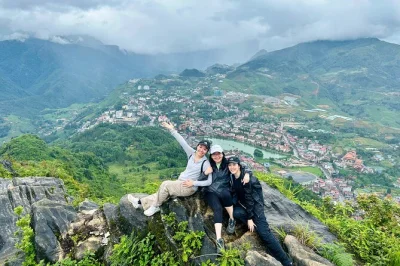 Sapa: Dragon Jaw Mountain & Rice Valley Trek with Local GuideFull-day trek in Sapa from Dragon Jaw Mountain through H'Mong villages, bamboo forest and Muong Hoa Valley. Includes local guide, lunch and hotel pickup. 6–7 hours.★ 4.95 (150)5h–6hENUS$ 35View ›
 Private Sapa Tour: Car, Villages & Waterfalls Full DayPrivate full-day Sapa tour by car with hotel pickup. Visit Cat Cat Village, Silver Waterfall, Love Waterfall and Lonely Tree. Lunch and water included.★ 4.82 (114)6h–8hENUS$ 95View ›
 Sapa: Full Day Trekking Tour with Rice Terraces & VillagesFeel the rhythm of Sapa’s rice terraces, trek through Y Linh Ho and Lao Chai villages, share lunch in Ta Van, and return by bus. Includes local guide and entry fees.★ 4.83 (423)6h–7hENUS$ 25View ›
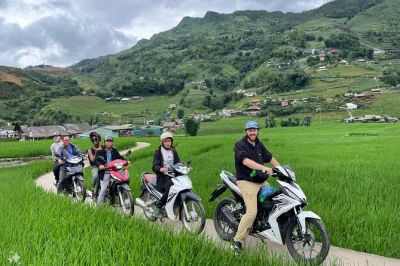 Sapa: Motorbike Day Tour Waterfalls, O Quy Ho Pass & VillagesFeel mountain air on a Sapa motorbike tour—ride O Quy Ho Pass, visit Silver & Love Waterfalls, explore Muong Hoa Valley villages. Includes guide, lunch, entry.★ 4.99 (281)6h–7hENUS$ 54View ›
 Sapa Trekking: Rice Terraces, Ethnic Villages & HomestayWake up to mountain air in Sapa, trek quiet rice terraces, share meals with Hmong & Dzao families, and stay overnight in a wooden village home. Includes guide & meals.★ 4.95 (75)2dENUS$ 92View ›
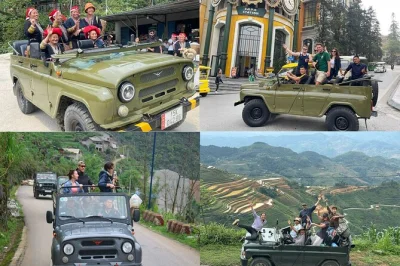 Sapa Jeep Tour: Muong Hoa Valley & Ethnic Villages 4.5 HoursOpen-air jeep through Sapa's remote villages, rice terraces & Muong Hoa Valley. Pickup included, professional guide, all entrance fees. 4.5 hours, small groups.★ 4.96 (207)4h 30mENUS$ 79View ›
 Sapa: Motorbike Day Tour Remote Villages & Rice FieldsRide a motorbike through Sapa’s remote villages and rice terraces, meet Hmong and Dao locals, enjoy a home-cooked lunch, and experience daily life with pickup included.★ 4.98 (214)8hENUS$ 69View ›
 Sapa Motorbike Tour: Villages, Waterfalls & Ancient Rock FieldRide through Sapa’s valleys by motorbike, visit Cat Cat Village, see Silver Waterfall, and explore ancient rock carvings. Includes bottled water and entry fees.★ 4.97 (76)7h–9hENUS$ 59View ›
 Sapa one-day trek: Y Linh Ho, Lao Chai, Ta Van villagesTrek through Muong Hoa Valley in Sapa with an English or Vietnamese guide, visiting three Black Hmong villages over five to six hours with lunch and return transport.★ 4.91 (95)5h–6hEN · VIUS$ 22View ›
 Sapa: Rice Terrace Trek, Ethnic Villages & Homestay NightWake up to Sapa’s mountain air, hike rice terraces, meet Hmong & Red Dao locals, and share a homestay dinner. Includes pickup, guide, meals & return transport.★ 4.95 (106)2dENUS$ 90View ›
 Sapa: Glass Bridge, Cat Cat Village & Moana Day TourFull-day Sapa tour with Glass Bridge skywalk, Cat Cat Village and Moana artistic complex. Includes air-conditioned transport and refreshment. No heavy trekking required.★ 4.97 (317)7hENUS$ 33View ›
Top questions
What's the fitness level needed for this trek?
Moderate fitness minimum. Days involve 6–7 hours of walking with elevation gain, some steep sections, and uneven terrain. Not recommended for travelers with spinal injuries, poor cardiovascular health, or pregnancy.
How many kilometers do you walk each day?
Day 1 is 15 km (6.5 hours), Day 2 is 18 km (6.5 hours), Day 3 is 3 km (3 hours). Total is 36 km across three days.
What time does the trek start?
9 am from your hotel in Sapa Town or the main church. Your local guide meets you there.
Do you sleep in hotels or homestays?
Homestays only. You stay with a Giay family in Ta Van on night one and a Tay family in Ban Ho on night two. Rooms are basic but clean, with hot showers available.
Is there a cooking class included?
An informal cooking class is offered at the first homestay (Ta Van) if you want to join. It's optional and depends on the family's schedule.
What meals are included?
Lunch on all three days and dinner on nights one and two, cooked by local families. Breakfast is provided at both homestays. You arrange your own meals in Sapa Town on the first and last evenings.
Are there hanging bridges on this trek?
Yes, two. One crosses the Muong Hoa river on Day 1, and another on Day 2 near Giang Ta Chai waterfall. Both are sturdy but sway slightly.
What's included in the price?
Two nights homestay, all meals during the trek, local guide, village entry fees, one large bottle of water per person, and transport back to Sapa Town at the end.
Can I do this trek if I'm not very fit?
Not recommended. The trek requires at least moderate fitness and the ability to walk uphill for extended periods. If you have any health concerns, check with the operator before booking.
What's the best time of year to do this trek?
October to April offers the clearest skies and coolest temperatures. May to September is rainy and can make trails slippery.
Sapa Valley Trek & Homestay: 3 Days Hmong, Red Dao & Giay Villages
3d · EN · VI · at your hotel
from US$ 170 per person
★★★★★★★★★★4.97109 reviews
