

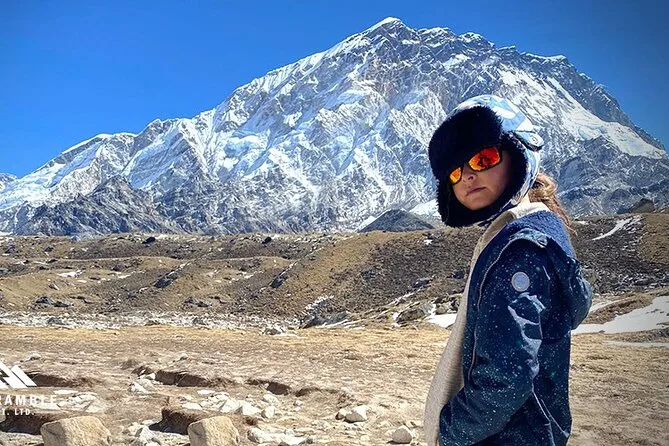
Everest Base Camp Trek from Kathmandu: 12 Days & Sherpa Villages
The Flight to Lukla Alone Will Make You Reconsider Everything
You fly to Lukla, trek through Sherpa villages and mountain lodges for twelve days, and reach Everest Base Camp at 17,598 feet. Meals, accommodation, flights, and an English-speaking guide are included. You walk three to five hours daily with rest days built in. The trek takes place in autumn or spring, when weather is most stable, and returns you to Kathmandu by day nine.
Step-by-step itinerary
Day 1: Arrival and introduction in Kathmandu
- Arrive in Kathmandu
- Meet airport representative
- Transfer to hotel
- Meet trekking guide
- Discuss trek details
Day 2: Fly to Lukla and trek to Phakding
- Fly to Lukla
- Trek to Phakding
Day 3: Trek from Phakding to Namche Bazaar
- Trek 10 to 12 km to Namche Bazaar
Day 4: Trek from Namche to Pangboche
- Trek to Pangboche
Day 5: Trek from Pangboche to Labuche
- Trek to Labuche
Day 6: Trek to Gorakshep and base camp
- Trek to Gorakshep
- Visit Everest Base Camp
- Return to Gorakshep
Day 7: Return trek from Pangboche to Namche
- Trek back to Namche
Day 8: Trek from Namche to Lukla
- Trek to Lukla
Day 9: Fly back to Kathmandu
- Fly to Kathmandu
- Transfer to hotel
What’s included
- Your trek includes hotel pickup and transfer in Kathmandu on arrival, domestic flights from Kathmandu to Lukla and return, accommodation in mountain trekking lodges throughout the trek, all meals on a full-board basis (breakfast, lunch, dinner, and hot drinks), Everest National Park entry fees and TIMS card, an experienced English-speaking government-licensed guide, one porter per two trekkers to carry luggage, water purification tablets, and a briefing each evening about the next day's route.
- The company also provides down jackets and sleeping bags if you don't have your own.
- Personal travel insurance is recommended.
Times
- Every day 07:15
Before you book
Operated by Alpine Ramble Treks
Prices and times updated 3 days ago
Traveler reviews
The experience
The plane to Lukla seats maybe nineteen people, and it banks so steeply on approach that you can see the airstrip tilting beneath the wing like it's being held at an angle just to scare you. Then it lands (actually lands, on a slope that drops off into the valley), and you step out into thin air and the sound of prayer flags snapping in the wind, and suddenly the Everest Base Camp Trek from Kathmandu stops being something you read about and becomes the thing you're actually doing. Your guide meets you at the lodge in Phakding that first night, and by the time you've drunk your second cup of butter tea, you understand why people come back to this trek again and again. It's not the mountain itself, not yet. It's the rhythm: wake at six, walk for three hours, lunch at a tea house, walk again, arrive at a lodge where someone has already made your bed and is boiling water for your shower.
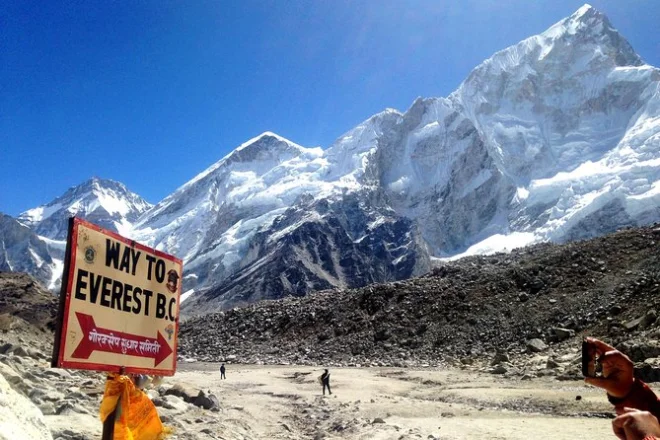
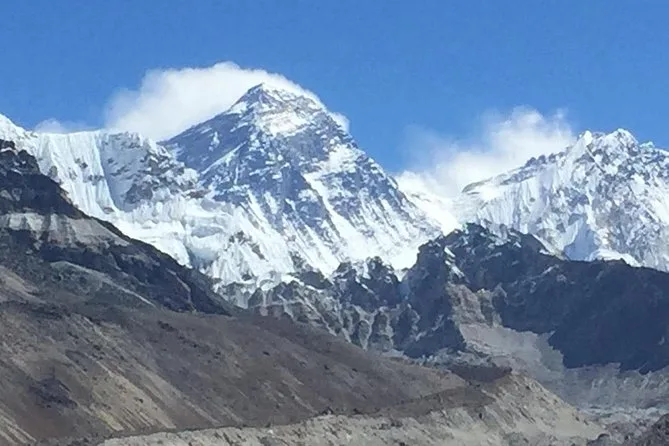
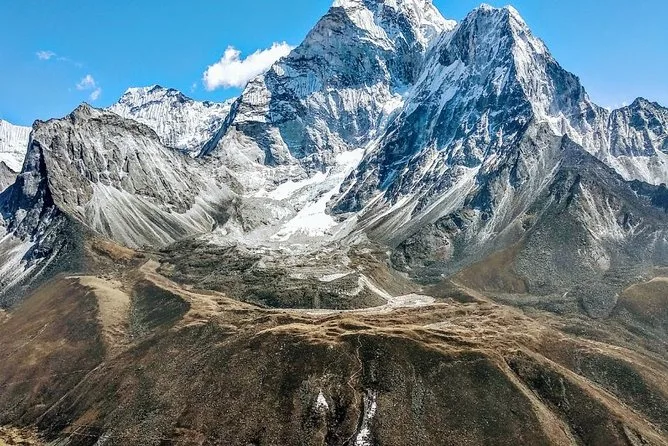
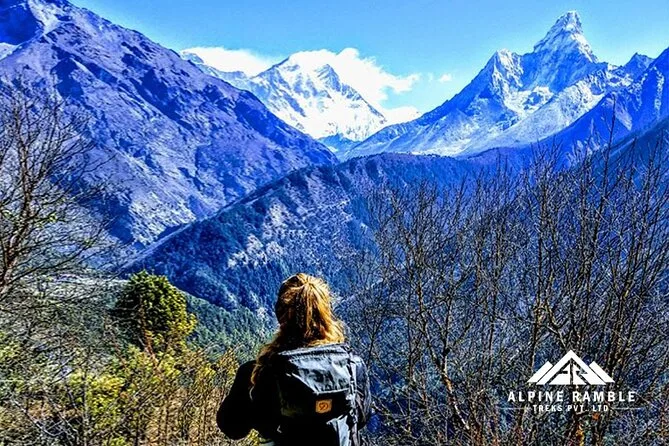
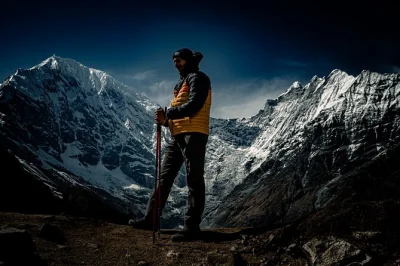
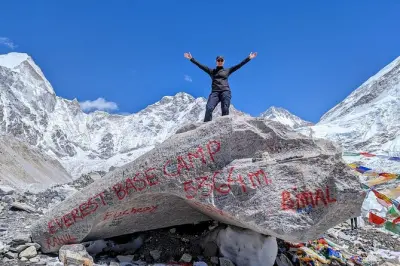
The trek moves through Namche Bazaar on day three, a market town that sits at 11,283 feet and feels like the last real settlement before the mountains take over completely. From there the days blur into a pattern of climbing, resting, eating whatever's on the menu (dal bhat, vegetable soup, the occasional pizza that tastes better than it has any right to at altitude), and listening to your guide brief you each evening about tomorrow's walk. You'll trek from Pangbuche to Labuche, then push toward Gorakshep and the base camp itself, where the trail flattens and the prayer flags multiply and you're standing at 17,598 feet looking up at the mountain that everyone on earth knows by name. The lodges get simpler as you climb (shared bathrooms at higher elevations, thinner blankets, colder nights), but the company of other trekkers and the presence of your guide and porter means you're never actually alone with the difficulty of it.
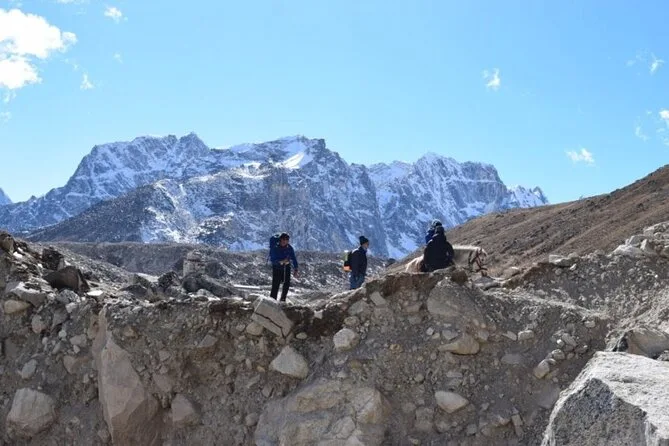
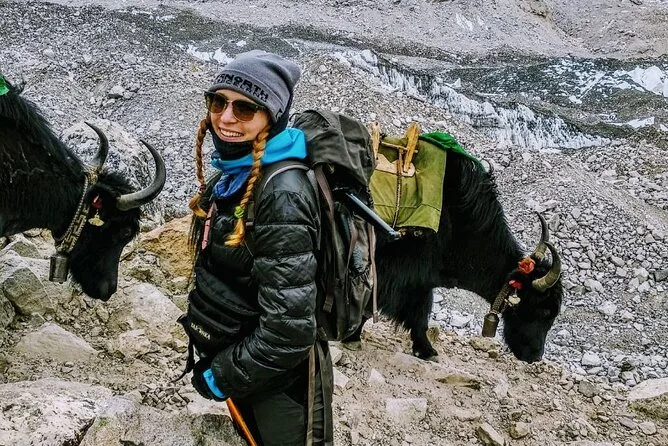
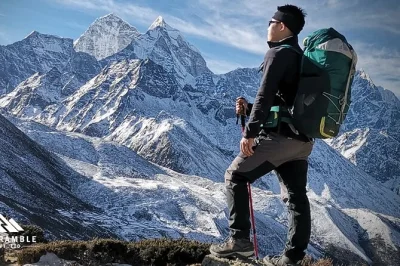
What makes this work is the structure. Your company handles the domestic flights from Kathmandu to Lukla and back, the park fees and TIMS card, all your meals on a full-board basis, and accommodation in the mountain lodges. You don't negotiate with lodge owners or figure out which tea house serves lunch: your guide chooses the stops, timing everything so you're eating when you're hungry and sleeping when you're tired. The porter carries your bag, which means you're hiking with just a day pack. Most trekkers walk three to five hours a day, with breaks built in. It's moderate, not extreme. You don't need technical skills or climbing experience, just the fitness to walk uphill for a few hours and the willingness to sleep in a cold room and eat simple food. The company provides down jackets and sleeping bags if you don't have your own.
The best time to go is autumn (mid-September through November) or spring (March through May), when the skies are clear and the nights are cold but the days are bright. Last-minute bookings are accepted, though you'll want to arrange your Nepal visa beforehand. It can be obtained at the airport or through your country's immigration office. Bring trekking boots, layers, sun protection, and the equipment list the company provides. Everything else (the meals, the guide's knowledge of the route, the porter who'll ask how you're feeling each morning) is already arranged.
Is this one for you?This trek suits anyone with moderate fitness who wants to reach Everest Base Camp without arranging flights, permits, meals, or logistics themselves: the fixed itinerary and included guide handle all of that, leaving you to focus on the walk and the mountain.
Compare the 12 alternatives






Top questions
What languages is the tour guided in?
Live guide in English, Spanish and Italian.
Can children come?
Yes. Ticket types: Youth (15 to 24 years). Children under 15 can't be included in the booking.
What happens if it rains?
It may be canceled due to bad weather. If that happens, you're offered another date or a refund. Free cancellation up to 24 h before the start.
How many days is the Everest Base Camp Trek?
Twelve days total, including arrival in Kathmandu, the trek itself, and return flight to Kathmandu.
What's included in the price?
Domestic flights Kathmandu-Lukla-Kathmandu, all accommodation in mountain lodges, all meals (breakfast, lunch, dinner), park entry fees, TIMS card, English-speaking guide, porter, and water purification tablets.
Do I need climbing experience?
No. It's a non-technical trek requiring moderate fitness and the ability to walk three to five hours daily, but no climbing skills or technical equipment.
What's the altitude at base camp?
17,598 feet (5,364 meters). Altitude sickness is possible. The company can provide Diamox if needed.
When is the best time to trek?
Autumn (mid-September to November) and spring (March to May) offer clear skies, stable weather, and good visibility of the mountains.
What about the flight to Lukla? Is it safe?
The Lukla airstrip is steep and dramatic but is one of the busiest mountain airports in the world. Flights operate daily during the trekking season.
Can I book last-minute?
Yes, the company accepts last-minute bookings by phone or message, though earlier booking is recommended for better availability.
What if I'm traveling alone?
Single travelers can book. Accommodation is on a twin-sharing basis, but single supplements are available for an additional cost.
How much luggage can I bring?
Your porter will carry your main bag, which should not exceed 18 kilograms. You'll trek with a day pack only.
What meals are provided?
Full board includes breakfast, lunch, and dinner at the lodges and tea houses along the route. Menus offer dal bhat, vegetable dishes, soups, noodles, bread, and hot drinks. Meat is not recommended at high altitude.
Everest Base Camp Trek from Kathmandu: 12 Days & Sherpa Villages
14d · EN · ES · IT · at your hotel
from US$ 1,339.20 per person
Next, you choose your date and number of travelers and see the final price.