
17-day Gokyo to Everest Base Camp Trek from Kathmandu

Lukla to Base Camp: the high pass route that reaches both Gokyo and Everest
A 17-day trek from Kathmandu that follows the Everest Circuit route through Lukla, Namche Bazaar, Gokyo and Cho La Pass to Everest Base Camp at 5,365 m. You trek with a licensed English-speaking guide and one porter per two clients, staying in guesthouses with attached toilets. The trek includes all permits, airport transfers, two nights in a Kathmandu hotel, filtered water on the trail, down jacket and sleeping bag rental, and a 35-minute flight each way between Kathmandu and Lukla. Lunch and dinner in Kathmandu, international airfare, personal equipment and staff tips are optional at checkout.
Compare the 12 alternatives
 14-Day Everest Base Camp Trek from KathmanduEvery day · 06:15 and 08:00 · From age 8★ 4.98 (1,657)14dENUS$ 1,800View ›
 Everest Base Camp Trek from Kathmandu: 14 DaysEvery day · 15–70 years★ 4.99 (1,134)14dENUS$ 1,475View ›
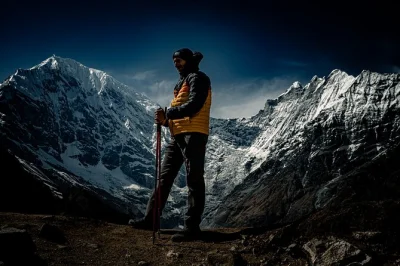 Langtang Valley Trek: Beginner-friendly Himalayan TrekEvery day · 06:45★ 4.99 (191)7dENUS$ 555View ›
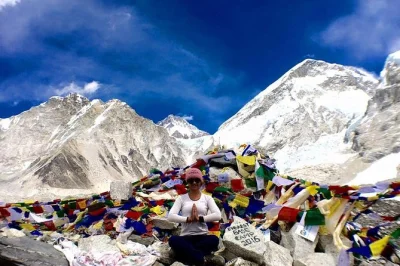 Everest Base Camp Trek from Kathmandu: 12 DaysEvery day · first departure 00:15, last 23:45 · From age 10★ 4.97 (575)14dENUS$ 1,700View ›
 Everest Base Camp Trek: 14 Days Kathmandu & Mount EverestEvery day · first departure 00:45, last 23:45 · From age 8★ 4.93 (101)14dENUS$ 999View ›
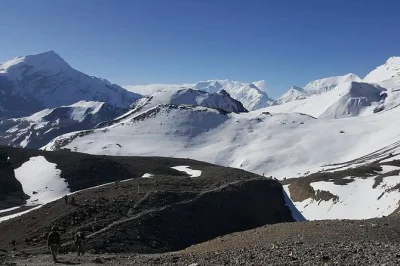 Annapurna Circuit Thorong La Pass Trek: 15 Days from KathmanduEvery day · 06:00 · From age 15★ 4.94 (16)15dENUS$ 1,750View ›
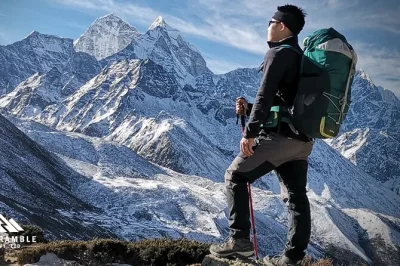 Everest Base Camp Trek from Kathmandu: 14 days to the mountainEvery day · 06:15 and 06:45 · From age 5★ 4.99 (372)13dENUS$ 1,420View ›
 Everest Base Camp Trek from Kathmandu: 14-day guided expeditionEvery day · From age 12★ 5.00 (29)14dENUS$ 1,650View ›
 Chitwan National Park tour: Jungle tower night stayEvery day · 06:15 · All ages★ 4.86 (44)4dENUS$ 350View ›
 Everest Base Camp Trek from Kathmandu: 13 DaysEvery day · 06:15 · From age 10★ 4.96 (110)15dEN · JAUS$ 1,690View ›
 Annapurna Base Camp Trek from Kathmandu or Pokhara: 5 DaysEvery day · 06:45 and 07:45 · From age 7★ 5.00 (176)5dEN · HIUS$ 200View ›
 Everest Base Camp Trek 16 Days from KathmanduEvery day · 09:15 · 15–70 years★ 4.97 (115)15dEN · ZH +2US$ 1,538View › Compare more experiences like this »
Step-by-step itinerary
Day 1: Arrive in Kathmandu and pre-trek meeting
- Meet airport representative
- Transfer to hotel
- Attend pre-trek meeting
Day 2: Fly to Lukla and trek to Phakding
- Fly to Lukla
- Meet guide and porters
- Trek to Phakding
Day 3: Trek to Namche Bazaar
- Trek along Dudh Kosi river
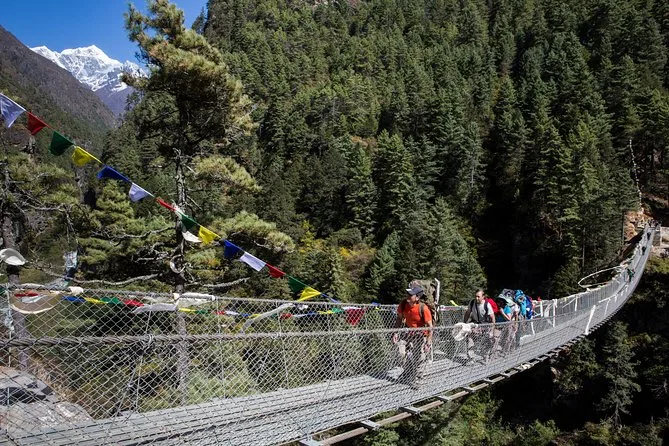
- Cross suspension bridges
- Arrive at Namche Bazaar
Day 4: Acclimatize in Namche Bazaar
- Visit Sherpa museum
- Hike to Syangboche Airport
- Visit Everest View Hotel
Day 5: Trek to Phorste Thanga
- Climb through rhododendron forest
- Pass Yak Kharkas settlements
- Reach Phorste Thanga
Day 6: Trek to Machherma
- Climb ridge for valley views
- Descend to river
- Climb to Ngozumpa glacier terminal moraine
- Arrive at Machherma
Day 7: Trek to Gokyo
- Trek to Gokyo village
- Settle in guesthouse
Day 8: Climb Gokyo Ri and return
- Climb Gokyo Ri summit
- Enjoy panoramic mountain views
- Return to Gokyo
Day 9: Trek to Thangna
- Trek to foot of Cho La pass
- Stay in basic dormitory accommodation
Day 10: Cross Cho La pass and trek to Dzongla
- Start early before sunrise
- Climb Cho La pass
- Descend to Dzongla
- Stay in dormitory-style room
Day 11: Trek to Lobuche
- Trek to Lobuche village
Day 12: Trek to Everest Base Camp and back to Gorak Shep
- Trek along Khumbu Glacier
- Visit Everest Base Camp
- Return to Gorak Shep
Day 13: Climb Kala Patthar and trek to Pheriche
- Climb Kala Patthar summit
- Descend to Gorak Shep
- Have hot breakfast
- Trek down to Pheriche
Day 14: Trek to Namche Bazaar
- Descend through Pangboche and Tengboche
- Arrive at Namche Bazaar
Day 15: Trek to Lukla
- Trek back to Lukla
- Relax and celebrate
Day 16: Fly from Lukla to Kathmandu
- Fly to Kathmandu
- Transfer to hotel
Day 17: Transfer to airport for departure
- Transfer to Tribhuvan International Airport
The experience
Lukla sits at 2,804 m where the 35-minute flight from Kathmandu lands you at Tenzing and Hillary Airport. From there, the trek descends to Phakding and climbs to Namche Bazaar over two days, crossing the Dudh Kosi River on suspension bridges strung with prayer flags. Namche is the largest settlement on the Everest trail and sits at 3,441 m. You spend a full acclimatization day here visiting the Sherpa museum and hiking to Syangboche Airport and the Everest View Hotel, where the first views of Everest itself come into frame.
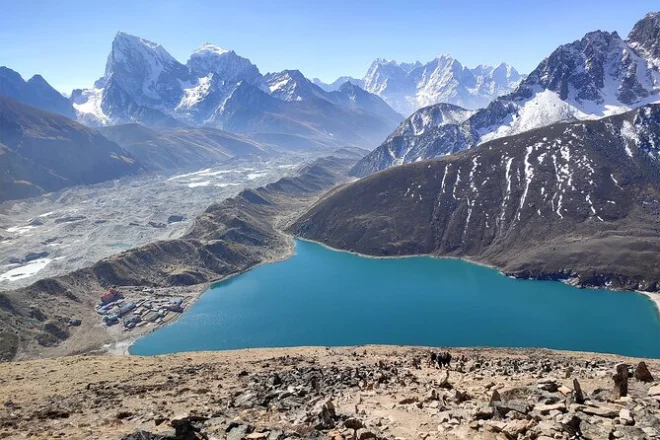
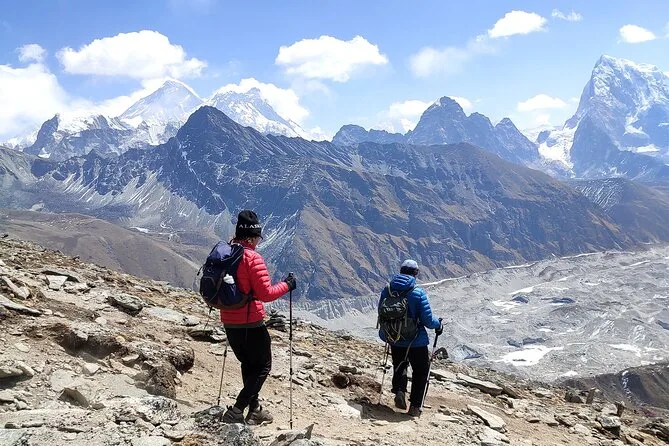
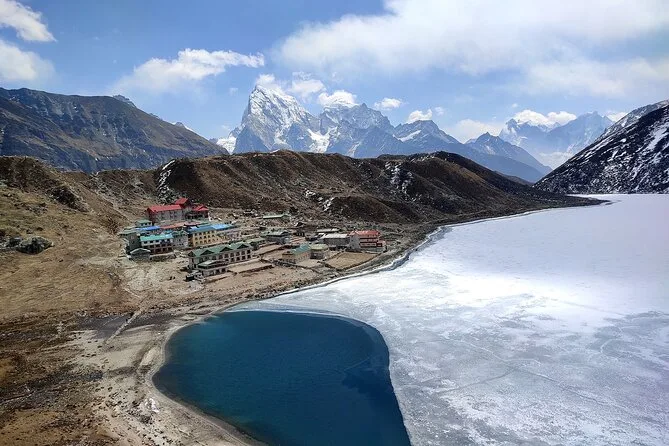
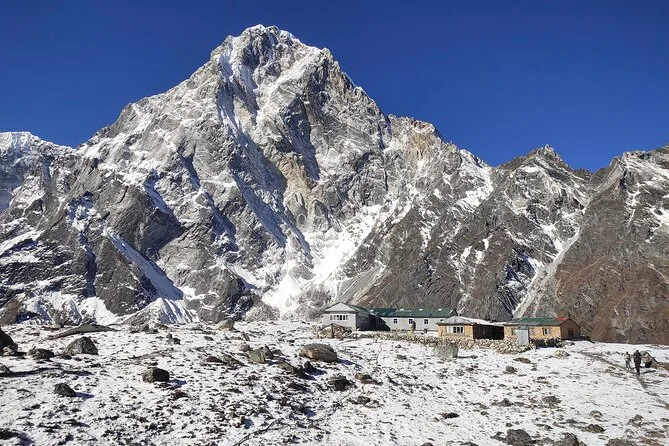
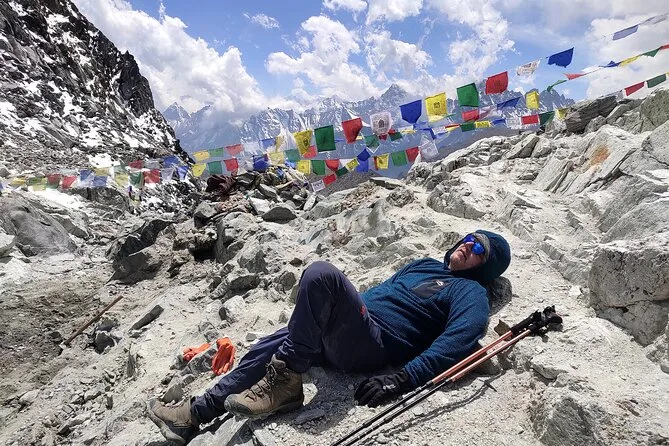
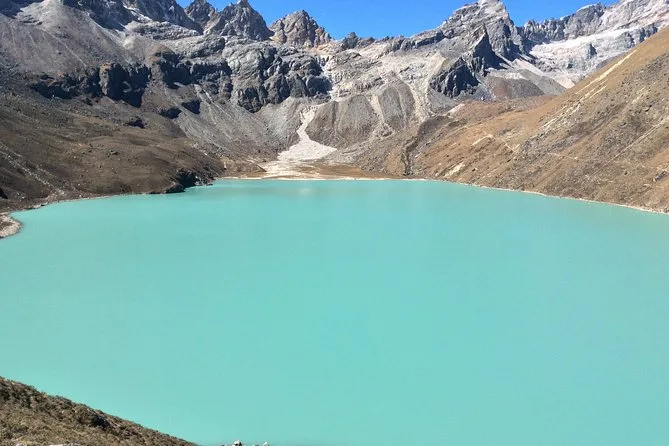
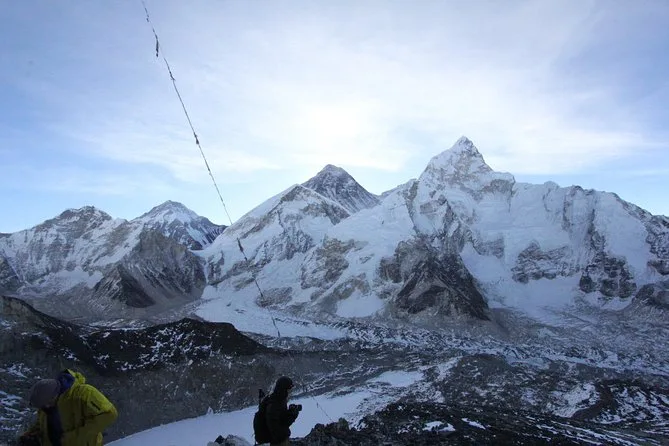
The route then climbs northeast through rhododendron forest and high pastures to Gokyo at 4,790 m, where you base for two nights. On one of those days you climb Gokyo Ri to 5,483 m. A steep ascent that rewards with a panoramic view of the whole Khumbu Himalayas: Everest, Lhotse, Nuptse, Makalu, Cho Oyu and Gychung Kang all visible at once, plus the massive Ngozumpa glacier below. The trek then crosses Cho La Pass at 5,300 m, a high and exposed crossing that starts before sunrise to avoid afternoon weather and snow. Early starts and dormitory accommodation in the remote villages of Thangna and Dzongla are part of this section.
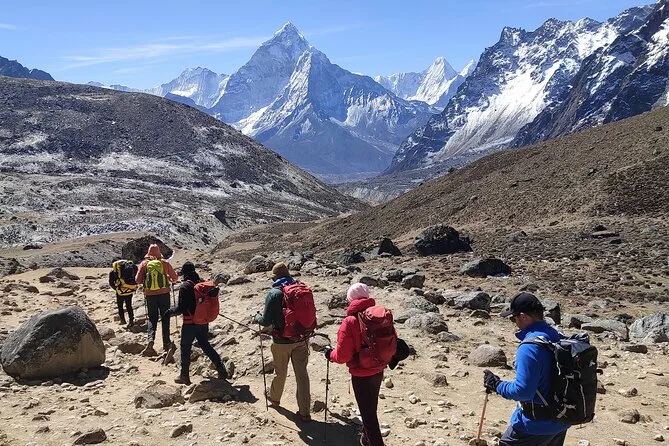
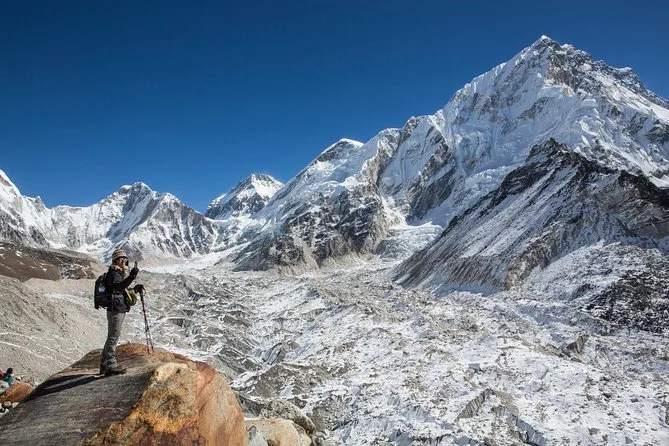
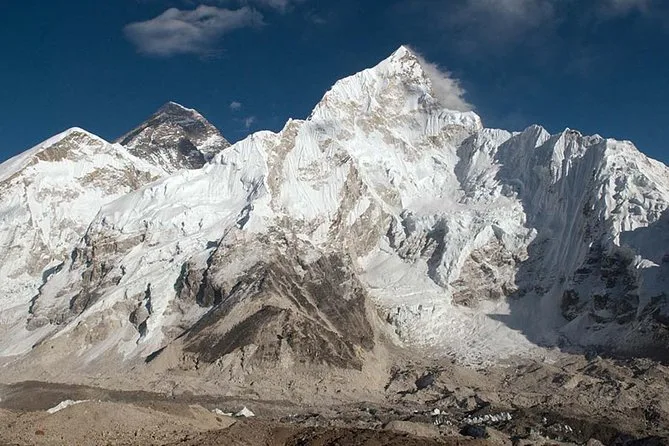
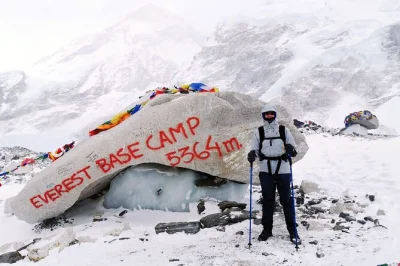
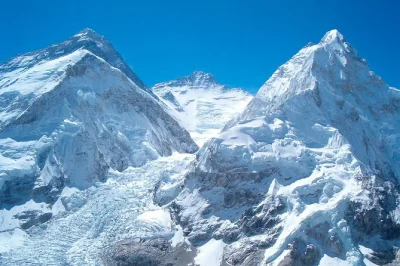
The final push takes you through Lobuche to Everest Base Camp at 5,365 m, the closest approach without mountaineering equipment. The Khumbu Icefall dominates the view. During spring, expedition teams are often preparing for summit attempts. From Base Camp you return to Gorak Shep, then climb Kala Patthar at 5,555 m the next morning: one of the trek's hardest days but the one where Everest towers directly ahead. The descent follows the main trail back through Pangboche and Tengboche to Namche, then down to Lukla over two days, and a final 35-minute flight returns you to Kathmandu.
What’s included
- Licensed English-speaking trekking guide and one porter per two clients.
- twin-share guesthouse accommodation for 14 nights with attached toilets.
- all trekking permits.
- down jacket and sleeping bag rental.
- filtered water on the trail.
- seasonal fruits during the trek.
- airport transfers in Kathmandu.
- two nights in a three-star hotel in Kathmandu.
- Kathmandu-Lukla-Kathmandu airfare.
- free Ace the Himalaya duffel bag and sun hat.
- all government taxes and official fees.
Before you book
Prices and times updated 14 days ago
Operated by Ace the Himalaya
Is this one for you?Small groups work best here. You trek with a single guide and share porter support with one other client, which keeps the pace steady and the experience intimate across 17 days of high altitude. Choose this route if you want the full Everest Circuit including Gokyo and Cho La Pass, not just the direct Base Camp approach.
Traveler reviews
Top questions
What happens if it rains?
It may be canceled due to bad weather. If that happens, you're offered another date or a refund. Free cancellation up to 6 days before the start.
What's the difference between the Gokyo route and a standard Everest Base Camp trek?
This trek includes Gokyo and Cho La Pass, adding the western approach to Base Camp instead of the direct route. You summit Gokyo Ri at 5,483 m and cross the high pass at 5,300 m, which means two extra days of trekking and exposure to more remote terrain and altitude, but also views of the Ngozumpa glacier and a fuller circuit of the Khumbu region.
How much physical fitness do I need for 17 days at altitude?
The operator requires at least a moderate level of physical fitness. Days involve 5 to 8 hours of trekking at elevations between 2,600 m and 5,555 m, with steep climbs, thin air and early starts. The trek is not recommended for travelers with spinal injuries, poor cardiovascular health or pregnancy.
Do I need to bring my own sleeping bag and down jacket?
No, both are included and provided by the operator, then returned at the end of the trek. You do need to arrange your own personal trekking equipment (boots, layers, pack) and travel insurance that covers high-altitude rescue and evacuation, which is not included.
What happens on the acclimatization day in Namche Bazaar?
You spend the full day at 3,441 m to let your body adjust to the altitude. The guide takes you to the Sherpa museum to learn about local customs, then you hike up to Syangboche Airport and the Everest View Hotel, one of the world's highest-placed hotels, where you get your first clear views of Mount Everest.
How early do we start on the Cho La Pass crossing?
You begin walking at 4:00 or 5:00 am to reach the 5,300 m pass by 9:00 or 10:00 am and avoid afternoon weather and snow. The pass is regularly used and easy to follow, but altitude and snow conditions can make the crossing difficult, and accommodation the night before in Thangna is basic dormitory-style.
What's included in the price and what costs extra?
Included are the 17-day trek with guide and porter, all permits, guesthouse accommodation with attached toilets, filtered water, down jacket and sleeping bag rental, airport transfers, two nights in a Kathmandu hotel, Kathmandu-Lukla-Kathmandu airfare, and government taxes. Lunch and dinner in Kathmandu, international airfare, personal trekking equipment and tips for staff are optional choices at checkout.
17-day Gokyo to Everest Base Camp Trek from Kathmandu
17d · EN
from US$ 2,200 per person
4.99123 reviewsVerified traveler reviews via our booking provider