
Medan: 2-Day Jungle Trek & Rafting Gunung Leuser


Two nights in the rainforest, one night sleeping under it
You trek into Gunung Leuser National Park for two days, sleep one night at a jungle campsite with a certified guide and assistant, swim in rainforest rivers, and raft back to Bukit Lawang on the second afternoon. All entry permits, meals, camping equipment, and transport back to your guesthouse are included. The fixed schedule means you don't have to arrange permits, timing, or logistics yourself — just show up ready to walk.
 2d
2d

Step-by-step itinerary
Day 1 — Jungle trek and wildlife spotting
- Pick up at guesthouse around 9 am
- Follow guide along river and uphill
- Spot Orangutans and Thomas Leaf monkeys
- See gibbons, turtles, peacocks, and monkeys
- Stop for tropical fruit snack
- Hike to viewpoint over river valley
- Have lunch with nasi goreng and fruits
- Continue trekking through jungle
- Arrive at campsite near river around 4 pm
- Swim and shower under waterfall
- Have tea or coffee while watching Orangutans
- Dinner with traditional Indonesian meals
- Chat and play games with guides and group
- Sleep at jungle campsite under leaf roof
Day 2 — Morning trek and river rafting
- Wake up with jungle wildlife
- Enjoy decorated breakfast at campsite
- Choose to relax or trek more in morning
- Have lunch with noodle soup and fruits
- Trek ends at Bahorok River
- Raft back to Bukit Lawang on rubber tires
- Arrive in Bukit Lawang between noon and 2 pm
- Guide accompanies back to guesthouse
- Relax or do more activities in afternoon

The Experience
You wake up wondering if you'll actually see an orangutan in the wild, and then your guide points one out building a nest before breakfast. The 2-day jungle trekking experience in Gunung Leuser National Park starts around 9 am with a pickup from your guesthouse in Medan, then follows the river uphill toward the park entrance where the semiwild orangutans hang around Bukit Lawang. On the way you'll spot Thomas leaf monkeys, up to four different monkey species, gibbons, turtles, and if you're lucky, peacocks calling from the canopy. The trail climbs to a viewpoint that overlooks the river valley and the mountains — the kind of view that makes you stop talking and just stand there.
By 4 pm you reach the campsite near the river, which is basically a large wooden frame covered with waterproof sheets, a mattress, mosquito net and blanket — not glamping, but honest and functional. You can swim in the clear water or shower under a waterfall if the energy is there, then sit with tea or coffee watching orangutans build their nests as the light goes. Dinner is homemade and eaten with your guides and whoever else is on the trek, and the night fills with jungle sounds that are louder and stranger than you expected. Some people find it magical; some find it loud. Both are true.
The second morning you wake to actual wildlife — birds, insects, the whole ecosystem doing its thing — and after a decorated breakfast you can either rest at camp or trek for a few more hours to see more of the rainforest. After lunch, the trek ends at the Bahorok River where you raft back to Bukit Lawang on big rubber tires knotted together as a boat, which is exactly as fun as it sounds. You're back at your guesthouse between noon and 2 pm, which leaves the afternoon free to either do more or collapse in a hammock and let the last 48 hours settle.
The trek requires at least moderate fitness — there's real elevation gain and the terrain is dense — and it's not suitable for travelers with spinal injuries, pregnancy, or serious cardiovascular concerns. Children from 5 years up are welcome; younger ones can come if your guide carries them. Private treks can be arranged if you want the experience without a group.

What’s included
Your two days include hotel pickup and return to your guesthouse, a certified guide and assistant, all national park entry permits, a homemade dinner on day one and breakfast on day two, tea, coffee, cookies and water at the campsite, full camping equipment (tent, mattress, blanket, pillow, mosquito net), and the rubber-tire raft ride back to Bukit Lawang on day two.
Operated by The Jungle Guide
Is this one for you?Book this if you want to see wild orangutans and sleep in the rainforest without arranging permits, transport, or meals yourself — the fixed itinerary and included guide handle all of that, which is what makes two full days in Gunung Leuser possible from Medan.
Traveler reviews
Compare the 13 similar options
 Medan: 2-Day Jungle Trek & Rafting Gunung Leuser★ 4.97 (96)2dEN · JVUS$ 152
 Bukit Lawang: Jungle Trek with Orangutans & Lunch IncludedStep into the wilds of Bukit Lawang for a full day jungle trek, spot orangutans, share stories with local guides, and enjoy a simple lunch in the forest. Permit and pickup included.★ 4.94 (71)1dEN · DEUS$ 70View ›
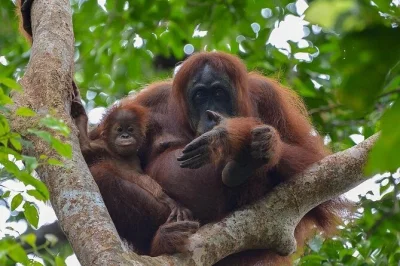 Bukit Lawang: 2-Day Jungle Trek & Ethical Orangutan EncounterWake up to Sumatra’s wild calls, trek with certified guides, spot orangutans, camp by the river, and return by tube raft. Includes meals and all permits.★ 4.98 (184)2dEN · MSUS$ 177View ›
 4-Day Jungle Trek from Medan: Orangutans & Mount LeuserFour-day trek from Medan into Mount Leuser National Park with certified English-speaking guide, camping, meals and traditional rafting back★ 4.96 (125)4dENUS$ 275View ›
 Bukit Lawang: Jungle Trek, Orangutans & River CampingWake up to jungle sounds, spot wild orangutans, and float home by river on this Bukit Lawang overnight trek—includes pickup, camping, meals, and local guide.★ 4.89 (103)2dEN · DEUS$ 117View ›
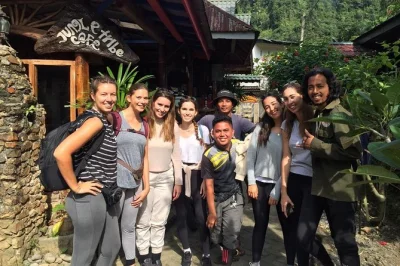 Bukit Lawang: 3-Day Jungle Trek & Rafting with WildlifeWake up to jungle sounds, spot wild orangutans, swim by waterfalls, and raft back to Bukit Lawang. Three days trekking with meals, camp, and local guides included.★ 4.96 (303)3dENUS$ 199View ›
 Mount Sibayak Sunrise Hike from Berastagi & Hot SpringSunrise hike up Mount Sibayak volcano near Medan with views of Mount Sinabung. Includes hot spring soak, snacks, tea, and air-conditioned transport. 3–4 hours hiking.★ 4.98 (129)5h–7hEN · MSUS$ 46View ›
 Mount Sibayak Sunrise Hiking: Volcano & Hot Spring TourHike Mount Sibayak volcano from Medan with a live guide, exploring steam vents and a 120-meter waterfall.★ 4.81 (79)5h–8hEN · MSUS$ 174per groupView ›
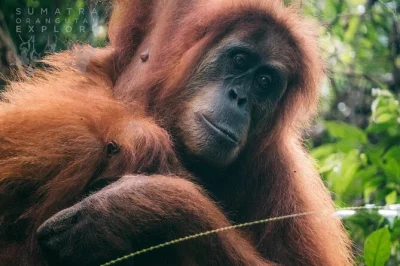 Bukit Lawang: 2-Day Jungle Trek & River Tubing with WildlifeWake up to Sumatran rainforest sounds, trek with guides, spot orangutans, and float back to Bukit Lawang by river tubing. Includes meals, permits, and camping gear.★ 4.97 (398)2dENUS$ 173View ›
 Bukit Lawang: Jungle Trek with Orangutans & River Raft ReturnWake up in Bukit Lawang, trek Gunung Leuser’s wild jungle, spot orangutans, float back by river raft. Includes Medan pickup, guide, lunch, and 2 nights stay.★ 4.99 (121)3dENUS$ 369View ›
 Bukit Lawang 3-Day Jungle Trek: Orangutan Trekking TourThree days trekking through Gunung Leuser National Park from Bukit Lawang with certified English-speaking guide, jungle camps★ 4.97 (526)3dENUS$ 199View ›
 2-day jungle trekking and rafting in Bukit LawangTwo days trekking through Gunung Leuser National Park with overnight jungle camp, private chef meals, and a river descent by traditional raft — you walk 6★ 4.94 (123)2dENUS$ 141View ›
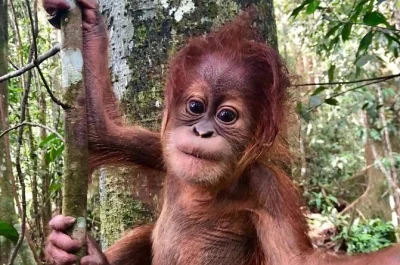 Gunung Leuser: 2-Day Orangutan Trek & Jungle CampWake to jungle sounds, trek with a guide in Gunung Leuser, spot wild orangutans, camp by the river, and float home by tube. Includes meals and pickup.★ 5.00 (7)2dENUS$ 105View ›
Top questions
What time does the trek start and end?
Pickup is around 9 am on day one. You return to your guesthouse between noon and 2 pm on day two.
Will I definitely see orangutans?
Orangutans are common in the area, especially around Bukit Lawang, but sightings are never guaranteed in the wild. Your guide will know the best spots to look.
What's the campsite like?
It's a wooden frame with a waterproof roof, mattress, blanket, pillow, and mosquito net. Basic but functional, right by the river.
Is this trek suitable for children?
Children from 5 years old are welcome. Younger children can join if your guide carries them.
What's included in the price?
Guide and assistant, all park entry permits, dinner and breakfast, tea/coffee and snacks at camp, camping equipment, and the raft ride back to Bukit Lawang.
How difficult is the trekking?
Moderate fitness is required. There's real elevation gain and the terrain is dense forest, but it's not a technical climb.
Can I do a private trek instead of a group?
Yes, private treks can be arranged on request for a more individual experience.
Medan: 2-Day Jungle Trek & Rafting Gunung Leuser
2d · EN · JV · at your hotel
from US$ 152 per person
★★★★★★★★★★4.9796 reviewsVerified traveler reviews via our booking provider
