
Rotorua: Mitai Maori Village & Hangi Feast with Haka


Sit Down to Hangi, Watch Warriors Paddle a War Canoe
You get hangi lunch, a two-hour cultural performance with haka and poi, a walk through the reconstructed village and sacred spring, and an English-speaking guide who knows the place. The fixed schedule means you show up and everything's timed — no arranging transport or figuring out what happens when. Dress warm, wear walking shoes, and plan for a small forest walk with some steps.
 2h
2h

Step-by-step itinerary
Explore Mitai Maori Village culture
- Arrive at Mitai Maori Village
- Experience traditional Pōwhiri welcome
- Watch Wero warrior challenge
- Enjoy cultural performances: Waiata, Mōteatea, Poi, Haka
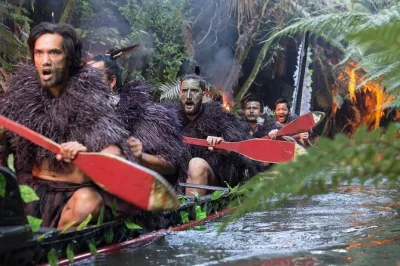
- See warriors navigate war canoe
- Explore reconstructed fortified village
- Visit natural spring Te Wai Whakarukuhanga a Atua
- Relish traditional hangi feast buffet lunch

The Experience
So you're in Rotorua and someone tells you the hangi is the thing — the earth oven, the feast, the whole reason to go to Mitai Maori Village. They're not wrong. You arrive and walk through the forest to find the waka taua (war canoe) on the Wai-o-Whiro stream, warriors actually paddling it, and the whole setup feels less like a performance space and more like you've stumbled into something that's been happening for generations. The village itself is a reconstructed pā, the old fortified settlement, and your guide walks you through how people actually lived there — not a museum explanation, just the layout, the logic of it.
The hangi comes first, and it's buffet style, which means you're not sitting through a speech before you eat. The food's been slow-cooked in the earth oven all morning, and you fill your plate and find a seat. After that, the performances start — Wero (the challenge), the Pōwhiri (formal welcome), waiata and mōteatea (songs and traditional chants), poi, and then the haka. The haka's the one everyone knows about, and yeah, it lands different when you're watching it live, close enough to feel the floor move. Two hours total for the cultural performances, and your guide speaks English the whole time, so you're not guessing what's happening.
There's a walk through the forest to see Te Wai Whakarukuhanga a Atua — the sacred spring, the waters of the Gods — and the path has some steps and uneven ground, so wear proper walking shoes. You can see it from a platform if the full forest walk isn't your thing. The whole experience includes tea and coffee, and the guide is certified, so questions get real answers, not a script. Weather doesn't stop it; they run in rain, so bring a jacket that actually works.

What’s included
Your experience includes hangi lunch served buffet style, a two-hour cultural performance featuring haka, poi, waiata (song), mōteatea (traditional chant), Wero (the challenge), and Pōwhiri (formal welcome), a walk through the reconstructed village and forest to see the sacred spring Te Wai Whakarukuhanga a Atua, viewing of the waka taua (war canoe) on the Wai-o-Whiro stream, tea and coffee, and a certified English-speaking guide throughout.
Operated by Mitai Maori Village
Is this one for you?Book this if you want to see Māori culture performed and explained in one afternoon without arranging your own transport or timing — the fixed schedule and included guide handle both, leaving you to focus on the hangi and the haka.
Traveler reviews
Compare the 5 similar options
 Rotorua: Mitai Maori Village & Hangi Feast with Haka★ 4.77 (96)2hENNZ$ 139
 Mitai Māori Village Rotorua: Cultural show & hangi dinnerMitai Māori Village evening tour in Rotorua includes waka canoe on the stream, haka and cultural performance, traditional hangi buffet★ 4.61 (1,425)3hENNZ$ 169View ›
 Māori Cultural Experience & Feast at Te Pā TūSeasonal Māori cultural celebration at Te Pā Tū with traditional welcome, fusion feast, and live performance in a forest village★ 4.76 (1,694)3hENNZ$ 280View ›
 Rotorua: Agrodome Farm Show & Tractor Tour with Animal FeedingVisit a working sheep and cattle farm near Rotorua. Hand-feed alpacas, llamas and deer, watch the sheep show, and ride an all-terrain tractor.★ 4.64 (236)2h 30mENNZ$ 65View ›
 Rotorua: Māori Evening with Hāngī Dinner & Pōhutu GeyserTe Puia's Te Pō evening includes traditional hāngī buffet, cultural performance in carved meeting house, and hot chocolate by Pōhutu Geyser. Around 2 hours 45 minutes.★ 4.69 (117)3hNZ$ 203View ›
Top questions
How long is the whole experience at Mitai Maori Village?
The cultural performances run two hours. Add time for the hangi lunch and the forest walk to the sacred spring — plan for around three to four hours total.
Is the hangi included, or do you pay extra?
The hangi buffet lunch is included in the experience.
Can you do this if you're not very fit?
The experience is suitable for all fitness levels. There is a walk through the forest with some steps and uneven ground, but you can view the sacred spring from a platform if you prefer not to walk the full path.
What if it rains?
The experience operates in all weather. Dress warmly and bring appropriate rain gear.
Is there wheelchair access?
Wheelchair access is limited for the forest walk, which has stairs at the exit. The waka canoe is viewed from a platform, and you can go a short distance into the forest to see the old pā and sacred spring.
Do children need to stay with an adult the whole time?
Infants and small children can ride in a pram or stroller, and specialized infant seats are available. The experience is designed for families.
Is the guide English-speaking?
Yes, the guide is certified and speaks English throughout the experience.
What's included in the price?
Hangi lunch, two-hour cultural performances (haka, poi, waiata, mōteatea, Wero, Pōwhiri), access to the reconstructed village and sacred spring, tea and coffee, and an English-speaking guide.
Can you get there by public transport?
Public transportation options are available nearby. Check locally for bus routes to Mitai Maori Village in Rotorua.
What should you wear?
Warm, comfortable clothing and proper walking footwear. The forest walk has uneven ground and steps, so sturdy shoes are important.
Rotorua: Mitai Maori Village & Hangi Feast with Haka
2h · EN
from NZ$ 139 per person
★★★★★★★★★★4.7796 reviewsVerified traveler reviews via our booking provider
