
Tokyo: Ramen Noodle Making Class Kappabashi Knife Experience


Tokyo ramen noodle making class with local chef in Kappabashi
You’ll knead soft Hokkaido flour, hand-cut ramen noodles with a traditional Kappabashi knife, and share smiles with locals as you choose your favorite soup flavor—then eat what you’ve made. It’s hands-on, lively, sometimes messy, but always real—a taste of Tokyo that lingers long after you leave.
 50m
50m

Step-by-step itinerary
Ramen noodle making and tasting
- Arrive at SOBAGIRI-RAKUJYO shop
- Receive instruction from the instructor
- Make noodles by hand using special knife
- Slice noodles thinly with soba-soba technique
- Choose preferred noodle type: ramen or soba
- Enjoy your handmade noodles with special soup
- Optionally learn basic soup recipe ideas

The Experience
The first thing I noticed was the clatter of knives — not threatening, just this steady sound in Kappabashi, where every shop seems to sell something sharp or shiny. Our instructor, Mr. Sato, greeted us with a bow and a grin that made me relax (even though I was about to wield a kitchen knife the size of my forearm). There were two Japanese families at the next table — their little girl kept peeking over at my dough like she was judging my technique. Honestly? She probably should have been.
I didn’t expect flour to feel so soft. We mixed Hokkaido wheat with water from Tokyo’s taps (which really does taste different — cleaner somehow), and then pressed and rolled until my arms started to ache. Mr. Sato showed us how to fold the dough and slice it into impossibly thin ribbons using this heavy soba knife. My first cuts were wonky, but he just nodded and said, “Good shape!” I think he was being polite, but I’ll take it.
After we finished slicing, we sat down at these tiny tables and picked our ramen flavors — I went for the aged miso because it smelled earthy and deep even before tasting it. The soup came out piping hot; steam fogged my glasses for a second. There was a quiet pride in eating something I’d actually made myself (even if mine looked more like tagliatelle than ramen). The Japanese dad next to me tried my noodles and gave me an approving thumbs up — then his daughter giggled when I tried to say “oishii” properly. Still think about that moment sometimes.

What’s included
- Your experience includes protective gloves and aprons for everyone in your group.
- all ingredients for making either wheat or buckwheat noodles.
- use of traditional kitchen tools including a special soba knife.
- translation support in multiple languages.
- plus you’ll sit down after class to enjoy your freshly made ramen or soba with your choice of soup and toppings—all right there in Kappabashi before heading back out into Tokyo’s bustle.
Operated by Sobagiri Rakujyo
Traveler reviews
Compare the 13 similar options
 Tokyo: Ramen Noodle Making Class Kappabashi Knife Experience★ 4.98 (122)50mJAJP¥ 8,880
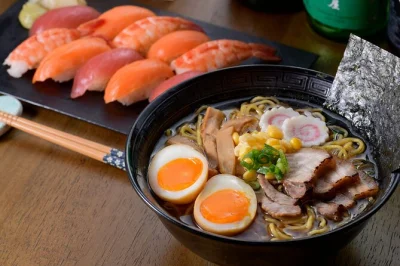 Tokyo: Ramen & Sushi Cooking Class with Sake PairingFeel the rhythm of Tokyo in a hands-on ramen & sushi cooking class, taste sake pairings, and learn from local chefs. Includes all ingredients and English guide.★ 4.98 (315)3hEN · JAJP¥ 20,000View ›
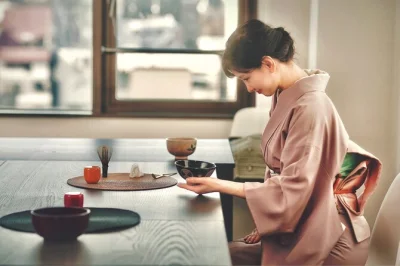 Tokyo Asakusa: Tea Ceremony with Kimono & Two-Bowl MatchaFeel the quiet beauty of a real Tokyo tea ceremony in Asakusa, try kimono dressing, taste seasonal wagashi, and prepare your own matcha—includes English guidance.★ 4.99 (220)1h 30mEN · JAJP¥ 8,820View ›
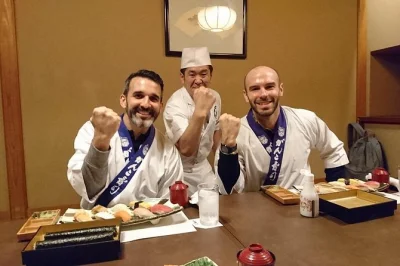 Tokyo: Tsukiji Fish Market Tour & Sushi Making with ChefWalk Tokyo’s Tsukiji Market, taste fresh flavors, and learn sushi making from a local chef. Includes guided tour, hands-on class, and lunch with tea and soup.★ 4.88 (976)4hENJP¥ 15,700View ›
 Tokyo Cruise: Senso-ji Temple & Imperial Palace Car TourPrivate 7-hour Tokyo car tour from cruise terminal visiting Imperial Palace, Tsukiji Market and Senso-ji Temple with English-speaking driver.7hJAJP¥ 120,403per groupView ›
 Tokyo: Shibuya Food Tour with Izakaya & 13 Local DishesStep into Shibuya’s lively streets on a guided food tour, tasting 13 dishes across four izakayas and bars. Includes all food, drinks, and a local guide.★ 4.91 (1,232)3hEN · JAJP¥ 13,000View ›
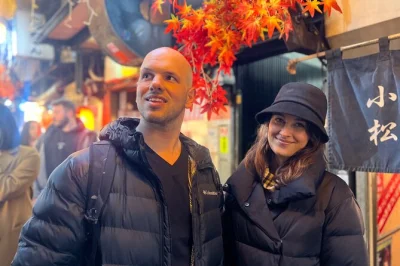 Shinjuku: Food Tour with 15 Dishes & Memory Lane StopsFollow a local guide through Shinjuku’s lively alleys, taste 15 dishes at hidden spots, see Godzilla Head, and wander Memory Lane. Includes all food & drinks.★ 4.95 (527)3hENJP¥ 13,000View ›
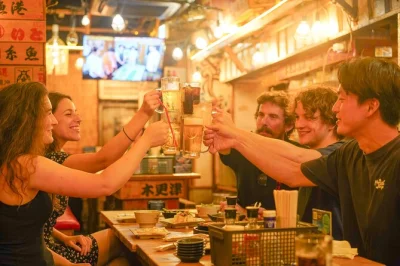 Tokyo Shinjuku Bar Hopping: Golden Gai & All-You-Can-DrinkThree izakaya bars in Shinjuku with full dinner, all-you-can-drink included, and a certified MagicalTrip guide. Small groups, local crowds, evening tour.★ 4.92 (3,982)3hENJP¥ 16,880View ›
 Tokyo Shinjuku Food Tour: 15 Dishes & Bar Hopping NightFollow a local guide through Shinjuku’s backstreets, sampling 15 Japanese dishes and 3 drinks at 4 unique Tokyo eateries. Includes reserved seats and easy meeting point.★ 4.93 (992)3hEN · JAJP¥ 12,000View ›
 Asakusa Night Walking Tour: Senso-ji Temple IlluminatedWalk through Asakusa after dark with a guide who explains the Kaminarimon Gate, the lit five-story pagoda, and the murals on Nakamise Street2hEN · JA +1JP¥ 25,000per groupView ›
 Tokyo & Mt. Fuji Private Tour: Custom Itinerary, Pickup & DriverFeel Tokyo’s pulse from Shibuya Crossing to Senso-ji Temple, with a private English-speaking driver, hotel pickup, and flexible stops—even Tsukiji Market snacks.★ 4.96 (329)9hEN · RU +1JP¥ 53,371per groupView ›
 Tokyo Shinjuku: Food Tour 13 Dishes & 4 Local EateriesSmall-group food tour in Tokyo's Shinjuku with 13 dishes at 4 local spots: izakaya, stall, traditional restaurant & gastrobar. Includes 2 drinks & expert guide.★ 4.94 (9,689)3hENJP¥ 13,000View ›
 Tokyo Tsukiji Fish Market Food and Walking TourStart at Tsukiji Hongwanji Temple, then walk the fish market with a local English-speaking guide, tasting sushi, omelets and street food at vendor stalls along the way.★ 4.94 (2,050)2hEN · JAJP¥ 5,000View ›
Top questions
How long does the ramen noodle making class take?
The workshop takes about 30 minutes from start to finish.
Is this ramen making experience suitable for children?
Yes, children can participate alongside adults; infants can stay in strollers during the class.
Are there vegetarian or vegan ramen options available?
Yes, there is a Vegan Wakame Ramen option using kombu dashi and tamari soy sauce.
Can people with buckwheat allergies join the workshop?
No, those with buckwheat allergies are not allowed to enter due to soba preparation on site.
Is the location wheelchair accessible?
Yes, all areas and surfaces are wheelchair accessible.
Do I get to eat the noodles I make?
Yes, you will enjoy eating the ramen you cut yourself at your seat after cooking.
What languages are supported during the class?
The main instruction is in Japanese but translation speakers support English, French, German, Korean and more.
Where is this ramen noodle making class held?
The class takes place in Tokyo’s Kappabashi district—famous for its kitchenware shops.
Tokyo: Ramen Noodle Making Class Kappabashi Knife Experience
50m · JA
from JP¥ 8,880 per person
★★★★★★★★★★4.98122 reviews
