


Sapa trekking tour: Rice terraces and ethnic villages adventure
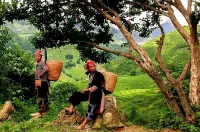


Walk past the tour buses into working rice valleys where the villages are real
A full-day trek from Sapa through Suoi Ho, Giang Cha, Lu Khau and Ta Phin village, walking 12–13km across rice terraces and pine forest to meet Black Hmong and Red Dzao ethnic communities in their traditional homes. The route stays off the main tourist paths, keeping the villages quiet and the landscape uncluttered. An English-speaking guide leads the trek, lunch is in a local restaurant, and transport by car returns you to Sapa at the end.
Step-by-step itinerary
Authentic trekking through Sapa villages
- Start trek at 9:00 am
- Trek down to pine tree forest
- Visit Suoi Ho Hmong village
- Explore traditional wooden house
- Cross rice paddy fields
- Trek to Giang Cha village
- Lunch at local restaurant
- Walk down to corn and limestone fields
- Visit rice terraces and bamboo jungle
- Discover Dzao ethnic people in Ta Phin valley
- Return to Sapa by car
What’s included
- English-speaking guide for the full day.
- lunch at a local restaurant in one of the villages.
- 0.5 liters of water per person.
- entrance fees to the villages and trek areas.
- transport by car from the villages back to Sapa at the end.
Times
- Every day 09:00
Before you book
Operated by Sapa Original Trek
Prices and times updated 2 days ago
Traveler reviews
The experience
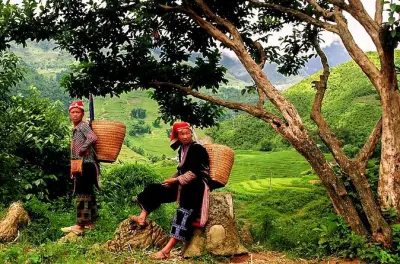
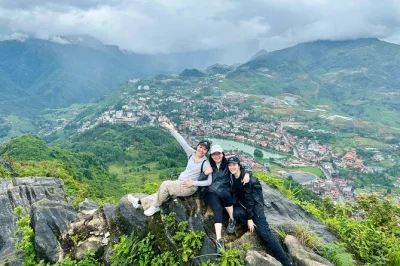
The trek starts at 9am from Sapa and descends into pine forest toward Suoi Ho, a Hmong village tucked into a small valley ringed by rice paddies. You walk through the village itself, stopping at a traditional wooden house to see how the families live and work, not a museum setup, but the actual homes where people are. From there the route crosses open rice terraces, the kind that fill photographs, then climbs to Giang Cha village, which sits above a panorama of smaller valleys. The whole morning is walking through working farmland, not a loop back to the trailhead.
Lunch happens in a local restaurant in one of the villages, and afterward the trek moves downhill through corn fields and past black limestone outcrops toward Ta Phin valley. This stretch passes through some of the most photographed rice terraces in Vietnam (the kind with steep, narrow paddies stacked up the mountainside), and you may walk through bamboo jungle depending on the exact route the guide chooses. The Red Dzao people live in Ta Phin, and you'll see their homes and fields as the day winds down. The trek covers 4–5 hours of actual walking, with an elevation gain of 200–300 meters, graded easy to medium. A car meets you at the end and drives back to Sapa, finishing by late afternoon.
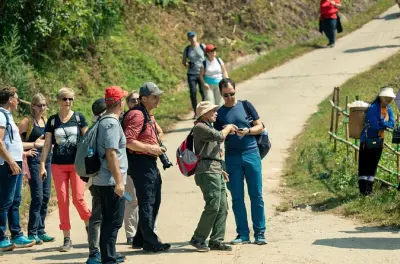
What makes this trek different from the standard Sapa day trips is the absence of tour groups on the trail itself. The villages are still villages (people are farming, not posing), and the quiet means you can actually hear the landscape and the farmers working. The route is less touristy by design, which is why it stays small and why the guide can move at a pace that lets you stop and talk to people or sit with a view instead of rushing to the next checkpoint.
Is this one for you?Book this trek if you have a free day in Sapa and want to walk through working villages and rice terraces without the tour-bus crowds. The small group size and off-the-beaten-track route mean the villages stay quiet and the farmers are actually farming, not performing for cameras, which is what makes the walk feel like you're seeing the real landscape instead of the postcard version.
Compare the 12 alternatives




Top questions
Can children come?
Yes. Ticket types: Youth (11 to 12 years); Child (6 to 10 years); Infant (under 6): free.
How far is the actual walking on this Sapa trek?
The trek covers 12–13km over 4–5 hours of walking, with an elevation gain of 200–300 meters. The route is graded easy to medium, so it suits most fitness levels, though the distance and the mountain terrain mean you should be comfortable walking for several hours.
What ethnic villages do you visit on this trek?
You walk through Suoi Ho, a Black Hmong village in a small valley, then to Giang Cha village with views over the surrounding mountains. Later you reach Ta Phin valley, where the Red Dzao people live. The trek passes through their homes and farmland, not just past them.
Is this trek crowded with other tour groups?
No, the route is deliberately off the main tourist paths, which is why the villages stay quiet and the trail feels less touristy than the standard Sapa day trips. You'll see farmers working their fields and families in their homes, not tour groups moving between photo stops.
What's included in the price for this trek?
The trek includes an English-speaking guide, lunch at a local restaurant, 0.5 liters of water per person, entrance fees, and transport by car from the villages back to Sapa at the end of the day.
What time does the trek start and finish?
The trek begins at 9am and runs for 4–5 hours of walking, so you'll be back in Sapa by late afternoon. The car ride back from the villages adds a bit more time, but the full day is done by early evening.
Can you take photographs on this trek?
Yes, the rice terraces and mountain valleys are photographed often, and the quiet trail means you have time to stop and compose shots without rushing. The operator notes it's a good trek for photography because of the landscape and the absence of crowds.
Sapa trekking tour: Rice terraces and ethnic villages adventure
5h–6h · EN
from US$ 39 per person
Next, you choose your date and number of travelers and see the final price.