
Abuja Street Food Tour: Taste 6 Dishes with a Local Guide
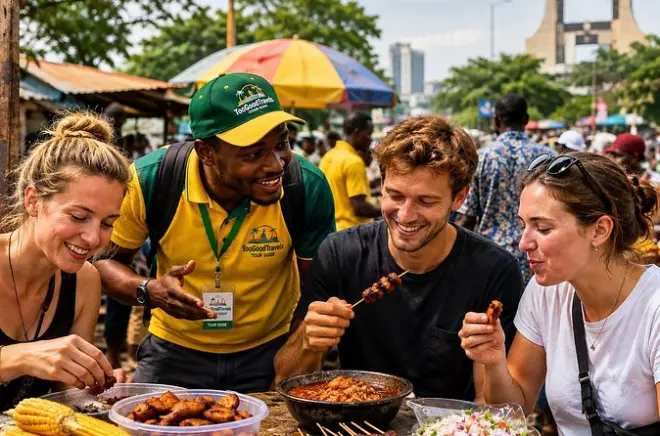


Taste your way through Abuja's markets, street stalls and restaurants in one afternoon.
A 4–5-hour food and cultural tour of Abuja with a local English-speaking guide, starting at Wuse Market and moving through six stops where you taste akara, roasted bole and fish, charcoal-grilled suya, jollof rice, pounded yam and regional soups. The tour includes bottled water, all street snacks and a seated dinner at a traditional Nigerian restaurant. Pickup and air-conditioned transport are included. You'll also visit the Arts & Crafts Village to meet local artisans and browse handmade crafts.
More experiences you might like
 Makoko Floating Community Canoe Tour in Lagos: Local GuideEvery day · First departure 08:00, last 16:00 · Up to age 69★ 4.94 (47)2h–4hEN · AR · FRUS$ 96View ›
 Abuja City Tour: National Mosque, Zuma Rock & Creative VillagesEvery day · 08:00, 10:00 and 12:00★ 4.48 (21)5h–6hENUS$ 161View ›
 Black River Southwest Tour Mauritius: Private Taxi Volcano GorgesEvery day · First departure 08:00, last 10:30★ 4.86 (223)6h–8hEN · HI · FRUS$ 100per groupView ›
 Mauritius North Tour: Private guide, five major sightsMon–Sat · 09:00★ 5.00 (10)7hEN · FRUS$ 102per groupView › Compare more experiences like this »
Step-by-step itinerary
Abuja street food and cultural tour
- Walk through Wuse Market
- Taste Akara at Akara Café
- Visit Abuja Arts & Crafts Village
- Enjoy Yahuza Suya tasting
- Taste Boli and roasted fish
- Sample traditional Nigerian dishes
The experience
Start at Wuse Market, one of Abuja's busiest traditional markets, where your guide walks you through spice stalls and fresh produce while explaining how Nigeria's diverse ethnic groups shape the country's cuisine. From there you move to Akara Café to taste fresh akara (golden bean fritters that have been a West African breakfast staple for hundreds of years) paired with agege bread and pap. The guide explains why akara is cheap, protein-rich and quick to make: black-eyed peas are soaked, peeled, blended into a smooth paste, whisked for fluffiness, then fried.
Next is the Arts & Crafts Village, where you meet local artisans and browse handmade wood carvings, bronze castings, adire tie-dye fabrics, aso oke weaving, leather work and Nigerian masks before the shops close. Then comes Yahuza Suya in Wuse II, where beef suya is grilled over charcoal and seasoned with yaji: a spice blend of ground peanuts, ginger, paprika, chili and garlic. Your guide shares how suya became Nigeria's national street food: its smoky flavor, portability and affordable price made it a bridge across ethnic and social divides, spreading from Northern nomadic herders nationwide through migration and urbanization. At Floris Garden you taste roasted plantain (boli) and roasted fish with pepper sauce, learning why this Southern Nigerian pairing combines sweet, earthy and spicy flavors in a single meal.
The tour ends at PTK Restaurant with a seated tasting of authentic Nigerian dishes from different regions: jollof rice, pounded yam, egusi soup, efo riro, vegetable soup, white soup, ofada rice with ayamase sauce, peppered goat meat and catfish pepper soup. Bottled water is provided throughout, and the air-conditioned vehicle handles transport between stops.
What’s included
- Bottled water throughout the tour.
- all street snacks at each stop.
- a seated dinner with multiple traditional Nigerian dishes at PTK Restaurant.
- air-conditioned vehicle transport between all stops.
- pickup from your hotel.
- a local English-speaking guide who shares stories about Nigerian food, traditions and daily life.
Before you book
Prices and times updated 3 days ago
Operated by Toogoodtravels Nigeria
Is this one for you?Book this if you want to sample multiple regional Nigerian dishes and meet craftspeople in one guided outing: the 4–5 hours fits a free afternoon without dominating your day.
Top questions
Can children come?
Yes. Ticket types: Youth (12 to 17 years); Child (3 to 11 years); Infant (under 3).
What is akara and why is it so popular in Nigeria?
Akara is a golden fried fritter made from whipped black-eyed pea or bean batter, and it has been a West African breakfast staple for hundreds of years. It became one of Nigeria's favorite breakfast foods because it is cheap, protein-rich, and filling. The fluffy batter is made by soaking beans, peeling them, blending them into a smooth paste, whisking in air, and frying until golden. It pairs easily with pap, custard, oatmeal or bread.
What is suya and where does it come from?
Suya is Nigeria's national street food: beef, chicken or gizzard grilled over charcoal and seasoned with yaji, a spice blend of ground peanuts, ginger, paprika, chili, garlic and other spices. It originated among the Hausa people of Northern Nigeria and spread nationwide through migration and urbanization because its smoky flavor, portable nature and affordable price made it accessible across all ethnic and social groups, turning roadside stands into community gathering spaces.
Will I have a chance to buy souvenirs on this tour?
Yes, the Arts & Crafts Village stop gives you time to meet local artisans and shop for handmade crafts including wood carvings, bronze castings, adire tie-dye fabrics, aso oke weaving, leather work, jewelry and Nigerian masks and sculptures. The stop runs from 4:10 PM to 4:50 PM, before the shops close.
What dishes will I taste at the final restaurant stop?
At PTK Restaurant you enjoy a seated tasting of authentic Nigerian dishes from different regions, which may include jollof rice, pounded yam, egusi soup, efo riro, vegetable soup, white soup, ofada rice with ayamase sauce, peppered goat meat and catfish pepper soup, subject to availability.
Is pickup from my hotel included?
Yes, pickup is included, and you travel in an air-conditioned vehicle between all six stops. The guide speaks English throughout the tour.
Abuja Street Food Tour: Taste 6 Dishes with a Local Guide
4h 30m · EN
from US$ 130 per person