
Annapurna Base Camp Trek from Pokhara: 8 days to 4,130m


Annapurna Sanctuary trek: hike to 4,130m plateau with lodge at base camp surrounded by peaks
An 8-day trek from Pokhara to Annapurna Base Camp at 4,130m with an English-speaking guide, all accommodation and meals on the trail, park entry and TIMS card, private vehicle transport from Pokhara to the trailhead and back, and emergency evacuation service arranged. The route climbs from low farm villages through rhododendron forest and past the Modi River gorge to a high plateau enclosed by the Annapurna range, with overnight stops in local lodges. Annapurna Base Camp is the only base camp in the Himalaya region with a lodge and food service at the summit itself. Children from age 5 are welcome; moderate fitness is required.
 8d
8d

Step-by-step itinerary
Day 1 — Drive and trek to Ghandruk village
- Drive from Pokhara to Nayapul
- Start trekking to Ghandruk village
- Overnight stay in Ghandruk lodge
Day 2 — Trek to Chomrong village
- Walk up to village top in Ghandruk
- Climb to Kimrong Danda ridge
- Descend to Kimrong River valley
- Climb to hilltop above Chomrong
- Descend to Chomrong village
- Overnight stay in Chomrong lodge
Day 3 — Trek to Dovan
- Descend to cross Chomrong river bridge
- Climb to Sinuwa danda ridge
- Walk through forest to Bamboo settlement
- Gradual walk to Dovan
- Overnight stay in Dovan lodge
Day 4 — Trek to Machhapuchare Base Camp
- Walk past Himalaya Hotel and Hinko cave
- Descend near Modi River
- Climb to Deurali
- Continue uphill to Machhapuchare Base Camp
- Overnight stay at base camp lodge
Day 5 — Trek to Annapurna Base Camp
- Short walk from base camp to Annapurna Base Camp
- Explore Annapurna Sanctuary plateau
- Overnight stay at Annapurna Base Camp lodge
Day 6 — Trek from Base Camp to Bamboo
- Walk downhill from Annapurna Base Camp
- Reach Bamboo settlement
- Overnight stay in Bamboo lodge
Day 7 — Trek to Jhinu Village with Hot Spring
- Return trek to Chomrong
- Divert to Jhinu village
- Visit natural hot springs
- Overnight stay in Jhinu area
Day 8 — Trek to Siwai and drive to Pokhara
- Trek downhill to Siwai
- Drive to Pokhara
- Overnight stay in Pokhara

The Experience
How do you reach a Himalayan base camp without spending two weeks on the trail? This trek compresses the climb to Annapurna Base Camp into eight days, starting with a two-hour drive from Pokhara to Nayapul, then five hours of walking to Ghandruk village on the first day. The route follows the Modi River through stone-stepped paths and past farm villages, gaining elevation gradually enough that the body adjusts without the shock of altitude sickness that catches people who fly straight into high camps.
Days two through four take you deeper into the sanctuary. You walk past Chomrong, the last permanent settlement on the route, then through dense rhododendron and bamboo forest to Dovan and Machhapuchare Base Camp at 3,700m. The guide handles navigation and knows which lodges have hot water and which villages have the best meals; you carry only a daypack. Each night you sleep in a local lodge with a bed and a meal cooked in the kitchen below. By day five, the final push to Annapurna Base Camp is just three hours and less than two kilometers, a short morning walk to the plateau at 4,130m where the lodge sits facing the North Face of Machhapuchare and the surrounding peaks.
The descent reverses the route but takes a different path on the way down. From base camp you walk six hours back to Bamboo, then six more hours to Jhinu Village, where a natural hot spring sits a half-hour downhill from the lodge — a chance to soak in warm water after days at altitude. The final day is a gentle two-hour walk through paddy fields back to Siwai, then a private vehicle returns you to Pokhara by evening. Your guide speaks English, Spanish, French or German; the trek planner provides a T-shirt, cap, duffle bag and maps. National park fees, the TIMS card required by Nepal, and emergency evacuation service are all arranged before you arrive.

What’s included
- All accommodation in mountain lodges.
- all meals on the trail from day one breakfast through day eight lunch.
- an experienced English-speaking guide (Spanish, French or German available).
- national park entrance fee and TIMS card.
- private vehicle transport from Pokhara to Nayapul and back.
- emergency evacuation service arranged in advance.
- a trekking planner T-shirt, cap, duffle bag, city map and route map.
- first aid kit and guide support throughout.
Operated by Trekking Planner Nepal
Is this one for you?Most treks to Himalayan base camps take two weeks or more, but this one reaches Annapurna Base Camp in eight days because the route climbs gradually and the lodge at the summit means you don't have to descend the same day you arrive — you get the high camp experience without the ultra-long expedition.
Traveler reviews
Compare the 13 similar options
 Annapurna Base Camp Trek from Pokhara: 8 days to 4,130m★ 5.00 (93)8dEN · DE +2US$ 899
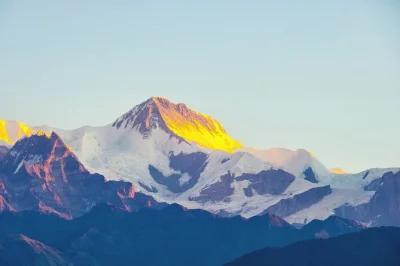 Pokhara: Sarangkot Sunrise Tour with Pickup & Local GuideSee the Himalayas light up from Sarangkot near Pokhara, with early hotel pickup, local guide, and all fees included. Experience sunrise over Annapurna range.★ 4.50 (24)2h 30mUS$ 12View ›
 4-day Ghorepani Poon Hill Trek from Pokhara: Annapurna sunriseTrek the Annapurna foothills over 4 days from Pokhara with a licensed guide, staying in local lodges and tea houses★ 4.96 (72)4dUS$ 400View ›
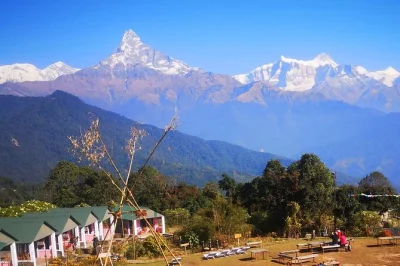 Pokhara: Trek to Australian Camp & Dhampus with guideWalk from Pokhara through forests and villages to Australian Camp and Dhampus. Includes hotel pickup, meals, and a local guide. Book your trek now.★ 4.94 (54)2dENUS$ 99View ›
 Annapurna Base Camp Helicopter Tour from Pokhara LandingHelicopter flight from Pokhara to Annapurna Base Camp with 30-minute landing, coffee, and mountain views. Hotel pickup included, under 2 hours total.★ 4.20 (5)2hEN · DE +3US$ 780View ›
 Annapurna, Langtang & Everest: Custom Trekking with Local GuideFeel the mountain air in Nepal’s Annapurna, Langtang or Everest regions on a custom trek with a local guide. Flexible routes, real village life, and all logistics handled.★ 5.00 (176)2h–1dENUS$ 40per groupView ›
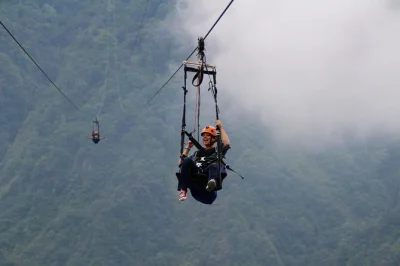 Pokhara: ZipFlyer Nepal Steepest Zipline & Sarangkot ViewsFeel the rush on Pokhara’s ZipFlyer, the world’s steepest zipline. Soar above Sarangkot with Annapurna views, hotel pickup included for easy adventure.★ 4.86 (657)3hENUS$ 70View ›
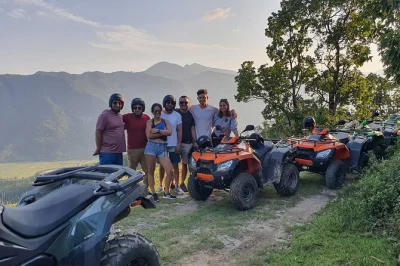 Pokhara: ATV Adventure Tour with Sarangkot Hills & Fewa Lake ViewsFeel the rush of an ATV ride in Pokhara, climb Sarangkot Hill, enjoy local lunch with lake views, and get professional photos. Includes all fees and bottled water.★ 4.84 (219)2hEN · HIUS$ 56View ›
 Paragliding in Pokhara: Fly with a pilotParagliding in Pokhara with hotel pickup and professional pilot—fly above the Pame valley and Himalayan foothills★ 4.99 (103)2h 30mEN · HI +1US$ 75View ›
 Pokhara: Upper Seti White Water Rafting with PickupFeel the rush of Pokhara’s Upper Seti River on a half-day white water rafting trip, with private transport, local guides, and photos included for memories.★ 4.96 (100)4hEN · HIUS$ 45View ›
 Pokhara Full-Day Private Tour: Sarangkot Sunrise & Phewa LakePrivate full-day tour of Pokhara with Sarangkot sunrise, hotel pickup and English-speaking guide—see Mahendra Cave, Bat Cave★ 4.78 (72)7hUS$ 58View ›
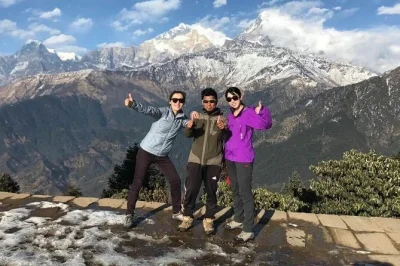 Poon Hill Trek from Pokhara: Sunrise Hike & Gurung VillagesWake up to sunrise over Annapurna, trek rhododendron forests, meet Gurung locals, and enjoy lunch in Ghandruk. Includes permits, guide, and pickup.★ 4.98 (136)4dENUS$ 321View ›
 Annapurna Basecamp helicopter tour from Pokhara: Land at 4,130mHelicopter tour from Pokhara to Annapurna Basecamp with hotel pickup, coffee at the landing site, and time on the ground surrounded by the Annapurna ranges.★ 5.00 (17)2h–3hENUS$ 769View ›
Top questions
How high is Annapurna Base Camp and will I get altitude sickness?
Annapurna Base Camp sits at 4,130m (13,550 feet), high enough that some people feel the altitude, but the trek climbs gradually over five days before reaching it, which gives your body time to adjust. The guide watches for symptoms and can slow the pace or descend if needed; emergency evacuation service is arranged in advance.
What do I eat and where do I sleep each night?
You sleep in local lodges in the villages along the route — Ghandruk, Chomrong, Dovan, Machhapuchare Base Camp, and Annapurna Base Camp itself — each with a bed and basic rooms. All meals are included and cooked in the lodge kitchens; the menu is simple (dal, rice, noodles, vegetables) but plentiful, and the lodges can accommodate vegetarian diets. Annapurna Base Camp is the only base camp in the Himalaya region with a lodge and food service at the summit.
What's the walking like day to day?
Days range from three to six hours of walking. The first day is five hours from Nayapul to Ghandruk, climbing stone steps and farm paths. Days two through four average six hours each, winding through forest and along the Modi River gorge. Day five to base camp is only three hours and mostly level. The descent takes six hours each on days six and seven, then two hours on the final day through paddy fields.
Do I need to be very fit to do this trek?
Moderate fitness is required — you should be comfortable walking for several hours a day on uneven terrain and at altitude. The trek is not technical climbing, and the gradual ascent over five days helps your body adapt, but it is not a casual walk. If you have concerns about your fitness level, discuss them with the guide when you arrive in Pokhara.
What's included in the price and what do I need to pay for separately?
The trek includes all accommodation and meals on the trail, the English-speaking guide, national park entrance fees, the TIMS card, private vehicle transport from Pokhara to the trailhead and back, a trekking planner T-shirt and cap, duffle bag, and emergency evacuation service. You pay separately for meals and lodging in Pokhara and Kathmandu before or after the trek, personal expenses like laundry and phone calls, travel insurance, and tips for the guide and driver if you choose to give them.
Can children do this trek?
Children from age 5 are welcome on the trek. The pace is set by the group and the guide, and younger children may find the long walking days tiring, but many families do the trek successfully. Discuss your child's fitness and hiking experience with the operator when booking.
Annapurna Base Camp Trek from Pokhara: 8 days to 4,130m
8d · EN · DE +2 · at your hotel
from US$ 899 per person
★★★★★★★★★★5.0093 reviewsVerified traveler reviews via our booking provider
