
Annapurna Base Camp Trek: 13 Days from Kathmandu
Thirteen Days in the Annapurna Sanctuary
You trek from Kathmandu through five ecosystems to Annapurna Base Camp at 4,130 meters over thirteen days, with a guide, permits, lodging and meals included. The route climbs through rhododendron forest, crosses Poon Hill at sunrise, and descends through bamboo and pine back to the valley. Airport transfers, two hotel nights in Kathmandu and two in Pokhara, plus eight nights in mountain lodges, are part of the package. You return with an adventure certificate and the kind of fatigue that feels earned.
Compare the 12 alternatives
 Annapurna Base Camp Trek: Local Guides, Permits & MealsEvery day · 06:15 · From age 9★ 4.99 (107)12dENUS$ 800View ›
 Annapurna Base Camp Trek from Kathmandu or Pokhara: 5 DaysEvery day · 06:45 and 07:45 · From age 7★ 5.00 (176)5dEN · HIUS$ 200View ›
 Annapurna Base Camp Trek from Kathmandu: 14 daysEvery day · first departure 06:30, last 14:15 · From age 10★ 5.00 (98)14dEN · HIUS$ 925View ›
 Chitwan National Park tour: Jungle tower night stayEvery day · 06:15 · All ages★ 4.86 (44)4dENUS$ 350View ›
 14-Day Everest Base Camp Trek from KathmanduEvery day · 06:15 and 08:00 · From age 8★ 4.98 (1,657)14dENUS$ 1,800View ›
 Annapurna Base Camp Trek from Pokhara: 13 DaysEvery day · 07:00 · From age 8★ 5.00 (33)13dENUS$ 1,350View ›
 Annapurna Base Camp Trek Kathmandu: 10-Day Himalayan TrekEvery day · 01:15 · 18–65 years★ 4.99 (145)12dUS$ 935View ›
 14-Day Annapurna Base Camp Trek from KathmanduEvery day · 06:00, 06:45 and 07:45 · 18–70 years★ 4.96 (99)14dENUS$ 850View ›
 Everest Base Camp Trek: 14 Days Kathmandu & Mount EverestEvery day · first departure 00:45, last 23:45 · From age 8★ 4.93 (101)14dENUS$ 999View ›
 Annapurna Base Camp Trek: 10 Days from KathmanduEvery day · 06:15 · 16–65 years★ 4.98 (40)10dENUS$ 848View ›
 Annapurna Circuit Thorong La Pass Trek: 15 Days from KathmanduEvery day · 06:00 · From age 15★ 4.94 (16)15dENUS$ 1,750View ›
 17-day Gokyo to Everest Base Camp Trek from KathmanduEvery day · 08:00 · From age 12★ 4.99 (123)17dENUS$ 2,200View › Compare more experiences like this »
Step-by-step itinerary
Day 1: Arrival and briefing in Kathmandu
- Arrive at Kathmandu airport
- Transfer to hotel
- Trekking guide briefing
- Prepare trekking gear
Day 2: Drive to Pokhara and relax
- Drive from Kathmandu to Pokhara
- Stop for lunch along Trisuli River
- Check in hotel in Pokhara
- Relax at Phewa Lake
- Enjoy boating or lakeside evening
Day 3: Start trek to Tikhedhunga
- Drive to Nayapul
- Trek to Birethanti village
- Climb to Tikhedhunga
Day 4: Trek to Ghorepani
- Climb stone staircase to Ulleri
- Trek through oak and rhododendron forest
- Reach Ghorepani
Day 5: Hike Poon Hill and trek Tadapani
- Early hike to Poon Hill summit
- View sunrise and mountain panorama
- Climb ridge to Deurali
- Descend to Tadapani
Day 6: Trek to Sinuwa village
- Steep downhill through rhododendron forest
- Reach Gurung community village
- Trek to Sinuwa
Day 7: Trek to Deurali
- Descend to Sinuwa Khola
- Climb to Khuldighar
- Walk through bamboo and rhododendron forest
- Arrive at Deurali
Day 8: Trek to Annapurna Base Camp
- Climb through forest crossing Hinku Cave
- Pass Machhapuchhre Base Camp
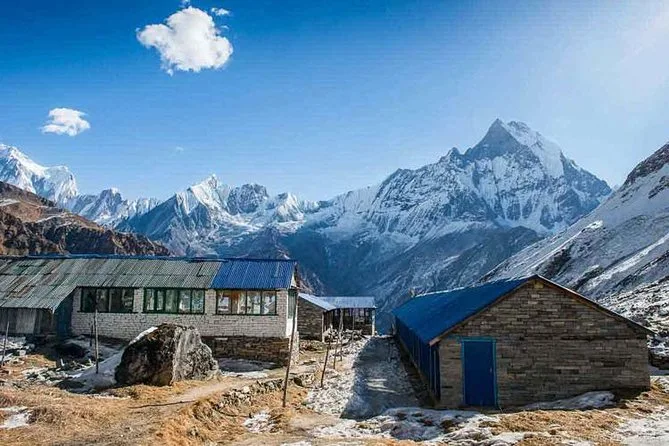
- Reach Annapurna Base Camp
- Enjoy mountain views
Day 9: Descend to Bamboo village
- Trek downhill from base camp
- Arrive at Bamboo
Day 10: Trek to Jhinu Danda hot springs
- Uphill trek to Kuldighar
- Downhill to Chhomrong Khola
- Climb stone steps to Chhomrong
- Descend to Jhinu Danda
- Visit hot springs
Day 11: Trek to Nayapul and drive Pokhara
- Trek to Nayapul
- Enjoy landscape views
- Lunch on the way
- Drive to Pokhara
- Check in hotel
Day 12: Return to Kathmandu and farewell
- Travel back to Kathmandu by bus
- Rest or walk around Thamel
- Farewell dinner with cultural dance
Day 13: Departure from Nepal
- Transfer to Kathmandu airport
- Depart Nepal
The experience
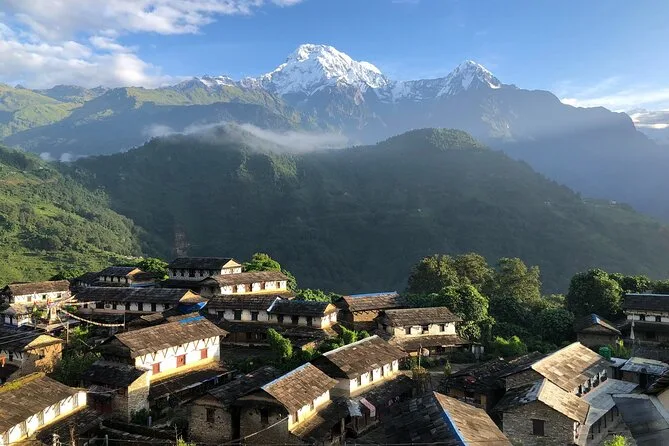
The first surprise is how fast the landscape changes. You leave Kathmandu in traffic, drive seven hours following the Trisuli River, and suddenly you're in Pokhara looking out at the lake, the mountains already visible on the far side. That's when it hits you. This isn't a weekend hike. The trek itself doesn't start until day three, which means you have time to adjust, to let your body understand what's coming. Your guide meets you at the hotel in Kathmandu and walks through the route, the altitude gains, what to pack. He carries the first aid kit the whole way.
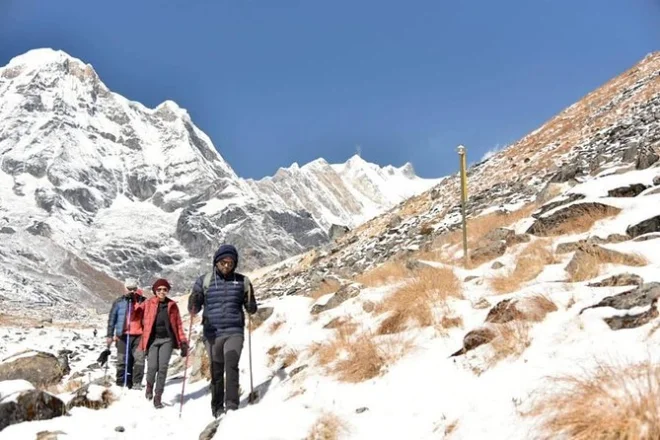
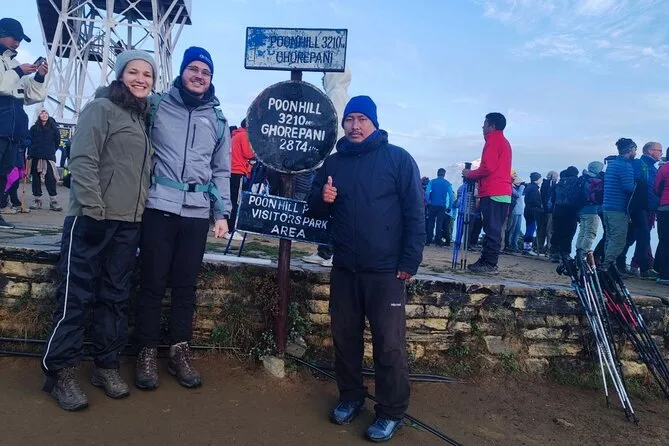
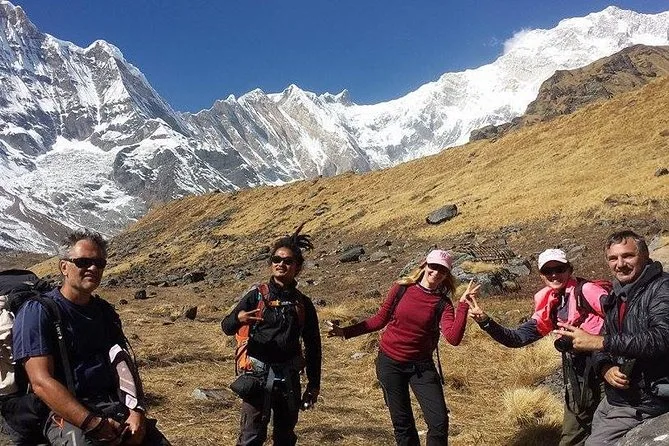
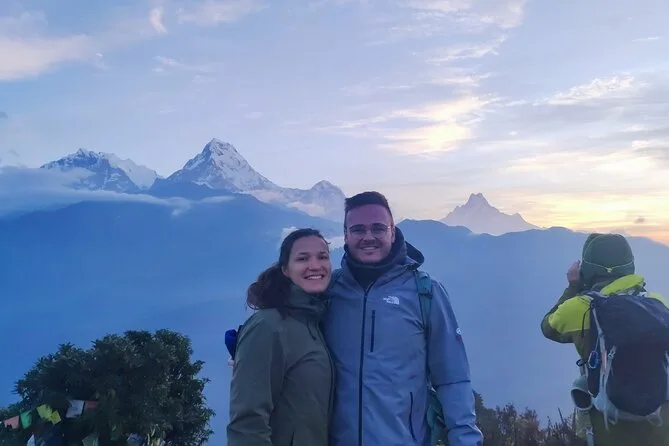
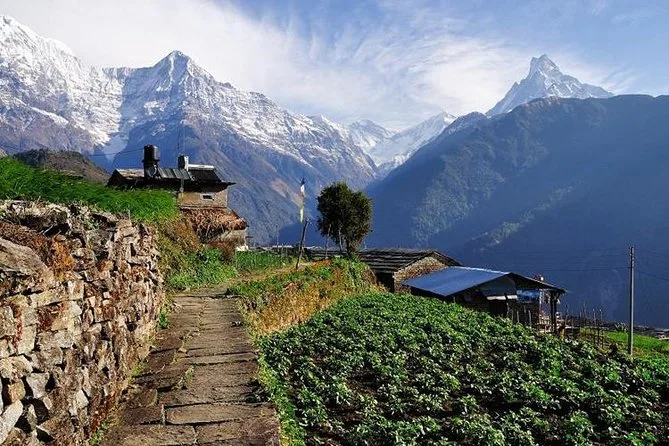
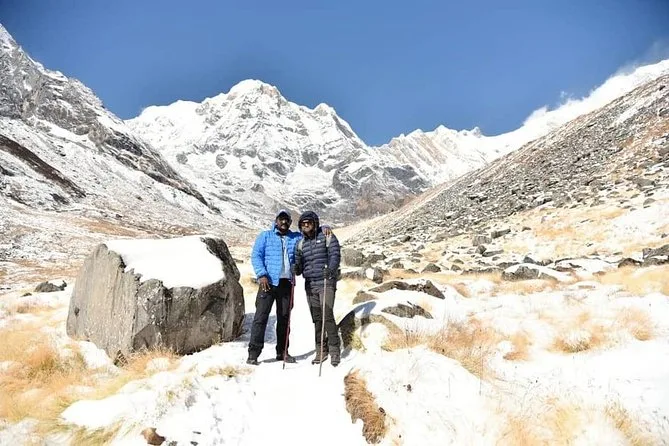
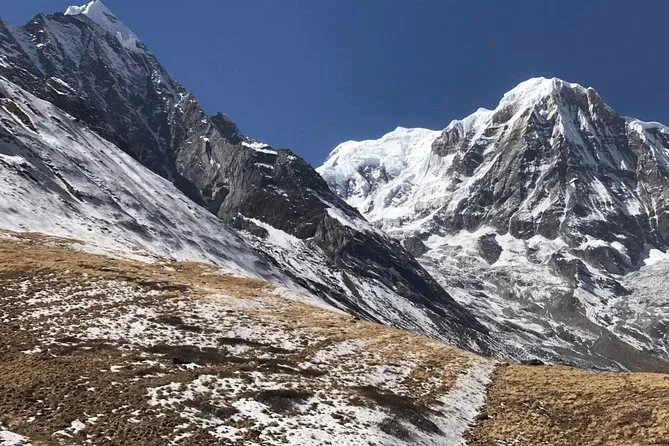
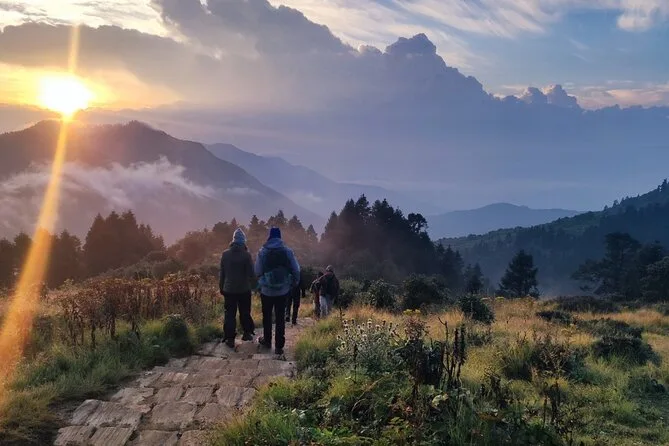
The climb to Poon Hill on day five is the moment most people remember. You start before dawn, hike forty-five minutes uphill through rhododendron forest, and reach 3,210 meters just as the sun hits the Himalayas. Annapurna, Dhaulagiri, Machhapuchhre: the peaks line up in front of you, unobstructed, and the light is still soft. From there the trail drops and climbs through bamboo and pine, crossing into the Annapurna sanctuary itself. The trek to Annapurna Base Camp takes two more days, and by the time you reach 4,130 meters, you've walked through five different ecosystems. The north-facing slopes are dry, the south-facing ones thick with forest. It's the altitude and the depth of the valley that makes this possible. You're not just climbing, you're moving through entirely different worlds stacked on top of each other.
The return is downhill, which sounds easier until your knees remind you otherwise. Day nine brings you to Jhinu Danda, where there are hot springs a twenty-minute walk below the lodge: that part is real relief. You retrace your steps to Nayapul, catch a bus back to Pokhara, then a tourist bus back to Kathmandu. The whole thing is thirteen days: two nights in Kathmandu before, two nights in Pokhara, eight nights in local tea houses on the trail itself. Airport pickup and drop-off are included, so you don't negotiate a taxi when you land. On the last night in Kathmandu there's a farewell dinner at a local restaurant with cultural dancing. It's the kind of thing that sounds touristy until you're actually there and it's not.
You need moderate fitness for this. The itinerary doesn't hide that. The steep sections are steep, the altitude is real, and some days you're walking six or seven hours. But the pace is built around acclimatization, not speed. The guide knows the trail, knows the lodges, and knows how to read how you're doing. If you've hiked before and your cardiovascular system is solid, this is doable. If you have spinal issues, poor heart health, or you're pregnant, the operator recommends against it. Those aren't small print warnings, they're real constraints. Vegetarian meals are available if you mention it when you book.
What’s included
Your thirteen days include airport pickup and drop-off by private vehicle, round-trip transport between Kathmandu and Pokhara by tourist bus, eight nights in local mountain lodges with meals, two nights in a three-star hotel in Pokhara with breakfast, two nights in a three-star hotel in Kathmandu with breakfast, one experienced trekking guide for the entire trek, all trekking permits and entrance fees, first aid supplies carried by the guide, a welcome dinner at a local restaurant with cultural dance performance in Kathmandu, a farewell dinner on your last evening, and an adventure certificate upon completion. Vegetarian meals are available upon request at booking.
Before you book
Prices and times updated 8 days ago
Operated by Glorious Himalaya Trekking Pvt. Ltd.
Is this one for you?Right for trekkers with moderate fitness who want a full Himalayan experience without arranging permits, transport, or lodging themselves. The thirteen days are what lets you acclimatize properly and move through five different ecosystems instead of rushing to the summit and back.
Traveler reviews
Top questions
How many days is the Annapurna Base Camp Trek?
Thirteen days total, including two nights in Kathmandu before the trek, two nights in Pokhara, and eight nights in mountain lodges during the trek itself.
What is the highest altitude reached?
Annapurna Base Camp sits at 4,130 meters (13,550 feet). Poon Hill, a viewpoint on day five, is 3,210 meters.
Is a guide included?
Yes, one experienced trekking guide is included for the entire trek. The guide carries first aid supplies and leads the group through the route.
What accommodation is provided?
Eight nights in local tea houses and lodges on the trail, two nights in a three-star hotel in Pokhara, and two nights in a three-star hotel in Kathmandu, all with breakfast included.
Are meals included?
Breakfast is included at all hotels. Dinner is included. Lunch is provided on trekking days and on the drive days. Vegetarian options are available if requested at booking.
What is included in the price?
Airport pickup and drop-off, all transport between Kathmandu and Pokhara, lodging, meals as noted, trekking permits, entrance fees, a guide, and an adventure certificate upon completion.
Is this trek suitable for beginners?
You need at least moderate physical fitness. The trek involves steep sections and high altitude, but the pace is designed for acclimatization. If you have cardiovascular issues, spinal injuries, or are pregnant, it is not recommended.
How much walking is involved each day?
Days vary from four to seven hours of trekking. Some days are steep climbs, others are downhill or more gradual. The itinerary allows rest days and acclimatization time.
Can children go on this trek?
Children are allowed but must be accompanied by an adult. The altitude, duration, and physical demands mean children should be experienced hikers and in good health.
What happens on the last day?
The operator drops you at Kathmandu International Airport for your departure flight. A farewell dinner with cultural dance performance is included on your last evening in Kathmandu.
Annapurna Base Camp Trek: 13 Days from Kathmandu
13d · EN · at your hotel
from US$ 650 per person
5.0034 reviewsVerified traveler reviews via our booking provider