
Hiroshima & Miyajima: Peace Memorial & Shrine Private Tour

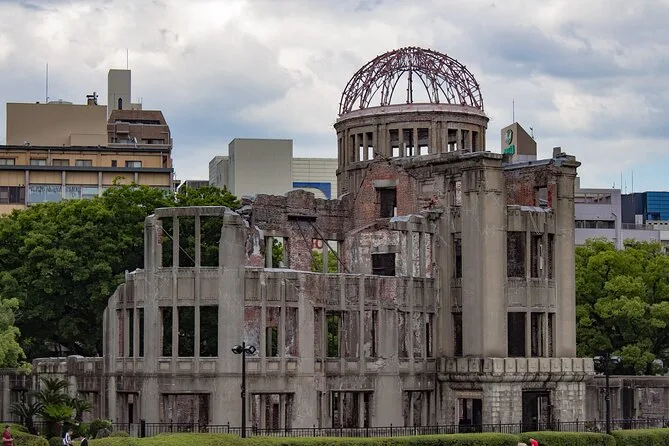
Two Cities, One Day: Hiroshima's Peace Sites & Miyajima's Sacred Shrine
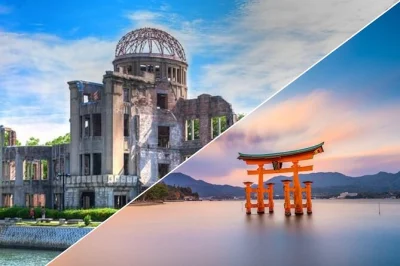
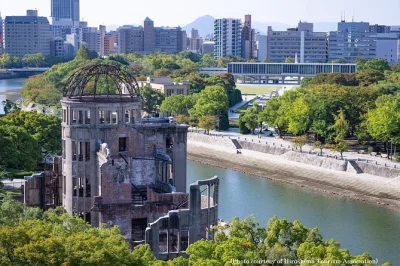
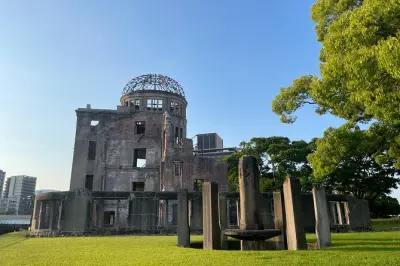
You meet your Spanish-speaking guide at Hiroshima Station at 9am and spend the morning in the Peace Memorial Park, standing in front of the Genbaku Dome and moving through the museums at your own pace. After lunch on your own, you take the ferry to Miyajima Island and walk through the Itsukushima Shrine, the Five-Story Pagoda, and the Toyokuni Temple. The tour handles transport and timing. You handle the reflection.
Compare the 12 alternatives
 Hiroshima & Miyajima Private Tour: 8-Hour Local GuideEvery day★ 4.95 (92)8hEN · JA +1JP¥ 27,000View ›
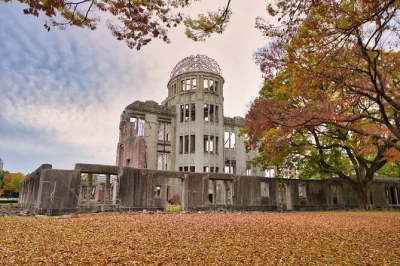 Hiroshima and Miyajima Day Tour: Peace sites and floating shrineEvery day · 10:00 · All ages★ 4.72 (155)7h 40mENJP¥ 18,000View ›
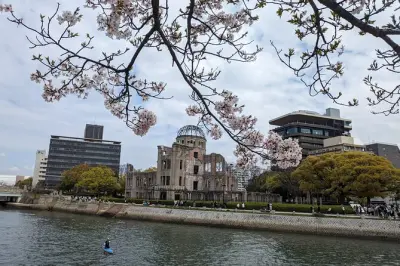 Hiroshima Peace Memorial Private Tour: Atomic Bomb DomeEvery day except Friday · first departure 10:00, last 15:00 · All ages★ 4.84 (56)3hEN · HI +1JP¥ 13,731View ›
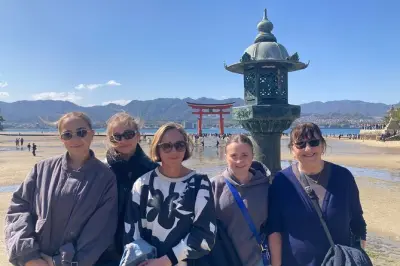 Hiroshima Private Tour: Peace Memorial & Miyajima IslandEvery day · first departure 08:00, last 09:30 · All ages★ 4.89 (57)7h 30mENJP¥ 29,000View ›
 Hiroshima & Miyajima Private Tour: Customizable 8-Hour ItineraryEvery day · first departure 07:30, last 14:00 · All ages★ 4.94 (1,579)8hEN · JAJP¥ 30,900View ›
 Hiroshima & Miyajima Full-Day Private Tour with Licensed GuideEvery day · first departure 09:00, last 11:00 · From age 4★ 5.00 (13)8hENJP¥ 36,992View ›
 Hiroshima Peace Park Private Walking Tour with Licensed GuideEvery day · first departure 09:00, last 13:00 · All ages★ 4.95 (554)4hEN · JAJP¥ 18,000View ›
 Hiroshima & Miyajima Private Tour: Peace Park & Floating ToriiEvery day · first departure 08:00, last 16:00★ 4.80 (148)4h–8hENJP¥ 24,230View ›
 Hiroshima & Miyajima Private Tour: 7 hours with local guideEvery day · first departure 09:00, last 13:00 · All ages★ 4.96 (176)7hENJP¥ 18,000View ›
 Hiroshima Miyajima Tour: Peace Museum & Floating ShrineEvery day · first departure 08:00, last 12:00 · All ages★ 5.00 (1)7hENJP¥ 48,461View ›
 Hiroshima & Miyajima: Peace Memorial, Shrine & Island Day TripEvery day · 10:10 · All ages★ 4.63 (516)8h 20mENJP¥ 25,000View ›
 Private Hiroshima Peace Memorial Tour with Local GuideEvery day · first departure 09:00, last 15:00 · All ages★ 5.00 (72)3hEN · JAJP¥ 17,500View › Compare more experiences like this »
Step-by-step itinerary
Visit Hiroshima and Miyajima Island
- Meet at Hiroshima Station
- Visit Hiroshima Peace Monument and Park
- See Genbaku Dome memorial
- Free time for lunch
- Travel to Miyajimaguchi Pier
- Board ferry to Miyajima Island
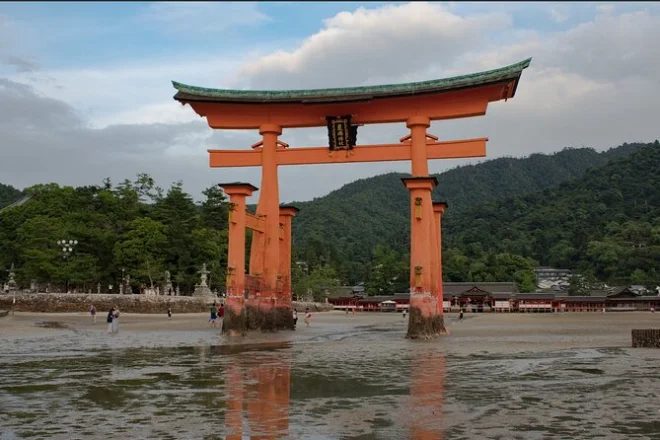
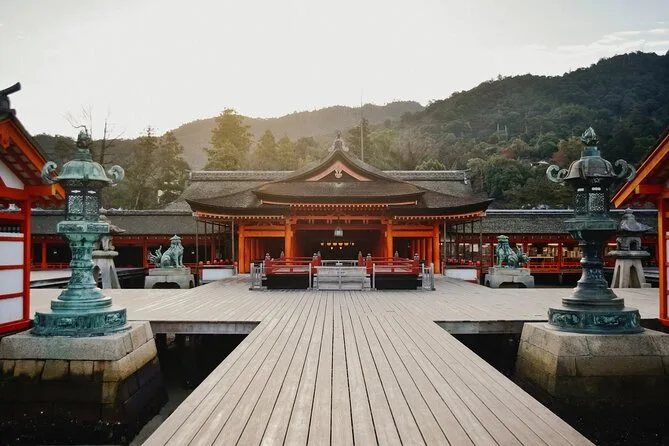
- Walk through Itsukushima Shrine and Grand Torii
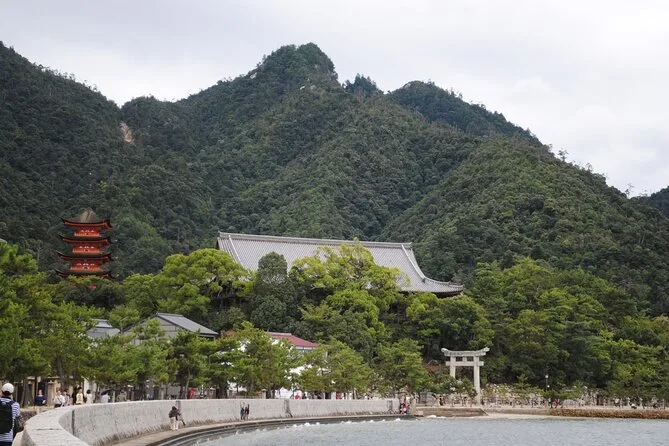
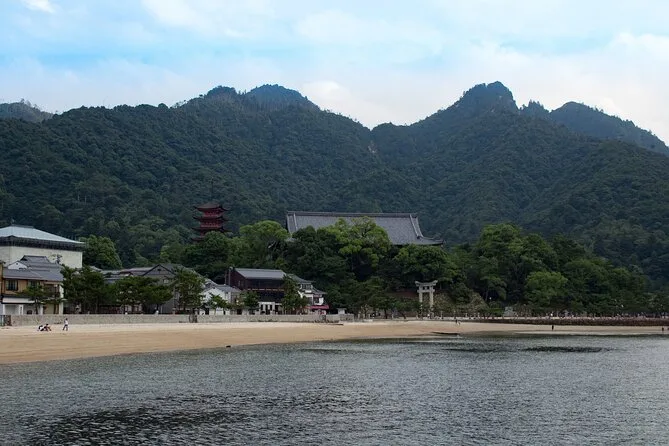
- Visit Goju-no-to Pagoda
- Explore Toyokuni Temple
The experience
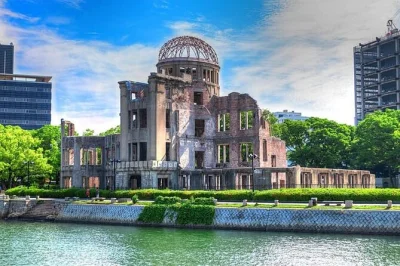
You've just stepped off the train at Hiroshima Station. It's 9am, and your guide is waiting. The city moves around you: commuters, school groups, the ordinary rhythm of a place that rebuilt itself. This is where the day begins, and it's deliberate. You'll walk into the Peace Memorial Park on foot, moving through the grounds where the Genbaku Dome stands as it has since 1945, its skeletal frame still holding the shape of the moment the atomic bomb fell. The park spreads around it with museums and monuments, each one asking you to stop and look. You're not rushed through. The space itself does the work. After that weight, you'll have time to eat on your own at a local restaurant. The guide steps back and lets you breathe.
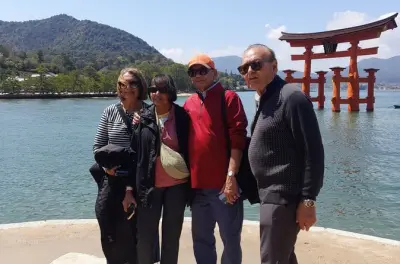
Then comes the shift. You head to Miyajimaguchi Pier and board a ferry. The water crossing takes minutes, but it feels like moving between worlds. Miyajima Island appears, and you walk straight into the Itsukushima Shrine, where the Grand Torii gate rises from the water like a threshold. The Goju-no-to Pagoda, the Five-Story Pagoda, sits nearby, its Buddhist geometry a counterpoint to the Shinto shrine. The Toyokuni Temple, built in 1594 to honor Toyotomi Hideyoshi, anchors the island's history in a different register. Your Spanish-speaking guide moves you through these spaces, explaining the architecture, the dedications, the layers of meaning. You're walking, not sitting in a bus. You're using Japan's public transport system, which means you're moving like a local, not like a tourist in a bubble.
The day holds two very different kinds of silence: one heavy with history, one peaceful and spiritual. Both matter. Bring cash. Not all places take cards, and you'll want to eat when hunger hits, not when a schedule says so. The ferry runs regularly, the walking is steady but manageable, and the guide handles the logistics so you don't have to figure out which train or which pier. If you're traveling with an infant, they'll need to sit on your lap during the ferry ride.
What’s included
- Your day includes a Spanish-speaking guide, entry to the Peace Memorial Park and its museums, the ferry crossing to Miyajima Island, and access to the Itsukushima Shrine, Goju-no-to Pagoda, and Toyokuni Temple.
- You arrange and pay for your own lunch at a local restaurant.
- Public transport is used throughout the tour.
- Cash is necessary for certain attractions and food.
Before you book
Prices and times updated 8 days ago
Operated by Toursnippon
Is this one for you?Right for travelers who speak Spanish and want to understand Hiroshima's peace history and Miyajima's spiritual sites without managing transport logistics themselves. The guide handles the ferry, the timing, and the route so you can focus on what you're seeing.
Traveler reviews
Top questions
Can children come?
Yes. Ticket types: Child (under 8): free.
What time does the tour start?
9am at Hiroshima Station.
Is lunch included?
No. You have free time to eat at a local restaurant on your own during the Hiroshima portion of the day.
Do I need to speak Spanish?
No. The guide speaks Spanish, so if you speak Spanish, the tour is conducted in that language. Confirm the language of your tour when booking.
Is the ferry to Miyajima included?
Yes. Ferry transport to Miyajima Island is included in the tour.
Can I use a credit card for food and attractions?
Not always. Bring cash. Some Japanese services don't accept cards.
How much walking is involved?
The tour is on foot and uses public transport. It's suitable for all fitness levels, but you'll be walking through the Peace Memorial Park and around Miyajima Island.
Can I bring an infant?
Yes. Infants must sit on an adult's lap, including during the ferry ride.
How long is the tour?
The itinerary spans a full day, starting at 9am. Exact end time depends on ferry schedules and your pace through the sites.
Hiroshima & Miyajima: Peace Memorial & Shrine Private Tour
8h · ES
from JP¥ 28,322 per person
5.001 reviewVerified traveler reviews via our booking provider