


Gobustan & Ateshgah Day Tour: Mud Volcanoes & Fire Temple
Walk through Stone Age caves, wade into mud volcanoes, stand where three religions converged
A full-day guided tour from Baku covers five major sites across Azerbaijan's Absheron Peninsula: the UNESCO-protected Gobustan rock art reserve with its open-air and modern museums, the mud volcanoes, Bibi-Heybat Mosque, Ateshgah Fire Temple, and Yanar Dag's burning hillside. Hotel pickup and a professional guide in English, Russian or Turkish are included. Entry fees to the fire temple and Yanar Dag, the mud volcano complex, and lunch are separate.
Step-by-step itinerary
Explore Azerbaijan's natural and cultural sites
- Visit Gobustan Rock Art Reserve
- See mud volcanoes
- Tour Bibi-Heybat Mosque
- Lunch at local restaurant
- Visit Ateshgah Fire Temple
- See Yanar Dag eternal flames
- Learn about Baku's first oil well
- Gobustan Rock Art Cultural Landscape 1h 30m
- Bibi-Heybat Mosque 30m
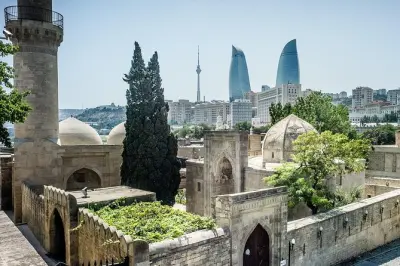
- Baku Old City 1h
- Ateshgah Fire Temple 50m
- Yanar Dag 30m
What’s included
- Comfortable vehicle.
- professional guide in English, Russian or Turkish.
- hotel pickup and drop-off in the Old City.
- entry to Gobustan's open-air and modern museums and Bibi-Heybat Mosque.
- discount card for Sheker Bura shop.
Times
- Every day 09:00
Before you book
Operated by Smile Azerbaijan Tour
Prices and times updated today
Need assistance?Message us on WhatsApp or by emailTraveler reviews
The experience
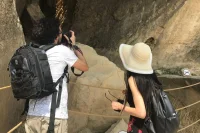
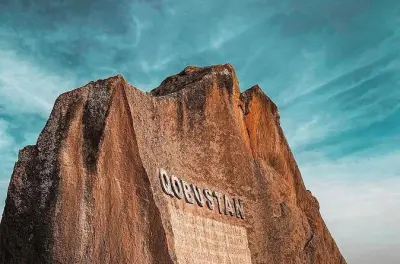
Gobustan opens the day: a UNESCO site since 2007 where two museums sit side by side. The open-air one lets you walk through actual caves carved into the rock face and see ancient paintings left by people who lived here thousands of years ago. The second museum, built in 2011, uses interactive displays to show how those primitive communities hunted and ate. It is a direct line from Stone Age life to the modern building next to it.
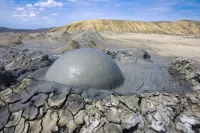
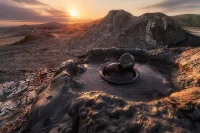
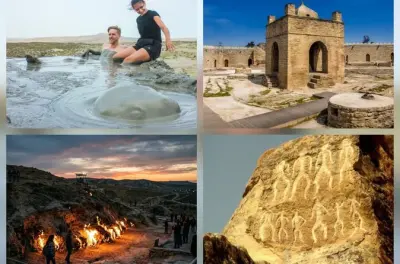
The mud volcanoes come next. Azerbaijan holds about 40% of the world's 354 mud volcanoes, and their surface looks so otherworldly that visitors compare it to Mars. You can walk out onto the mud itself. It is cool and useful for skin and joints, though you'll want to bring clothes you don't mind staining. From there, the tour stops at Bibi-Heybat Mosque, a white-domed structure on the Caspian shore that holds the tomb of relatives of Prophet Muhammad. A local restaurant break follows, where Azerbaijani dishes are served before the afternoon leg begins.
Ateshgah Fire Temple is where fire-worship, Zoroastrianism and Hinduism converged centuries ago. The temple sits on a site where natural gas seeps from the ground and burns continuously: a phenomenon that shaped religious belief across the region. Yanar Dag, the final stop, is the same phenomenon on a hillside: flames that have burned for thousands of years, documented by Marco Polo and ancient historians. The tour ends with drop-off in Baku's Old City. The whole day runs 8 to 9 hours, and a guide stays with the group throughout.
Is this one for you?Hotel pickup means you don't arrange transport to the starting point, which matters if you're staying away from the main roads or without a rental car. The guide handles the route and timing across five sites in a single day, so the stops hold together without you building the schedule yourself.
Compare the 12 alternatives





Top questions
What languages is the tour guided in?
Live guide in English, Russian and Turkish.
Can children come?
Yes. Ticket types: Child (under 5).
What happens if it rains?
It may be canceled due to bad weather. If that happens, you're offered another date or a refund. Free cancellation up to 24 h before the start.
What's inside the Gobustan museum, and can I walk through the actual caves?
Gobustan has two museums on the same reserve. The open-air museum lets you walk through real caves with ancient rock paintings still visible on the walls, showing how Stone Age people lived. The modern museum, built in 2011, uses interactive displays to explain the same period and how those communities hunted and prepared food.
Are the mud volcanoes safe to walk on, and what do they feel like?
The mud volcanoes are safe to walk on and cool to the touch. The mud is mineral-rich and used traditionally for skin and joint health, though it stains clothes. Azerbaijan has about 354 of the world's 800 mud volcanoes, and their surface resembles landscapes from space films.
What's the difference between Ateshgah Fire Temple and Yanar Dag?
Ateshgah Fire Temple is a built structure on a site where natural gas burns from the ground, and it was a place of worship for three religions: fire-worship, Zoroastrianism and Hinduism. Yanar Dag is a hillside where flames burn continuously from natural gas seeping below, a phenomenon documented by Marco Polo and historians dating back 4,000 to 5,000 years.
Is lunch included in the tour price?
Lunch is not included. The tour stops at a local restaurant in the Baku Old City area where you can order Azerbaijani dishes, but the cost is separate from the tour price.
Do I need to pay extra for entry to the sites?
Entry to Ateshgah Fire Temple and Yanar Dag costs 15 AZN total, and entry to the mud volcano complex costs 15 AZN. Entry to Gobustan and Bibi-Heybat Mosque are included in the tour. Qobustan entry is 10 AZN and depends on which tour option you choose.
Gobustan & Ateshgah Day Tour: Mud Volcanoes & Fire Temple
8h–9h · EN +2
from US$ 42 per person
Next, you choose your date and number of travelers and see the final price.