
Bukhara One Day Tour: UNESCO City Monuments & Silk Road History
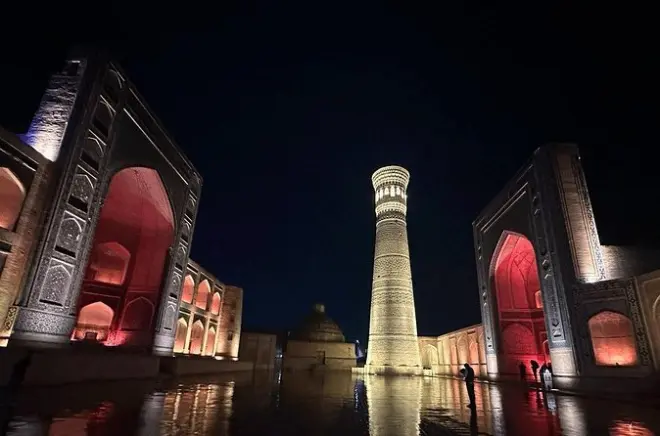


Nine centuries of Silk Road trade, scholarship and faith in a single day
This guided walking tour of Bukhara covers the UNESCO-listed city's most significant monuments across six to seven hours, including a lunch break. You visit the Ismail Samaniy mausoleum, Poi Kalon complex, Labi Hauz, the Citadel Ark, Magoki-Attari Mosque and other sites spanning from the 9th century to the 18th, with an English-speaking guide and all entrance tickets included. The itinerary traces Bukhara's role as a center of Islamic scholarship and Silk Road commerce.
Compare the 7 alternatives
 Bukhara City Tour: Crafts, Mosques & Handmade MessagesMon–Sat★ 4.98 (66)4h–6hEN · RUUS$ 66per groupView ›
 Private Walking Tour of Bukhara Old Town: All-Day Historic CityEvery day · First departure 08:00, last 15:00 · From age 7★ 4.94 (78)5h–7hEN · DE · RU · FR
 Bukhara Historical City Highlights: Walking Tour with GuideEvery day · First departure 09:00, last 18:00 · All ages★ 4.68 (31)4hEN · RUUS$ 23View ›
 Bukhara City Tour: Inside Visits IncludedEvery day · First departure 06:00, last 20:00 · All ages★ 4.78 (9)4h–5hENUS$ 35View ›
 Bukhara day tour: Silk Road history with local guideEvery day · 09:00★ 5.00 (8)3h–4hEN · RUUS$ 80per groupView ›
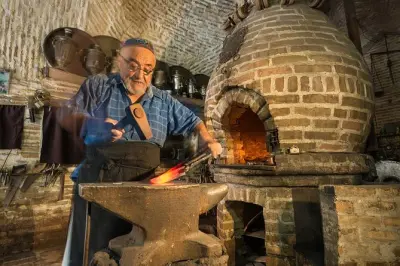 Bukhara Old Town Guided Tour: 16 iconic stopsEvery day · First departure 08:00, last 15:00 · From age 6★ 4.83 (6)5h–7hEN · DE · RU · FR
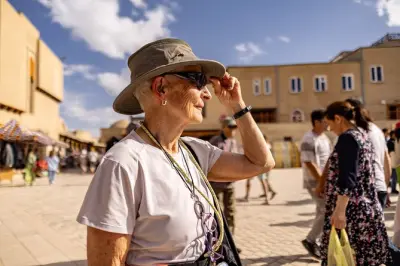 Bukhara countryside tour: Palace, traditional lunchEvery day · First departure 08:00, last 15:00 · Ages 14–80★ 4.85 (13)4h–6hEN · DE · RU · FR
Step-by-step itinerary
Guided walking tour of Bukhara
- Visit Ismail Samaniy mausoleum
- See Chashmai Ayub mausoleum
- Pass by Abu Abdullah Mohammed ibn Ismail Imam Al Bukhari site
- View Bolo Hauz mosque from outside
- Explore the Citadel Ark
- Tour Poi Kalon complex
- Pass by Magoki-Attari Mosque
- Visit Labi Hauz Complex
- See XVI century Synagogue
- View Statue of Hodja Nasruddin
The experience
What makes Bukhara worth a full day instead of a quick pass through? The city has earned four different names across its 2,500-year history (the Copper City, the City of Traders, the Honorable City), and the monuments still standing explain why. You start at the Ismail Samaniy mausoleum, the oldest and best-preserved building in the city, built in the 9th or 10th century. From there the walk moves through the layers: the Poi Kalon complex from the 12th to 16th centuries, where the minaret's beauty reportedly stopped Genghis Khan in his tracks; the Citadel Ark, rebuilt across centuries from its original 1st-millennium foundations; and the Labi Hauz, a 17th-century gathering place built around a reservoir by the Grand Vizier.
The tour also reaches sites tied to specific stories. The Chashmai Ayub mausoleum commemorates the spring that legend says the Prophet Job brought forth by striking the earth with his staff during a drought. The Magoki-Attari Mosque, Central Asia's oldest surviving mosque, sits on ground that once held a Buddhist monastery and a Zoroastrian temple before the Arab invasion. The 16th-century Synagogue in the Jewish Quarter, south of Labi Hauz Square, marks a minority community that has lived in Bukhara since forced migration from other cities in the 14th century. The Bolo Hauz mosque, still functioning as a Friday mosque from the 18th century, can be viewed from outside. A statue of Hodja Nasruddin, the homespun philosopher and humorist, stands in the old town: Uzbeks claim him as their own, though he is known elsewhere as Turkish.
The six to seven hours includes a lunch break, so the day is structured around walking and stopping rather than rushing. An English-speaking guide stays with you throughout, and entrance tickets to all the monuments are covered. Dress code matters at the religious sites: both men and women should wear clothing that covers shoulders and knees, and women should bring a headscarf or shawl for the holy places.
What’s included
- Entrance tickets to all monuments.
- English-speaking guide for the full day.
- lunch break built into the itinerary.
Before you book
Prices and times updated yesterday
Operated by Samaria Travel
Is this one for you?Six to seven hours, including lunch, means you can see the major monuments without sacrificing the rest of your day in Bukhara: morning departure leaves the afternoon open, or an afternoon start keeps the morning free for other plans.
Top questions
What is the Poi Kalon complex and why does it matter?
The Poi Kalon complex, built between the 12th and 16th centuries, consists of a mosque, madrassah and minaret in one of the great centers of trade and scholarship along the Silk Road. The minaret's beauty was so striking that it reportedly amazed Genghis Khan.
Can I go inside the Bolo Hauz mosque?
The Bolo Hauz is a functioning Friday mosque from the 18th century, so you can visit it from outside but cannot enter during active prayer times.
What is the story behind the Chashmai Ayub mausoleum?
According to legend, the Prophet Job came to the Zerafshan Valley and witnessed a terrible drought. When people around him were dying of thirst, Job struck the earth with his staff and brought forth a spring of cool, sweet water. The Chashmai Ayub, meaning "the Spring of Job" in Uzbek, commemorates this site.
Is there a Jewish Quarter in Bukhara's old town?
Yes, the Jewish Quarter spreads south of Labi Hauz Square and includes a 16th-century Synagogue. Jews have been an important minority in Bukhara since the 14th century, and the Synagogue houses a Torah when it is open to visitors.
Who was Hodja Nasruddin and why is there a statue of him in Bukhara?
Hodja Nasruddin was a homespun philosopher and humorist known for witty sayings. While he is generally accepted as Turkish elsewhere in the world, Uzbeks claim he was born in Bukhara and consider him one of their own. A statue of him on his donkey stands in the old town.
Bukhara One Day Tour: UNESCO City Monuments & Silk Road History
6h–7h · EN
from US$ 89 per person