
Indigenous Cacao Tour in Bocas del Toro: Farm to Chocolate
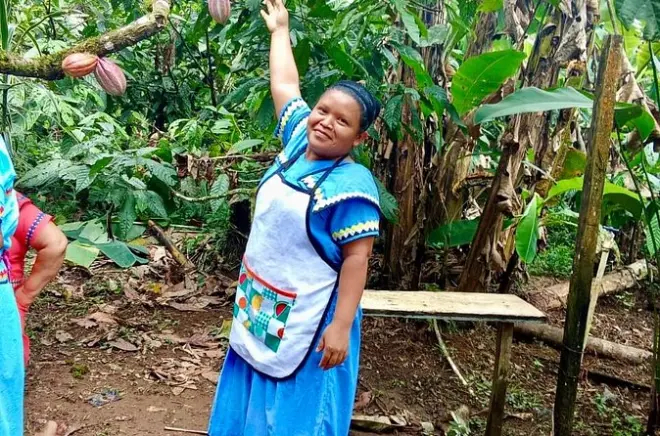


Cacao beans taste sweet before they're roasted: a detail most chocolate eaters never learn.
An indigenous cacao tour in Bocas del Toro takes you to a working organic farm in a mountain valley where you walk through harvesting, fermentation, drying, roasting, and grinding, taste the beans at two stages, eat a traditional lunch prepared by the community, and return by water taxi and land transfer from Isla Colon. The farm sits in biodiverse forest where sloths, frogs, and toucans live among the shade-grown plants. A guide fluent in English or Spanish leads the tour, which involves moderate walking on some steep sections.
Compare the 3 alternatives
 Bocas del Toro Snorkeling Tour: Dolphins & Red Frog BeachEvery day · 09:00 · All ages7hEN · ESUS$ 119View ›
 Bocas del Toro: Bioluminescence Snorkeling at NightEvery day · 19:30 · From age 4★ 4.27 (22)2hEN · ESUS$ 50View ›
 Snorkeling in Bocas del Toro: Speedboat Tour & WildlifeEvery day · 09:30 · From age 7★ 3.57 (28)7hEN · ESUS$ 68View ›
 Cacao Tour on Isla Cristóbal: Learn Chocolate from the FarmEvery day · 09:00 · From age 35h
Step-by-step itinerary
Visit organic cacao plantation and lunch
- Arrive at organic cacao farm
- Observe cacao cultivation process
- Taste raw cacao beans
- Learn cacao harvesting and fermentation
- See drying, roasting, and grinding
- Taste roasted cacao beans
- Enjoy traditional indigenous lunch
- Interact with indigenous community
The experience
If you've landed in Bocas del Toro with a free afternoon and want to know how chocolate actually gets made, this tour takes you straight to the source. You start at an organic cacao plantation nestled in a valley at the foot of Panama's Central Mountain Range, where the indigenous community has cultivated cacao for generations. The farm sits inside a forest thick with wildlife. You may spot sloths, brightly colored frogs, toucans, and other birds as you walk the property. The biodiversity here is part of what makes the location work: shade-grown cacao thrives under the forest canopy, and the pods display a wide range of colors depending on ripeness and variety.
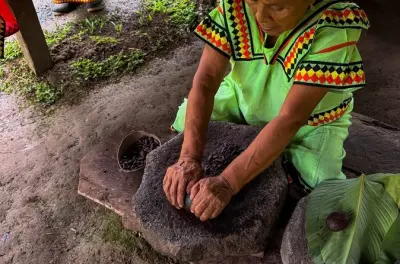
The tour walks you through each stage of turning cacao into chocolate: harvesting the pods, fermenting and drying the beans, roasting them, grinding them into paste, and the final preparation. You taste the beans twice (first raw and sweet, before any processing, then again after they've been roasted), so you experience the transformation yourself. The guide explains the challenges of cacao farming, including the threat of a lethal fungus that can wipe out trees, and why this farm uses no chemical pesticides despite those risks. Lunch comes next: a traditional meal prepared by members of the indigenous community, typically featuring chicken or fish with rice and root vegetables like yuca, ñame, ñampi, or otoe. You eat with the community and have time to talk with them about their work and life on the farm.
Transport is handled for you: a round-trip water taxi runs between Isla Colon and Almirante, and a land transfer takes you from Almirante to the farm. Your guide speaks English or Spanish. The walk involves moderate pace but includes some steep sections of trail, so it's not suitable if you have mobility limitations. The whole experience runs about three hours.
What’s included
- Chocolate-making experience from harvest through final preparation.
- farm tour with a guide in English or Spanish.
- traditional lunch prepared by the indigenous community.
- cacao beans to taste before and after roasting.
- round-trip water taxi from Isla Colon to Almirante.
- land transfer from Almirante to the farm.
Before you book
Prices and times updated 8 days ago
Operated by The Panama Club
Is this one for you?The tour involves moderate walking on steep sections, so it works best if you're comfortable with uneven forest terrain and can handle inclines. This is what keeps you inside the working farm where the cacao actually grows, rather than a flat demonstration space.
Top questions
What languages is the guide in?
Live guide in English and Spanish.
Can children come?
Yes. Ticket types: Child (3 to 5 years): free; Infant (under 3): free.
What happens if it rains?
It may be canceled due to bad weather. If that happens, you're offered another date or a refund. Free cancellation up to 24 h before the start.
What's the difference between tasting cacao before and after roasting?
Raw cacao beans are quite sweet and taste nothing like the chocolate you know. After roasting, the beans develop the deeper, more complex flavors that become chocolate. Tasting both stages on the same tour shows you how much the roasting process changes the bean.
Will I actually see cacao being harvested and processed, or just walk past the plants?
You walk through the various stages of processing (harvesting, fermentation, drying, roasting, grinding, and final preparation), so you observe the work as it happens on a working farm, not a museum display.
What kind of wildlife might I see on the farm?
The farm sits inside biodiverse forest where sloths, brightly colored frogs, toucans, and other bird species live among the shade-grown cacao plants. Sightings depend on the time of day and season, but the forest is active.
How do I get from Isla Colon to the farm?
A round-trip water taxi takes you from Isla Colon to Almirante, then a land transfer brings you from Almirante to the farm. Both are included in the tour price.
Is the walk difficult, and what's the terrain like?
The tour involves moderate-pace walking, but some sections of the trail are steep. It's not recommended for people with mobility impairments, though it's suitable for a range of fitness levels if you're comfortable with uneven ground and inclines.
Indigenous Cacao Tour in Bocas del Toro: Farm to Chocolate
3h · EN · ES
from US$ 70 per person