
Hiroshima Miyajima private tour: Peace Memorial & torii gate


A local guide takes you to places about the atomic bombing that aren't on the internet.
This private guided tour covers Hiroshima's Peace Memorial Museum and Park, then crosses by ferry to Miyajima to visit Itsukushima Shrine and its famous floating torii gate, running 7 to 8 hours from around 9:00 AM. A certified English-speaking guide with deep knowledge of Hiroshima's wartime history leads the route using public trains and ferry, and the itinerary includes entrance fees to both the museum and shrine, plus guide photography. The tour is flexible—you can request other stops, and children from age 6 are welcome.
 7h–8h
7h–8h

Step-by-step itinerary
Hiroshima and Miyajima sightseeing
- Listen to 1945 history and city revival
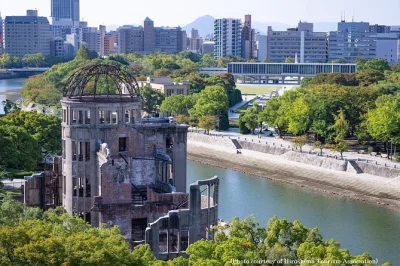
- Visit Peace Memorial Park
- Explore Hiroshima Peace Memorial Museum
- Travel to Miyajima island
- Visit Itsukushima Shrine and Kiyomori street
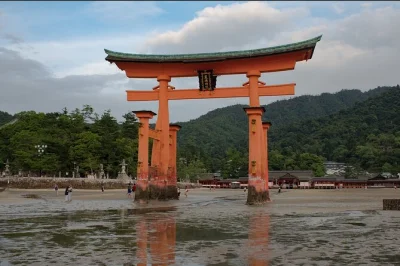
- See Itsukushima Shrine torii gate
- Return to Hiroshima station or hotel

The Experience
You start in Hiroshima city and spend the morning at Peace Memorial Park and the museum, where a local guide walks you through what happened in 1945 and how the city rebuilt itself. The museum holds the actual objects from the war—tools, clothing, personal items—so the stories move beyond dates into the lives that lived them. The guide also takes you to hidden local spots tied to the atomic bombing, places known only to people who live here and not findable online; that's where the tour departs from what a first-time visitor would stumble onto alone.
After lunch (your choice from Kiyomori souvenir street on Miyajima, where local restaurants and beer stalls line the pedestrian area), you head to the ferry for the crossing to the island. Itsukushima Shrine sits at the water's edge, and at high tide the torii gate appears to float on the sea—a Shinto landmark so recognizable it shows up in guidebooks worldwide, but the moment of standing in front of it still lands differently than the photograph. The guide handles the route and timing; you move by public train and ferry, the same way locals do, so the day feels like following someone who knows the place rather than being herded through it.
The tour wraps around 4:30 PM with a return to Hiroshima station or your hotel by public transport. Entrance to both the Peace Memorial Museum and Itsukushima Shrine is included, as is the guide's fee and the photographs they take during the day.

What’s included
- Entrance to the Hiroshima Peace Memorial Museum and Itsukushima Shrine.
- certified English-speaking guide for the full 7 to 8 hours.
- photographs taken by the guide during the tour.
- all public transportation (trains and ferry between Hiroshima and Miyajima).
Operated by BE Hiroshima
Is this one for you?Book this tour if you're arriving in Hiroshima without a car or staying at a hotel in the city—the guide navigates all the public transport connections, so you move between the Peace Memorial sites and the ferry to Miyajima without figuring out the stations or schedules yourself. The flexibility to add stops or adjust the route also means you're not locked into a fixed itinerary if something else catches your interest along the way.
Traveler reviews
Compare the 11 similar options
 Hiroshima Miyajima private tour: Peace Memorial & torii gate★ 4.96 (89)7h–8hENJP¥ 35,000
 Hiroshima & Miyajima Day Tour: Museum & Shrine VisitEight hours from Hiroshima Station through the Atomic Bomb Dome, Peace Memorial Museum, and ferry to Miyajima Island—guide, shrine entry, and lunch included if you choose it.★ 4.97 (8,763)8hEN · JAJP¥ 19,488View ›
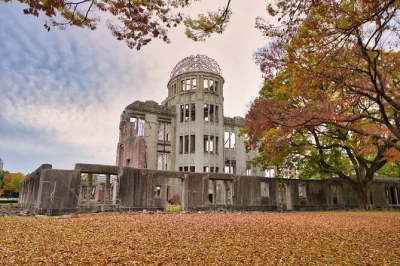 Hiroshima and Miyajima Day Tour: Peace sites and floating shrineFull-day guided tour from Hiroshima Station covering the Atomic Bomb Dome, Peace Memorial Museum, and Itsukushima Shrine on Miyajima Island★ 4.72 (154)7h 40mENJP¥ 18,000View ›
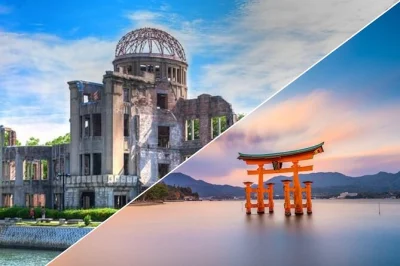 Hiroshima & Miyajima Private Tour: Customizable 8-Hour ItineraryMeet your English-speaking guide at your Hiroshima hotel and spend eight hours walking between the Peace Memorial Park, Hiroshima Castle★ 4.94 (1,536)8hEN · JAJP¥ 30,900View ›
 Hiroshima & Miyajima Private Tour: 7 hours with local guideSeven-hour private tour of Hiroshima and Miyajima with English-speaking local guide—visit the Peace Memorial Park and Atomic Bomb Dome★ 4.99 (162)7hENJP¥ 18,000View ›
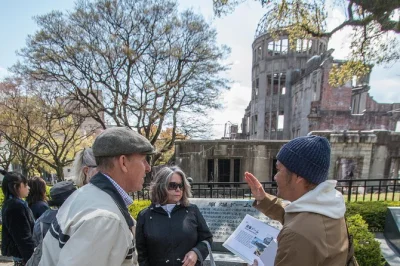 Hiroshima Peace Memorial & Atomic Dome Walking TourHiroshima Peace Memorial Museum, Atomic Bomb Dome, and Orizuru Tower with certified local guide. Includes lunch, entrance fees, tour photos. Small groups.★ 4.96 (1,022)5hENJP¥ 13,600View ›
 Hiroshima & Miyajima Private Tour: Peace Park & Floating ToriiPrivate tour of Hiroshima Peace Memorial Park, A-Bomb Dome, and Miyajima's Itsukushima Shrine with museum entry, ferry, English guide, and local transport. 8–10 hours.★ 4.79 (145)4h–8hENJP¥ 24,061View ›
 Hiroshima & Miyajima Private Tour: 8-Hour Local GuideEight-hour private tour of Hiroshima and Miyajima with a local guide of over 20 years, pickup included, lunch and transport arranged★ 4.95 (84)8hEN · JA +1JP¥ 27,000View ›
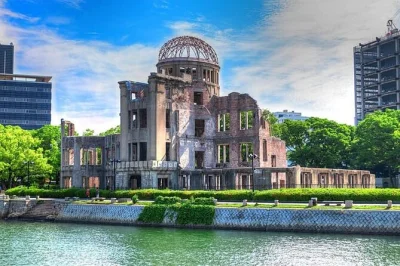 Hiroshima: Peace Memorial & Castle Private Walking TourWalk through Hiroshima’s Peace Memorial Park, Museum, and Carp Castle with a licensed guide. Includes flexible meetup and personal storytelling along the way.★ 4.96 (543)4hEN · JAJP¥ 18,000View ›
 Hiroshima & Miyajima: Peace Memorial, Shrine & Island Day TripWalk through Hiroshima’s Peace Memorial Park, meet wild deer on Miyajima Island, and see the floating torii gate with a local guide—entry fees and transport included.★ 4.62 (503)8h 20mENJP¥ 25,000View ›
 Hiroshima & Miyajima: Peace Memorial & Shrine Private TourFull-day Hiroshima and Miyajima tour with Spanish-speaking guide. Visit Peace Memorial Park, Genbaku Dome, Itsukushima Shrine, and Five-Story Pagoda. Includes ferry transport.★ 5.00 (1)8hESJP¥ 28,124View ›
Top questions
What exactly is inside the Peace Memorial Museum in Hiroshima?
The Hiroshima Peace Memorial Museum holds the physical objects from 1945—tools, clothing, personal belongings and documents—alongside the stories of the people who used them. The guide provides context about what happened that day and how the city has rebuilt since.
Can I see the Itsukushima Shrine torii gate at high tide, or does the timing depend on the day I book?
The torii gate appears to float on the sea at high tide, but the exact timing shifts with the tides each day. The guide will work with the schedule to give you the best chance to see it in that state, though the shrine is worth visiting regardless of the tide.
How do we get from Hiroshima to Miyajima—is it a long ferry ride?
You take a public train from Hiroshima to the ferry terminal, then a short ferry crossing to Miyajima. The guide leads the route, so you don't navigate the connections yourself; using public transport is how the tour keeps you moving like a local rather than in a private car.
Is lunch included, or do I pay separately on Miyajima?
Lunch is not included in the tour price. On Miyajima, Kiyomori souvenir street has many local restaurants and casual spots where you can eat and drink; the guide can point you toward options, but you choose and pay for your meal.
Can my 8-year-old come on this tour?
Children are welcome from age 6, so your 8-year-old can join. The tour involves walking through museums and around the shrine grounds, and the guide can tailor the depth of the wartime history discussion to what feels right for your family.
What if I want to visit somewhere else in Hiroshima instead of one of the scheduled stops?
The tour is flexible and can be tailored to your preferences. If there are other places you'd like to visit, let the guide know when you book or at any point during the day, and they can adjust the route.
Hiroshima Miyajima private tour: Peace Memorial & torii gate
7h–8h · EN
from JP¥ 35,000 per person
★★★★★★★★★★4.9689 reviewsVerified traveler reviews via our booking provider
