
Arches: Stargazing & Astro Photo Night Hike with Gear


Stargaze and capture the night sky on a guided hike in Arches
You’ll walk beneath arches after sunset, try your hand at astrophotography with provided gear, and learn from a local guide who knows every twist of Arches by night. Expect laughter over camera mishaps, real darkness under desert skies, and moments where you forget anyone else exists out there.
 2h
2h

Step-by-step itinerary
Night hike and stargazing in Arches
- Hike through rock garden
- Observe galaxy rotation
- Explore natural arches
- Photograph constellations framed by arches

The Experience
We were already fumbling with our headlamps when our guide, Jamie, waved us over to this patch of sand—she’d found the first arch she wanted us to see under the stars. There’s something odd about walking through Arches at night: the air cools off fast, and everything sounds sharper somehow. I kept thinking I heard little scurrying things in the brush, but maybe that was just my nerves or the way sound bounces around those rocks. Jamie had us pause for a minute and just listen—no cars, no voices, just wind and our own breathing. I didn’t expect to feel so small out there.
I’ll admit right away: I’m not a photographer. My phone camera is usually enough for me. But Jamie showed us how to set up these tripods (they provided them, which was lucky because mine would’ve been useless), and she explained how to use red LEDs so we wouldn’t mess up our night vision. She even helped me figure out the settings on my phone—I definitely pressed the wrong button at least twice. The arches looked like giant picture frames for the sky; you could actually see the Milky Way stretching behind them if you squinted long enough. Someone in our group tried to name constellations—Jamie gently corrected him, which made everyone laugh.
The best part was when we all turned off our headlamps for a few minutes. It got so dark that even my clumsy feet felt quieter on the sand. The galaxy really does seem to move above you out there; it’s almost dizzying if you stare too long. When we finally started heading back, someone pointed out a shooting star—I missed it because I was fiddling with my camera again (classic). Still think about that silence though.

What’s included
Your evening includes hands-on guidance from a local expert through Arches after dark, use of sturdy tripods for your camera or phone, and red LED headlamps so you can see without ruining your night vision as you hike between arches beneath the stars.
Operated by Moab Dark Sky Tours
Traveler reviews
Compare the 13 similar options
 Arches: Stargazing & Astro Photo Night Hike with Gear★ 4.97 (104)2hENUS$ 175
 Arches National Park Tour from Moab: Panoramic Van & Guided HikesFour-hour Arches National Park tour from Moab in a van with glass roof. Includes guide, park entry, snacks, and hikes to Delicate Arch overlook and Windows Section.★ 4.99 (788)4hENUS$ 159View ›
 Arches: Half Day Scenic Tour with Shuttle & Entry FeesFeel the wild Utah desert on a half day Arches tour—walk under Delicate Arch, see Balanced Rock, and catch stories from a local guide. Includes shuttle and park entry.★ 4.81 (100)4hENUS$ 139View ›
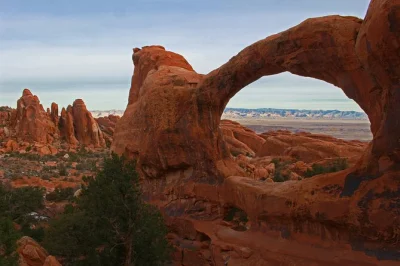 Moab: Arches & Canyonlands 4x4 Tour with Shafer Trail LunchFeel the wild edges of Moab on a 4x4 day trip through Arches & Canyonlands, including the Shafer Trail and a picnic lunch. Small group, local guide, park entry.★ 4.92 (251)9hENUS$ 275View ›
 Arches: Backcountry 4x4 Tour with Dinosaur Tracks & Hidden ArchesFeel the crunch of desert stone in Arches as you ride a private 4x4 through dinosaur tracks, quiet arches, and rugged backcountry—includes park entry and snacks.★ 4.97 (94)4h 30mENUS$ 213View ›
 Moab: Arches, Canyonlands & Dead Horse Point Day TripFeel the desert’s wild silence on a Moab day trip—walk beneath Double Arch, gaze from Dead Horse Point, and ride with a local guide. Includes pickup and lunch.★ 4.96 (360)8hENUS$ 385View ›
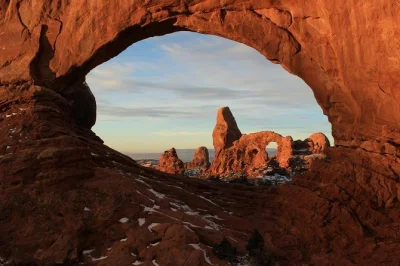 Moab: Arches 4x4 Tour with Dinosaur Tracks & Tower Arch HikeFeel the crunch of red dust underfoot, spot dinosaur tracks, and hike to Tower Arch on this Moab 4x4 adventure—includes pickup, local guide, and cold drinks.★ 4.82 (2,054)4h–5hENUS$ 240View ›
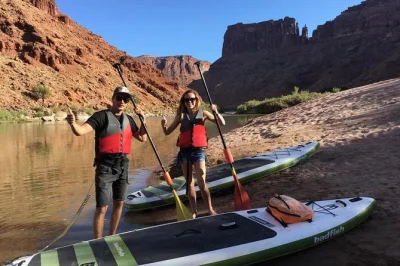 Moab: Colorado River SUP Tour & Flatwater PaddleboardingFloat past Arches’ red rocks on a calm Colorado River SUP tour from Moab. Includes pickup, snacks, and a guide who makes paddling feel easy—even for first-timers.★ 4.90 (136)3h–4hENUS$ 93View ›
 Moab Arches: Sunset 4x4 Tour & Dinosaur TracksWatch sunset light up Arches near Moab, ride 4x4 backroads, see dinosaur tracks, and walk to famous arches with a local guide. Includes pickup, snacks & water.★ 4.61 (124)3h 30mENUS$ 159View ›
 Moab: Hell's Revenge Hummer Safari & Arches OverlookTwo-hour Hummer off-road tour in Moab scaling red rock fins to Hell's Revenge with Colorado River views and La Sal Mountains. Includes guide, water, snacks.★ 4.89 (47)2hENUS$ 136View ›
 Moab Arches: Walking Tour with Park Ave & Sand Dune ArchSmall-group Arches National Park tour from Moab covering Park Ave, Sand Dune Arch, Windows Section, and Balanced Rock. Air-conditioned vehicle, water and snacks included.★ 4.99 (117)4hEN · PLUS$ 210View ›
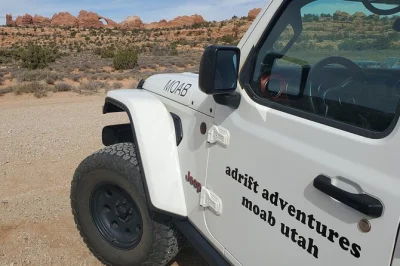 Moab: Arches Backcountry Jeep Tour & Dinosaur TracksFeel the wild side of Arches near Moab—Jeep backroads, dinosaur tracks, ancient stories, and local snacks. Includes pickup and a guide who knows every turn.★ 4.90 (649)4h 30mENUS$ 210View ›
 Whitewater Rafting Moab: 12 Class III & IV rapidsWhitewater rafting in Westwater Canyon near Moab with professional guide, lunch, and Class III–IV rapids. Includes all gear and hotel pickup.★ 4.91 (79)10hENUS$ 256View ›
Top questions
Is this stargazing tour in Arches suitable for beginners?
Yes, it’s suitable for all fitness levels and beginners in photography are welcome.
Are tripods provided on the astro-photo tour?
Yes, tripods are included as part of your experience.
What time does the stargazing hike in Arches start?
The exact timing depends on sunset but it begins after dark for optimal stargazing.
Will I need special equipment for astrophotography?
No special equipment is needed—tripods and red LED headlamps are provided; phones or cameras work.
Is transportation or hotel pickup included?
No mention of transportation or hotel pickup is included in this tour.
Arches: Stargazing & Astro Photo Night Hike with Gear
2h · EN
from US$ 175 per person
★★★★★★★★★★4.97104 reviewsVerified traveler reviews via our booking provider
