
Nevado Yanapaccha Mountaineering Course: Ice Climbing in Huaraz
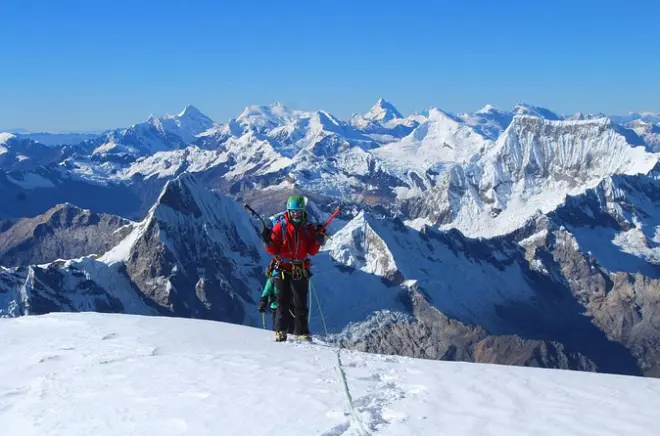


Master ice climbing and self-rescue on a glacier training peak in the Andes
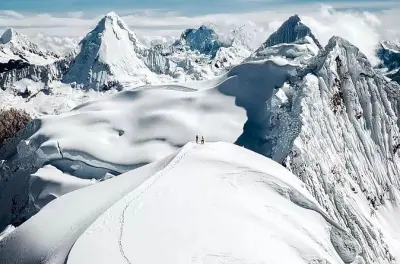
A 4-day mountaineering course on Nevado Yanapaccha (5,686 m) in Huascarán National Park near Huaraz teaches ice climbing, knot work, and rescue techniques on a moderate peak ideal for training. You spend day one hiking to Camp Morrena, day two on the glacier learning equipment and crampons, day three practicing crevasse rescue, and day four climbing the 180-meter ice wall to the summit before descending to Huaraz.
Compare the 12 alternatives
 5-day Huayhuash trek from Huaraz: Siula Grande & alpine lakesEvery day · 08:00 · Ages 18–80★ 5.00 (6)5dEN · ESUS$ 750View ›
 8-day Cordillera Huayhuash trek from Huaraz: Seven high passesEvery day · 01:00 · Ages 18–70★ 4.80 (5)8dEN · ESUS$ 800View ›
 Huayhuash Circuit Trek 14-Day Cordillera Circumnavigation HuarazEvery day · Ages 18–80★ 5.00 (4)14dEN · ESUS$ 1,750View ›
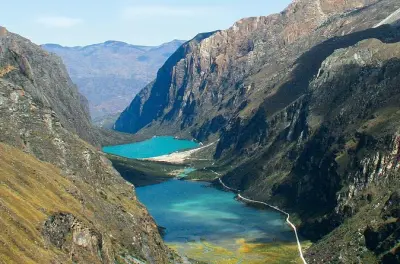 3-Day Tour: Llanganuco, Parón & Laguna 69 from HuarazEvery day · 07:00 · Season until 30 Nov · From age 53dESUS$ 150View ›
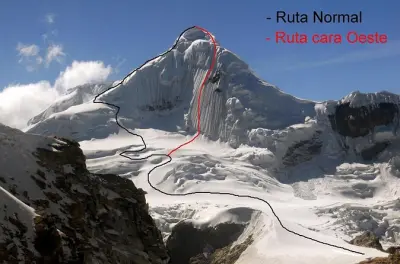 4-day Nevado Tocllaraju climb in Huaraz: 6,034 m peakEvery day · 12:00 · Ages 18–69★ 5.00 (3)4dEN · ESUS$ 1,350View ›
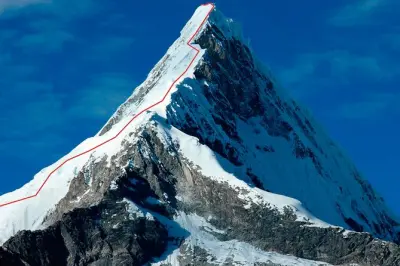 5-day Nevado Artesonraju climb from Huaraz: Paramount PeakEvery day · 08:00 · Ages 18–75★ 5.00 (1)5dEN · ESUS$ 2,250View ›
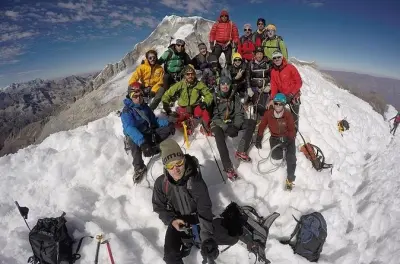 4-Day Ishinca & Urus Climb from Huaraz: 5530m PeakEvery day · 08:00 · Ages 18–804dEN · ESUS$ 850View ›
 6-Day Mount Quitaraju Climb: Huaraz 6,040m AlpineEvery day · 08:00 · Ages 18–706dEN · ESUS$ 1,950View ›
 14-day Alpamayo climb from Lima: Santa Cruz Trek & summitTue · Ages 18–70★ 5.00 (1)14dEN · ESUS$ 2,550View ›
 13-day Santa Cruz Trek from Huaraz: Alpamayo & Cordillera BlancaThu–Sat · 08:00 · Season until 31 Oct · Ages 18–70★ 5.00 (2)13dEN · ESUS$ 1,750View ›
 Cordillera Huayhuash 15-day mountain bike extreme circuitEvery day · 08:00 · Ages 18–7515dEN · ESUS$ 2,950View ›
 3-day Nevado Pisco climb from Huaraz: 5,752m peakEvery day · 23:00 · Ages 18–60★ 5.00 (1)3dEN · ESUS$ 750View › Compare more experiences like this »
Step-by-step itinerary
Day 1: Travel and basic mountaineering skills
- Depart from Huaraz
- Travel through Yungay and Llanganuco Valley
- Pass lakes Chinancocha and Orconcocha
- Arrive at Km 42 starting point
- Ascend to Camp Morrena
- Set up camp
- Practice knot tying and anchoring
Day 2: Ice climbing equipment and techniques
- Walk 20 minutes to Yanapaccha Glacier
- Learn equipment use and handling
- Practice essential knot techniques
- Use crampons properly
- Manage ropes and team roping
- Practice ice anchoring methods
- Learn fundamental ice climbing techniques
Day 3: Rescue and self-rescue training
- Navigate moraines to glacier
- Gear up and rope up
- Climb ice wall
- Arrive at crevasse
- Review equipment and climbing techniques
- Practice essential knots
- Train glacier climbing techniques
- Learn safety and self-rescue methods
- Practice ice and snow anchoring
- Conduct rescue and self-rescue training
Day 4: Summit ascent and descent
- Begin ascent at 3:00 AM
- Cross moraine
- Climb wide glacier
- Climb 180-meter ice wall
- Reach summit and enjoy views
- Descend via ridge
- Continue down to moraine
- Reach Km 42 for transport
The experience
Nevado Yanapaccha sits in the Cordillera Blanca, the highest tropical mountain range in the world, and its abundant crevasses and ice walls make it the standard training ground for climbers moving into technical alpine work. The course runs March through October and keeps groups to three climbers per guide, so instruction stays hands-on. You'll arrive in Huaraz at 3,100 meters, then drive through the turquoise lakes of Llanganuco Valley to Km 42, where a 4-hour hike brings you to Camp Morrena at 5,000 meters. That first afternoon covers the fundamentals: knot tying, anchoring, and the systems you'll use for the next three days.
Day two is a short 20-minute walk to the Yanapaccha Glacier, where the equipment and technique course begins. You learn how to handle ice axes and crampons, practice essential knots, manage rope as a team, and work through ice anchoring before attempting your first ice climbing moves. Day three takes you deeper into glacier terrain: crossing moraines and roping up to climb an ice wall for roughly 1.5 hours until you reach a crevasse. There, the rescue and self-rescue course kicks in: you practice glacier climbing techniques, review safety systems, and drill the methods you'd use if someone fell or got stuck. The final day starts at 3 a.m. You cross the moraine, climb the 180-meter ice wall at 50–60 degrees, and reach the summit to see Huascarán, Chopicalqui, Pisco, and the surrounding peaks spread across the horizon. The descent takes 3 to 4 hours back to Km 42, where transport returns you to Huaraz.
All meals, camping tents, a cook, donkeys or porters for gear, and park entrance fees are included. You bring or rent your own ice ax, crampons, harness, boots, sleeping bag, and weatherproof layers: gear rental is available in Huaraz. The guides are Peruvian mountaineers fluent in English or Spanish, and the course requires at least moderate fitness and a minimum age of 18.
What’s included
- Entrance fees to Huascarán National Park.
- a Peruvian qualified guide (one per three climbers).
- all meals during the four days.
- camping tents for two people.
- kitchen equipment and a cook.
- donkey drivers and donkeys or porters to carry gear.
Before you book
Prices and times updated today
Operated by Peru Expeditions Tours
Is this one for you?You learn by doing on the glacier itself with a guide watching and correcting, not by watching demonstrations. The three-climber-per-guide ratio means you get hands-on instruction in knots, crampons, ice climbing, and rescue techniques over three full days before attempting the summit, so climbers building toward harder peaks get the technical foundation they need.
Top questions
What languages is the tour guided in?
Live guide in English and Spanish.
What happens if it rains?
It may be canceled due to bad weather. If that happens, you're offered another date or a refund. Free cancellation up to 24 h before the start.
What does the ice climbing training actually cover on Nevado Yanapaccha?
The course teaches equipment handling, crampons and ice ax technique, knot work, rope management, ice anchoring, and glacier climbing over three days on the mountain before the summit push. Day two focuses on fundamentals on the glacier itself; day three adds crevasse rescue and self-rescue drills; day four applies everything on the 180-meter ice wall to the summit.
How much time do I spend actually climbing versus hiking and traveling?
Day one is 3.5 hours driving and 4 hours hiking to camp. Day two is a 20-minute walk to the glacier and a full day of instruction there. Day three is a walk to the glacier, climbing an ice wall for roughly 1.5 hours, then rescue training at the crevasse. Day four starts at 3 a.m. with 5 to 6 hours ascending the ice wall and 3 to 4 hours descending.
What is the group size and how much instruction do I get?
Groups stay at three climbers per guide, so you get direct attention throughout the course. Each guide is a Peruvian mountaineer qualified in ice climbing and rescue techniques.
What do I need to bring, and can I rent gear in Huaraz?
You need personal equipment including ice ax, crampons, harness, boots, sleeping bag, mat, and waterproof layers. Gear rental is available in Huaraz before the course starts, so you don't need to travel with everything.
What is the Cordillera Blanca and why is Yanapaccha good for training?
The Cordillera Blanca is the highest tropical mountain range in the world and part of the Andes. Nevado Yanapaccha is ideal for mountaineering training because it has moderate difficulty, abundant crevasses and ice walls for practicing techniques, and can be climbed nearly year-round.
Nevado Yanapaccha Mountaineering Course: Ice Climbing in Huaraz
4d · EN · ES
from US$ 1,250 per person