
Inca Trail 4-Day Trek Cusco to Machu Picchu & Sun Gate


Four Days Walking the Inca Trail: What It Takes to Reach Machu Picchu on Foot
You hike 26 miles over four days from km 82 to Machu Picchu, sleeping in camps with a professional guide, chef and porter team. Groups stay under eight people. You cross two high passes, explore Inca ruins along the way, and enter Machu Picchu through the Sun Gate at sunrise on the final morning. Hotel pickup in Cusco, all meals, permits, camping equipment and the return train are included, so the only thing you manage is your own pace.
Compare the 12 alternatives
 Machu Picchu: 2-Day Inca Trail Trek & Sunset EntryEvery day · 03:00, 04:00 and 05:00 · All ages★ 5.00 (47)2dEN · PT +2US$ 580View ›
 2-Day Inca Trail to Machu Picchu: Hike the Sun Gate entranceEvery day · 00:00 · 18–75 years★ 4.99 (530)2dENUS$ 670View ›
 Machu Picchu: 2-Day Inca Trail & Sun Gate with OvernightMon, Tue, Thu, Fri and Sat · From age 6★ 4.98 (337)2dEN · ESUS$ 600View ›
 Inca Trail 4-Day Trek to Machu Picchu & Vistadome TrainEvery day · From age 5★ 4.99 (11,562)4dEN · ESUS$ 835View ›
 Inca Trail to Machu Picchu: 4-Day Trek from CuscoEvery day · 04:30 and 05:00 · From age 8★ 4.99 (96)4dEN · ESUS$ 890View ›
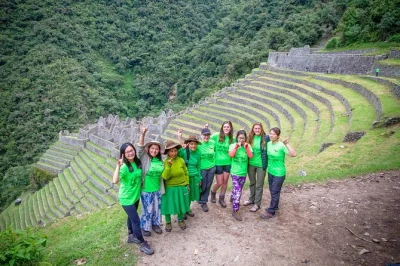 2-Day Short Inca Trail to Machu Picchu from CuscoEvery day · 04:00 · From age 5★ 4.99 (4,069)2dEN · ESUS$ 585View ›
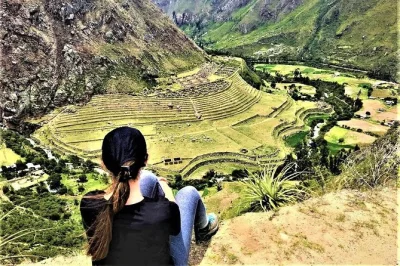 Cusco: Inca Trail to Machu Picchu 4-Day TrekEvery day · 04:30 · From age 4★ 5.00 (1)4dEN · ESUS$ 850View ›
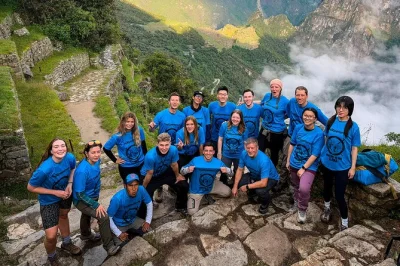 4-Day Inca Trail Trek to Machu Picchu from CuscoEvery day · 04:30 · From age 3★ 4.98 (5,477)4dEN · ESUS$ 820View ›
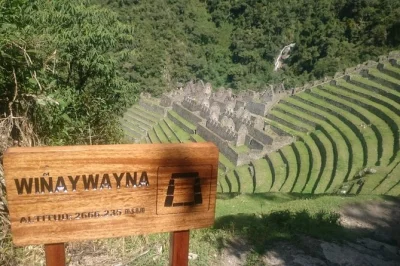 Machu Picchu 2-Day Trek from Cusco: Inca Trail & SunriseEvery day · 03:00, 04:00 and 05:00 · 15–60 years★ 5.00 (106)2dEN · ESUS$ 495View ›
 Machu Picchu: 2-Day Inca Trail Trek & Sun GateEvery day · 05:00 · 18–50 years★ 5.00 (1)2dEN · ESUS$ 816View ›
 Inca Trail 4-Day Trek to Machu Picchu from CuscoMon, Wed, Thu and Sat · 05:30 · From age 7★ 4.83 (380)4dEN · ESUS$ 932View ›
 2-Day Inca Trail to Machu Picchu from Cusco: Shortened TrekEvery day · From age 10★ 4.81 (73)2dEN · PT +1US$ 699View › Compare more experiences like this »
Step-by-step itinerary
Day 1: Cusco to Ayapata campsite
- Pick up from Cusco hotel at 4:30 a.m.
- Breakfast in Ollantaytambo
- Drive to km 82 (Piscakucho) checkpoint
- Meet expert team and start trek
- Hike 3 hours to Llactapata ruins
- Drive 1 hour to Hatunchaca camp
- Lunch at Hatunchaca camp
- Hike 4 hours to Ayapata campsite
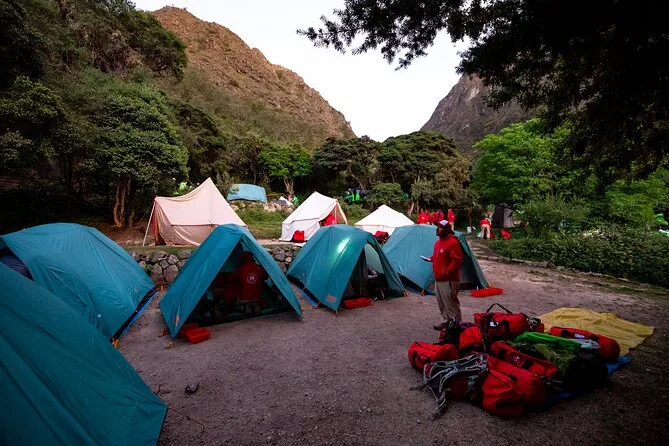
- Set up tents and serve hot tea
Day 2: Ayapata to Chaquicocha campsite
- Wake up with hot or coca tea
- Hike 4 hours to Dead Woman’s Pass
- Guide performs offerings at pass
- Descend 2 hours to Pacaymayu Valley
- Lunch prepared by chef
- Hike 1.5 hours to Runqurakay pass
- Explore Runqurakay Inca site
- Descend to Sayacmarca ruins
- Reach Chaquicocha campsite
- Enjoy sunset and Milky Way
Day 3: Chaquicocha to Wiñaywayna campsite
- Hike 2 hours on flat terrain
- Descend to campsite with glacier views
- Explore Phuyupatamarka and Intipata ruins
- Arrive at Wiñaywayna campsite by 12:30 p.m.
- Lunch and siesta at campsite
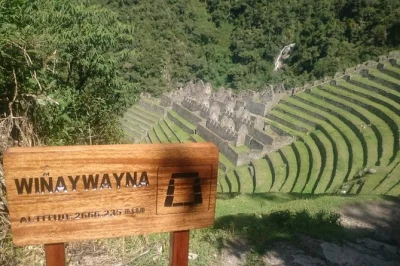
- Short hike to Wiñaywayna ruins
- Free time for photography
- Return to campsite and farewell porters
- Dinner and early rest
Day 4: Machu Picchu visit and return
- Early start and pass checkpoint at 5:30 a.m.
- Hike 1 hour 20 minutes to Sun Gate
- View sunrise over Machu Picchu
- Descend 45 minutes to Mapi checkpoint
- 2-hour guided Machu Picchu tour
- Bus to Aguas Calientes for lunch
- Train departure at 14:55 or 15:20 p.m.
- AB team meets at station
- Return to Cusco or Sacred Valley hotel
The experience
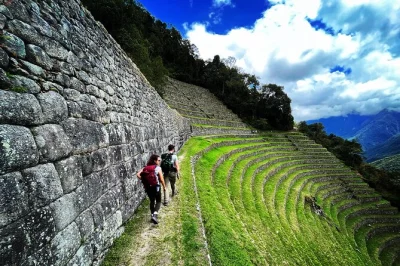
"How early do we start?" That's the first thing most people ask when they realize the pickup is 4:30 a.m. on day one. The answer is: early enough to eat breakfast in Ollantaytambo, drive to km 82, meet your guide and porters, and begin the 26-mile Inca Trail trek before the sun gets high. You're walking a path the Incas built, and the only way to enter Machu Picchu through the Sun Gate is on foot. The first day moves at a manageable pace: three hours to Llactapata ruins, then a drive to Hatunchaca for lunch, then four more hours to Ayapata camp where your tents are already pitched and hot tea is waiting around 5 p.m. Your porter has carried your gear. Your chef has cooked. You just walk.
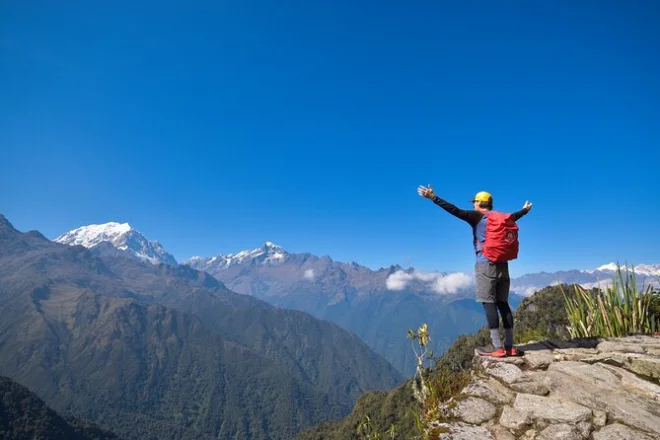
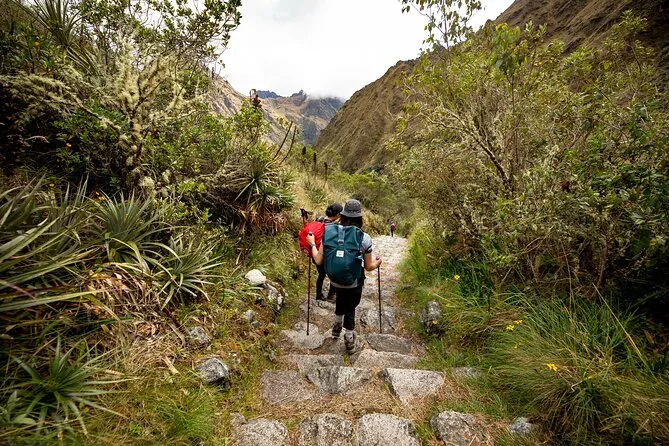
Day two is where the Inca Trail earns its reputation. You wake to coca tea or hot tea, then climb four hours to Dead Woman's Pass at 4,215 meters: the highest point on the trek. The air is thin and the views are wide, and your guide will explain what you're seeing instead of just pointing. After that peak comes a descent to Pacaymayu Valley for lunch, then another 1.5 hours to Runqurakay ruins and the second campsite at Chaquicocha. You'll see the Vilcabamba mountain range at sunset and the Milky Way after dark. It's a long day, but the camp is set, the food is hot, and you're not thinking about logistics. The team handles that.
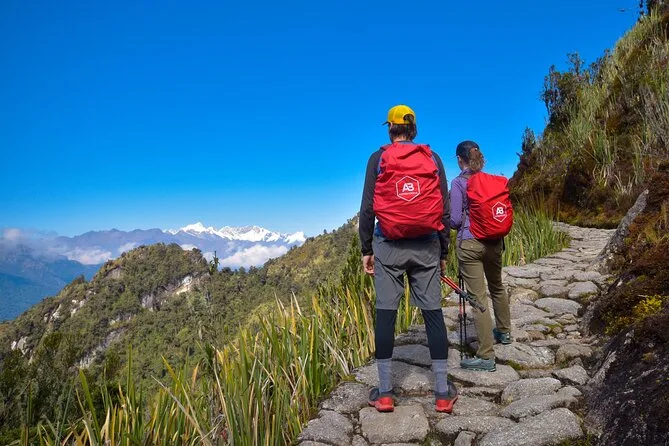
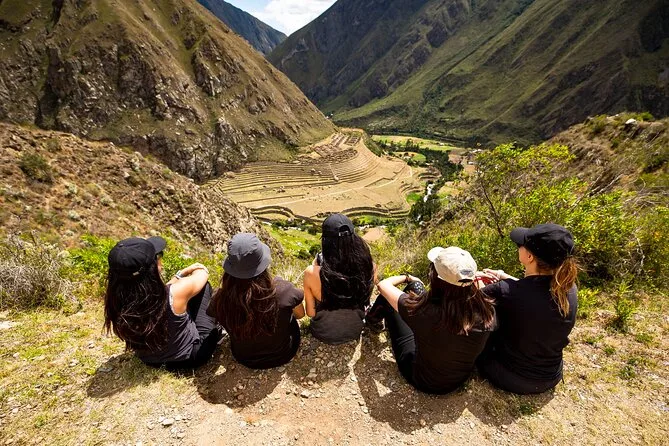
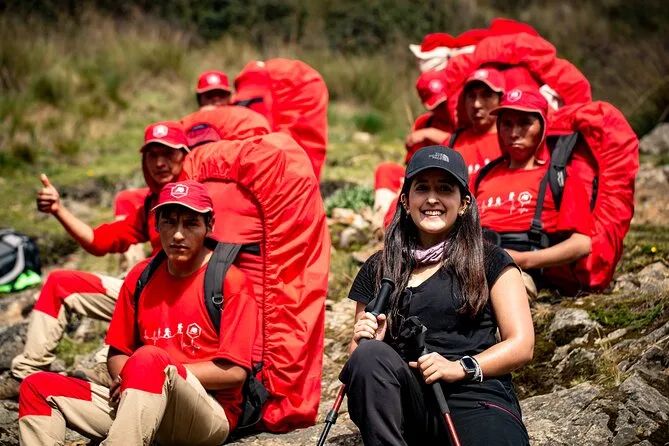
Day three is easier by design. Five hours of hiking, with the first two on gentler terrain, takes you past Phuyupatamarka and Intipata ruins to the final campsite by 12:30 p.m. You have time to shower, rest, and then hike to Wiñaywayna ruins for photos before dinner. This is when the rhythm of the trek shifts. You're close now, and the landscape is changing as you descend toward the cloud forest. You say goodbye to your porters here, which matters because they've been carrying your load the whole way and treating the work with dignity, not like a transaction.
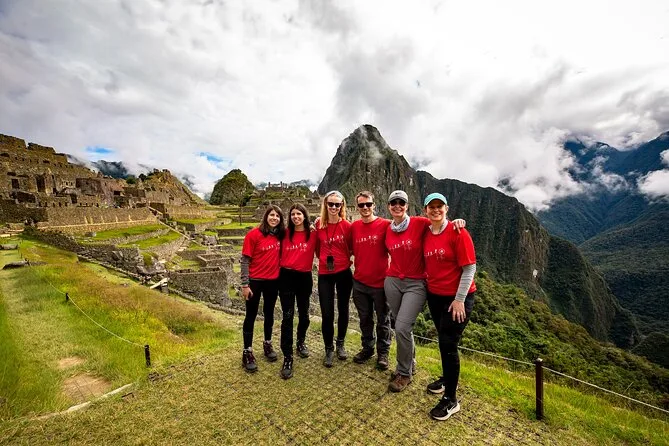
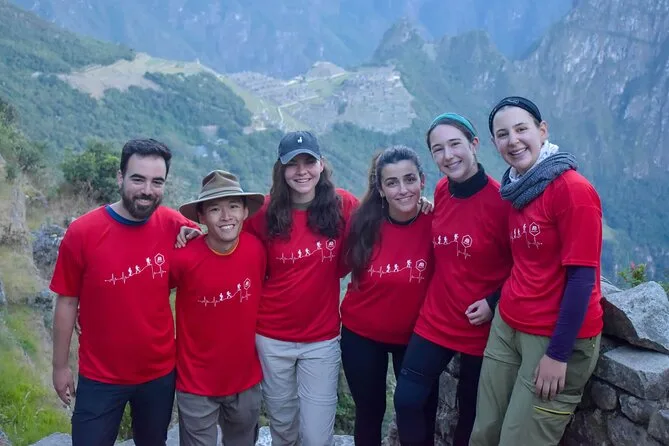
The last morning you leave at 5:30 a.m. for the final checkpoint, then hike 80 minutes to the Sun Gate. Machu Picchu appears below you in the sunrise, and you descend 45 minutes to the site itself. Your guide leads a two-hour walk through the citadel, then you take the bus down to Aguas Calientes for lunch. The train departs at either 14:55 or 15:20, and you're back in Cusco or the Sacred Valley by 7 p.m. The whole thing (pickup, permits, camping gear, all meals, the guide, the porters, the chef, the train back) is included. You don't arrange any of it. You just show up at your hotel at 4:30 a.m. ready to walk.
What’s included
Your four days include private hotel pickup and drop-off in Cusco, private transport from Cusco to km 82, the Inca Trail permit and Machu Picchu entrance ticket, all meals on the trail (three breakfasts, three lunches, three dinners), boiled drinking water, a professional English-speaking guide, porter service for up to 7 kg of gear, a chef, quality camping equipment with tents and mattresses, a dining tent, portable toilets, satellite phone and emergency oxygen, a two-hour guided tour of Machu Picchu, the bus from Machu Picchu to Aguas Calientes, the Expedition train back to Ollantaytambo, and an Inca Trail T-shirt. A pre-departure briefing in Cusco is also included.
Before you book
Prices and times updated 10 days ago
Operated by AB Expeditions
Is this one for you?This trek suits travelers with high cardiovascular fitness who want to reach Machu Picchu on the original Inca path without arranging permits, transport, camping or food: the guide and porter team handle all logistics so you focus only on walking and acclimatizing to the altitude.
Traveler reviews
Top questions
What languages is the guide in?
Live guide in English and Spanish.
Can children come?
Yes. Ticket types: Child (8 to 17 years). Under 8: they can't be included in the booking.
What happens if it rains?
It may be canceled due to bad weather. If that happens, you're offered another date or a refund. Free cancellation up to 24h before the start.
What's the fitness level needed for the Inca Trail?
High physical fitness is required. The trek includes two mountain passes over 4,000 meters, with the highest at 4,215m. Day two is the most demanding. Acclimatization before arrival in Cusco is recommended.
What time does the trek start each day?
Day one: hotel pickup at 4:30 a.m. Day two: early morning (time varies by camp). Day three: leisurely start, reaching camp by 12:30 p.m. Day four: 5:30 a.m. departure for the Sun Gate.
How many people are in each group?
Groups are kept small, with a maximum of eight people per trek.
What meals are provided?
All meals on the trail are included: three breakfasts, three lunches and three dinners. The chef prepares hot, restaurant-style meals at each campsite. Boiled drinking water is provided from day two onward.
Is the train back to Cusco included?
Yes. The Expedition train from Aguas Calientes to Ollantaytambo in the afternoon is included. From there, private transport returns you to your hotel in Cusco or the Sacred Valley, arriving around 7 p.m.
What's included in the camping setup?
Three-season tents (two people per tent), foam mattresses, a dining tent with tables and chairs, and portable toilets. Safe storage for luggage left in Cusco is also provided.
Do I need to carry my own backpack?
Porters carry up to 7 kg of your personal belongings in a duffel bag, so you only carry a daypack with essentials like water, snacks and a camera.
What happens if there's an emergency on the trail?
The team carries satellite phones, radios, a first aid kit and emergency oxygen. Your guide is trained and professional, and the company has ground logistics in place.
Is acclimatization included before the trek?
No. A pre-departure trek briefing is held in Cusco, but you should arrive in the city a few days early to acclimatize to the altitude.
Can I hike Huayna Picchu Mountain on the final day?
Yes. If you choose to, arrangements for lunch and duffle bag pickup are made with your guide before you take the train back to Cusco.
Inca Trail 4-Day Trek Cusco to Machu Picchu & Sun Gate
4d · EN · ES · at your hotel
from US$ 998 per person
4.991,047 reviewsVerified traveler reviews via our booking provider