
Blenheim: WWI & WWII Aviation Exhibitions Skip-the-Line


Two Wars, Two Centuries of Aircraft: Inside Blenheim's Peter Jackson Collection
You skip the entry queue and spend 90 minutes moving through two separate exhibitions: one tracking World War I aviation through rare aircraft and immersive sets, the other following World War II across multiple theaters with original Spitfires and Mosquitos on display. The museum handles the staging and storytelling; you just show up between 10am and 4pm and move through at your own pace.
 1h 30m

Step-by-step itinerary
Visit Omaka Aviation Heritage Centre
- Arrive at Omaka Aviation Heritage Centre
- Explore Knights of the Sky exhibition
- View WWI aircraft and artifacts
- Experience dioramas by WingNut Films
- See mannequins by Wētā Workshop
- Visit Dangerous Skies WWII exhibition
- Discover stories from WWII theatres
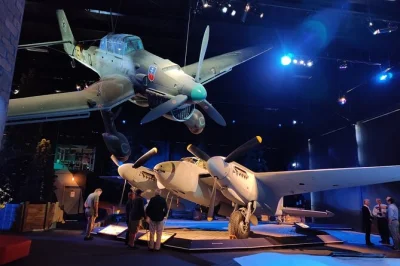
- View original DeHavilland Mosquito and Spitfire
- Experience immersive Battle of Stalingrad display
- Allow minimum 90 minutes for visit

The Experience
Most aviation museums feel like warehouses. You walk past a plane, read a placard, move on. Omaka Aviation Heritage Centre in Blenheim does something different — it stages the story. The first exhibition, Knights of the Sky, holds Sir Peter Jackson's personal collection of World War I aircraft, but what makes it land is the setting. WingNut Films and Weta Workshop (the same teams behind the Lord of the Rings films) built the dioramas and mannequins around the planes, so you're not just looking at a Sopwith Camel — you're standing in the moment it mattered. The whole thing opens at 10am daily, and the museum recommends spending at least 90 minutes to move through both exhibitions without rushing.
The second exhibition, Dangerous Skies, opened in 2016 and focuses on World War II. It stretches across theaters of war most museums skip over — the British Isles, the Russian forests, Germany, and the Pacific jungles. Two aircraft anchor the display: an original DeHavilland Mosquito (the "Wooden Wonder") and a Griffon-powered Spitfire Mk.XIVe. What caught me was how much space the exhibition gives to women's roles in both wars, and the immersive Battle of Stalingrad section — it's designed to be thought-provoking without feeling like a lecture. The pacing lets you absorb it.
The skip-the-line entry means you don't waste time at the counter, which matters on busy days. The centre is open year-round except Christmas Day, and it closes at 4pm, so timing your visit around that window keeps you from arriving with only an hour left. Wheelchair access covers all areas and surfaces, and there's a café for coffee and light refreshments if you need a break between the two exhibitions. Service animals are welcome, and if you're traveling with small children, prams and strollers work fine on the floors.

What’s included
Your visit includes skip-the-line entry to both exhibitions, access to the Knights of the Sky collection (Sir Peter Jackson's World War I aircraft and WingNut Films sets) and the Dangerous Skies exhibition (World War II aircraft, including the Mosquito and Spitfire), and GST. The museum is wheelchair accessible throughout, and a café with light refreshments is available on-site.
Operated by Omaka Aviation Heritage Centre
Is this one for you?Right for anyone interested in aviation history or World War I and II who wants to see rare original aircraft in a setting that tells the story rather than just displaying it — the skip-the-line entry and 90-minute window mean you move through both exhibitions without the usual museum friction.
Traveler reviews
More experiences you might like
 Blenheim: WWI & WWII Aviation Exhibitions Skip-the-Line★ 4.87 (99)1h 30mENNZ$ 49
 Omaka WWII Dangerous Skies Exhibition Tickets & Entry InfoBook skip-the-line tickets for Omaka Aviation Heritage Centre’s WWII Dangerous Skies exhibition. See rare aircraft, immersive displays, and local stories.★ 4.56 (27)45m–7hENNZ$ 25View ›
Top questions
How long should I spend at Omaka Aviation Heritage Centre?
The museum recommends a minimum of 90 minutes to see both exhibitions without rushing.
What are the opening hours?
Open daily from 10am to 4pm, closed only on Christmas Day.
Is the museum wheelchair accessible?
Yes, all areas and surfaces are wheelchair accessible. Prams and strollers are also suitable for the floors.
What aircraft are on display in the WWII exhibition?
The main attractions include an original DeHavilland Mosquito and a Griffon-powered Spitfire Mk.XIVe.
Who created the dioramas in the Knights of the Sky exhibition?
WingNut Films and Weta Workshop designed the sets and mannequins around Sir Peter Jackson's aircraft collection.
Can I bring service animals?
Yes, service animals are allowed throughout the museum.
Is food available at the centre?
Yes, there's a café serving coffee and light refreshments, plus souvenirs for purchase.
Do I need to book in advance?
The skip-the-line entry is included with your ticket, so you avoid the queue when you arrive.
Blenheim: WWI & WWII Aviation Exhibitions Skip-the-Line
1h 30m · EN
from NZ$ 49 per person
★★★★★★★★★★4.8799 reviewsVerified traveler reviews via our booking provider
