
Mardi Himal Base Camp Trek: 9 Days Kathmandu & Annapurna
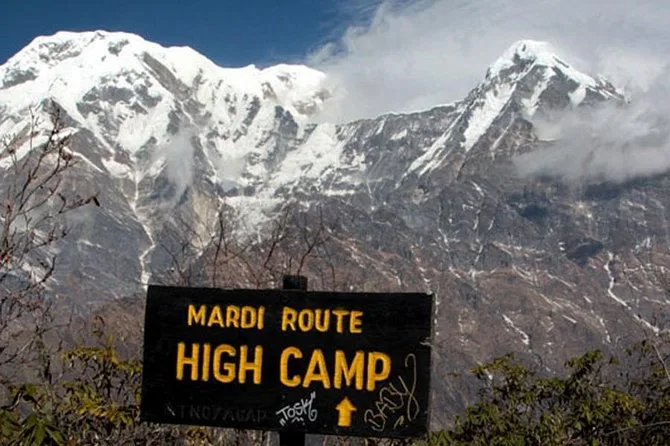
Nine Days to 4,550 Meters: The Mardi Himal Trek Without the Logistics
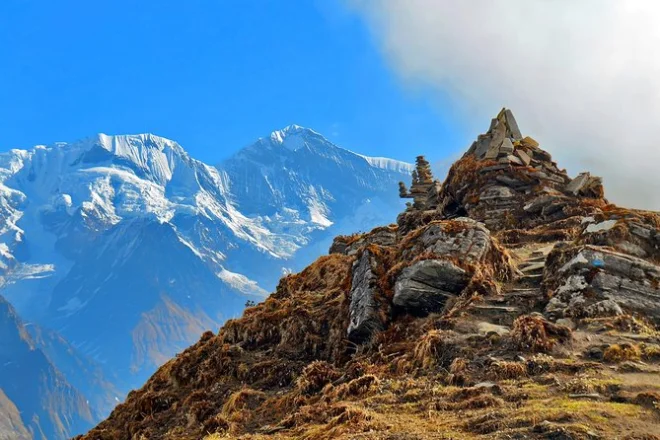
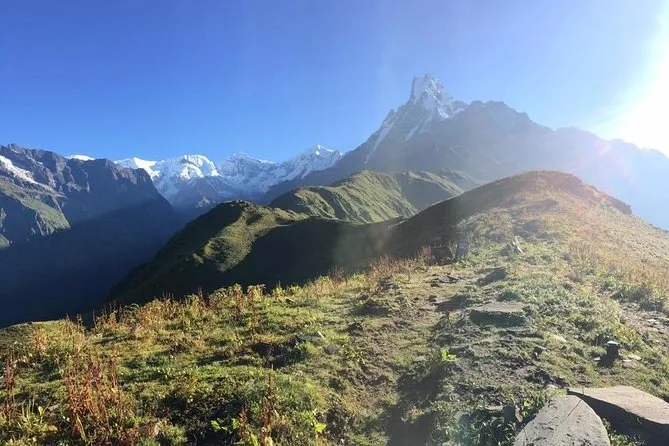
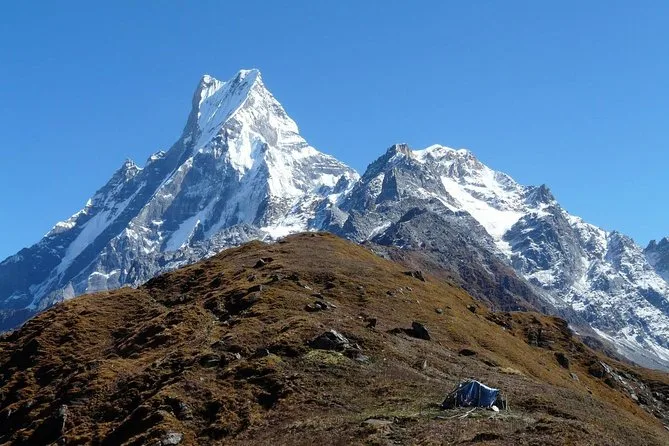
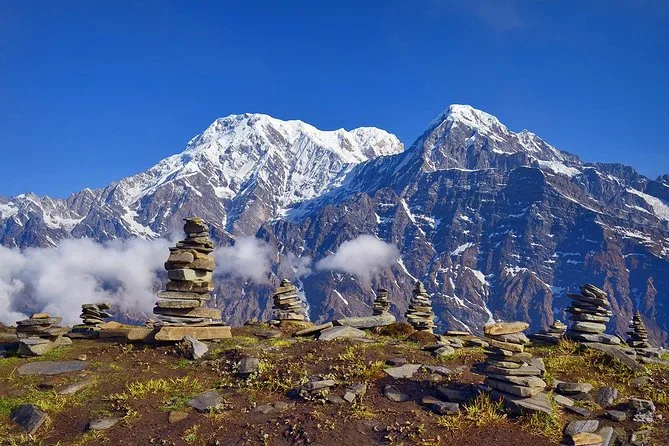
You fly into Kathmandu, get picked up and transferred to your hotel, then spend nine days trekking to Mardi Himal Base Camp at 4,550 meters with a guide, porter, all meals, and permits included. The trek moves through rhododendron forests and alpine meadows with views of Machhapuchhre, Annapurna South, and Annapurna I, descends through Gurung villages, and ends with a farewell dinner and cultural show before your airport transfer on the final day.
Compare the 12 alternatives
 Annapurna Base Camp Trek from Pokhara: 13 DaysEvery day · 07:00 · From age 8★ 5.00 (33)13dENUS$ 1,350View ›
 Langtang Valley Trek: Beginner-friendly Himalayan TrekEvery day · 06:45★ 4.99 (191)7dENUS$ 555View ›
 Everest Base Camp Trek from Kathmandu: 12 DaysEvery day · first departure 00:15, last 23:45 · From age 10★ 4.97 (575)14dENUS$ 1,700View ›
 Annapurna Base Camp Trek from Kathmandu or Pokhara: 5 DaysEvery day · 06:45 and 07:45 · From age 7★ 5.00 (176)5dEN · HIUS$ 200View ›
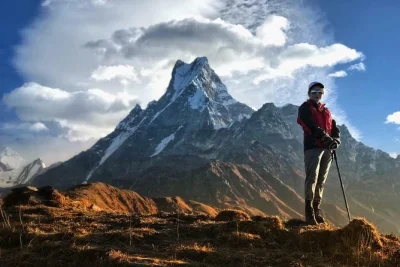 Mardi Himal Trek 8 Days: Annapurna Views & Teahouse LodgingEvery day · 06:15 · 17–72 years★ 5.00 (19)8dENUS$ 667View ›
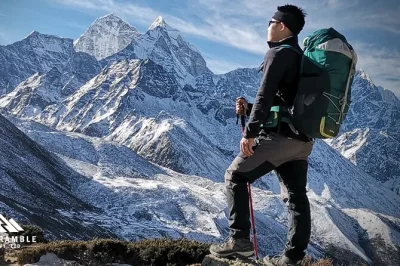 Everest Base Camp Trek from Kathmandu: 14 days to the mountainEvery day · 06:15 and 06:45 · From age 5★ 4.99 (372)13dENUS$ 1,420View ›
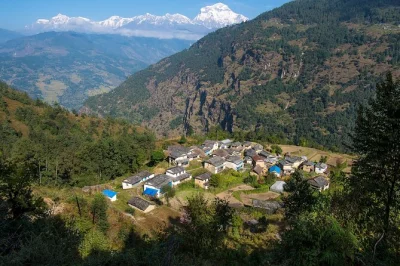 Kathmandu & Mohare Danda Trek: 12 Days AnnapurnaEvery day · From age 10★ 5.00 (56)12dEN · DE +4US$ 1,500View ›
 Everest Base Camp Trek: 14 Days Kathmandu & Mount EverestEvery day · first departure 00:45, last 23:45 · From age 8★ 4.93 (101)14dENUS$ 999View ›
 14-Day Everest Base Camp Trek from KathmanduEvery day · 06:15 and 08:00 · From age 8★ 4.98 (1,657)14dENUS$ 1,800View ›
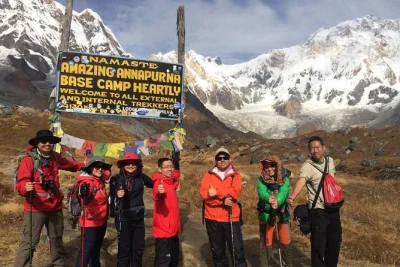 Annapurna Base Camp Trek from Kathmandu: 14 daysEvery day · first departure 06:30, last 14:15 · From age 10★ 5.00 (98)14dEN · HIUS$ 925View ›
 Everest Base Camp Trek from Kathmandu: 14-day guided expeditionEvery day · From age 12★ 5.00 (29)14dENUS$ 1,650View ›
 13-day Everest Base Camp Trek from Kathmandu: Guided with porterEvery day · 07:15 · From age 6★ 5.00 (146)13dEN · DE +3US$ 1,800View › Compare more experiences like this »
Step-by-step itinerary
Day 1: Arrival and hotel transfer in Kathmandu
- Arrive at Tribhuvan International Airport
- Meet company representative
- Transfer to hotel
- Meet participants and trek members
- Overnight stay at hotel
Day 2: Drive from Kathmandu to Pokhara
- Drive from Kathmandu to Pokhara
- Check into hotel in Pokhara
- Explore Pokhara in the evening
Day 3: Drive to Kande and trek to Pitam Deurali
- Drive from Pokhara to Kande
- Trek from Kande to Pitam Deurali
- Overnight stay at tea house
Day 4: Trek to Forest Camp at Kokar
- Trek from Pitam Deurali to Forest Camp
- Overnight stay at tea house
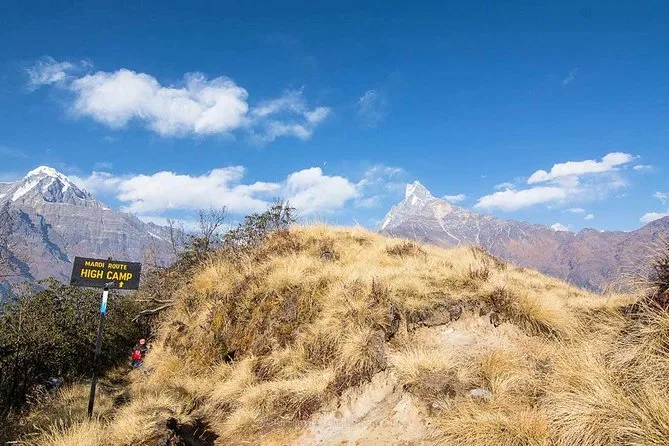
Day 5: Trek to High Camp
- Trek from Forest Camp to High Camp
- Overnight stay at tea house
Day 6: Excursion to Mardi Himal Base Camp
- Trek from High Camp to Mardi Himal Base Camp
- Enjoy mountain views at base camp
- Return to Badal Danda
- Overnight stay at tea house
Day 7: Trek down to Siding and drive to Pokhara
- Trek from Badal Danda to Siding village
- Drive from Siding to Pokhara
- Overnight stay at hotel in Pokhara
Day 8: Drive from Pokhara to Kathmandu
- Drive from Pokhara to Kathmandu
- Overnight stay at hotel in Kathmandu
Day 9: Departure from Kathmandu
- Transfer to airport
- Depart from Nepal
The experience
You land at Tribhuvan International Airport in Kathmandu and a company representative is already waiting with your name on a sign. That's the moment the trek actually starts, not the hiking, but the relief of knowing someone has your transfer sorted, your hotel booked, and your permits already in hand. The next morning you're on a bus heading west toward Pokhara, six to seven hours through terraced farmland and river valleys, and by evening you're in a tea house at Pitam Deurali watching the Annapurna range materialize above the clouds.
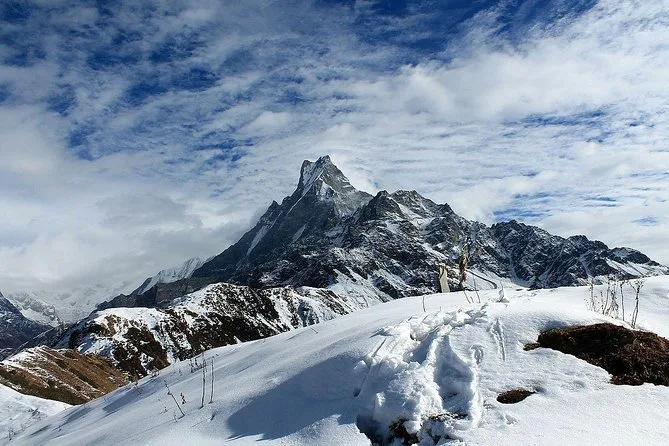
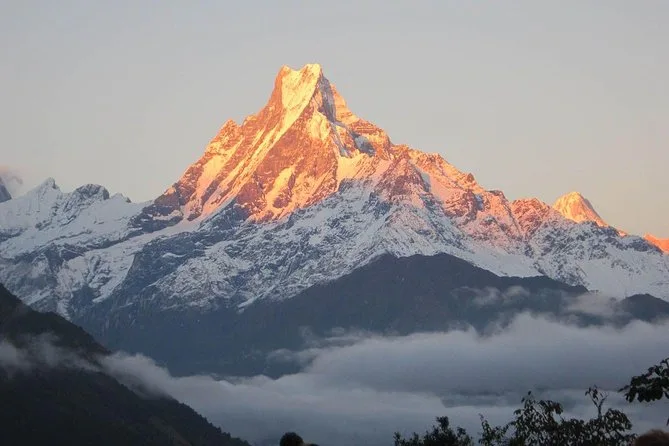
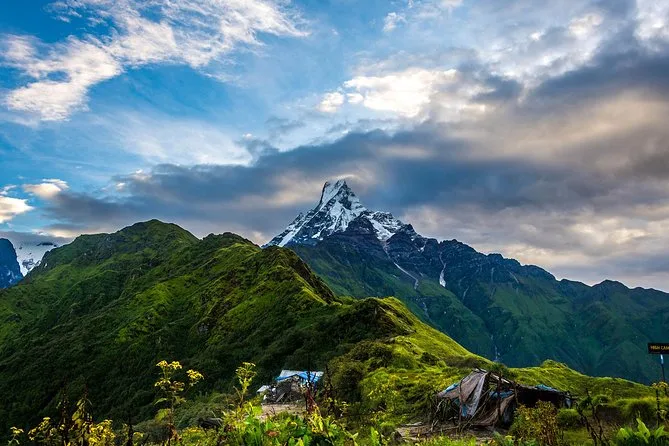
The Mardi Himal trek is built for people who want real altitude and real mountain views without spending three weeks in the wilderness. You climb from 1,750 meters at Kande to 4,550 meters at the base camp: high enough to feel the thin air and see snow on Machhapuchhre and Annapurna South, but short enough that you're done in nine days total, including the drive days. The trail moves through rhododendron forests that open onto alpine meadows, and the villages you pass through (Siding, Kokar, the small lodges at each camp) are still genuinely lived-in, not yet flattened by tourism. Your guide and porter handle the pace and the weight. You handle the walking. Meals come three times a day at the tea houses, and the last night back in Kathmandu ends with a farewell dinner and a cultural performance at an authentic Nepalese restaurant.
The trek itself follows a rhythm: five to six hours of hiking most days, with one big push on the day you go up to base camp and back down (six to seven hours). The altitude gain is steady but not brutal if you've done moderate hiking before. You're sleeping in basic tea house rooms on twin beds, not in a tent, which means hot water for washing and a roof that doesn't leak. The company provides a duffle bag for your gear, a porter to carry it, a first aid kit, and a TIMS permit plus the ACAP permit. The paperwork that would take you a full day to sort out yourself. Breakfast, lunch, and dinner are included throughout, and if you need vegetarian meals or have dietary requirements, you tell them when you book and it's handled.
The descent from High Camp to Siding takes you back down through forests and farmland in four to five hours, and then you drive back to Pokhara for a night in a 3-star hotel before the final six to eight hour drive back to Kathmandu. A company representative takes you to the airport three hours before your flight, so you're not figuring out taxis or negotiating with drivers at the curb. If you want to trek in the Annapurna region but don't have three weeks or the appetite for a full circuit, this one closes the gap.
What’s included
Your nine days include airport pickup and transfer to a 3-star hotel in Kathmandu, the drive from Kathmandu to Pokhara by tourist bus, all accommodation in tea houses during the trek and 3-star hotels in Pokhara and Kathmandu, breakfast, lunch, and dinner every day of the trek, an experienced guide and porter (one porter per two clients), all necessary permits (TIMS and ACAP), a duffle bag for your gear, a company t-shirt, a first aid kit, the drive from Pokhara to Kande and from Siding back to Pokhara by private vehicle, and a farewell dinner with cultural performance at an authentic Nepalese restaurant on your last night in Kathmandu, plus airport transfer on departure.
Before you book
Prices and times updated 3 days ago
Operated by Himalayan Adventure Treks and Tours Pvt Ltd
Is this one for you?This trek suits trekkers with moderate fitness who want genuine altitude and mountain views in nine days without arranging permits, transport, or meals themselves: the fixed itinerary and included guide mean you show up and walk, not organize.
Traveler reviews
Top questions
What languages is the guide in?
Live guide in English and Chinese.
How difficult is the Mardi Himal trek?
Moderate. You need a reasonable level of fitness (the daily hikes are five to six hours with altitude gain), but it's not a technical climb. The highest point is 4,550 meters, which is high but not extreme for acclimatized trekkers.
What's included in the price?
Airport pickup, all accommodation (3-star hotels in Kathmandu and Pokhara, tea houses on the trek), all meals during trekking, guide and porter, permits (TIMS and ACAP), transport from Kathmandu to Pokhara and back, and the farewell dinner with cultural performance.
How many days is actual trekking versus driving?
Two days are spent driving (Kathmandu to Pokhara, Pokhara to Kathmandu). Five days are trekking. The remaining two days are arrival, departure, and the night in Pokhara between the trek and the drive home.
Do I need to arrange permits myself?
No. The TIMS permit and ACAP permit are included and arranged by the company before you arrive.
What if I'm vegetarian?
Vegetarian meals are available. Tell the company at the time of booking and they'll arrange it with the tea houses along the route.
Is there a porter for my gear?
Yes. One porter is provided for every two clients. They carry your duffle bag so you only need a day pack while hiking.
What's the accommodation like on the trek?
Basic but comfortable tea house rooms with twin beds, hot water for washing, and meals. Not camping. You have a roof and walls.
How high is the base camp and will I get altitude sickness?
The base camp is at 4,550 meters (14,900 feet). Altitude sickness is possible at any elevation, but the trek climbs gradually over five days, which helps acclimatization. The company provides a first aid kit and your guide is trained to recognize symptoms.
What's the weather like in the Annapurna region?
Best trekking is September to November (clear skies, cool days) and March to May (warmer, occasional clouds). December to February is cold and snowy at altitude. June to August is monsoon season with heavy rain.
Do I need travel insurance?
Yes. Standard travel insurance should cover trekking up to around 4,500 meters. Check your policy before booking, especially if you have pre-existing conditions.
Mardi Himal Base Camp Trek: 9 Days Kathmandu & Annapurna
9d · EN +1
from US$ 1,000 per person
5.0019 reviewsVerified traveler reviews via our booking provider