
Beirut Historical Tour: Small Group, 3 Hours
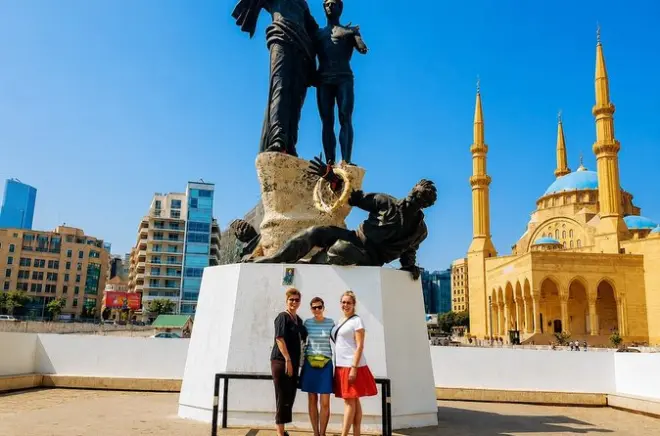


Three hours tracing Beirut from ancient baths to wartime ruins
A small-group historical tour of Beirut's downtown over three hours, with hotel pickup and an English- or Arabic-speaking guide. The route moves through Nejme Square and its 1930 Rolex clock, Martyrs' Square, the Mohammad Al-Amin Mosque with its blue-tiled domes, and the Al-Omari Grand Mosque, then reaches the Roman Berytus Baths (the largest outdoor archaeological site in downtown) before passing the abandoned Holiday Inn, a landmark of the civil war.
Compare the 3 alternatives
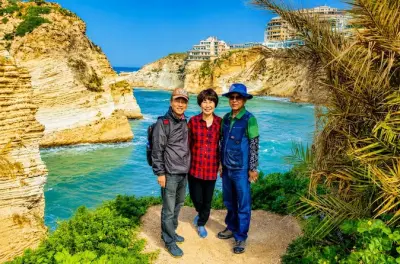 Private Beirut Historical Tour: National Museum & LandmarksTue–Sun · First departure 08:30, last 14:30★ 5.00 (7)5hEN · ARUS$ 150View ›
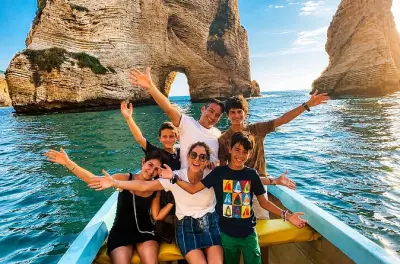 Private Beirut City Tour: 12 Landmarks in 4 HoursEvery day · First departure 08:30, last 14:30★ 5.00 (6)5hENUS$ 125View ›
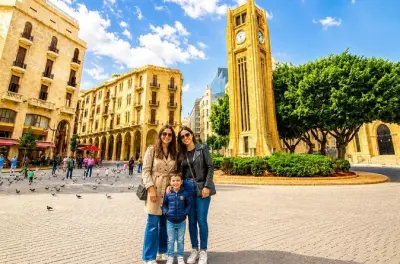 Beirut, Beiteddine & Deir El Qamar small-group tour with lunchTue and Fri · 08:30 · All ages★ 5.00 (2)8hEN · ARUS$ 89View ›
 Private Beirut Historical Walking Tour: Museum & DowntownTue–Sat · 09:00★ 5.00 (28)3h–4hEN · AR · FRUS$ 93View › Compare more experiences like this »
Step-by-step itinerary
Explore Beirut's historic city center
- Visit Nejme Square
- See Martyrs' Square
- Tour Mohammad Al-Amin Mosque
- Visit Al-Omari Grand Mosque
- Explore Greek Orthodox Cathedral of Saint George
- View Pigeon Rock
- Walk along Al Manara Corniche
- Stroll through Zaitunay Bay
- Pass by abandoned Holiday Inn Hotel
- Shop at Beirut Souks
- See Roman Berytus Baths
The experience
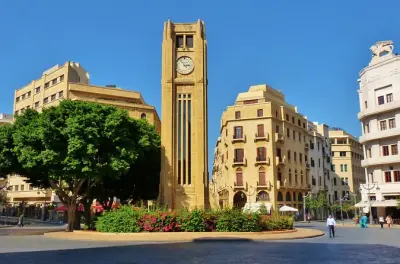
The tour starts with pickup from your hotel and moves into downtown Beirut's core. Nejme Square, or Place de l'Étoile, anchors the walk: the Lebanese Parliament sits here alongside two cathedrals, a museum, and the square's most recognizable feature, a four-faced Rolex clock built in 1930. From there, the route reaches Martyrs' Square, named after the 1916 Ottoman executions of Lebanese nationalists, and the Mohammad Al-Amin Mosque: the largest in Lebanon, opened in 2008 with four minarets 65 meters high and domes covered in light blue tiles.
The Al-Omari Grand Mosque comes next, a structure that has shifted between faiths across centuries: built in 635 AD, converted to a Crusader church in the 12th century, then restored as a mosque by the Mamluks in 1291. Damage from the civil war required a full refurbishment completed in 2004. Nearby stands the Greek Orthodox Cathedral of Saint George, the oldest church in Beirut, its origins traced to the mid-sixth century. The Roman Berytus Baths, discovered in 1968–69, form the largest outdoor archaeological site downtown. Four bath complexes once stood here under Augustus in the first century, until the 551 AD earthquake destroyed them. Today one serves as a performance and concert space.
The tour also passes the abandoned Holiday Inn, a war landmark left untouched since the Lebanese civil war began in 1975. Built between 1971 and 1974 during Beirut's economic peak, it became a contested site during the "Battle of the Hotels," when over 25,000 combatants fought for control of luxury properties across the city. The route ends at the Al Manara Corniche, the seaside promenade lined with palms that stretches toward Pigeon Rock and Mount Lebanon, or at Zaitunay Bay, the waterfront promenade with shops and restaurants. An air-conditioned vehicle carries the group throughout, and the guide speaks English or Arabic.
What’s included
- Hotel pickup and drop-off.
- air-conditioned vehicle.
- professional guide in English or Arabic.
Before you book
Prices and times updated 10 days ago
Operated by Lebanon Tours Online
Is this one for you?Small groups keep the pace intimate and allow the guide to answer questions as you move between sites. The three-hour window fits downtown's major landmarks into a single morning or afternoon without rushing, and hotel pickup means no navigation or transport logistics to arrange.
Traveler reviews
Top questions
What languages is the tour guided in?
Live guide in English and Arabic.
Can children come?
Yes. Ticket types: Child (4 to 12 years); Infant (under 4): free.
What is Pigeon Rock and where does it fit in the tour?
Pigeon Rock, also called the Rock of Raouché, is a pair of huge rock formations at Beirut's western tip that stand like sentinels to the city. The tour passes it from the Al Manara Corniche, the seaside promenade that stretches from Ramlet al Bayda to Saint George marina and offers views of the Mediterranean, Mount Lebanon, and the rock itself.
Can I see the Roman Berytus Baths up close, or is it just a drive-by?
The Roman Berytus Baths are a stop on the tour, not a drive-by. They are the largest outdoor archaeological site in downtown Beirut, and the guide will explain the four bath complexes that once stood here under Augustus and how the 551 AD earthquake destroyed them. One of the baths now functions as a performance and concert space.
Why is the abandoned Holiday Inn included on this tour?
The Holiday Inn is one of Beirut's most significant war landmarks. Built in 1971–74 during the city's economic boom, it became a contested site during the civil war's "Battle of the Hotels," when over 25,000 combatants fought for control of luxury properties. The hotel has remained untouched and empty for decades, serving as a reminder of the conflict's impact.
How many mosques and churches does the tour visit?
The tour includes two major mosques (the Mohammad Al-Amin Mosque, the largest in Lebanon with its distinctive blue-tiled domes, and the Al-Omari Grand Mosque, which has been rebuilt and refurbished multiple times across its 1,400-year history), and the Greek Orthodox Cathedral of Saint George, the oldest church in Beirut, dating back to the mid-sixth century.
What is Nejme Square known for?
Nejme Square, also called Place de l'Étoile, is the central square in downtown Beirut and home to the Lebanese Parliament, two cathedrals, a museum, and cafes and restaurants. It is most notable for its four-faced Rolex clock, built in 1930, and its distinctive architecture, which has made it a recognizable icon of Beirut worldwide.
Beirut Historical Tour: Small Group, 3 Hours
3h · EN +1 · at your hotel
from US$ 150 per person
5.002 reviewsVerified traveler reviews via our booking provider