



Baalbek Day Tour: Roman Temples & Stone of Pregnant Woman


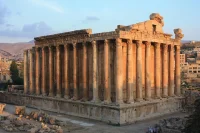
Temple of Jupiter and Bacchus tour, ancient temples, see stones no crane can lift
A private day tour from Beirut to Baalbek, Lebanon's UNESCO World Heritage temple complex in the Bekaa Valley, with an English-speaking driver who explains the site's engineering and history. You stop at the Stone of the Pregnant Woman (a 1,000-tonne limestone block cut 2,000 years ago and never transported), then spend the day walking through the Temple of Jupiter, the Temple of Bacchus, and the Temple of Venus at your own pace.
Step-by-step itinerary
Explore Baalbek Roman Temples
- Depart from Beirut hotel
- Drive through Lebanese mountains
- Stop at Stone of the Pregnant Woman
- Visit Temple of Jupiter
- Walk to Temple of Bacchus
- Explore Temple of Venus and complex
- Optional lunch in Baalbek
- Return to Beirut hotel
What’s included
- Knowledgeable English-speaking driver.
- private air-conditioned vehicle.
- hotel pickup and drop-off in Beirut.
- visit to the Stone of the Pregnant Woman quarry.
Times
- Every day 09:00 10:00 11:00
Before you book
Operated by Beirut Airport Transfer
Prices and times updated today
Need assistance?Message us on WhatsApp or by emailTraveler reviews
The experience
The drive east from Beirut climbs through the Lebanese mountains on the Damascus highway, then descends into the Bekaa Valley: one of the most dramatic openings in Lebanon, with the valley floor spreading between two mountain ranges as you approach. Before the temples, your driver stops at the ancient Roman quarry to show you the Stone of the Pregnant Woman: a single block of limestone 21 metres long and weighing an estimated 1,000 tonnes, still lying where it was cut and never moved. Standing beside it, realizing the Romans cut and planned to transport stones even larger than this one, is genuinely disorienting. Your driver explains the engineering theories and the enduring mysteries of how they intended to move it.
The Temple of Jupiter sits on a platform of megalithic stones so enormous that three of them, the Trilithon, each weigh over 800 tonnes and represent the largest dressed stones ever used in construction in human history. Six of the original 54 columns still stand, each one 22 metres tall and 2.2 metres in diameter. The Temple of Bacchus, dedicated to the god of wine, is larger than the Parthenon in Athens and almost entirely intact, with its towering carved doorway, ornate ceiling coffers, and 42 standing columns still in place: a complete Roman temple standing as it stood two thousand years ago. You also walk through the circular Temple of Venus, the Great Court, the Altar Court, and the propylaea gateway. Your driver-guide ties together the full story: from Baalbek's origins as a Phoenician sacred site, through its transformation into Rome's greatest eastern sanctuary, to its UNESCO World Heritage designation.
Before returning to Beirut around 4:00 PM, you have the option to stop for lunch at one of Baalbek's local restaurants. Hearty Bekaa Valley cuisine with fresh mezze, grilled meats, and local flatbread. The scenic drive back follows the same route through the valley and over the mountains, with drop-off at your Beirut hotel.
Is this one for you?Your driver speaks English and Arabic, so the commentary is accessible whether you prefer one language or both. The seven-hour day leaves you time to walk through each temple at your own pace rather than moving through on a fixed schedule, which is what makes standing inside these structures, especially the Temple of Bacchus, feel unhurried instead of rushed.
Compare the 12 alternatives










Top questions
What languages is the tour guided in?
Live guide in English and Arabic.
How long does the drive from Beirut to Baalbek take?
The full day tour is seven hours, which includes the drive, the Stone of the Pregnant Woman stop, and time exploring the temple complex. The drive itself to Baalbek takes several hours as you climb through the Lebanese mountains and descend into the Bekaa Valley.
What is the Stone of the Pregnant Woman and why is it still in the quarry?
The Stone of the Pregnant Woman is a single block of limestone 21 metres long and weighing an estimated 1,000 tonne, cut by the Romans 2,000 years ago and never transported from the quarry where it was worked. It is one of the heaviest objects ever worked by human hands in the ancient world, and standing beside it reveals the extraordinary scale of the engineering the Romans attempted.
Which temple at Baalbek is the best preserved?
The Temple of Bacchus is the best-preserved Roman temple at the site, standing almost entirely intact with its 42 columns, ornate ceiling coffers, and towering carved doorway still in place. It is larger than the Parthenon in Athens and represents a complete Roman temple in a state of preservation that seems almost impossible given its age.
How many of the original columns at the Temple of Jupiter are still standing?
Six of the original 54 columns at the Temple of Jupiter still stand, each one 22 metres tall and 2.2 metres in diameter. The temple was built on a platform of megalithic stones so enormous that three of them, the Trilithon, each weigh over 800 tonnes.
Is lunch included in the tour?
Lunch in Baalbek is optional and at your own expense. Before heading back to Beirut, you can stop at one of Baalbek's local restaurants for hearty Bekaa Valley cuisine with fresh mezze, grilled meats, and local flatbread.
Baalbek Day Tour: Roman Temples & Stone of Pregnant Woman
7h · EN +1 · at your hotel
from US$ 100 per person
Next, you choose your date and number of travelers and see the final price.