
Kanazawa: Shirakawa-go & Gokayama UNESCO Villages with Paper Making


What happens when you step into a 250-year-old farmhouse in the mountains?
You spend a full day moving through three mountain communities — a woodcarving town, two UNESCO heritage villages, and a paper-making workshop — with an English-speaking guide handling the route and the history. You make your own paper to take home, enter a 250-year-old farmhouse, and have free time to explore Shirakawa-go at your own pace. Hotel pickup and all entry fees are included, which means you show up ready to go.
 9h
9h

Step-by-step itinerary
Explore woodcarving and heritage villages
- Visit Inami woodcarving main street
- Walk around Zuizenji Temple
- Explore Ainokura Village in Gokayama
- Try Japanese paper-making experience
- Visit Shirakawa-go observation point
- Tour historic farmhouse in Shirakawa-go
- Free time to shop and eat in village

The Experience
The day starts in Inami, a town where woodcarvers have been at work for centuries. You walk the main street and see their craft everywhere — in shop windows, temple carvings, on hand-painted signs. Your guide points out the details most visitors miss: the way a piece of wood grain dictates the design, how the same families have held chisels for generations. After that, you visit Zuizenji Temple, where the woodcarving tradition itself began. It's quiet, and the carvings are the kind that make you stop and look twice.
Then the bus climbs into the mountains. Ainokura Village appears first — one of the two UNESCO World Heritage Sites on this tour. The gassho-style houses have steep, triangular roofs built to shed heavy snow, and some of them are over 250 years old. Your guide shows you the best angle for photographs, and you have time to walk around and absorb it. The scale of these buildings, the way they sit in the landscape, hits different when you're standing in front of them instead of scrolling past.
The paper-making experience comes next. You choose what to press into the paper — flower petals, leaves, whatever appeals to you — and then you make three postcard-sized sheets yourself. It takes about 10 to 15 minutes for them to dry, and you take them home. It's one of those activities that sounds simple until you're actually doing it and realizing how much skill goes into something that looks effortless.
Shirakawa-go is the final stop, and it's the larger of the two villages. You get a guided walk through the historic streets, and you actually enter one of the farmhouses to see how people lived and how the buildings were constructed. After that, the afternoon is yours — time to wander, shop, eat something local, or just sit with the view from the observation point. The entire day is structured around seeing the real thing, not a version of it. Transportation from Kanazawa is included, which means you don't have to figure out mountain roads or bus schedules yourself.

What’s included
Your day includes pickup from your Kanazawa hotel or meeting point, a guided tour of the wood carving town Inami with entry to Zuizenji Temple, a visit to Ainokura Village in Gokayama, a Japanese paper-making workshop where you create three postcard-sized pieces, a guided walk through Shirakawa-go with entry to a historic farmhouse, free time to explore Shirakawa-go on your own, and transportation to and from all destinations. An English-speaking guide is with you throughout.
Operated by Snow Monkey Resorts Tours (Machinovate Japan Ltd.)
Is this one for you?Book this if you want to see the UNESCO villages and mountain crafts without arranging your own transport or worrying about which stops to prioritize — the guide handles the route and the history, and you get to focus on what you're actually seeing.
Traveler reviews
Compare the 13 similar options
 Kanazawa: Shirakawa-go & Gokayama UNESCO Villages with Paper Making★ 4.92 (119)9hENJP¥ 28,000
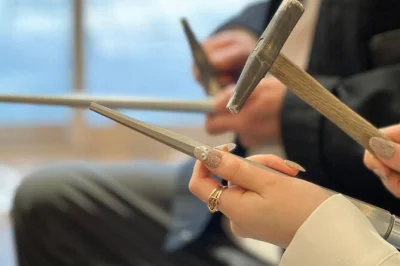 Kanazawa: Make Your Own Ring with Tsuchime HammeringCreate a silver or gold ring in 60–90 minutes using traditional Japanese hammering at GENTiL Tatemachi in Kanazawa. Take it home same day. From ¥3,850.★ 4.96 (199)1h 30mJP¥ 3,850View ›
 Kanazawa Sushi & Cooking Class: Hands-On at 56-Year SchoolLearn to make nigiri sushi, jibuni & dashi at Kanazawa's oldest cooking school. Small groups, AI translation, premium fish. Includes all dishes, sake & certificate.★ 4.99 (104)2h 30mEN · JA +3JP¥ 12,000View ›
 Kanazawa: Omicho Market & Geisha District Food TourTaste fresh sushi and seasonal street food at Omicho Market, then explore Higashi Chaya's wooden teahouses and sake bars with a local guide. Small groups, photos included.★ 4.89 (140)2hENJP¥ 7,000View ›
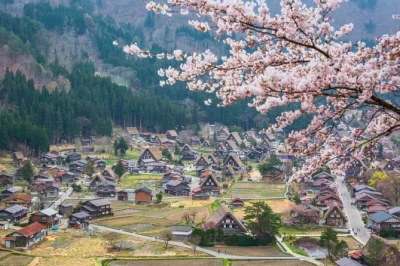 Shirakawa-go & Takayama Private Day Tour with Custom StopsStep into the quiet lanes of Shirakawa-go and Takayama, explore gassho-zukuri farmhouses, stroll Edo-era streets, and enjoy a private charter with flexible pickup.★ 4.67 (282)8hEN · JAJP¥ 90,221per groupView ›
 Kanazawa: Samurai District, Matcha & Geisha with Garden EntryFull-day Kanazawa walking tour of Ashigaru samurai homes, Nagamachi district, Kenroku-en Garden, and Higashi-chaya geisha district with matcha tea and wagashi sweets.★ 4.92 (102)9hENJP¥ 22,300View ›
 Kanazawa: Custom Walking Tour with Licensed Local GuideWander Kanazawa’s gardens, samurai lanes & teahouse districts on a private half-day walking tour. Includes meet-up, licensed guide & customizable route.★ 4.87 (117)4h–6hEN · JAJP¥ 18,500View ›
 Shirakawago & Kanazawa: UNESCO Village & Garden Day TripFull-day tour from Kanazawa Station to Shirakawago village with gassho-zukuri houses, Kenrokuen Garden, and Higashi Chaya district. Includes bilingual guide, lunch, and hotel pickup.★ 4.88 (97)8h 30mEN · ESJP¥ 8,661View ›
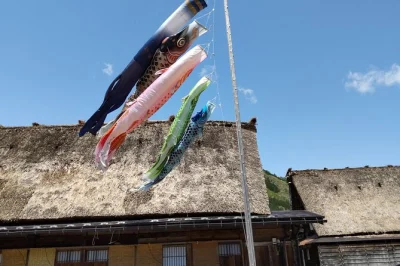 Shirakawa-go & Takayama Day Trip from Kanazawa with LunchStep into Shirakawa-go’s thatched villages & stroll Takayama’s old streets on a day trip from Kanazawa, with local guide, scenic stops & Hida-style lunch included.★ 4.74 (152)9h 15mEN · JAJP¥ 15,795View ›
 Kanazawa: Private Full Day Tour with Garden & Samurai DistrictWander Kanazawa’s gardens, castle grounds, geisha lanes & samurai district in one private day tour. Includes hotel pickup, certified guide & custom itinerary.★ 4.99 (389)7hEN · JAJP¥ 27,689View ›
 Kanazawa: Private Half Day Tour with Local Nurse GuideLet curiosity lead you through Kanazawa’s gardens, samurai streets & lively market on a private walking tour—customized, with a local nurse as your guide.★ 5.00 (127)4h–5hJP¥ 25,000View ›
 Kurobe Gorge & Unazuki Onsen: Trolley Train Day Trip from KanazawaFull-day tour from Kanazawa to Kurobe Gorge with trolley train ride, Unazuki Onsen town walk, and Buddha visit. Includes transport, English guide, train tickets. 8–9 hours.★ 4.89 (18)8hENJP¥ 28,000View ›
 Kanazawa: Shirakawa-go & Gokayama World Heritage Villages Bus TourDepart Kanazawa Station at 8am for two UNESCO villages in one day. Includes air-conditioned bus, English-speaking guide, and traditional Hida lunch. Back by 3:45pm.★ 4.78 (315)7h 45mEN · JAJP¥ 14,667View ›
Top questions
How long is the tour from Kanazawa?
Around 8 to 9 hours, including travel time and all stops.
Is the paper-making activity included?
Yes, the Japanese paper-making experience is included. You make three postcard-sized pieces to take home.
Do I need to speak Japanese?
No, an English-speaking guide is with you the entire day.
Are entry fees included?
Yes, entry to Zuizenji Temple, the paper-making workshop, and access to the villages are all included. Transportation from Kanazawa is also included.
What if I want to stay longer in one village?
You have free time in Shirakawa-go to explore at your own pace, shop, or eat. The other stops have set times as part of the guided portion.
Is this tour available year-round?
Most of the year, yes. However, from December 28 to January 5, many shops in Inami and Gokayama close, and the paper-making activity is not available during that period. Shirakawa-go remains mostly open.
Can I do this tour if I'm not very fit?
The tour is suitable for all fitness levels. There is walking through villages and temples, but the pace is leisurely and you set your own speed during free time.
Do I need to arrange my own transport to the meeting point?
Transportation from Kanazawa to all destinations and back is included in the tour.
Kanazawa: Shirakawa-go & Gokayama UNESCO Villages with Paper Making
9h · EN
from JP¥ 28,000 per person
★★★★★★★★★★4.92119 reviews
