
Hiroshima Peace Memorial Park Walking Tour: Small Group History


Walk through monuments and survivor stories, connecting history to the human cost of war
A two-hour small group walking tour of Hiroshima Peace Memorial Park led by a local English-speaking guide explores the city's transformation from devastation to peace symbol. The tour moves through nine key stops—the 10 Gates of Peace, the Mother and Baby monument, the Children's Peace Monument, and the sole surviving building 170 meters from ground zero—while your guide connects historical events with survivor testimonies and local perspectives on the bombing's lasting legacy.
 2h
2h

Step-by-step itinerary
Walking tour of Hiroshima Peace Park
- Meet guide at meeting point
- Learn about atomic bomb history
- Visit 10 Gates of Peace
- See Mother and Baby in the Storm monument
- View names of Hiroshima A-bomb victims
- Explore hall showing city destruction
- Visit solo survival building near ground zero
- See Sadako and children’s peace crane monument
- Visit monument for Korean victims
- Ring the peace bell
- View building that survived bombing

The Experience
The tour starts at the 10 Gates of Peace, where your guide explains why Hiroshima was selected as a target in the final stages of World War II and how the atomic bomb shaped world history. Nine of the gates represent the gates of hell; the tenth symbolizes the hell of Hiroshima itself. The word "peace" is inscribed in 49 different languages across the gates—a physical reminder of the city's transformation into an international symbol of peace.
From there, the walk moves through the park's monuments, each tied to specific human stories. You'll stand at the Mother and Baby monument, dedicated to mothers who sacrificed their lives protecting their children, and at the Children's Peace Monument, which tells the story of Sadako and the paper crane as a symbol of peace. The guide connects these sites to survivor testimonies and explains what Hiroshima was like before the bombing, how the city was rebuilt, and how the bombing continues to shape the city and its people today. A hall shows the scale of destruction; the solo survival building 170 meters from ground zero stands as physical evidence of the blast's force.
The route also includes the peace bell and a monument dedicated to Korean victims, rounding out the historical record beyond the most visible sites. Throughout the two hours, your guide creates space for discussion, so the tour becomes an exchange rather than a lecture. The park is fully accessible, and children under 10 can join free of charge.

What’s included
Guided tour led by a local English-speaking guide; access to all nine stops in Hiroshima Peace Memorial Park, including the 10 Gates of Peace, the Mother and Baby monument, the Children's Peace Monument, the peace bell, and the sole surviving building 170 meters from ground zero.
Operated by Ali
Is this one for you?This small group tour suits anyone who wants to move beyond dates and monuments to understand the human stories and lasting legacy of the bombing. The local guide and discussion-based format mean you're not just walking past sites—you're connecting them to survivor testimonies and local perspectives on how Hiroshima transformed into a peace symbol.
Traveler reviews
Compare the 13 similar options
 Hiroshima Peace Memorial Park Walking Tour: Small Group History★ 4.96 (94)2hENJP¥ 5,000
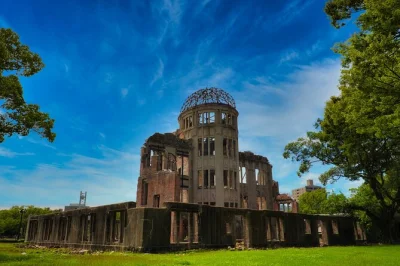 Hiroshima Peace & History Tour: Atomic bomb context and sitesWalking tour of Hiroshima with local guide covering the historical and political context of the August 6, 1945 atomic bombing, the Peace Memorial Park★ 4.88 (579)2h 30mENJP¥ 5,622View ›
 Hiroshima & Miyajima Day Tour: Museum & Shrine VisitEight hours from Hiroshima Station through the Atomic Bomb Dome, Peace Memorial Museum, and ferry to Miyajima Island—guide, shrine entry, and lunch included if you choose it.★ 4.97 (8,735)8hEN · JAJP¥ 19,488View ›
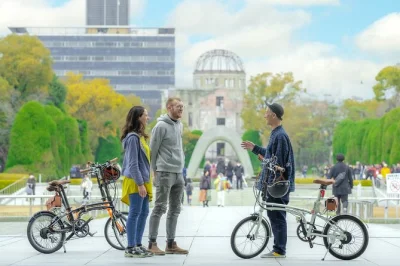 Hiroshima: Peace Cycling Tour, Bombed Heritage & Local StoriesPedal through Hiroshima’s history on a guided cycling tour. Visit the Peace Memorial Park, bombed heritage sites, and hear local stories. Includes e-bike rental.★ 4.97 (190)3hENJP¥ 13,000View ›
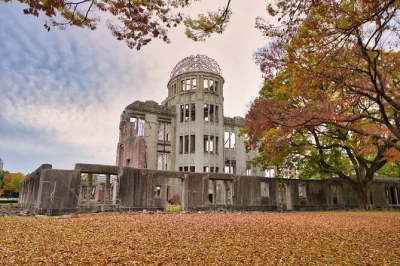 Hiroshima and Miyajima Day Tour: Peace sites and floating shrineFull-day guided tour from Hiroshima Station covering the Atomic Bomb Dome, Peace Memorial Museum, and Itsukushima Shrine on Miyajima Island★ 4.72 (154)7h 40mENJP¥ 18,000View ›
 Kimono and Tea Ceremony in Miyajima: Learn to Dress and BrewDress in traditional kimono at a 300-year-old Miyajima temple, then learn matcha tea ceremony from a tea master with over 100 garment options to choose from.★ 4.95 (78)1h 20mENJP¥ 14,100View ›
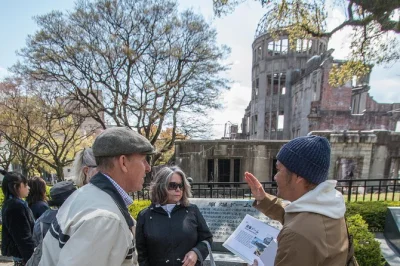 Hiroshima Peace Memorial & Atomic Dome Walking TourHiroshima Peace Memorial Museum, Atomic Bomb Dome, and Orizuru Tower with certified local guide. Includes lunch, entrance fees, tour photos. Small groups.★ 4.96 (1,022)5hENJP¥ 13,600View ›
 Hiroshima & Miyajima Private Tour: 7 hours with local guideSeven-hour private tour of Hiroshima and Miyajima with English-speaking local guide—visit the Peace Memorial Park and Atomic Bomb Dome★ 4.99 (162)7hENJP¥ 18,000View ›
 Hiroshima & Miyajima Private Tour: Customizable 8-Hour ItineraryMeet your English-speaking guide at your Hiroshima hotel and spend eight hours walking between the Peace Memorial Park, Hiroshima Castle★ 4.94 (1,535)8hEN · JAJP¥ 30,900View ›
 Miyajima Walking Tour: Shrine, Temple & Local FoodHalf-day walking tour of Miyajima island from Hiroshima with a certified local guide, shrine and temple entry, and lunch featuring fresh oysters and local specialties.★ 4.95 (361)5h 30mENJP¥ 16,170View ›
 Hiroshima Peace Cycling Tour: Electric Bikes & Heritage SitesRide an electric bicycle through Hiroshima's Peace Memorial Park and A-bomb heritage sites with an English-speaking local guide★ 4.96 (388)2hENJP¥ 9,000View ›
 Hiroshima: Morning Bike Tour Peace Park, Dome & ShukkeienPedal Hiroshima’s riverside paths, pause at Peace Memorial Park, visit the Atomic Bomb Dome & Shukkeien Garden with a local guide. Includes bike & helmet.★ 4.90 (594)3h–4hENJP¥ 11,000View ›
 Miyajima Half-Day Tour from Hiroshima: Licensed Local GuideFour-hour guided tour of Miyajima Island and Itsukushima Shrine from Hiroshima with licensed English-speaking guide★ 4.91 (223)4hEN · JAJP¥ 17,500View ›
Top questions
What does the 10 Gates of Peace represent?
Nine of the 10 Gates of Peace represent the gates of hell, while the tenth symbolizes the hell of Hiroshima. The word "peace" is inscribed in 49 different languages on each gate, reflecting the city's role as an international peace symbol.
Will the guide talk about survivor stories during the tour?
Yes, the guide connects historical events and monuments to survivor testimonies and local perspectives, so you understand the human stories and lasting impact behind the historical facts and dates.
How long does the walking tour take?
The tour lasts two hours and covers nine key stops throughout Hiroshima Peace Memorial Park, including the 10 Gates of Peace, monuments to mothers and children, and the building that survived 170 meters from ground zero.
Is the tour accessible for people with mobility challenges?
Yes, all areas and surfaces in the park are wheelchair accessible, and transportation options nearby are also wheelchair accessible. Infants and small children can ride in a pram or stroller.
What is the Children's Peace Monument about?
The Children's Peace Monument is dedicated to Sadako and other children who died in the atomic bombing. It tells the story behind the paper crane, which became a symbol of peace.
Do children need to pay for this tour?
Two children aged 0–10 years can join the tour free of charge; older children and adults pay the standard rate.
Hiroshima Peace Memorial Park Walking Tour: Small Group History
2h · EN
from JP¥ 5,000 per person
★★★★★★★★★★4.9694 reviewsVerified traveler reviews via our booking provider
