
6-day North Karnataka weaving trail from Hyderabad
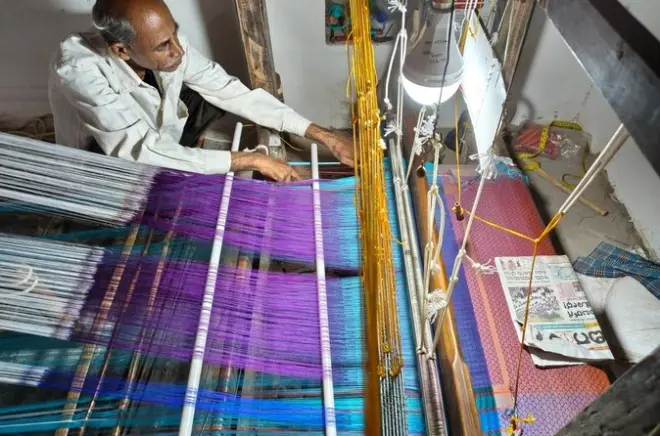


Weave silk, shape bangles, and learn from the families who've held these crafts for centuries
This 6-day tour through North Karnataka and Hyderabad connects you directly with weavers, farmers, silversmiths and bangle makers in their own homes and studios. You'll weave khun silk at a traditional pit loom in Guledagudda, craft lac bangles in Hyderabad's Laad Bazaar, and visit working farms growing India's only GI-tagged tur dal. Private transport, an English-speaking guide, all meals cooked by host families, accommodation and entrance fees are included throughout.
More experiences you might like
 2-Day Taj Mahal Tour from Hyderabad: Sunrise Visit & Agra FortEvery day except Thursday · 06:00 · All ages★ 4.94 (35)2dEN · DE · RU · IT +2US$ 254View ›
 2-Day Tiger Safari from Hyderabad: Amarabad Reserve & Fort TrekEvery day · 09:00★ 5.00 (1)2dEN · TE · HIUS$ 375View ›
 Hyderabad Street Food Crawl: Taste 5 Authentic DelicaciesEvery day · 12:00 and 17:00 · All ages★ 4.00 (6)2hEN · HIUS$ 22View ›
 Hyderabad: Golconda Fort & Charminar Full-Day Tour with PickupEvery day · 09:00★ 4.91 (235)4h–9hEN · TE · HIUS$ 130per groupView › Compare more experiences like this »
Step-by-step itinerary
Day 1: Kalaburagi, Arrival Into a Sultanate Stronghold
- Drive 4.5 hours from Hyderabad to Kalaburagi
- Visit Gulbarga Fort
- Explore Jama Masjid inside the fort
Day 2: Ganagapur and Bijapur, Devotion Meets Architectural Grandeur
- Visit Ganagapur Sangam Kshetra at dawn
- Explore Gol Gumbaz mausoleum
- Visit Ibrahim Rauza tomb complex
Day 3: Guledagudda and Badami, Living Craft and Ancient Rock
- Visit Guledagudda weaving village
- Participate in saree weaving and local crafts
- Enjoy lunch in a weaver's home
- Drive to Badami
- Climb and explore Badami cave temples
- View Agastya Lake reflection
Day 4: Through the Tur Dal Belt, a Journey in Flavour
- Drive from Bijapur to Bidar
- Stop at tur dal farm
- Meet farming families and learn about dal cultivation
Day 5: Bidar, Wildlife at Dawn and Metal Turned to Art
- Early morning blackbuck wildlife viewing
- Visit Bidar Fort ramparts
- Tour Bidriware metal craft studio
Day 6: Hyderabad, the Living Crafts of the Old City
- Walk Begum Bazaar market
- Explore Charminar area
- Visit Laad Bazaar bangle shops
- Shape lacquer bangles with a craftsman
The experience
The route unfolds across six days and four districts, anchored by hands-on time with craftspeople rather than a sequence of monuments. You start with a 4.5-hour drive west from Hyderabad to Kalaburagi, where Gulbarga Fort and its Jama Masjid (one of India's few mosques built entirely under a single continuous roof) set the historical frame. The fort's arcades turn gold in late afternoon light, and you walk them after the crowds have left. That evening you sleep in Kalaburagi and wake into a different rhythm: the next three days belong almost entirely to the people and the work itself.
Day two takes you to Ganagapur, where the Bhima and Amarja rivers meet at a pilgrimage site called Sangam Kshetra, then to Bijapur to see Gol Gumbaz (a seventeenth-century dome so perfectly curved that a whisper at one end carries across thirty metres to the other side), and Ibrahim Rauza, a tomb complex so finely carved that historians have argued it influenced the Taj Mahal. Day three is the heart of the trail: you arrive in Guledagudda, a stone-built town where fewer than sixty hand pit looms still work, operated by families who have lived in the same courtyard houses for generations. You're welcomed with an aarthi at the door, then guided through weaving a saree from raw thread to finished cloth. Lunch happens inside a weaver's home. The afternoon opens up: you can milk fresh cow's milk into tea, print cloth with hand-carved blocks, wear hand-woven khun, or spin cotton on a charkha. A short drive away, Badami's four rock-cut temples carved in the sixth century sit beneath a sandstone escarpment, their ceilings and pillars still intact after fourteen centuries. Agastya Lake below mirrors the temple complex in late afternoon light.
Day four is the longest drive, from Bijapur to Bidar, but it crosses the tur dal belt: Kalaburagi district alone grows a large share of Karnataka's pigeon pea harvest, and its tur dal is the only dal in India to hold a Geographical Indication tag. You stop at a working farm to meet the families growing this crop using drought-resistant methods passed down through generations, and understand why a bowl of dal here tastes different from anywhere else. Day five in Bidar begins at first light in the grasslands near Honnikeri Reserved Forest, where blackbuck herds graze and their spiral horns catch the earliest sun. Later you enter Bidar Fort to watch Bidriware being made: a zinc and copper alloy engraved by hand, inlaid with fine silver wire, then rubbed with soil from the fort's own chambers to blacken the base metal while leaving the silver untouched. The craftsmen you meet are the same families named in the Geographical Indication registration itself. Your final day is entirely on foot in Hyderabad's old city: Begum Bazaar, one of the subcontinent's oldest continuously trading markets, then Laad Bazaar near Charminar, where more than four thousand craftsmen work across a single kilometre of shopfronts making lac bangles. A craft that received its own Geographical Indication tag in March 2024 after four centuries of unbroken production. You sit with a bangle maker and shape lacquer around thin aluminium wire yourself.
What’s included
- Private air-conditioned transport with an expert English-speaking guide.
- five nights of accommodation in hotels.
- all entrance fees to Gulbarga Fort, Jama Masjid, Gol Gumbaz, Ibrahim Rauza, Badami temples, Bidar Fort and the old city sites.
- daily meals cooked by host families in their homes.
- hands-on experiences at working looms, farms, craft studios and markets.
Before you book
Prices and times updated 9 days ago
Operated by 5 Senses Walks
Is this one for you?This tour suits anyone who wants to learn a craft by doing it, not by watching a demonstration. You'll spend hours at a loom, a farm, a bangle maker's bench and a Bidriware studio, guided by the people who work there every day. The 6-day length allows time to move slowly through each place and eat meals inside the homes where you're learning, rather than rushing through a sequence of sites.
Traveler reviews
Top questions
Can children come?
Yes. Ticket types: Child (3 to 12 years); Infant (under 3): free.
What does a day of weaving look like in Guledagudda?
You arrive at a working pit loom in a century-old stone house, are welcomed with an aarthi, then are guided through the full process of weaving a saree from raw thread to finished cloth. Lunch is cooked and eaten inside the weaver's home. The afternoon is unscheduled: you can milk fresh cow's milk into tea, print cloth with hand-carved blocks, wear hand-woven khun, or spin cotton on a charkha.
How long is the drive from Hyderabad to Kalaburagi on the first day?
The opening drive west from Hyderabad to Kalaburagi takes 4.5 hours, crossing the black cotton soil plains of the Deccan plateau where the landscape begins to shape what you'll eat and who you'll meet over the days ahead.
What is Bidriware and where do you see it made?
Bidriware is a metal craft unique to Bidar, made from a zinc and copper alloy cast at a ratio of sixteen parts zinc to one part copper, then engraved by hand with a metal stylus and inlaid with fine silver wire. You watch the full process in a working studio, including the final stage where the piece is rubbed with soil from Bidar Fort's interior chambers, which blackens the base metal instantly while leaving the silver untouched. The craftsmen demonstrating it are the families named as custodians in Bidriware's own Geographical Indication registration.
Why does tur dal from Kalaburagi taste different?
Kalaburagi district's tur dal is the only dal in India to hold a Geographical Indication tag, awarded for a taste and cooking quality that farmers attribute to the district's uniquely high calcium and potassium soil content. On day four you stop at a working farm to meet the families growing this crop using drought-resistant methods their fathers used, and taste the difference plate by plate.
What happens on your final day in Hyderabad?
Your last day is entirely on foot in the old city, starting in Begum Bazaar, one of the subcontinent's oldest continuously trading markets, then moving toward Charminar and Laad Bazaar, where more than four thousand craftsmen make lac bangles across a single kilometre of shopfronts. You sit with a bangle maker and shape lacquer around thin aluminium wire yourself.
What's included in the tour price?
The tour includes private air-conditioned transport throughout, an English-speaking guide, five nights of accommodation, all entrance fees, and daily meals prepared by the families you visit. Everything is covered except personal expenses and gratuities.
6-day North Karnataka weaving trail from Hyderabad
6d · EN · at your hotel
from US$ 1,400 per person
5.003 reviewsVerified traveler reviews via our booking provider