
Kumasi: Asante Kingdom Museums & Kejetia Market Day Tour



Options for this experience
2 optionsYou pick the guide language when booking. Options with the same name differ in details you'll see when you pick a date.
More experiences you might like
 Kumasi City Tour with Lunch: Kejetia Market & Palace MuseumsDaily · 09:00 · From age 5★ 5.00 (4)4hENUS$ 110View ›
 Kumasi: Lake Bosomtwe Boat Cruise & Ashanti Palace MuseumsDaily · 07:00 · From age 10★ 4.33 (6)6h–7hENUS$ 250View ›
 Kumasi City Tour: Ashanti Kingdom History & Local MarketsDaily · 09:30 and 14:30 · From age 10★ 4.72 (36)5h–6hENUS$ 100View ›
 2-Day Kumasi City Tour: Asante Heritage & Kejetia MarketDaily★ 4.75 (8)2dENUS$ 90View › Compare more experiences like this »

What happens when you walk into a Ghanaian palace built to hold a kingdom's memory
You visit four museums that hold Asante Kingdom history (palaces, military artifacts, royal personal items), then move through traditional cloth villages where weavers still work by hand, and finish at Kejetia Market where the city actually shops. The air-conditioned vehicle handles the transport between stops, and each museum includes a personalized tour with admission. The whole day is wheelchair accessible.
 4h–8h
4h–8h

Step-by-step itinerary
- Manhyia Palace Museum45m · entry included
- Kumasi Fort and Military Museum1h · entry included
- Prempeh II Jubilee Museum25m · entry included
- Kejetia Market1h
Explore Kumasi cultural and historical sites
- Visit Manhyia Palace Museum
- Tour Kumasi Fort and Military Museum
- Explore Prempeh II Jubilee Museum
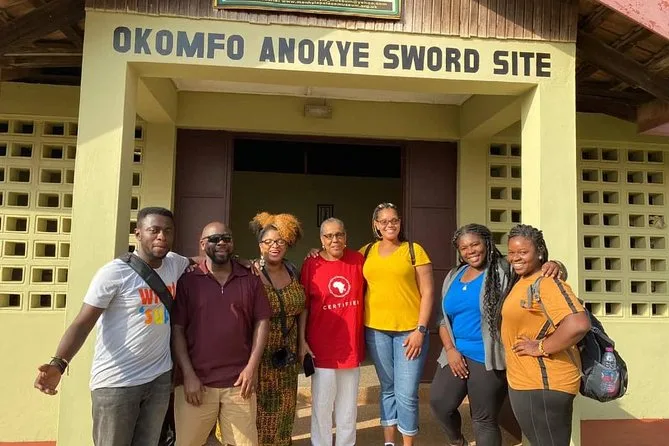
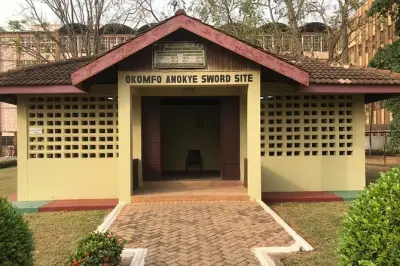
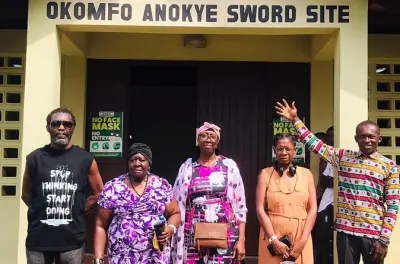
- See Komfo Anokye Sword Site
- Visit Ntonso Adinkra Cloth Village
- Discover Kente cloth making in Adanwomse
- Shop at Kumasi Central Market

The Experience
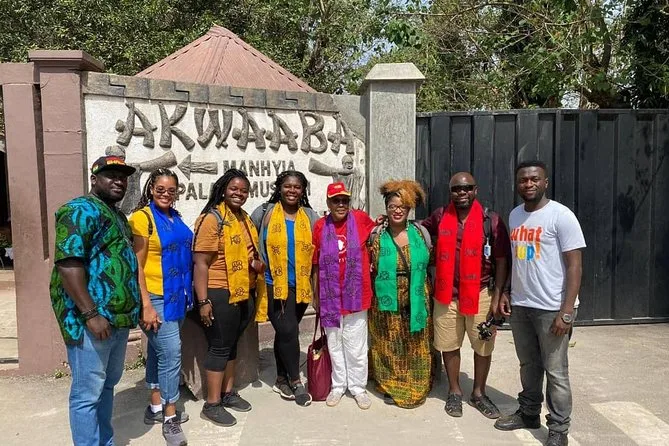
The Manhyia Palace Museum opens with a small courtyard and walls carved with symbols you won't recognize at first, and that's the point. You're standing in a space that was sealed off for decades, then reopened in 1995 during the Silver Jubilee of the Asante king's reign. Inside, the artifacts sit close enough to touch (behind glass, but close): war amulets, royal insignia, the king's ceremonial clothing, brass weights used for weighing gold. The personalized tour that comes with admission walks you through what each piece meant, and why the Asante Kingdom still matters to Ghana's story.
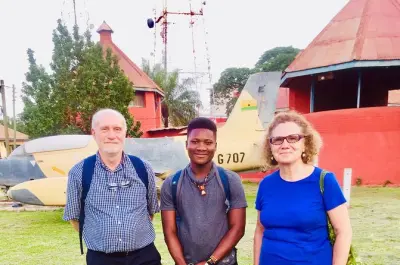
After the palace, the day moves to the Kumasi Fort and Military Museum, a few minutes away in the air-conditioned vehicle. The fort holds equipment and weapons from the British-Asante wars of the 1890s and the Second World War: armored cars, medals, photographs, the kind of objects that make colonial history concrete instead of abstract. It's a smaller collection than you'd find in a capital city museum, but that's what makes it work: you can actually see how the pieces connect, how a single building holds the story of Ghana from the colonial era to independence and beyond.
The Prempeh II Jubilee Museum is constructed to look like an Ashanti chief's house, with a courtyard in front and the same carved walls. Inside are the personal items of King Prempeh II (his war attire, jewelry, bathing equipment, dining pieces) the kind of details that make a historical figure feel like a person who actually lived. The cloth villages come next: Ntonso, where adinkra cloth is still made by hand the traditional way (it's the only place in Ghana that does it from scratch), and Adanwomse, where kente cloth weavers work with over 300 patterns, each one named and tied to a proverb or historical event. You'll see the looms, watch the process, and understand why these fabrics aren't just decoration.
The day ends at Kejetia Market, the central market in Kumasi's rainforest zone. It's open-air, loud, crowded in the way markets are supposed to be: vendors calling out, colors everywhere, the smell of spices and produce and humanity. This is where locals shop, not where tourists usually go, and that's the whole point of the tour. You're not observing Kumasi from the outside. You're moving through it the way someone who lives there would, with a guide who knows which stalls matter and why.

What’s included
Your day includes air-conditioned vehicle transport between all attractions, personalized tours at Manhyia Palace Museum, Kumasi Fort and Military Museum, and Prempeh II Jubilee Museum (with admission included), visits to Ntonso Adinkra Cloth Village and Adanwomse Kente Cloth Village to see traditional weavers at work, and time at Kejetia Market to experience where Kumasi residents shop.
Prices and times updated 7 days ago
Operated by BIBINIBA KUMASI CITY TOURS
Is this one for you?Book this if you want to move through Kumasi's history and culture in one day without arranging transport or museum tickets yourself: the fixed itinerary and included vehicle mean you're not negotiating logistics at each stop, just moving through the city the way a local would.
Traveler reviews

Top questions
What languages is the guide in?
Live guide in English and German.
What happens if it rains?
It may be canceled due to bad weather. If that happens, you're offered another date or a refund. Free cancellation up to 24h before the start.
Is the tour wheelchair accessible?
Yes, the tour is wheelchair accessible. Public transportation options are also available nearby if needed.
What's included in the price?
Air-conditioned vehicle transport between attractions, personalized museum tours with admission, and visits to the cloth villages and Kejetia Market.
Can I bring an infant on this tour?
Yes. Infants can sit on an adult's lap, and specialized infant seats are available if needed.
What is adinkra cloth?
Adinkra is a traditional Ghanaian cloth made by hand, famous for its symbols and proverbial wisdom. Ntonso is the only place in Ghana where it's still made from scratch using traditional methods.
Do I need to be fit to do this tour?
No, the tour is suitable for all physical fitness levels. You'll be moving between museums and markets with transport provided between stops.
What can I see at Kejetia Market?
Kejetia is Kumasi's central open-air market where locals shop. You'll see produce, spices, textiles, and everyday goods in an authentic market setting.
Are service animals allowed?
Yes, service animals are allowed on the tour.
Kumasi: Asante Kingdom Museums & Kejetia Market Day Tour
4h–8h · EN · DE
from US$ 130 per person
★★★★★★★★★★5.006 reviewsVerified traveler reviews via our booking provider