
Monteverde: Curicancha Birdwatching Tour for Quetzals & Cloud Forest Birds


Curicancha cloud forest birdwatching with local guide and scope
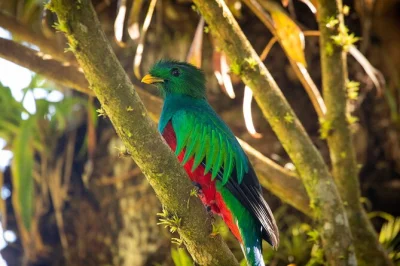
You’ll walk slow beneath dripping leaves as your guide helps you spot resplendent quetzals and dozens of cloud forest birds in Monteverde’s Curicancha Reserve. With small groups and a high-definition spotting scope included, you’ll get close-up views—and maybe even hear monkeys overhead or orchids blooming along the trail.
 3h
3h

Step-by-step itinerary
Guided birdwatching in Curicancha Forest
- Meet local expert naturalist guide
- Walk prime quetzal habitat trails
- Spot Resplendent Quetzal and birds
- Use high-definition spotting scope
- Observe other wildlife and orchids

The Experience
The first thing I noticed was the hush—just this soft, green quiet in Curicancha, like the whole cloud forest was holding its breath. Our guide, Diego, had us stop before we’d even walked five minutes. He pointed up into a tangle of branches and whispered something about a “quetzal corridor.” I barely saw anything at first—just mist clinging to moss—but then there it was: a flash of emerald and red, so quick I almost doubted it. Diego grinned when I gasped (quietly, because apparently quetzals are shy). I didn’t expect to feel that much awe over a bird, but yeah, it kind of hit me.
The trails here aren’t tough—some roots and damp patches, but nothing wild. We moved slow, listening for these tiny clicks and trills that Diego could somehow identify instantly (“That’s a euphonias,” he’d say, or “Listen—toucanet!”). At one point he set up the spotting scope so we could see a hummingbird preening on a branch. It looked like a little jewel through the lens. The air smelled wet and earthy; every now and then you’d catch something sweet from wild orchids. There were spider monkeys overhead too—one dropped something (fruit?) right near us and made everyone laugh.
I liked how Diego never rushed us. If someone wanted to linger over a tanager or try for another photo through the scope, he just waited. Sometimes we’d all go quiet together, watching light shift in the trees or hoping for another glimpse of that ridiculous quetzal tailfeather. It wasn’t just about ticking off birds—it felt more like being let in on some secret rhythm of Monteverde’s cloud forest life. Three hours went fast; I still think about that first flash of color high in the canopy when I close my eyes at night.

What’s included
- Your guided walk includes 2–3 hours exploring Curicancha Reserve with an expert naturalist focused on birdwatching.
- You’ll have access to professional optic gear—a high-definition spotting scope—for clear views of birds perched high above or hidden among leaves.
- All ages and fitness levels are welcome; just bring your curiosity (and maybe binoculars if you have them).
Operated by Johnny loves nature
Traveler reviews
Compare the 13 similar options
 Monteverde: Curicancha Birdwatching Tour for Quetzals & Cloud Forest Birds★ 4.69 (108)3hEN · ESUS$ 30
 Monteverde Night Walk: Wildlife Sighting & Coffee Farm TrailsStep into Monteverde’s forests after dark—spot sleeping birds, mammals, and insects with a local guide. Small groups, flashlights included, starlit sky if you’re lucky.★ 4.89 (76)2hEN · ESUS$ 35View ›
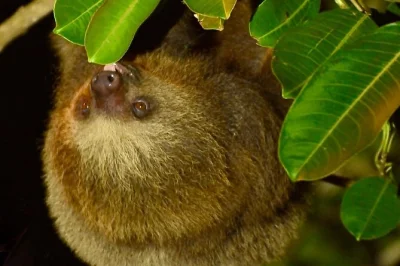 Monteverde: Night Tour with Vision Goggles & Wildlife GuideStep into Monteverde’s cloud forest after dark with night vision goggles, a small group, and a local wildlife expert. Includes sweet snack & all equipment.★ 4.81 (150)2hEN · ESUS$ 40View ›
 Monteverde Cloud Forest Night Tour: nocturnal wildlife walkWalk the Monteverde Cloud Forest at night with a licensed guide, flashlights and park entry included—spot frogs, insects and mammals that only emerge after dark.★ 4.81 (94)2hEN · ESUS$ 35View ›
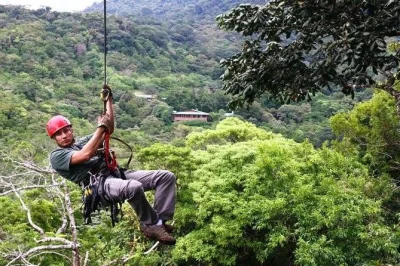 Monteverde Canopy Tour: Zipline, Rappel & Tarzan SwingSoar through Monteverde's cloud forest on ziplines and rappel 150 feet down. Includes hotel pickup, guide, and all equipment. Small groups, 5+ years old.★ 4.87 (1,475)2h 30mEN · ESUS$ 80View ›
 Monteverde Zipline & Hanging Bridges Tour: Cloud Forest CanopyZipline through Monteverde's cloud forest canopy on eight suspension bridges up to 170 meters long, with bilingual guide and hotel pickup included★ 4.40 (68)5hEN · ESUS$ 139View ›
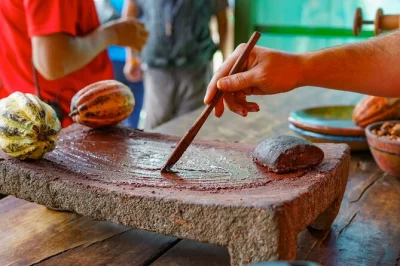 Coffee, Chocolate & Sugar Cane Tour in ChileTour three working farms in Chile tasting coffee, chocolate and sugar cane juice with a guide—all on cement trails that work for strollers and wheelchairs.★ 4.87 (358)2hEN · ESUS$ 64View ›
 Monteverde: Rain Forest Night Walk with Wildlife SightingStep into Monteverde’s rainforest after dark for a guided night walk. Spot sloths, frogs, and more with optic gear and flashlights included. Small group tour.★ 4.65 (400)2hENUS$ 31View ›
 Night hike Monteverde: forest animals with guideNight forest hike in Monteverde with experienced guide, flashlight and optical equipment — walk the trails after dark to spot sloths, frogs★ 4.99 (79)2h 30mEN · ESUS$ 33View ›
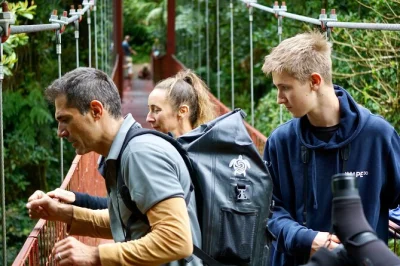 Monteverde: Private Nature Walk & Wildlife Guide in Cloud ForestStep into Monteverde’s misty cloud forest with a private guide, spot wildlife up close, and explore at your own pace. Flat rate for small groups, book direct.★ 4.95 (165)3hEN · ESUS$ 85View ›
 Monteverde Birdwatching Hike: Resplendent Quetzal & Cloud ForestHike the Curicancha Reserve in Monteverde with a bilingual naturalist guide and spotting scope to watch Resplendent Quetzals★ 4.91 (75)4hEN · ESUS$ 90View ›
 Monteverde Cloud Forest: Guided Nature Walk & Hummingbird GalleryFeel the misty magic of Monteverde’s cloud forest on a guided nature walk with a local naturalist, spot rare birds, and visit the Hummingbird Gallery. Small groups, optics included.★ 4.71 (126)2h 30mEN · ESUS$ 30View ›
 Monteverde Cloud Forest Tour with Spotting Scope: Quetzals & WildlifeMonteverde cloud forest tour with naturalist and spotting scope to see quetzals, monkeys and birds, plus hummingbird gallery access.★ 4.81 (188)2h 30mEN · ESUS$ 30View ›
Top questions
What is included in the Curicancha birdwatching tour?
The tour includes 2–3 hours with a professional naturalist guide specializing in birdwatching and use of high-definition optic gear (spotting scope).
When is the best time to see quetzals in Monteverde?
The best season for spotting resplendent quetzals is January through July.
How many bird species can you see during this tour?
You may observe 30–40 species during one walk, including toucanets, hummingbirds, tanagers, euphonias, and more.
Is this birdwatching tour suitable for beginners?
Yes, it’s suitable for all physical fitness levels and no prior birdwatching experience is needed.
Are there other animals besides birds in Curicancha?
Yes, you might also encounter spider monkeys, capuchins, armadillos, coatis, agoutis, and native orchids along the trails.
Is hotel pickup included?
No mention of hotel pickup; guests meet at Curicancha Reserve for the start of the tour.
How big are the groups on this tour?
Tours operate in small groups for a more personal experience.
Can I take photos through the spotting scope?
Yes, the guide will help set up photos through the high-definition spotting scope if you wish.
Monteverde: Curicancha Birdwatching Tour for Quetzals & Cloud Forest Birds
3h · EN · ES · at your hotel
from US$ 30 per person
★★★★★★★★★★4.69108 reviews
