
Angkor Wat small-group tour from Siem Reap: Four temples


Four temples in a single circuit, with a guide who knows what each one is
A small-group tour of Angkor Archaeological Park near Siem Reap visits Angkor Wat, Angkor Thom, Bayon and Ta Prohm on a guided circuit with hotel pickup and return. The group size varies by bookings; an English-speaking guide leads the route; entrance fees to the park are separate. Choose the morning departure to avoid the midday heat, or the sunrise option to reach Angkor Wat before the crowds arrive.
Step-by-step itinerary
- Angkor Wat2h
- Angkor Thom1h
- Bayon1h
- Ta Prohm1h
Explore Angkor Archaeological Park temples
- Visit Angkor Wat temple complex
- Explore Angkor Thom capital city
- Discover Bayon temple with smiling faces
- Tour Ta Prohm temple ruins
- Return transfer to hotel or city center
The experience
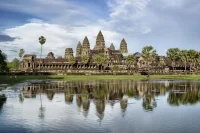
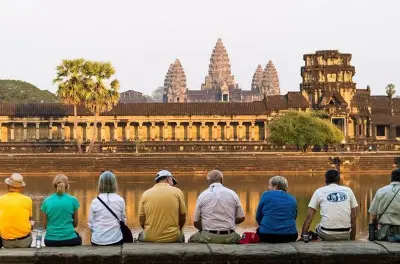
Angkor Wat is the world's largest religious building, a 12th-century temple complex oriented to the west and designed to represent Mount Meru from Hindu mythology. Three rectangular galleries rise one above the next within a moat and outer wall 3.6 kilometers long, and the center holds five towers in a quincunx. The temple is the best-preserved structure at the site and the only one to have remained a significant religious center since its foundation: first as a Hindu temple dedicated to Vishnu, then as Buddhist. The architecture is admired for its grandeur, harmony, extensive bas-reliefs and the guardian spirits adorning its walls.
From there the route moves to Angkor Thom, the late 12th-century capital city of the Khmer empire built by King Jayavarman VII after he drove out the Chams. The city is nearly square, surrounded by 8-meter-high walls a little over 12 kilometers long, with five gopura gates providing access. A 100-meter-wide moat encloses the fortified city. Inside, the Bayon temple stands at the center of Angkor Thom, decorated with more than 200 smiling faces carved into its towers. Built in the late 12th or early 13th century as the state temple of the Mahayana Buddhist king, the Bayon has no enclosing wall of its own but is protected by the city wall. Its three levels contain square galleries with bas-reliefs and a circular central sanctuary, connected by a maze of passages and steps that create dim lighting and narrow walkways.
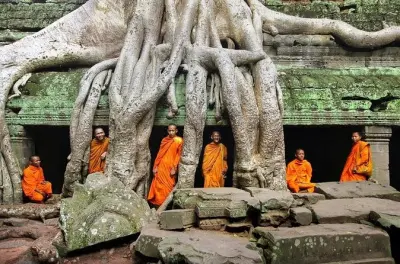
The final stop is Ta Prohm, among the largest monuments in the Angkor complex, built around the mid-12th to early 13th century by King Jayavarman VII and dedicated to his mother. The temple comprises long low buildings enclosed by a rectangular laterite wall 600 by 1,000 meters, with three square galleries enclosing the center. Ta Prohm is reached by a series of towers connected with passages forming a sacred way into the heart of the monument. The complex originally included 260 statues of gods, 39 towers with pinnacles and 566 groups of residences. The tour lasts 6 to 7 hours and includes cold bottled water, an experienced English-speaking guide, hotel pickup and return to your hotel or any requested drop-off point within the city center. Lunch at a local restaurant in the national park is arranged during the day and costs more than restaurants in town, but it is the practical choice on this route.
What’s included
- Cold bottled water throughout the tour.
- experienced English-speaking guide leading the circuit.
- hotel pickup and return to your hotel or any requested drop-off point in the city center.
- lunch at a local restaurant in the national park during the day.
Options for this experience
2 optionsInformation
Lasts 6h–7h, runs every day at 04:30 and 07:30, from US$ 18 per person, with a live guide in English, in groups of up to 12 and with free cancellation up to 24 h before.
Prices and times updated 12 days ago
Operated by Green Era Travel
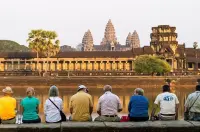
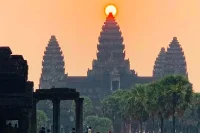
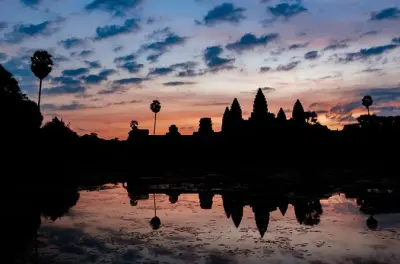
Is this one for you?Book the sunrise option if you want to photograph Angkor Wat in soft light and reach the temples before crowds fill the galleries and passages. The morning departure suits travelers who prefer a later start and don't mind visiting during peak hours.
Traveler reviews
Compare the 12 alternatives
- 317 reviews
- 4.97★
- Duration
- 8h–9h
- start times · Every day
- 15
- 40 reviews
- 4.95★
- Duration
- 5h–6h
- start times · Every day
- 8

- 136 reviews
- 4.96★
- Duration
- 8h–9h
- Every day
- 04:30

- 522 reviews
- 4.99★
- Duration
- 7h–8h
- Every day
- 04:30

- 66 reviews
- 4.98★
- Duration
- 10h–11h
- Every day
- 05:00

- 317 reviews
- 4.97★
- Duration
- 6h–9h
- start times · Every day
- 4
- 31 reviews
- 4.97★
- Duration
- 6h–7h
- start times · Every day
- 4

- 266 reviews
- 4.97★
- Duration
- 7h–9h
- start times · Every day
- 8

- 112 reviews
- 4.97★
- Duration
- 8h
- Every day
- 05:00

- 97 reviews
- 4.99★
- Duration
- 7h–8h
- Every day
- 04:40
- 26 reviews
- 4.96★
- Duration
- 5h–9h
- start times · Every day
- 6
- 44 reviews
- 4.84★
- Duration
- 13h
- Every day
- 05:00
Top questions
Can children come?
Yes. Ticket types: Child (3 to 11 years); Infant (under 3): free.
What is Angkor Wat and why is it called the 7th world wonder?
Angkor Wat is the world's largest religious building, a 12th-century temple complex built for King Suryavarman II as his state temple and capital city. It is the best-preserved temple at the Angkor site and the only one to have remained a significant religious center since its foundation: first as a Hindu temple dedicated to Vishnu, then as Buddhist. The temple is admired for the grandeur and harmony of its architecture, its extensive bas-reliefs and the numerous guardian spirits adorning its walls.
What does the Bayon temple look like, and what makes it different from other temples at Angkor?
The Bayon is a richly decorated Khmer temple at the center of Angkor Thom, built in the late 12th or early 13th century as the state temple of King Jayavarman VII. It is decorated with more than 200 smiling faces carved into its towers. Unlike most Angkorian temples, the Bayon has no enclosing wall of its own, though it is protected by the wall surrounding Angkor Thom. Its three levels contain square galleries with bas-reliefs and a circular central sanctuary, connected by a maze of passages and steps.
Why is Ta Prohm special, and what will I see there?
Ta Prohm is among the largest monuments in the Angkor complex, built around the mid-12th to early 13th century by King Jayavarman VII and dedicated to his mother. The temple comprises long low buildings enclosed by a rectangular laterite wall, with three square galleries enclosing the center. It is reached by a series of towers connected with passages forming a sacred way into the heart of the monument. The complex originally included 260 statues of gods, 39 towers with pinnacles and 566 groups of residences.
How long does the tour take, and what is included?
The tour lasts 6 to 7 hours and includes cold bottled water, an experienced English-speaking guide, hotel pickup and return to your hotel or any requested drop-off point within the city center. Lunch at a local restaurant in the national park is arranged during the day. The entrance fee to Angkor Archaeological Park is not included and costs 37 dollars per person.
What should I wear and bring for this tour?
Long pants or knee-length skirts or dresses are required for visiting the temples. Bring cold bottled water, which is provided during the tour. The tour is not recommended for travelers with poor cardiovascular health. You should have at least a moderate level of physical fitness. Wear comfortable walking shoes suitable for navigating temple steps and passages.
Do I choose between a sunrise tour and a morning tour?
Yes, you choose at checkout between the Small-Group Sunrise Tour and the Small Group Tour with no sunrise. The sunrise option reaches Angkor Wat before the crowds arrive and the heat builds. The morning departure avoids the early start but means visiting during busier hours.
Angkor Wat small-group tour from Siem Reap: Four temples
6h–7h · EN · at your hotel
from US$ 18 per person