
Arnhem Land Rock Art Tour: Injalak Hill Aboriginal Guides
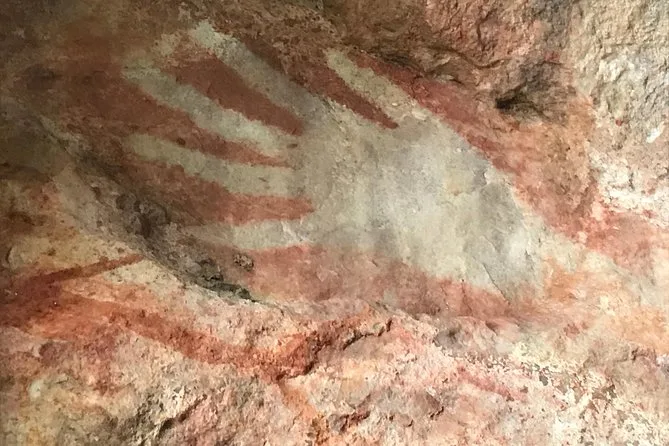
Walk among rock art galleries with the people who painted them
A full-day rock art and culture tour of Arnhem Land departing from Jabiru, led by local aboriginal guides who show you Injalak Hill and its galleries, with lunch, afternoon tea, park fees and hotel pickup included. The tour takes 7.5 hours and does not require athletic fitness, though walking over uneven ground and boulders demands agility. Children from age 7 are welcome when accompanied by an adult.
More experiences you might like
 Kakadu: Jabiru Scenic Flight & Ancient Landmarks Aerial TourEvery day · first departure 08:30, last 14:30 · All ages★ 4.87 (105)30mENAU$ 159View ›
 Kakadu National Park Wildlife & Rock Art Tour from DarwinEvery day · 07:30 · From age 6★ 4.67 (167)12hENAU$ 257View ›
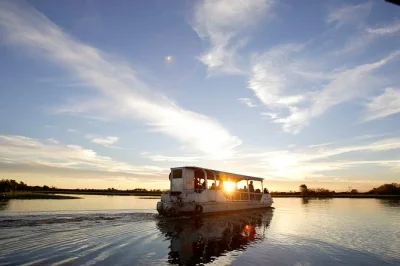 Yellow Water Cruise Kakadu: Indigenous-led wetland tourEvery day · first departure 06:30, last 16:30 · All ages★ 4.84 (650)1h 30m–2hENAU$ 105View › Compare more experiences like this »
Step-by-step itinerary
Explore Arnhem Land and Injalak Hill
- Visit Aboriginal arts and craft center
- Tour Injalak Hill rock art sites
- Learn from local indigenous guides
- Walk over uneven surfaces and rocks
The experience
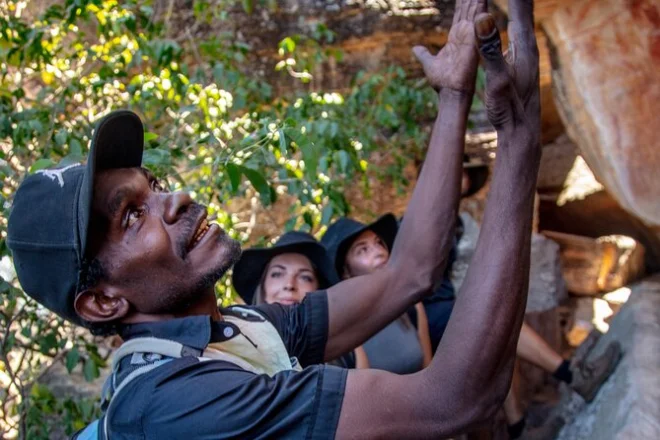
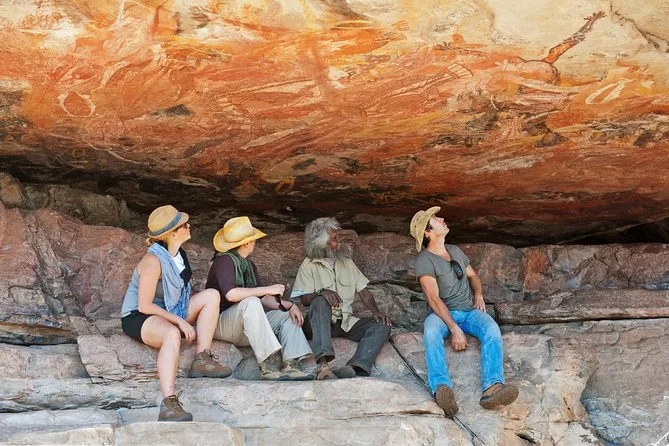
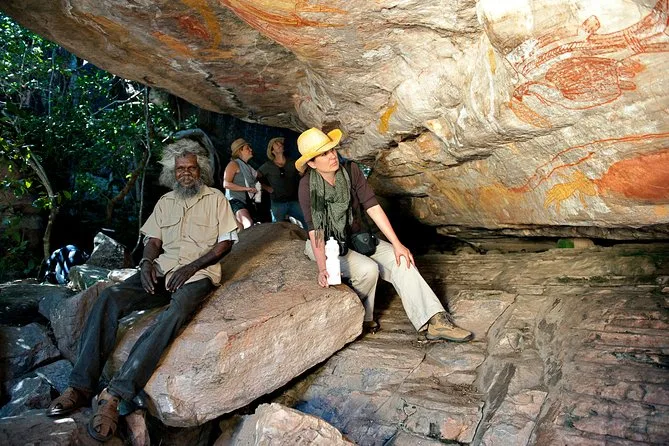
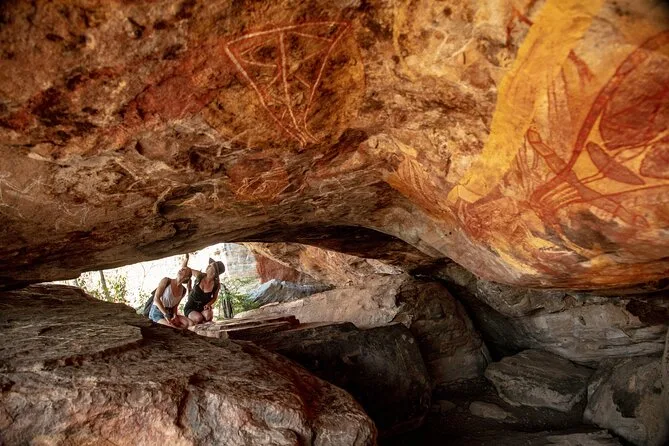
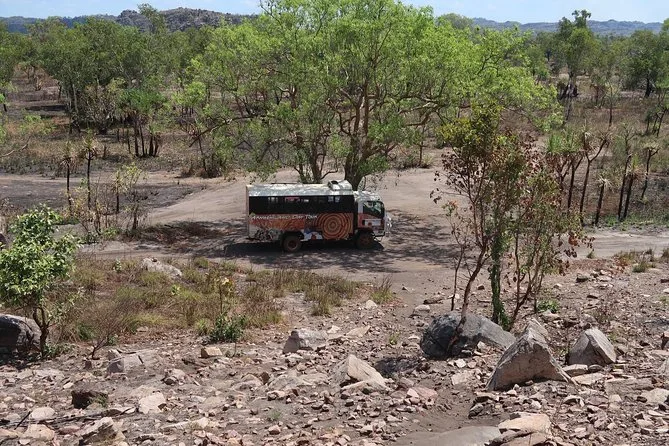
The rock art at Injalak Hill is not behind glass or roped off. You walk into the galleries themselves, guided by local aboriginal people who explain what you are standing in front of. Top End Day Tours is the only day tour operator in the Kakadu and Arnhem Land region to employ indigenous guides, and they have a special arrangement with traditional owners that gives access to sacred sites most visitors never reach. The tour leaves from Jabiru with hotel pickup, and the minivan is air-conditioned for the drive into Arnhem Land, a vast wilderness that belongs to the traditional owners.
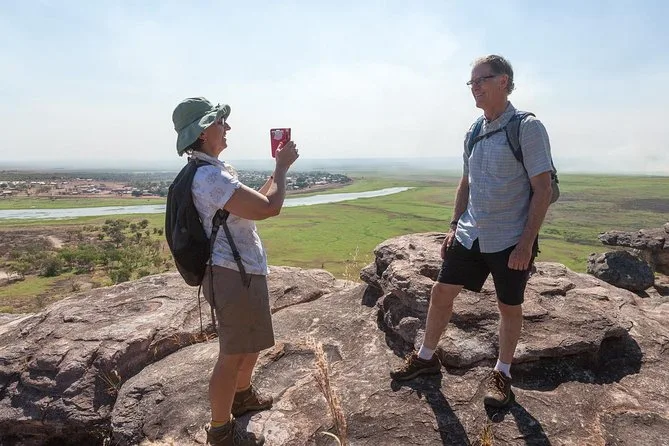
The walking happens over uneven surfaces and rocks without marked paths or handrails, so you need to be agile on your feet, but the pace is built for conversation, not speed. The guides are experienced and welcoming, and the tour encourages you to ask questions and talk directly with them about the rock art, the country and what it means. Lunch and afternoon tea are included, along with snacks and coffee or tea throughout the day, so the day holds together without stopping to hunt for food. National Park fees are covered in the price.
Bring sturdy walking shoes or boots, at least a litre of water, sunscreen and a hat. The sun is direct and there is no shade on the rocks. Insect repellent, light clothing and a camera are worth packing. If you want to buy work from the Injalak Arts and Crafts Centre, bring cash. The centre is a not-for-profit aboriginal arts space where you can see what local artists make.
What’s included
- The tour includes hotel pickup and drop-off from selected Jabiru hotels.
- transport by air-conditioned minivan.
- a local aboriginal guide for the full day.
- lunch and afternoon tea.
- snacks, coffee and tea.
- and National Park fees.
Before you book
Operated by Top End Day Tours
Is this one for you?The 7.5-hour day leaves room for an early start or a late finish in Jabiru, but not for a second activity. Book this when you want to spend a full morning and afternoon on the rock art and the country itself, not when you are fitting it between other stops.
Traveler reviews
Top questions
What is the rock art at Injalak Hill like?
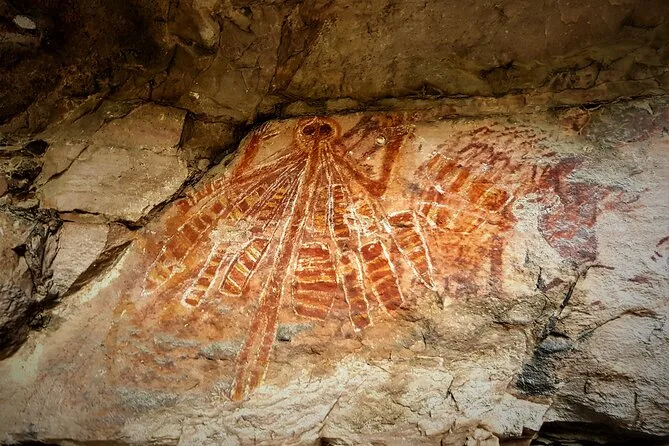
Injalak Hill holds one of the world's best rock art sites, with galleries you walk through directly rather than view from a distance. The paintings are explained by local aboriginal guides who know the stories and the country behind them.
How much walking is involved on this tour?
The tour covers uneven ground and rocks without paths or handrails, so agility matters more than fitness. The pace is built for conversation and looking, not for speed or athletic endurance, and the 7.5-hour day includes lunch and rest time.
Can I bring my children on this tour?
Children from age 7 are welcome when accompanied by an adult. Children under 5 are not recommended for this tour because of the uneven walking terrain and the physical demands of the day.
What is included in the price?
The tour includes hotel pickup and drop-off from selected Jabiru hotels, transport by air-conditioned minivan, lunch, afternoon tea, snacks, coffee and tea, National Park fees, and a local aboriginal guide for the full day.
Do I need to be very fit to do this tour?
You do not need to be a fit athlete, but you do need moderate physical fitness and agility to walk over rocks and uneven surfaces without handrails. The tour is paced for conversation and looking, not for speed.
What should I bring?
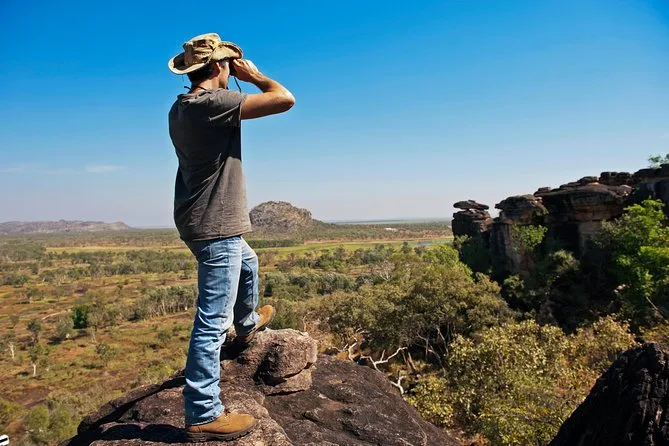
Bring sturdy walking shoes or boots, at least one litre of bottled water, sunscreen, a hat, insect repellent, light comfortable clothing and a camera. Binoculars are useful for detail in the rock art, and bring cash if you want to buy from the Injalak Arts and Crafts Centre.