
Buenos Aires Walking Tour: History & Hidden Stories


The Questions That Unlock Buenos Aires
You walk through Buenos Aires with a university-educated guide who treats the city as a text to be read together—colonial foundations, immigration waves, political upheaval, and how memory shapes the present. The route covers Parque Lezama, Casa Rosada, Puerto Madero, and Plaza Dorrego over a few hours, with time built in for questions and real conversation instead of a scripted monologue.
 3h–3h 10m

Step-by-step itinerary
Explore historic Buenos Aires landmarks
- Visit old town of Buenos Aires
- Start at first fort site
- See Swedish church
- Visit former clandestine detention center
- Explore colonial catholic church
- Walk through old town's main square
- Browse local Italian immigrant market
- View Woman's Bridge in Puerto Madero
- Visit president's office Casa Rosada

The Experience
You want to understand a place, not just see it. That's the pull of this walking tour through Buenos Aires—the chance to ask the questions that actually matter. Why did the British try to invade? Where did the African-descendant population go? What's the real story with Evita and Perón? These aren't trivia. They're the threads that hold the city together, and a guide with a university degree in history knows how to pull them without oversimplifying.
The walk starts at Parque Lezama, where the first fort went up in 1536, and moves through the old town in a way that feels less like checking boxes and more like a conversation. You'll stand in front of Casa Rosada, the president's office, and understand why it matters. You'll see the Woman's Bridge in Puerto Madero—designed by Santiago Calatrava—and learn how immigration reshaped the entire city. The route takes in Plaza Dorrego, the colonial church, the Swedish church from 1944, and a site that was a clandestine detention center during the dictatorship from 1976 to 1979. That last stop isn't easy, but it's essential to how Buenos Aires thinks about itself now.
What sets this apart is the permission to actually engage. You're not trailing behind someone reading from a script. The guide expects you to ask, to push back, to sit with uncomfortable history. The pace is walking speed through accessible streets, and the group stays small enough that you're not competing to be heard. If you arrive with a stroller or use a wheelchair, the route works for that too.

What’s included
A university-educated guide who leads the walking tour through Buenos Aires' old town, from Parque Lezama (the site of the 1536 fort) through Plaza Dorrego, the colonial church, the Swedish church, a former detention center, the Woman's Bridge in Puerto Madero, and Casa Rosada. The tour is wheelchair accessible, and public transportation options are available nearby if needed.
Operated by Social & Cultural
Is this one for you?Right for anyone who wants to understand Buenos Aires rather than just move through it—the guide's degree and the built-in time for questions mean you leave knowing why the city is the way it is, not just what it looks like.
Traveler reviews
Compare the 13 similar options
 Buenos Aires Walking Tour: History & Hidden Stories★ 4.94 (90)3h–3h 10mEN · PT +2US$ 32
 Buenos Aires: Old City Bike Tour San Telmo, La Boca & MateFeel the pulse of Buenos Aires by bike through San Telmo, La Boca, Caminito & Puerto Madero. Small group tour with mate tasting, local guide & gear included.★ 4.96 (120)4hEN · IT +2US$ 55View ›
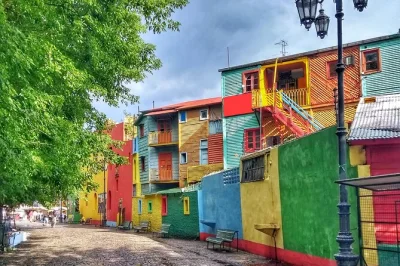 Buenos Aires: Private City Tour with La Boca & RecoletaFeel the pulse of Buenos Aires on a private city tour, from colorful Caminito to Recoleta’s quiet grandeur. Includes bilingual guide, pickup, and local stops.★ 4.83 (389)4hEN · PT +1US$ 48View ›
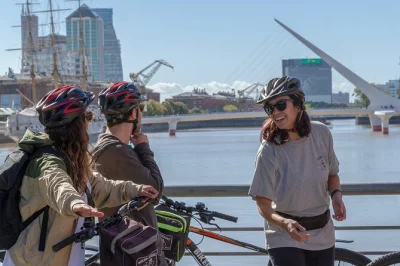 Buenos Aires: Full Day Bike, Food & Culture Small GroupPedal Buenos Aires with a local host, taste mate & empanadas, and explore San Telmo, La Boca & Recoleta by bike. Includes lunch, snacks, and all gear.★ 4.97 (175)8hEN · IT +2US$ 110View ›
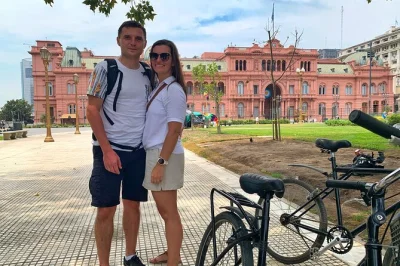 Buenos Aires: Half-Day Bike Tour City Highlights & La BocaFeel the pulse of Buenos Aires on a guided bike tour through La Boca, Caminito, San Telmo & Puerto Madero. Includes all gear, local guide, and bottled water.★ 4.88 (1,181)4hEN · FR +1US$ 45View ›
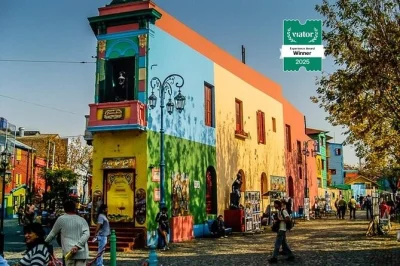 Buenos Aires City Private Tour with Local Guide: 4 HoursPrivate city tour of Buenos Aires with bilingual guide, air-conditioned vehicle and hotel pickup included—stop at Caminito, Casa Rosada, Puerto Madero★ 4.87 (3,967)4hEN · PT +2US$ 114per groupView ›
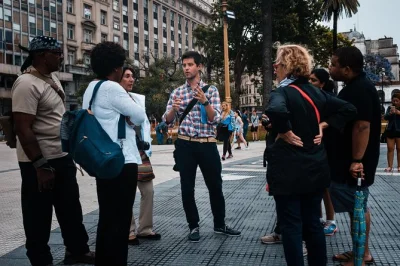 Buenos Aires Small-Group City Tour: 3 or 5 HoursBuenos Aires small-group tour (max 15 people) with hotel pickup, live guide & air-conditioned vehicle. Choose 3 or 5 hours. Covers Recoleta, San Telmo, La Boca & Caminito.★ 4.75 (2,379)3h–5hEN · PT +1US$ 38View ›
 Buenos Aires: South City Bike Tour with Caminito & La BocaFeel the pulse of Buenos Aires on a guided bike tour through San Telmo, Caminito, and Puerto Madero. Includes bikes, helmet, water, and local guide.★ 4.97 (286)4hEN · PT +1US$ 45View ›
 Buenos Aires City Tour: 5-Hour Small Group with GuideSmall group Buenos Aires city tour with hotel pickup and live guide covering Plaza de Mayo, San Telmo, La Boca and Recoleta★ 4.64 (262)5hEN · PT +1US$ 54View ›
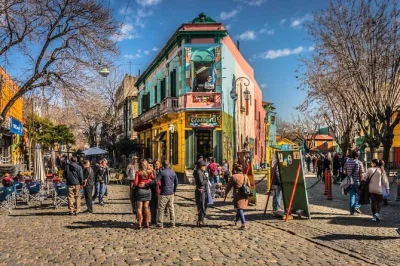 Buenos Aires: Private City Tour with Recoleta, Caminito & Leather FactoryFeel the pulse of Buenos Aires on a private city tour with Recoleta Cemetery, Caminito’s colors, mate tasting, and a leather factory stop. Includes pickup & local guide.★ 4.96 (456)4hEN · PT +2US$ 98per groupView ›
 Buenos Aires City Tour with Tigre Delta CruiseSmall group tour of Buenos Aires with hotel pickup, professional guide, air-conditioned transport, Recoleta Cemetery entry★ 5.00 (23)7h–8hEN · PT +1US$ 139View ›
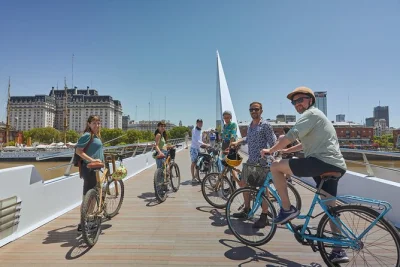 Buenos Aires: South City Bike Tour San Telmo, La Boca & Mate StopFeel the pulse of Buenos Aires on a small group bike tour through San Telmo, La Boca, and Puerto Madero—includes snacks, mate stop, and English-speaking guide.★ 4.98 (100)4hEN · ESUS$ 56View ›
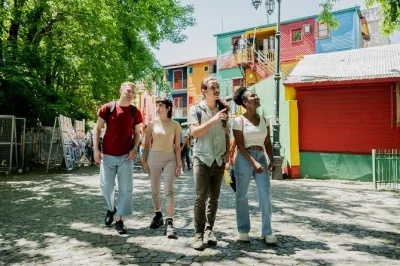 Buenos Aires: Private City Tour with Recoleta & CaminitoFeel the pulse of Buenos Aires on a private full day tour—walk Recoleta Cemetery, browse San Telmo Market, and wander colorful Caminito, all with tickets and pickup.★ 4.79 (276)6hEN · DE +3US$ 187per groupView ›
Top questions
Is the tour wheelchair accessible?
Yes. The tour is wheelchair accessible, and strollers are also fine if you're traveling with infants or small children.
What's included in the tour?
A university-educated guide who leads the walk and facilitates discussion. Entry fees to attractions, meals, and transportation are not mentioned in the listing.
Can I ask questions during the tour?
Yes—that's the core of the experience. The tour is designed as a conversational journey where you're encouraged to talk, ask questions, and discuss the city's history and present.
What topics does the guide cover?
Colonial history, British invasions, the African-descendant population, immigration, Evita and Perón, the desaparecidos (disappeared people), and the role of the US dollar in Argentina's economy.
Do I need to be fit to do this tour?
The tour is suitable for all physical fitness levels and is wheelchair accessible, so mobility isn't a barrier.
Are service animals allowed?
Yes, service animals are allowed on the tour.
Buenos Aires Walking Tour: History & Hidden Stories
3h–3h 10m · EN · PT +2
from US$ 32 per person
★★★★★★★★★★4.9490 reviewsVerified traveler reviews via our booking provider
