
Las Palmas Old Town: Private Walking Tour & Columbus House
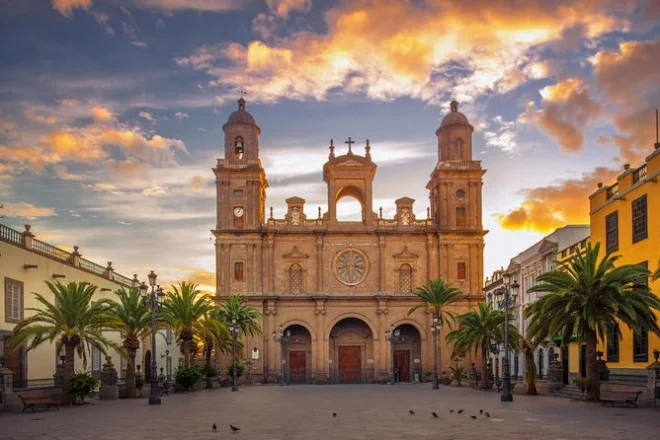


Columbus Walked These Streets—Now You Can Follow the Route
You walk the cobblestone streets of Vegueta and Triana with a private guide, seeing the Columbus House, Santa Ana Cathedral, and the squares where the city's conquest began. Entry fees and transportation by taxi or public transport are included, and your guide offers restaurant recommendations before you leave. The tour works for any fitness level and ends at Las Canteras beach before your return.
 3h
3h

Step-by-step itinerary
Explore Las Palmas Old Town highlights
- Meet guide at port or hotel
- Take taxi or public transport to Old Town
- Walk through Vegueta and Triana districts
- Visit Santa Ana square and cathedral
- See Balconies street and cathedral architecture
- Pass by Casa de Colón building
- Visit Plaza of San Antonio Abad
- Explore Atlantic Center for Modern Art
- Visit Espíritu Santo square and hermitage
- See Santo Domingo square and church
- Shop at Vegueta street market
- Take taxi to Las Canteras beach
- Return to port with guide

The Experience
The narrow cobblestone streets of Vegueta open up suddenly onto Santa Ana Square, where the Cathedral rises in layers of neoclassic and Gothic stone, its construction spanning five centuries. This is where your private walking tour of Las Palmas Old Town begins—not with a group, but with a single guide who knows the stories behind each doorway, each plaza, each carved wooden ceiling. Your guide meets you at the cruise port or your hotel and takes you straight into the heart of the city's oldest quarter, the place that became Las Palmas at the end of the 15th century.
You'll walk the famous Balconies street first, where the architecture shifts between styles because different architects built different sections over time—you can read the centuries in the stonework. Then comes the Casa de Colón, the mansion with ornate doorways and latticed balconies where Columbus himself is said to have stayed in 1492 while his ship was repaired. The building is now a museum with 13 exhibition rooms, but what stays with you is the courtyard, the carved wooden ceilings, the sense that this place held real people and real decisions. From there you move through Triana, the shopping district that grew up alongside the market built in 1856, still full of vendors selling handicrafts and fresh produce in the same squares where locals have shopped for generations.
The tour doesn't rush. You'll stand in the Espíritu Santo square, where a stone-covered fountain from Hispanic architecture sits beside a drago tree planted to symbolize the link between the Canary Islands and America. You'll see the Plaza of San Antonio Abad, where the conquest of the Canaries began and where Columbus prayed before sailing west. The Atlantic Center for Modern Art, housed in a building that kept the facade of two neoclassical houses, shows you how Las Palmas holds old and new in the same frame. By the time your guide takes you back north to Las Canteras beach and returns you to your starting point, you'll have walked the actual streets where history happened, not watched them from a bus window.

What’s included
Your day includes hotel or cruise port pickup, transportation by taxi or public transport through Las Palmas Old Town, entry to all attractions (Columbus House, Santa Ana Cathedral, and the museums and squares throughout Vegueta and Triana), a professional licensed guide who walks with you through the emblematic streets and shares the history and details of each stop, and drop-off at Las Canteras beach before returning to your starting point.
Operated by Uopera tours
Is this one for you?Book this if you want the main historical sites of Las Palmas without arranging your own transport or entry tickets—the private guide and included fees mean you walk straight into each place instead of spending time on logistics.
Traveler reviews
Compare the 5 similar options
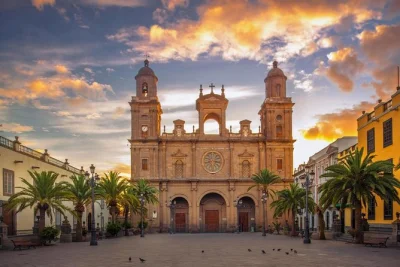 Las Palmas Old Town: Private Walking Tour & Columbus House★ 3.00 (2)3hEN · ES€ 351
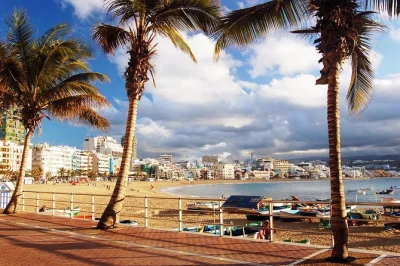 Gran Canaria: Guided City, Garden & Crater Tour with PickupDiscover Las Palmas, Spain’s largest botanical garden, and Bandama Crater on a guided day tour. Includes hotel pickup, local guide, and free time in Vegueta.★ 4.31 (32)8hEN · DE +1€ 32View ›
 Las Palmas old town walking tour: wine and cheese in VeguetaWalk Las Palmas' cobblestone streets and Vegueta's colonial architecture with a local guide, then taste Canarian wines and artisan cheeses at the market.★ 5.00 (3)2h 30mEN · ES€ 45View ›
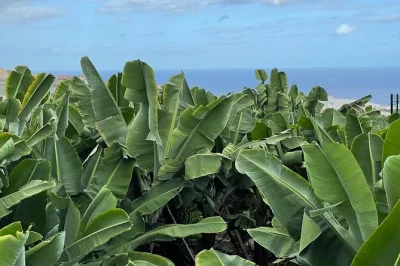 Banana World tour in Arucas: farm, tastings & 1804 houseTour a working banana farm in Arucas near Las Palmas with a live guide, taste banana wines and artisan spreads made on the islands★ 4.95 (3,850)50m–1hEN · ES€ 15View ›
 Gran Canaria: Ron Arehucas Distillery Tour & Rum TastingRon Arehucas distillery tour in Gran Canaria includes guided walk through aging cellars, production rooms, and rum tasting. 1 hour, small groups, wheelchair accessible.★ 4.68 (203)1hEN · DE +1€ 13View ›
Top questions
What's included in the Las Palmas Old Town walking tour?
All entry fees, pickup and drop-off from your cruise port or hotel, transportation by taxi or public transport, and a professional licensed guide.
How long does the tour take?
The itinerary covers multiple stops across Vegueta and Triana, ending at Las Canteras beach, but a specific duration is not listed—ask when booking.
Is the tour suitable if I'm not very fit?
Yes, it's suitable for all physical fitness levels.
Can I book this if I'm staying at a hotel rather than arriving by cruise ship?
Yes, your guide will meet you at your hotel in Las Palmas instead of the cruise port.
What is the Casa de Colón?
A palace with ornate doorways and carved wooden ceilings where Columbus is said to have stayed in 1492. It's now a museum with 13 exhibition rooms, a library, and space for temporary exhibitions.
When was Santa Ana Cathedral built?
Construction began in 1497 and wasn't finished until the 20th century. It combines neoclassic, gothic, and renaissance styles because different architects worked on it over time.
Is the Vegueta market included in the tour?
Yes, you'll visit the market in the Plaza del Pilar Nuevo near the cathedral, where you can see handicrafts, fruit, and plants. Note that it closes during summer.
Will my guide recommend restaurants?
Yes, your guide will suggest the best places to eat and drink before the tour ends.
Las Palmas Old Town: Private Walking Tour & Columbus House
3h · EN · ES · at your hotel
from € 351 per person
★★★★★★★★★★3.002 reviews
