
Pampas National Reserve near Nazca: Vicuña and camelid sanctuary
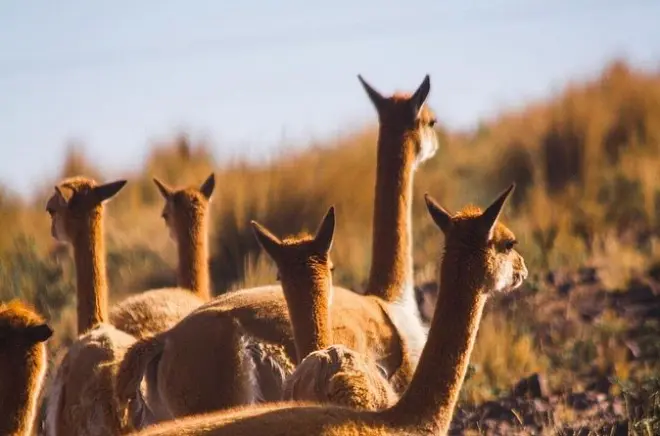


Six hours in the high Andes among four species of South American camelids
A six-hour tour from Nazca to the Pampas National Reserve, a conservation center in the Peruvian Andes home to vicuña, alpaca, llama, guanaco and other wildlife. Your bilingual guide picks you up at your hotel, drives the steep mountain road to the reserve, and walks you through the grassland ecosystem where the animals graze freely. The reserve sits 90 km away at high altitude, protecting Peru's native camelids and the rare fibers they produce.
More experiences you might like
 Flight over the Nazca Lines from Nazca: 30-minute aerial tourEvery day · 08:30 · From age 3★ 3.50 (2)3h–4hEN · ESUS$ 111View ›
 Nazca Lines overflight and ceramics class from IcaEvery day · 06:30 · From age 3★ 5.00 (1)10h–11hESUS$ 193View ›
 Cahuachi Pyramids Small-Group Tour from NazcaEvery day · 10:00 and 15:00★ 5.00 (3)3hEN · ESUS$ 65View ›
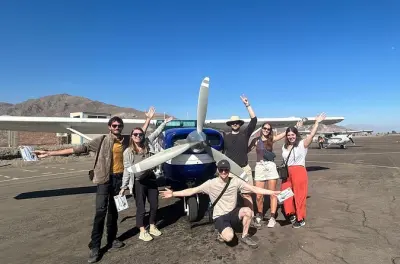 Nazca Lines Overflight: See the Geoglyphs from the SkyEvery day★ 4.00 (4)35mEN · ESUS$ 119View › Compare more experiences like this »
Step-by-step itinerary
Visit Pampas National Reserve and Wildlife
- Hotel pickup and travel to reserve
- Enjoy natural setting and ecological zones
- Learn about Chaccu vicuña shearing practice
- Visit site museum and observe wildlife
- Walk to see flora and fauna of park
- See vicuña, alpaca, llama, and guanaco
- Return to Nazca
The experience
The tour starts early with pickup at your hotel and a drive toward the reserve through changing landscapes, from coastal hills with sparse vegetation up into the Andes. Your guide explains the Chaccu, an ancient practice where vicuña were herded and sheared without harm, a tradition rooted in respect for the mountain and the animals themselves. The road climbs steeply and winds through zigzag turns as you gain elevation toward the high plateau.
At the reserve, you visit a site museum first, then walk out to see the animals in their habitat. The Pampas National Reserve protects four species of South American camelids (vicuña, alpaca, llama, and guanaco) all grazing freely across grassland called ichu. The vicuña, smallest and rarest of the group, produces the world's finest natural fiber and is the species that motivated the reserve's creation. In the stony valleys you'll spot relict forests of quinoa and quishuar, and stands of candelabra cactus adapted to the thin mountain air. The guide points out other wildlife: vizcachas (wild rodents), eagles, ducks, and if you're lucky, condors riding the thermals overhead.
The return to Nazca follows the same steep road down from the plateau. The full outing takes six hours from pickup to drop-off, with most of that time spent driving to and from the reserve and walking the grassland itself. Bring layers for the cold at altitude and wear sturdy shoes for the uneven terrain.
What’s included
- Private transportation from your hotel.
- a bilingual guide in English and Spanish.
- pickup and return to your hotel.
Before you book
Prices and times updated 7 days ago
Operated by IZI PERU
Is this one for you?The early start and steep mountain road mean this tour demands a full morning and afternoon, with significant time spent driving to reach the 90 km distance. The high altitude and uneven grassland terrain require a steady pace on foot, so come ready to walk and dress warmly for the cold at elevation.
Top questions
What languages is the tour guided in?
Live guide in English and Spanish.
What animals will I actually see at the Pampas National Reserve?
The reserve is home to four species of South American camelids (vicuña, alpaca, llama, and guanaco) all grazing freely across the high plateau. You'll also see vizcachas, eagles, ducks, and possibly condors in flight. The vicuña is the rarest and most protected. It produces the finest natural fiber in the world.
How far is the reserve from Nazca, and what is the road like?
The Pampas National Reserve sits 90 km from Nazca and requires a steep, winding mountain road to reach. The drive climbs through zigzag turns as you gain altitude into the Andes, so expect a slow ascent and descent on both ends of the tour.
What does the Chaccu have to do with this tour?
The Chaccu is an ancient herding practice your guide explains during the drive. Vicuña were cornered and sheared without harm, a tradition that shows how Andean people historically managed the animals with respect for nature and the mountain spirits they believed protected them.
What vegetation grows at the reserve?
The reserve's characteristic landscape is grassland called ichu. In the stony valleys you'll find relict forests of quinoa and quishuar trees, and stands of candelabra cactus adapted to the cold, thin air of the high plateau.
Pampas National Reserve near Nazca: Vicuña and camelid sanctuary
6h · EN · ES · at your hotel
from US$ 119 per person