
Stavanger walking tour: Old wooden houses and Preikestolen views

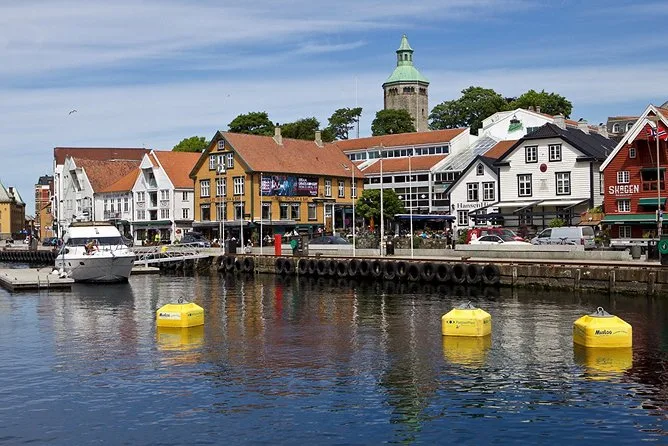










Walk Stavanger's wooden quarters and watchtower, then eat where locals do
A private guided walking tour of Stavanger covers the city's landmarks on foot over four hours, starting from hotel or cruise ship pickup. Your guide leads you past the Norwegian Petroleum Museum, up the 1853 fire watchtower at Valberget, through the colourful street of painted houses, past Stavanger Cathedral, and into Old Stavanger's stone-paved lanes lined with northern Europe's largest wooden house settlement. The tour ends with your guide helping arrange a taxi or directing you to a dinner spot they recommend.
 4h
4h

Step-by-step itinerary
Guided walking tour of Stavanger
- Meet outside Norwegian Petroleum Museum
- Explore Norwegian Petroleum Museum exhibits
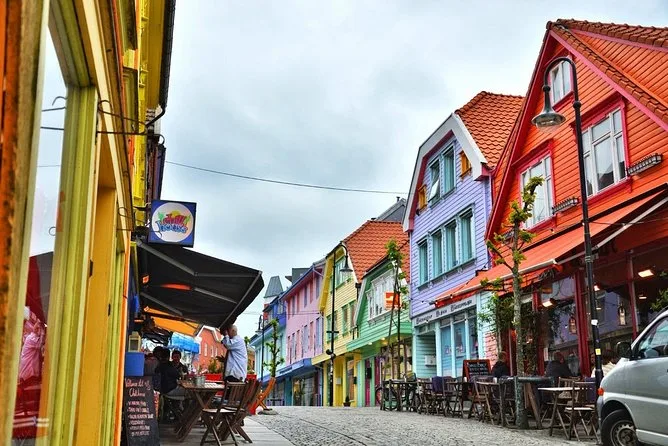
- Walk through colourful street Øvre Holmegate
- Climb Valberget watchtower
- Walk along Kirkegata Street
- Stop outside Stavanger Cathedral for history
- Pass old cathedral school and Breiavannet lake
- Walk through Old Stavanger wooden houses
- Visit new concert hall
- Guide assists with taxi or dinner suggestions

The Experience
The tour begins with pickup at your hotel or cruise ship, then heads to the Norwegian Petroleum Museum to orient yourself to the city's modern identity before moving into its older layers. From there you walk through Øvre Holmegate, the colourful street where every building has been painted in different hues since 2005—it's often called Stavanger's Notting Hill, lined with niche shops and cafes. The climb up to Valberget, the watchtower built in 1853 on the highest point in the city, gives you views across the harbor and a small museum on the first floor.
Kirkegata Street leads you toward Stavanger Cathedral, a 12th-century Romanesque basilica with a richly carved Baroque pulpit and stained glass in the east window. You'll pass the old cathedral school and the small lake Breiavannet, then walk up into Old Stavanger, where the meandering stone-paved streets hold the largest surviving wooden house settlement in northern Europe. The tour finishes at the new concert hall, and your guide will either help you call a taxi or walk you to a restaurant they know well enough to recommend for dinner.
The four-hour pace assumes moderate fitness—there is climbing involved, particularly at Valberget—and the route is entirely on foot through the city center. Your guide speaks English and carries the commentary throughout, so you're not reading plaques or following a map; you're listening to the history as you stand in front of it.

What’s included
- Professional licensed English-speaking guide.
- hotel or cruise ship pickup.
- four hours of walking commentary through the city center.
- guidance to dinner or taxi arrangements at the end.
Operated by Uopera tours
Is this one for you?The guide speaks English throughout, so you follow the commentary without translation or a headset—good for anyone who wants to ask questions and hear the stories as they unfold at each stop. The private format means the pace and stops adjust to your interests, and pickup from your hotel or ship removes the logistics of finding the meeting point yourself.
Traveler reviews
Compare the 13 similar options
 Stavanger walking tour: Old wooden houses and Preikestolen views★ 5.00 (1)4hENUS$ 400
 Stavanger Electric Fjord Cruise: Preikestolen & LysefjordSilent electric catamaran cruise through Lysefjord from Stavanger with audio guide, passing Preikestolen and Hengjanefossen waterfall—no engine noise★ 4.48 (69)3h 30mUS$ 97View ›
 Lysefjord RIB Safari from Stavanger: Pulpit Rock & WaterfallsRIB speedboat tour from Stavanger through Lysefjord, passing Pulpit Rock and Whiskey Falls. Wildlife spotting and waterfall swim included. All taxes and fees covered.★ 4.91 (789)2hEN · NOUS$ 151View ›
 Haugesund: EL-Bike City Tour & Rising Tides SculpturesFeel the North Sea breeze on an electric bike tour of Haugesund, with stops at Viking monuments, coastal art, and the famous Rising Tides horses. Includes bike & guide.★ 4.61 (97)2hENUS$ 93View ›
 Lysefjord RIB boat tour from Stavanger: Pulpit Rock by waterFeel the wind as you speed from Stavanger harbor to Lysefjord, get close to Pulpit Rock, explore Vagabond Cave, and taste waterfall spray—includes gear & local captain.★ 4.93 (477)2hEN · NOUS$ 151View ›
 Lysefjord and Pulpit Rock cruise from Stavanger: Hybrid boatCruise Lysefjord from Stavanger on a hybrid boat, sailing under Pulpit Rock towering 600 meters above, past Vagabonds Cave and a 75-meter waterfall★ 4.75 (100)3h 30mENUS$ 93View ›
 Stavanger: Preikestolen Hike & Undersea Tunnel with Local GuideHike Preikestolen from Stavanger with a local guide. Includes hotel pickup, 4-hour round trip, Norwegian snack at 604m cliff, and drive through the longest undersea tunnel.★ 4.82 (117)7hEN · NOUS$ 151View ›
 Haugesund: RIB Safari & White-Tailed Eagle SpottingRIB speedboat tour from Haugesund cruise terminal through straits and islands. Includes wetsuit, life jacket, and wildlife spotting with captain. Two hours total.★ 4.84 (380)1hEN · NOUS$ 151View ›
 Langfoss waterfall shore excursion from Haugesund Norwegian fjordLangfoss waterfall excursion from Haugesund port with guide, Haraldshaugen monument and fjord views, timed for cruise passengers.★ 4.60 (702)5h–6hEN · DE +1US$ 108View ›
 Karmøy guided bus tour: Skudeneshavn, St. Olav's Church & beachesGuided bus tour of Karmøy with stops at the Statue of Liberty replica in Visnes, Blue Flag beach at Åkrasanden, the historic village of Skudeneshavn★ 4.64 (104)4hEN · DEUS$ 97View ›
 Pulpit Rock Hike from Stavanger: Guided Trek & Fjord ViewsGuided hike to Pulpit Rock (Preikestolen) from Stavanger with hotel pickup, local guide, and transport. 2-hour trek to Norway's iconic cliff plateau overlooking Lysefjorden.★ 4.73 (411)9hEN · NOUS$ 184View ›
 Stavanger: E-Scavenger Hunt City Game at Your PaceE-scavenger hunt through Stavanger's medieval old town, oil museum, and harbor landmarks. Play on your phone, set your own pace, up to 6 people. Includes game access.★ 3.86 (7)3h–4hUS$ 36per groupView ›
 Lysefjorden boat cruise from Stavanger: Pulpit Rock viewsCruise Lysefjorden from Stavanger with an English or Norwegian-speaking guide to see Pulpit Rock, waterfalls and mountain cliffs while enjoying complimentary coffee and tea.★ 5.00 (6)3h–4hEN · NOUS$ 4,785per groupView ›
Top questions
What is the Norwegian Petroleum Museum and why does the tour start there?
The Norwegian Petroleum Museum, opened in 1999, looks like a small oil platform from the sea and has become a landmark in Stavanger's port. It covers the history of North Sea oil operations from the 1960s onward through original objects, models, films and interactive exhibits. The tour uses it as a starting point to frame Stavanger's modern identity before moving into the older wooden quarters.
How long does the walking tour take and what is the fitness level required?
The tour runs four hours on foot through the city center. You should have at least a moderate level of physical fitness, as the route includes climbing up to Valberget, the old fire watchtower on the highest point in the city.
What is Old Stavanger and why is it worth seeing?
Old Stavanger is a historic area of quaint older homes along meandering stone-paved streets, and it holds the largest surviving wooden house settlement in northern Europe. The streets themselves are worth exploring, and the area also contains galleries and museums.
Does the tour include entrance fees to any of the sites?
Entrance tickets are not included in the tour price. The guide will walk you past and through the exteriors and public areas of landmarks like Stavanger Cathedral and Old Stavanger, but any paid museum entry or interior visits are separate.
What happens at the end of the tour?
Your guide will help you call a taxi to return to your hotel or cruise ship, or will walk you to a restaurant they recommend for dinner and leave you there, so you have a local suggestion for the evening.
Stavanger walking tour: Old wooden houses and Preikestolen views
4h · EN · at your hotel
from US$ 400 per person
★★★★★★★★★★5.001 reviewVerified traveler reviews via our booking provider
