


Walking tour in Thamel: Ancient temples and hidden corners
Thamel got its name from the monastery you'll stand inside.
A walking tour of Thamel in Kathmandu led by a professional English-speaking guide, visiting four historic sites (Ga Hiti, Thambahi monastery, Gunakar Mahavihar, and Shree Gha Stupa), while moving through the neighborhood's modern streets, shops and cafes. Small groups stay under five people, and the tour runs three hours.

Options for this experience
2 optionsStep-by-step itinerary
Explore historic and vibrant Thamel
- Start at an amazing coffee place
- Visit Ga Hiti ancient water fountain
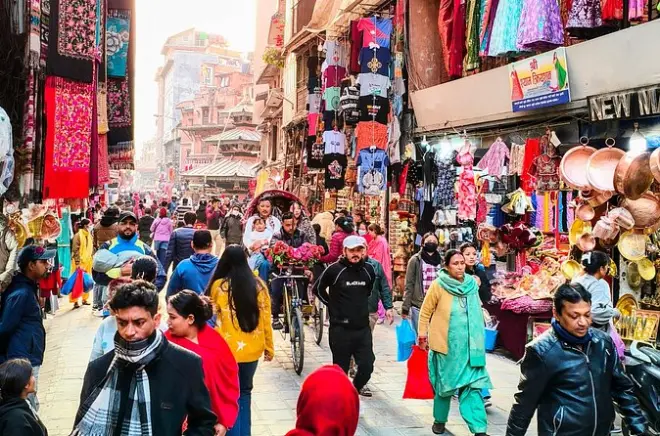
- Explore lively downtown Thamel streets and shops
- Visit Tham Bahi Buddhist monastery
- Visit Gunakar Mahavihar monastery
- End at Shree Gha Stupa Mini Swayambhunath
What’s included
- Professional English-speaking guide for the full three hours.
- access to all four heritage sites (Ga Hiti, Thambahi monastery, Gunakar Mahavihar, and Shree Gha Stupa).
- and time walking through Thamel's modern streets, shops and cafes.
- Every day 09:00 15:00
Information
Walk through Kathmandu's oldest quarter with a guide, starting at Ga Hiti's carved stone fountain and moving through Buddhist monasteries and the Mini.
More experiences you might like


Traveler reviews
The experience
The tour starts at Ga Hiti, an ancient stone water fountain built during the Lichhavi period, where carved spouts once delivered clean water to the community. From there you move through Thamel's lively streets to Thambahi monastery. The site that gave the neighborhood its name when "Tham Bahi" shortened over centuries into "Thamel." The courtyard holds intricately carved stone statues, prayer wheels and stupas made in the traditional Newar style.
You'll then visit Gunakar Mahavihar, another active Buddhist monastery, before ending at Shree Gha Stupa, known locally as the Mini Swayambhunath. This smaller replica of the famous Monkey Temple sits surrounded by prayer wheels and fluttering flags. Between these heritage sites, the guide takes you through downtown Thamel itself: the vibrant streets, shops and cafes that make the area a working neighborhood, not a museum quarter.
The group stays small, capped at five people, and the pace is set for walking on foot through crowded streets. A professional guide speaks English throughout and can answer questions about what you're seeing as you move between sites. The whole tour takes three hours.
Top questions
What is Ga Hiti and why does the tour start there?
Ga Hiti is an ancient stone water fountain system built during the Lichhavi period, designed with intricately carved spouts that once supplied clean water to the community. It stands in the heart of Thamel surrounded by local shops and bustling streets, making it a quiet landmark of Kathmandu's heritage in the middle of modern activity.
How did Thamel get its name?
Thamel takes its name from Thambahi monastery, also called Bhagwan Bahal, a historic Buddhist monastery in the neighborhood's center. Over time, "Tham Bahi" evolved into "Thamel," and you'll visit the actual monastery during the tour to see its carved courtyard and prayer wheels.
What is the Shree Gha Stupa and how does it compare to Swayambhunath?
Shree Gha Stupa is a smaller replica of the famous Swayambhunath temple, also known as the Monkey Temple. It sits surrounded by prayer wheels and fluttering flags and serves as the final stop on the tour, offering a serene conclusion to the walk through Thamel's heritage sites.
Can I bring a stroller or pram on this walking tour?
Yes, infants and small children can ride in a pram or stroller, and the tour is suitable for all physical fitness levels. Public transportation options are also available nearby if you need them.
Operated by Amazing Kathmandu Tours. Explorevia does not run this tour: we compare it with similar options, and you book it with our booking partner.
Prices and times updated 4 days ago
Walking tour in Thamel: Ancient temples and hidden corners
3h · EN
from US$ 15 per person
Next, you choose your date and number of travelers and see the final price.