
Private 8-Day Morocco Tour: Marrakech, Sahara & Berber Villages

Morocco Private Tour: Sahara Desert, Atlas Mountains & Medina Life
If you want more than just snapshots—if you want to taste street food in Marrakech, ride camels under Saharan stars, meet real Berber families, and get lost (just a little) in ancient medinas—this tour gives you all that and more without rushing past what makes Morocco special.
 8d
8d

Step-by-step itinerary
Day 1 — Arrival in Marrakech
- Transfer to Riad and free time at Jemaa el-Fnaa
Day 2 — Marrakech City Tour
- Visit Jemaa el-Fnaa square
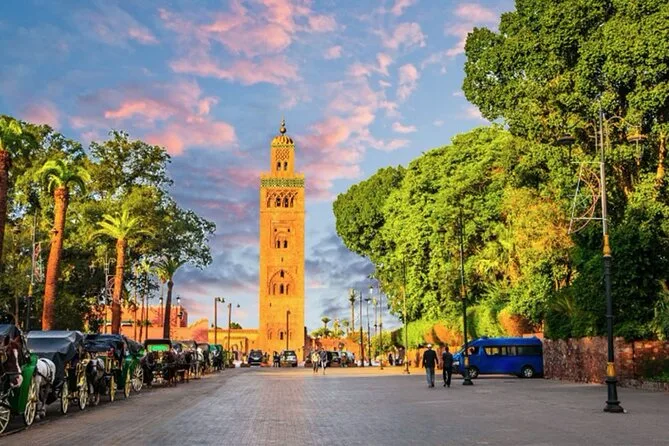
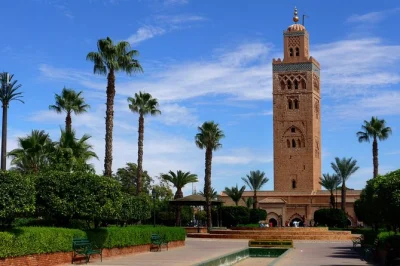
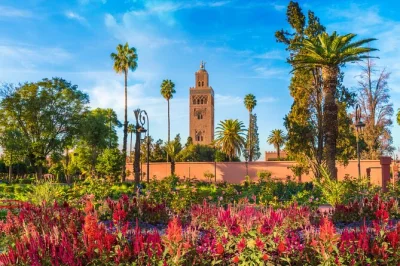
- Visit Koutoubia Mosque
- Tour Bahia Palace
- Explore Saadian Tombs
- Walk Marrakech Medina
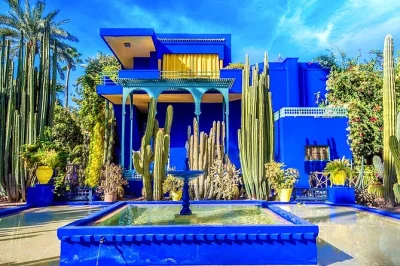
- Visit Majorelle Gardens
Day 3 — Atlas Mountains and Valleys
- Stop at High Atlas Mountains
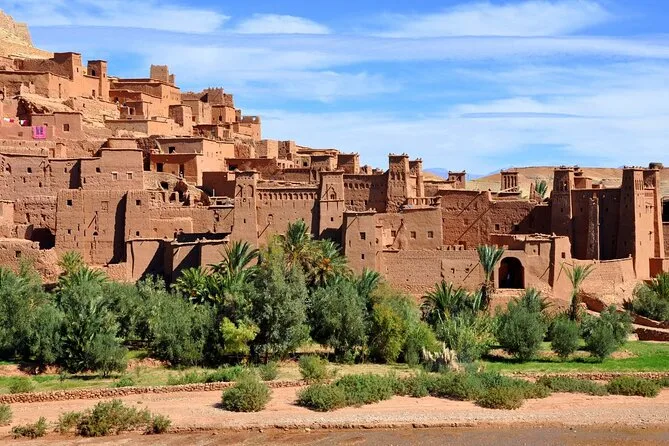
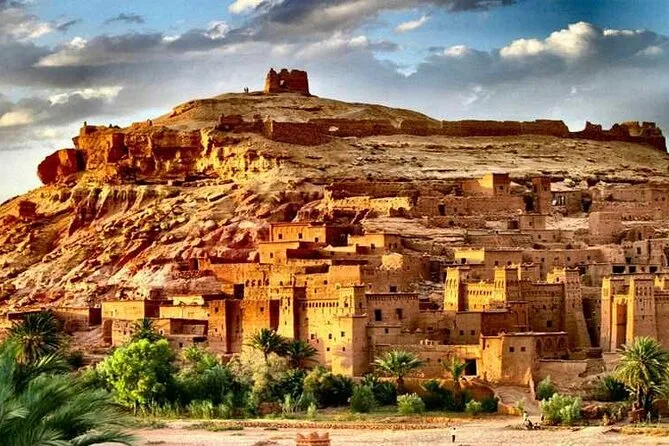
- Visit Ait-Ben-Haddou Ksar and lunch
- Visit Roses Valley
- Explore Dades Valley and drive to hotel
Day 4 — Todgha Valley and Erfoud
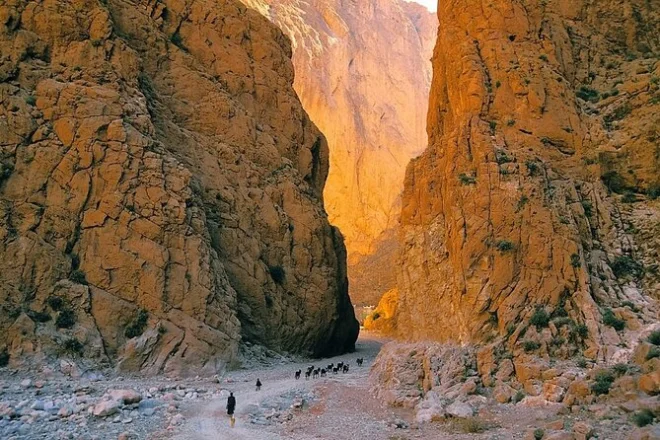
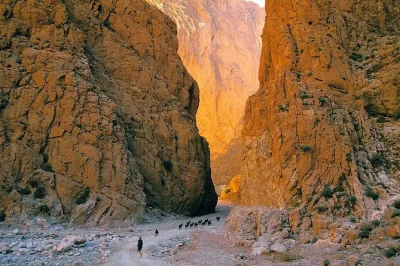
- Visit Todgha Valley and Gorges walk
- Visit Erfoud fossil factory
Day 5 — Merzouga and Sahara Desert
- Visit Khamlia Village and Gnawa music
- Explore Sahara Desert off-road
- Lunch with local family
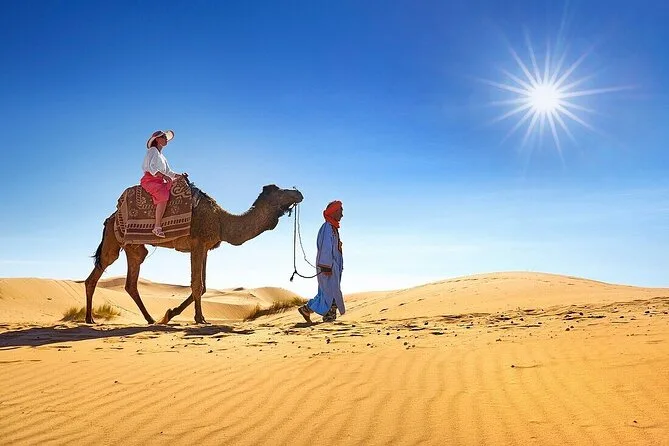
- Camel trek at sunset
Day 6 — Rissani Market and Draa Valley
- Visit Rissani Market
- Stop at Draa Valley
Day 7 — Ouarzazate and Telouet Kasbah
- Visit Telouet Kasbah
Day 8 — Departure Transfer
- Transfer to Marrakech or Casablanca airport

The Experience
The first thing I noticed stepping out of Menara Airport was the warm air—almost sweet with a hint of orange blossom. Our driver was waiting right outside, holding a small sign and grinning like he’d been expecting us all day. The drive into Marrakech was a blur of scooters and flashes of pink city walls. That evening, we wandered Jemaa el-Fnaa square—smoke curling up from food stalls, the sound of drums and chatter everywhere. I grabbed a glass of fresh-squeezed orange juice from one of the carts; it tasted like sunshine after a long flight.
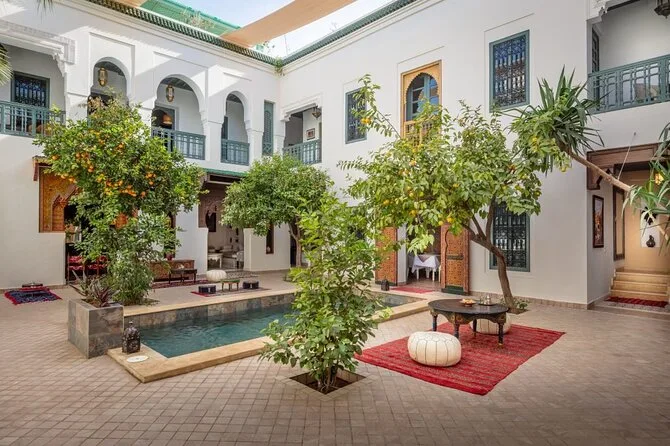
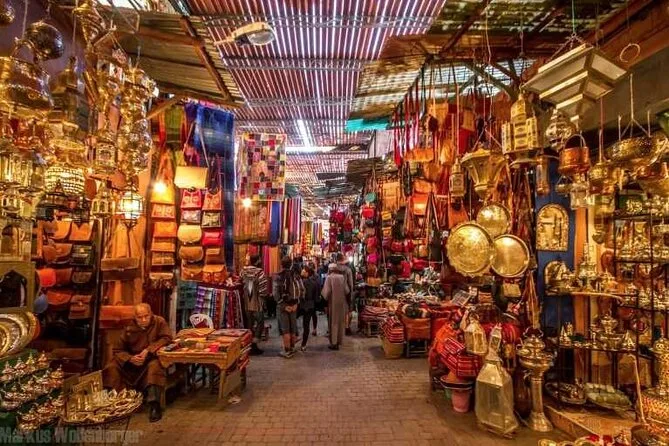
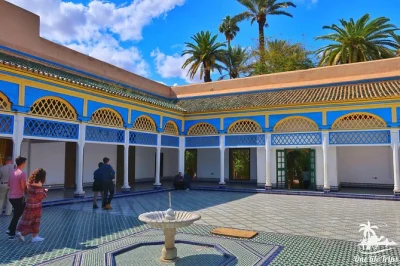
The next morning, our local guide met us at the riad’s door. He led us straight into the heart of Marrakech’s old city. Jemaa el-Fnaa was already buzzing—snake charmers on one side, storytellers drawing little crowds on another. We ducked into Koutoubia Mosque’s gardens (non-Muslims can’t go inside), but you can’t miss that minaret—it towers over everything nearby. Bahia Palace felt cooler inside, all painted ceilings and tiled courtyards where sunlight flickered through orange trees. At the Saadian Tombs, I remember tracing my finger along the mosaic tiles—so many colors packed into such a small space. The Medina itself is a maze; our guide pointed out tiny workshops where artisans hammered copper or dyed leather by hand. Later, we escaped to Majorelle Garden—a riot of blue walls and cactus shadows. It’s quieter there; you hear birds instead of mopeds.
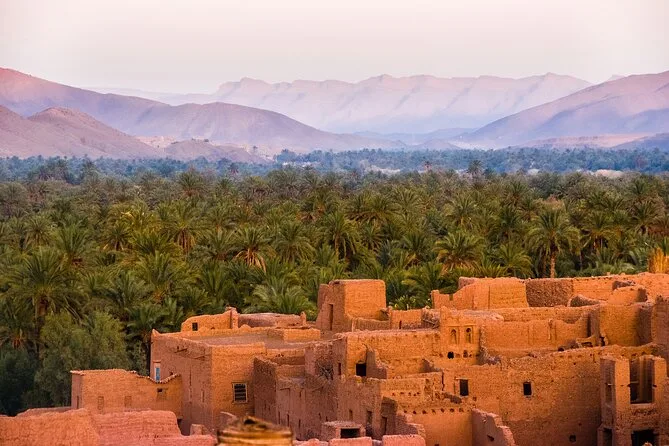
Leaving Marrakech behind meant winding up into the High Atlas Mountains—switchbacks and sudden views that make your stomach drop (in a good way). We stopped for mint tea at a roadside café near Tizi n'Tichka pass—the highest in Morocco—and watched clouds drift below us for once. Ait-Ben-Haddou Ksar looked almost unreal in the afternoon light: mudbrick towers stacked against each other like something out of an old movie (which makes sense since they filmed Gladiator here). Lunch was simple—tagine and bread—but eaten with locals who shared stories about growing up in these villages. Driving through Roses Valley later that day, you could actually smell flowers on the breeze if you rolled down your window.
Dades Valley felt cooler than I expected—shaded by cliffs and full of little streams trickling past walnut trees. We stopped often just to take photos or wave at kids herding goats along the road. In Todgha Valley next morning, palm groves gave way to narrow gorges where water ran cold even in summer heat. We passed an old Jewish Kasbah before walking through Todgha Gorges themselves—sheer rock walls rising up on both sides while nomads led their sheep to drink from the river below.
By midday we reached Erfoud—a dusty town famous for fossils. Inside one workshop, a craftsman showed us how they turn ancient stone into sinks and tabletops; his hands were stained gray from years of polishing rock dust away.
Merzouga sits right at the edge of the Sahara Desert—the sand here glows gold at sunset. In Khamlia Village, musicians welcomed us with Gnawa rhythms—deep drums and metal castanets echoing across the dunes while kids danced nearby. We drove off-road to visit remote Berber families; sometimes you spot fennec fox tracks in early morning sand if you look close enough. Lunch with a local family was honestly my favorite meal: couscous served in big clay dishes while everyone ate together on low cushions.
Camel trekking at dusk is something else—the silence out there is huge except for soft hoofbeats and wind moving across dunes. At camp that night, stars filled every inch above us; someone brewed tea over hot coals while we swapped travel stories around the fire.
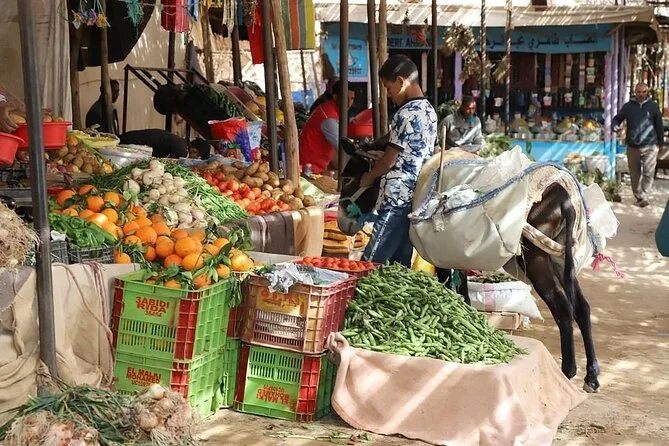
The next day took us through Rissani’s market—a real working souk where locals haggle over everything from dates to donkeys (the smell of spices hits you before you even see them). Draa Valley came next: endless palm groves lining Morocco’s longest river, with patches of henna fields tucked between villages.
On our way back toward Marrakech we stopped at Telouet Kasbah—a crumbling palace high in the mountains that still holds onto its faded grandeur inside mosaic-tiled halls. By now I’d lost track of how many glasses of mint tea I’d had—but each one tasted different depending on who poured it.

What’s included
Your private transportation throughout Morocco is covered—including parking fees—and there’s always an English-speaking driver or guide ready to help out or answer questions along the way. Infant seats are available if needed so everyone travels safely and comfortably.
Operated by Fes Day Tours
Traveler reviews
Compare the 13 similar options
 Private 8-Day Morocco Tour: Marrakech, Sahara & Berber Villages★ 5.00 (41)8dEN · IT +2US$ 2,079
 Marrakech: Private Half-Day City Tour with Souks & Bahia PalaceLet Marrakech surprise you—explore Bahia Palace, wander the medina’s souks, and share mint tea with locals. Includes hotel pickup and private guide.★ 4.83 (552)3h–3h 30mEN · AR +1US$ 87View ›
 Half-Day Marrakech Tour: Jemaa el-Fna, Palaces & SouksHalf-day guided tour of Marrakech with skip-the-line access to Bahia Palace and Ben Youssef Madrasa★ 4.96 (537)3hEN · FRUS$ 25View ›
 Marrakech: Bahia Palace, Saadian Tombs & Medina Walking TourStep inside Marrakech’s medina with a local guide, wander Bahia Palace, explore Saadian Tombs & souks, skip lines, and enjoy hotel pickup in the old city.★ 4.75 (291)4hEN · FRUS$ 17.33View ›
 Marrakech: Private City Tour with Majorelle Garden & Medina WalkStep into Marrakech’s old medina, wander the Majorelle Garden, and see Bahia Palace on a private city tour with hotel pickup and local guide included.★ 4.71 (689)4h–8hENUS$ 28View ›
 Marrakech: Majorelle Garden, Bahia Palace & Souks Private TourStart with the blue of Majorelle Garden, wander Bahia Palace mosaics, explore Marrakech’s souks & Mellah with a private guide and skip-the-line access.★ 4.93 (87)3h 30mENUS$ 157View ›
 Marrakech: Private City Tour with Majorelle Garden & MedinaFeel the pulse of Marrakech on a private city tour—wander Jardin Majorelle, explore Bahia Palace, and dive into the souks with a local guide. Includes pickup.★ 4.80 (91)4h–8hENUS$ 26View ›
 Marrakech half-day tour: Majorelle Garden, Bahia Palace & moreHalf-day private tour of Marrakech with air-conditioned vehicle, professional guide and admission to Majorelle Garden, Bahia Palace★ 4.69 (245)3h–4hEN · FR +1US$ 30View ›
 Marrakech City Tour with Private Vehicle: Koutoubia to MajorellePrivate Marrakech city tour with your own guide and driver, hotel pickup included. Start at Koutoubia Mosque★ 4.83 (233)7h 30mEN · FR +1US$ 70View ›
 Marrakech Medina Tour with Local Guide: Saadian Tombs & Bahia PalaceThree to four hours walking the Marrakech Medina with a licensed local guide through souks, the 16th-century Saadian Tombs, Bahia Palace★ 4.61 (44)3h–4hEN · AR +1US$ 15.01View ›
 Marrakech: Full Day Private Tour with Majorelle Garden & SouksSix-hour private Marrakech city tour covering Koutoubia Mosque, Bahia Palace, Ben Youssef Madrasa, Jewish Quarter and Djemaa El Fna souks. Local guide, hotel pickup included.★ 4.73 (213)6hEN · AR +4US$ 69View ›
 Marrakech Medina Walking Tour: Private Guide & SouksPrivate half-day walking tour of Marrakech's medina with a local guide — Bahia Palace, Saadian Tombs, Jemaa el-Fna and the souks without getting lost in the narrow streets.★ 4.88 (41)4hEN · DE +2US$ 87View ›
 Marrakech: Merzouga Desert & Ait Ben Haddou 3-Day Tour3-day desert tour from Marrakech with camel ride, luxury camp, Ait Ben Haddou UNESCO site & Atlas Mountains. Includes transport, meals, local guides.★ 4.96 (539)3dEN · AR +3US$ 150View ›
Top questions
Is this Morocco tour suitable for families with young children?
Yes! Infants and small children are welcome—you can request prams or specialized infant seats for comfort during drives.
Do I need to be physically fit for this itinerary?
This tour suits most fitness levels; walks are gentle but let your guide know if you have any concerns—they’ll adjust as needed.
Are meals included? What about dietary restrictions?
Main meals aren’t included except lunch with a local family in Merzouga; let us know about allergies or preferences so we can help arrange options along the way.
What kind of accommodation should I expect?
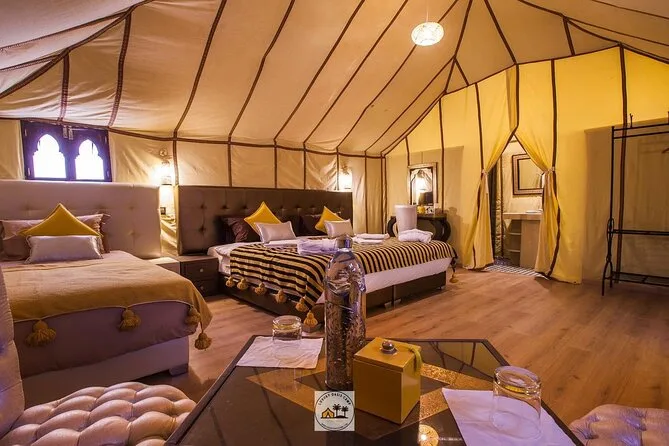
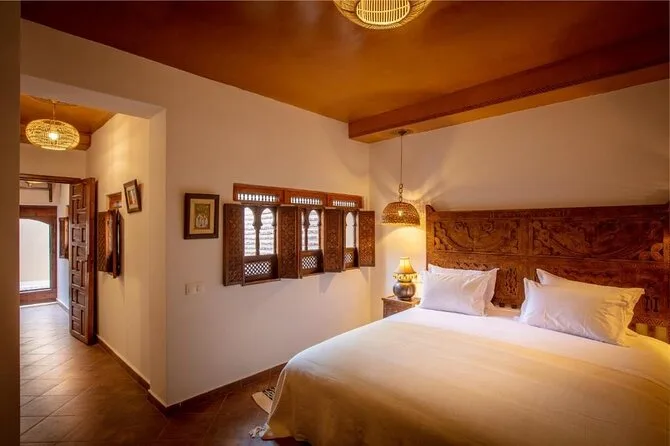
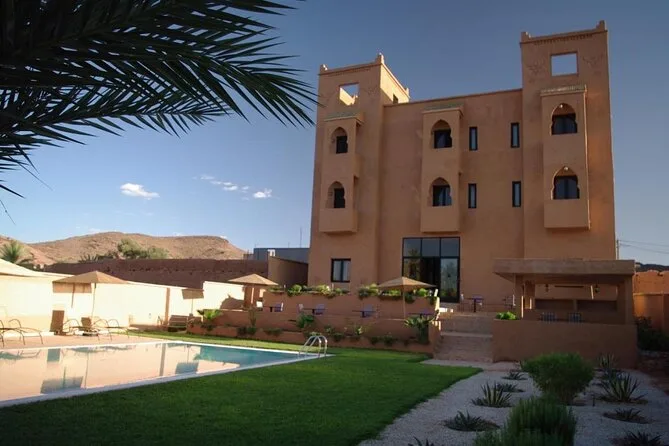
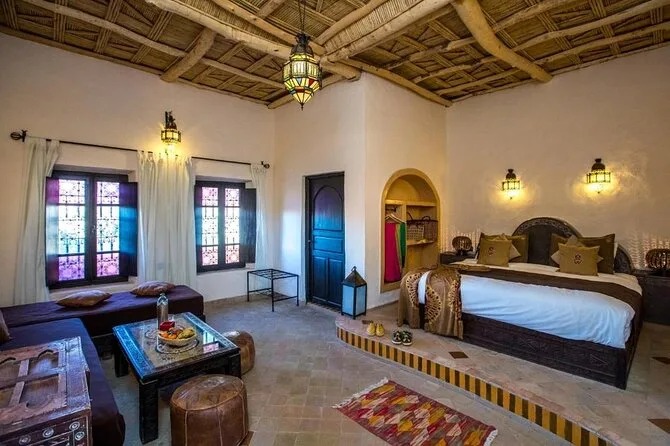
You’ll stay mostly in traditional riads or kasbah-style hotels—comfortable places with plenty of character (and usually great breakfasts).
Private 8-Day Morocco Tour: Marrakech, Sahara & Berber Villages
8d · EN · IT +2 · at your hotel
from US$ 2,079 per person
★★★★★★★★★★5.0041 reviewsVerified traveler reviews via our booking provider
