
Marrakech to Merzouga: 3-Day Sahara Desert & Luxury Camp

Three days, two nights, one desert that doesn't let go
You travel from Marrakech across the Atlas Mountains to the Sahara, stopping at Ait Ben Haddou and Todra Gorges along the way. Two nights include one in a luxury nomadic camp in Merzouga with a camel ride at sunset and traditional music. Transport, meals, and accommodation are all included; you arrive back in Marrakech on the evening of day three.
 3d
3d

Step-by-step itinerary
Day 1 — Marrakech to Dades via Ait Ben Haddou
- Visit Berber village Ait Berka
- Visit village Ait Ben Amer
- Cross High Atlas Mountains Tizi-n-Tichka
- Explore Ait Ben Haddou Kasbah
- Visit Ouarzazate medina and Taourirt Kasbah
- Explore International Museum of Cinema
- Stop at Kelaa M'Gouna for photos
- Visit Dades Valley and Kasbah Ait Youl
- See monkey rocks at Boumalne Dades
- Overnight at Kasbah de Tessidrine hotel
Day 2 — Dades to Merzouga via Todra Gorges
- Breakfast at hotel
- Guided tour of Tinghir valleys
- Visit Todra Gorges
- Lunch in Tinghir village
- Travel through Tin-n-Jdad, Rissani, Erfoud
- Arrive Merzouga desert camp
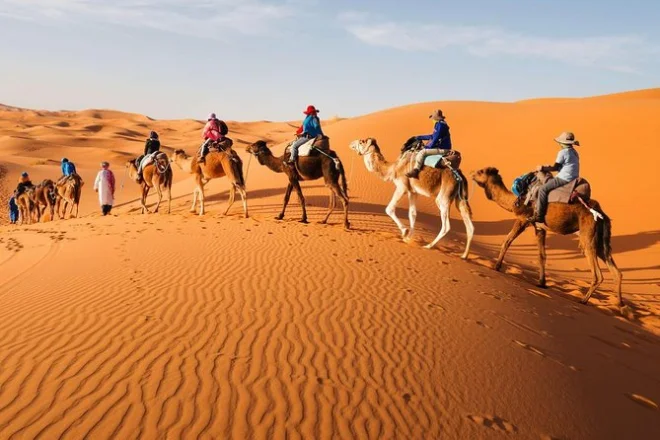
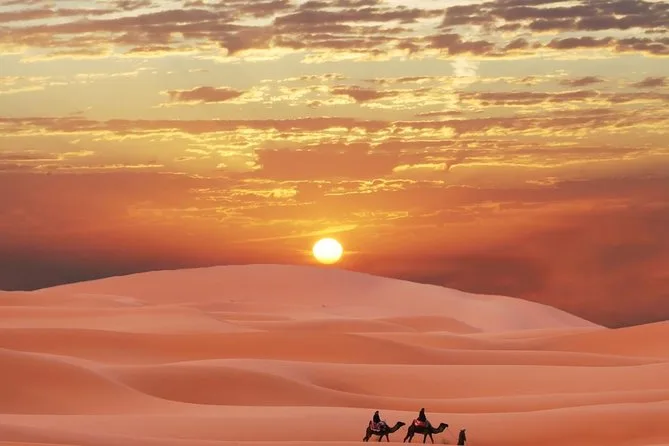
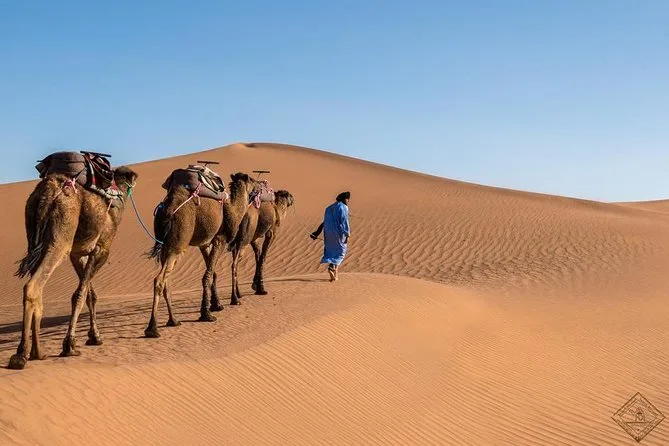
- 1 hour camel ride to watch sunset
- Enjoy folk dances and traditional music
- Overnight in luxury desert camp
Day 3 — Merzouga to Marrakech return
- Breakfast at desert camp
- Return journey to Marrakech
- Arrive in Marrakech around 7:30 pm

The Experience
The moment you realize you're actually doing this is somewhere around the Tizi-n-Tichka pass, at 2,260 meters, when the air gets thin and the road stops pretending to be flat. You've left Marrakech behind—the noise, the medinas, the whole thing—and now it's just mountains folding into more mountains, and a driver who knows every switchback. The first day takes you through Berber villages perched at impossible altitudes, then down to Ait Ben Haddou, a UNESCO-listed kasbah that looks like it was built from the earth itself. You get three hours there: ninety minutes to walk the narrow streets and climb the walls, then an hour to eat and sit with the weight of it. By evening you're in Dades, in a traditional kasbah hotel, and the gorges are close enough you can hear them.
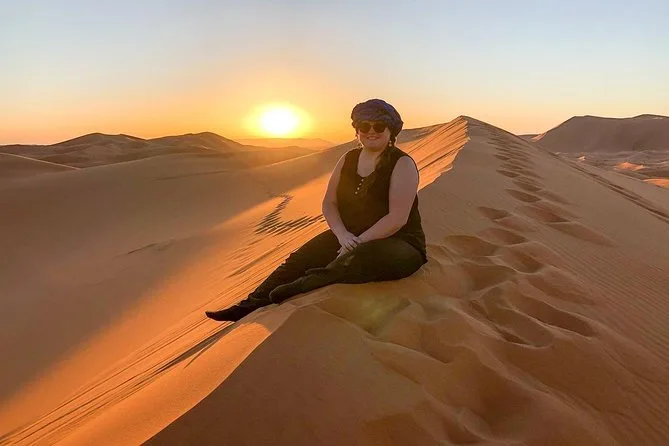
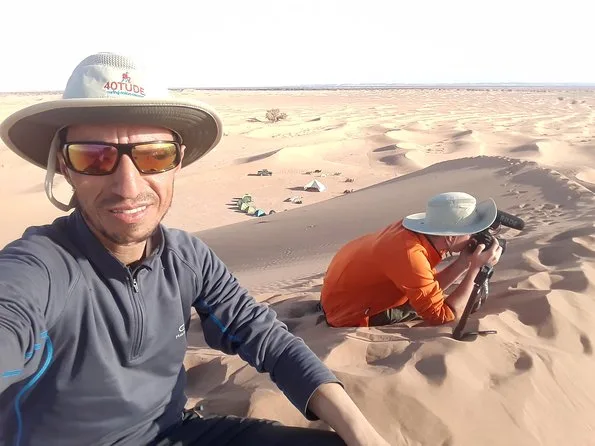
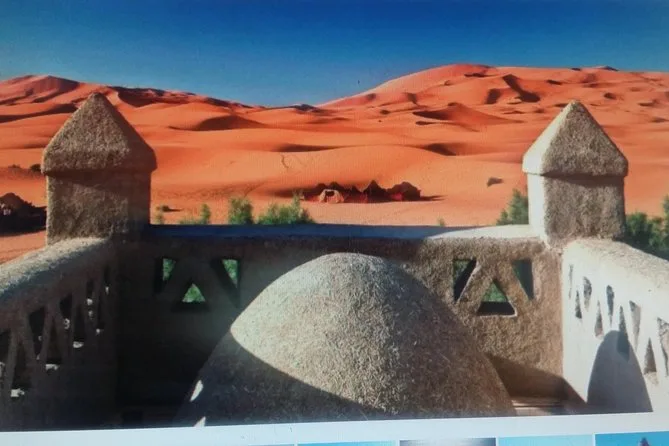
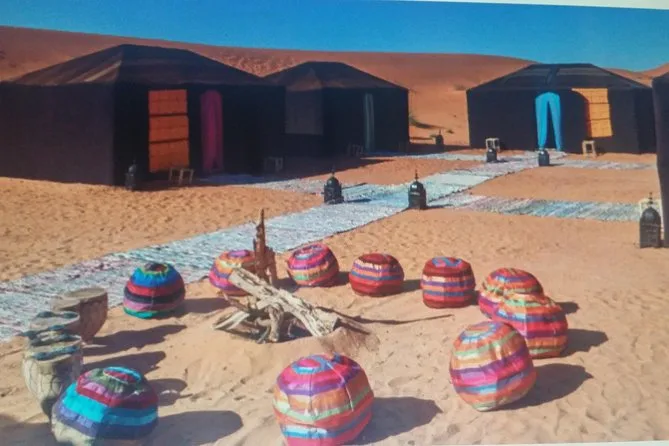
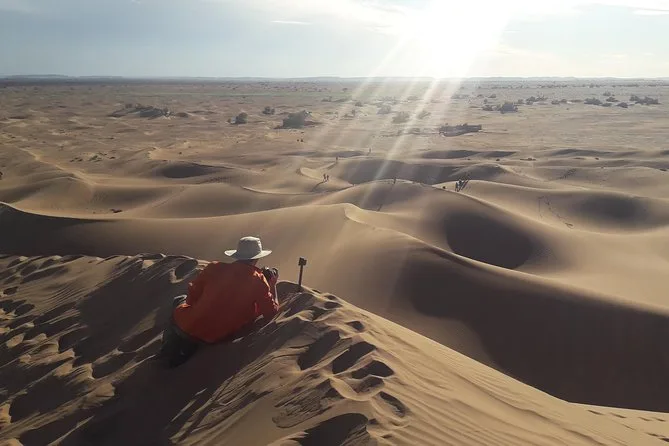
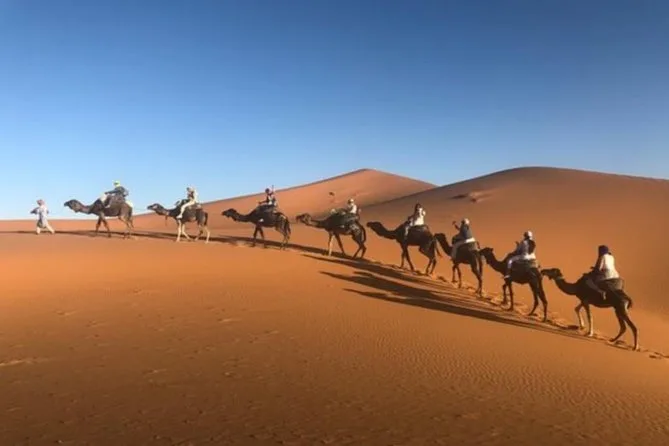
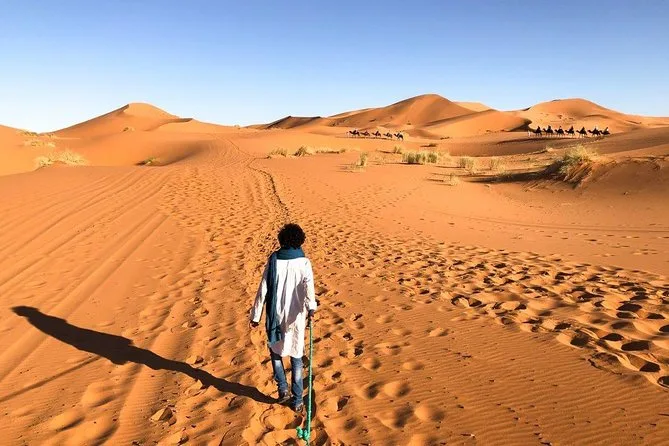
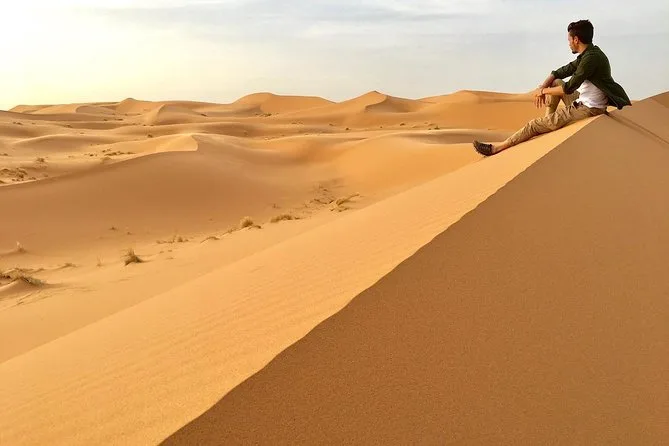
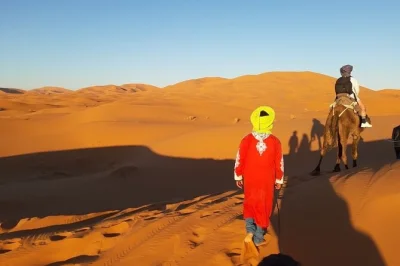
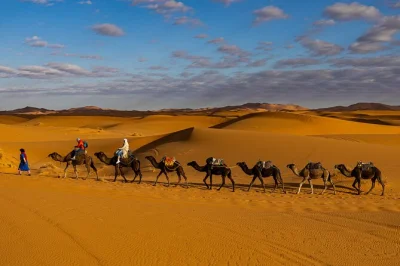
Day two is when the landscape stops being a view and becomes something you're inside. Early breakfast, then Tinghir and the Todra Gorges—a guided walk through valleys where the rock walls rise so close you can touch both sides if you stretch. After lunch you drive toward Merzouga, passing through towns with names that don't sit easy on an English tongue: Rissani, Erfoud, tin-n-Jdad. And then the dunes start. Not gradually—suddenly. The Erg Chebbi desert opens up and the road becomes sand, and you're there. The luxury camp sits in the middle of it, tents with proper beds and blankets, and that first night you get a one-hour camel ride to watch the sunset turn the dunes orange and then purple. After, there's folk music and traditional dancing around a fire, and the stars are so thick you stop trying to count them.
The return on day three is the long drive back—Ouarzazate, then the mountains again, arriving in Marrakech around 7:30 in the evening. You'll be tired in a way that's hard to explain to people who weren't there. The Sahara desert tour from Marrakech covers a lot of ground, and the air-conditioned vehicle does the work, but your body knows it's been three days of moving. You need moderate fitness for the walking and the camel riding, and the drive itself is long enough that you'll want to be comfortable with hours in a car. But that's also what makes it work—you see the whole thing, from the high passes to the desert floor, without having to arrange any of it yourself.

What’s included
Your three-day Sahara desert tour from Marrakech includes air-conditioned transport throughout, accommodation for two nights (one in a traditional kasbah hotel in Dades, one in a luxury nomadic camp in Merzouga), all meals, a guided tour of Ait Ben Haddou kasbah, walks through Todra Gorges and Tinghir valleys, a one-hour camel ride at sunset in the Erg Chebbi desert, and an evening of folk dancing and traditional music at the camp. You return to Marrakech on the evening of day three.
Operated by Marrakech Tours Excursions
Is this one for you?A good fit if you want the full Sahara experience—mountains, gorges, and desert nights—without arranging transport, guides, or camp logistics yourself. The three-day pace is what makes visiting Ait Ben Haddou, Todra, and Merzouga possible in one trip, though expect long driving days and moderate physical activity.
Traveler reviews
Compare the 13 similar options
 Marrakech to Merzouga: 3-Day Sahara Desert & Luxury Camp★ 4.61 (95)3dEN · FR +1US$ 135
 Marrakech to Merzouga: 3-Day Desert Tour & Luxury Camp3-day Sahara Desert tour from Marrakech to Merzouga with camel trek, Todra Gorge, Aït Benhaddou, and overnight luxury camp. Includes transport, meals, guide.★ 4.97 (176)3dEN · AR +3US$ 120View ›
 Marrakech to Merzouga Desert Tour: Camel Rides & CampThree-day guided tour from Marrakech through the High Atlas, Ait Ben Haddou and Todra Gorge to Merzouga's Erg Chebbi dunes with camel rides at sunset★ 4.91 (10,240)3dEN · AR +5US$ 129View ›
 Marrakech to Fes: 3-Day Sahara Desert Tour, Camel Trek & KasbahsFeel the shift from Marrakech’s bustle to Sahara silence, cross Atlas passes, ride camels at sunset in Merzouga, and sleep under desert stars. Includes pickup.★ 4.87 (6,720)3dEN · AR +2US$ 233View ›
 Marrakech to Merzouga: Sahara Desert Tour with Berber CampFeel the shift from Marrakech to Merzouga on a 4-day Sahara tour, ride camels, share tea with nomads, and sleep under desert stars. Includes pickup & all stays.★ 4.89 (311)4dEN · FR +1US$ 236View ›
 3-Day Desert Tour from Marrakech to Merzouga: Camel Trek & DunesWake early in Marrakech, cross Atlas passes, wander Ait Ben Haddou’s alleys, ride camels at sunset and sleep under desert stars. Includes pickup, hotel & camp stays.★ 4.89 (12,469)3dEN · FR +1US$ 117View ›
 Marrakech: Merzouga Desert & Ait Ben Haddou 3-Day Tour3-day desert tour from Marrakech with camel ride, luxury camp, Ait Ben Haddou UNESCO site & Atlas Mountains. Includes transport, meals, local guides.★ 4.97 (515)3dEN · AR +3US$ 152View ›
 3-Day Merzouga Desert Tour: Camel Rides & Desert CampThree-day Atlas Mountains trek to the Sahara with camel rides across Erg Chebbi dunes and overnight in a traditional desert camp, including all transport and meals.★ 4.90 (1,941)3dEN · AR +8US$ 145View ›
 3-Day Merzouga Sahara Tour: Camel Rides & Berber CampsThree-day journey from Marrakech through Aït Ben Haddou and Dades Gorge to Merzouga's desert dunes, featuring camel rides at sunset and sunrise in a Berber tent and hotel.★ 4.92 (391)3dEN · IT +2US$ 174View ›
 Marrakech to Merzouga: Sahara Desert Safari, Camel Trek & Berber CampWake up in Marrakech, cross the Atlas Mountains, wander Ait Ben Haddou, ride camels at sunset in Merzouga and sleep under desert stars. Includes pickup & all stays.★ 4.98 (244)4dEN · AR +2US$ 562View ›
 Marrakech to Merzouga: Sahara Camel Trek & Desert Camp 3-Day TourFeel the magic of Morocco on a Marrakech to Merzouga desert tour with camel trek, Berber camp night, Atlas Mountains crossing, and Kasbah Ait Ben Haddou visit. Includes pickup.★ 4.67 (83)3dEN · FR +1US$ 181View ›
 Marrakech to Merzouga: 3-Day Desert & Camel Ride3-day desert tour from Marrakech through Atlas Mountains to Merzouga with camel ride, Todra Gorges hike, and Berber camp overnight. Includes transport, meals, guide.★ 4.92 (49)3dEN · FR +1US$ 130View ›
 Marrakech: 3-Day Desert Tour with Camel Ride & Erg ChebbiThree days from Marrakech through the Atlas Mountains to Merzouga's sand dunes with camel rides, desert camp stay, and hotel pickup included.★ 4.71 (34)3dEN · FR +1US$ 433View ›
Top questions
How long is the drive from Marrakech to Merzouga?
The full journey takes three days. Day one covers Marrakech to Dades (crossing the Atlas Mountains and visiting Ait Ben Haddou). Day two goes from Dades to Merzouga via Todra Gorges. Day three is the return to Marrakech, arriving around 7:30 pm.
What's included in the luxury camp night?
Accommodation in nomadic tents with beds and blankets, a one-hour camel ride to watch the sunset, folk dancing and traditional music in the evening, and breakfast the next morning.
Is this tour physically demanding?
Moderate fitness is recommended. You'll walk through gorges and villages, ride a camel for an hour, and spend long hours in a vehicle. It's not recommended for travelers with spinal injuries, poor cardiovascular health, or if you're pregnant.
What happens on the first day?
You visit Berber villages in the Atlas Mountains, cross the Tizi-n-Tichka pass at 2,260 meters, spend three hours exploring Ait Ben Haddou (a UNESCO-listed kasbah), then continue to Dades Gorges and stay overnight in a traditional kasbah hotel.
Do I need experience riding camels?
No. The camel ride on day two is one hour and doesn't require prior experience. It's part of the standard itinerary at sunset in Merzouga.
Are meals included?
Yes. Meals are included throughout the three days, including lunch stops and dinners at the accommodations.
What if I have mobility issues?
The tour involves walking through gorges and villages, camel riding, and long vehicle journeys. It's not recommended for travelers with spinal injuries or poor cardiovascular health. Contact the operator to discuss your specific needs.
Marrakech to Merzouga: 3-Day Sahara Desert & Luxury Camp
3d · EN · FR +1 · at your hotel
from US$ 135 per person
★★★★★★★★★★4.6195 reviewsVerified traveler reviews via our booking provider
