
Vilnius: Jewish Quarter Walking Tour & Ghetto History

The Streets Where Vilnius Earned "Jerusalem of Lithuania"
You walk the former Jewish quarter and WWII ghettos with a local English-speaking guide, seeing the Vilna Gaon's neighborhood, "Walls that Remember" art, the ruins of the Great Synagogue, and Yiddish shop signs preserved from the interwar period. Entry to the Choral Synagogue is included (2 EUR extra if you want to go inside). The tour runs 2–3 hours at a steady pace, suitable for all fitness levels, and strollers are welcome.
 2h 30m

Step-by-step itinerary
Explore Jewish history and sites in Vilnius
- Meet guide at Vilnius Town Hall stairs
- Learn Jewish history introduction
- Walk narrow streets from 16th century
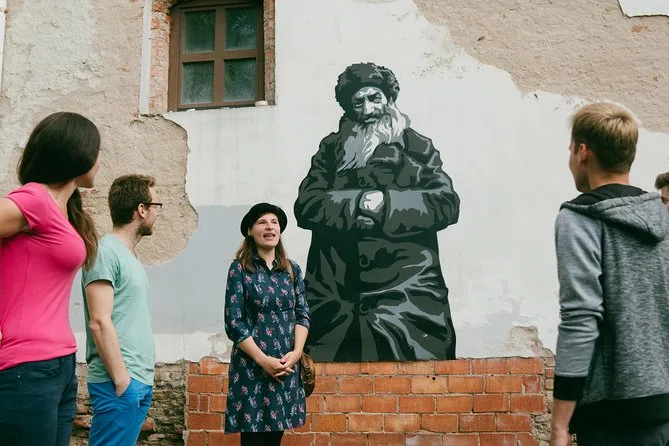
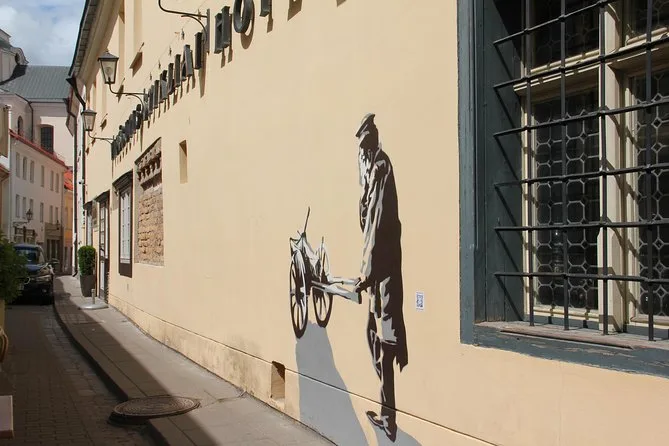
- See "Walls that remember" art project
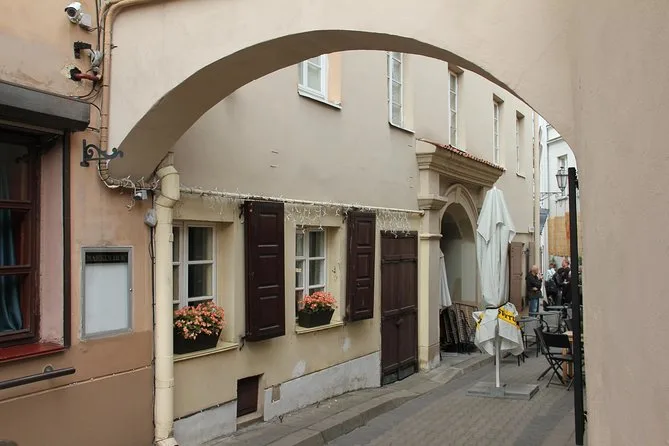
- Pass Glassblowers' street
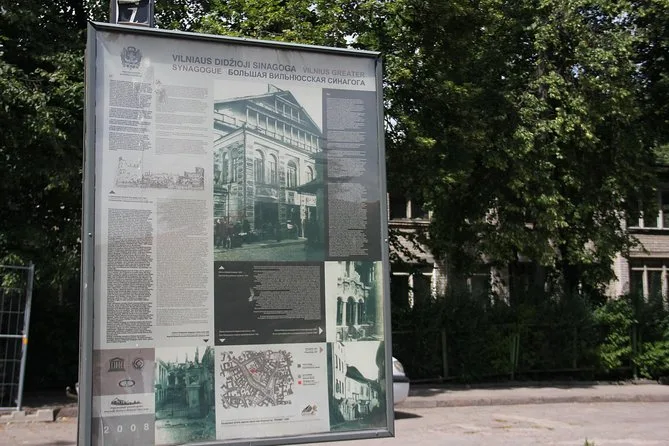
- View Great Synagogue WWII damages
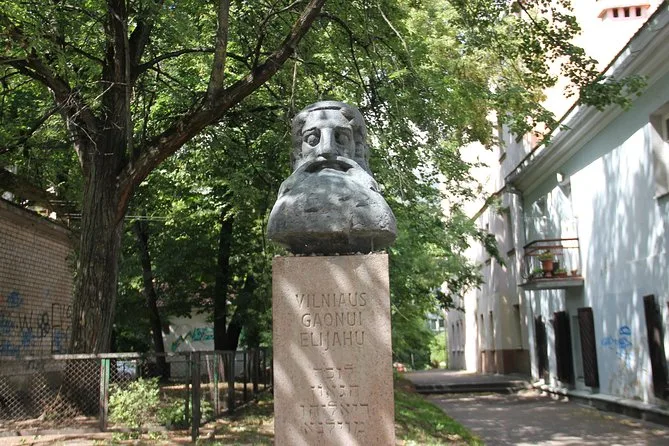
- Hear story of Jewish scholar Vilna Gaon
- Visit former Big Jewish Ghetto area
- Optional break on German street
- Visit surviving synagogue (2 EUR fee)
- Learn about WWII Ghettos creation and liquidation
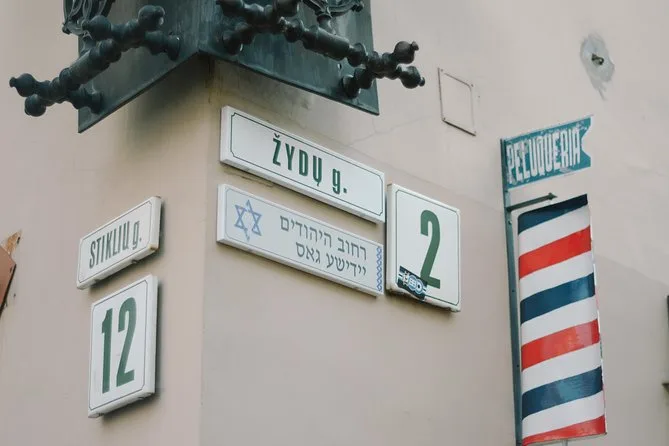
- See street with preserved Jewish shop names
- Find former Ghetto library building
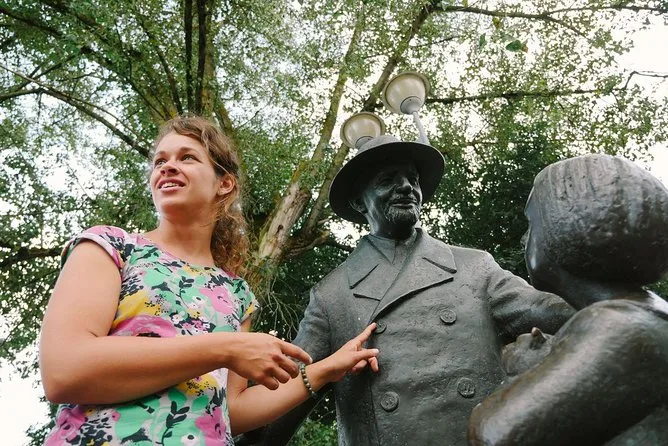
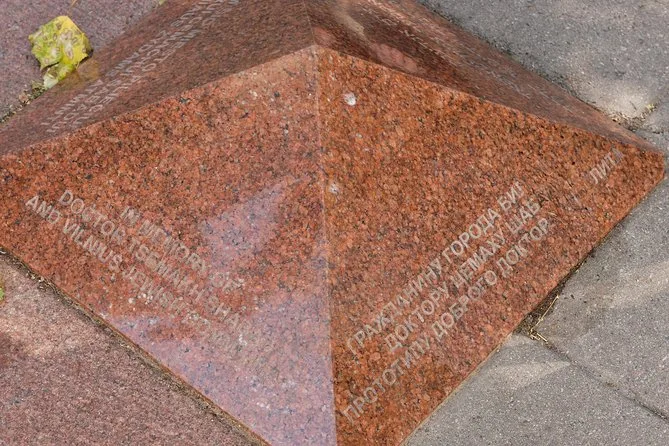
- Learn about famous Jewish doctor statue
- Guide points Jewish information office

The Experience
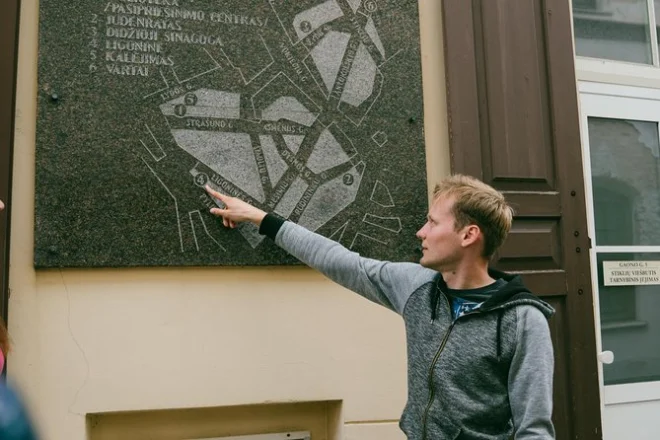
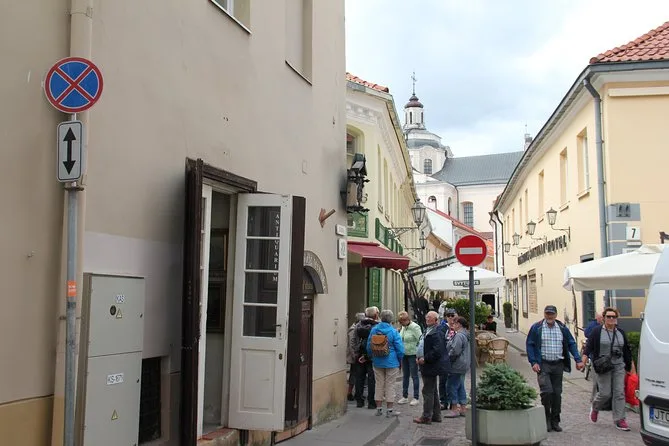
The guide is waiting on the stairs of Vilnius Town Hall when you arrive, and within minutes you're walking into narrow streets that have held the weight of centuries. This is the former Jewish quarter, where Jews began settling in the 16th century and where, by the 18th century, one of Europe's greatest centers of Jewish learning had taken root. The Vilna Gaon lived here — a scholar whose reputation reached across the continent — and the streets themselves still carry the imprint of that world, even though so much of it was erased. You move through the winding lanes slowly, your guide pointing out details most visitors would miss: the way the buildings lean together, the courtyards that once held synagogues, the spaces where life happened before everything changed.
The tour takes you through both the Small and Big Ghettos, the territories the Nazis carved out during WWII, and your guide explains not just what happened but how people lived inside those boundaries — the impossible choices, the small acts of resistance, the liquidation that followed. You'll see the ruins of the Great Synagogue of Vilna, damaged during the war and again under Soviet rule, and pass the Glassblowers' street with its preserved shop signs still readable in Yiddish and Polish from the interwar years. There's a moment when you stand on German Street, where the guide offers a short break if you need one, and the quiet of the place settles on you. One of the most striking stops is "Walls that Remember," a newer art installation that marks where the past was, and then you reach the only surviving synagogue in the city — the Choral Synagogue — where you can step inside for an additional 2 euros (cash only, and it's closed during Jewish holidays, so check ahead).
Near the end, your guide shows you a statue of a famous Jewish doctor who lived in Vilnius, one of the most beloved figures in the city's memory, and points you toward the Jewish information office if you want to dig deeper after the tour ends. The whole walk takes about two to three hours, and by the time you're back where you started, the streets feel different — less like a tourist route and more like a place where you've been let in on something that matters.

What’s included
- Your tour includes a local guide who meets you at Vilnius Town Hall and leads you through the former Jewish quarter, the Small and Big Ghettos, and key historical sites.
- Entry to the Choral Synagogue is included (with an optional 2 EUR cash fee to enter the interior).
- The guide will point you toward the Jewish information office at the end if you want additional resources.
- Strollers and prams are welcome.
Operated by Vilnius with Locals tours
Is this one for you?Right for travelers who want to understand Vilnius's Jewish history and the WWII period through the streets themselves, with a guide who knows where the traces are. The 2–3 hour pace lets you absorb the story without rushing, and the steady walk is manageable for most fitness levels.
Traveler reviews
Compare the 13 similar options
 Vilnius: Jewish Quarter Walking Tour & Ghetto History★ 4.93 (205)2h 30mEN€ 22
 Vilnius: Soviet History Walking Tour & Architecture SitesFeel the echoes of Soviet Vilnius on a walking tour with a local guide. See iconic architecture, hear real stories, and wander streets shaped by history. Includes guide.★ 4.91 (291)2h 30m–2h 50mEN€ 20View ›
 Vilnius Old Town Walking Tour & Lithuanian Snacks2.5-hour walking tour of Vilnius UNESCO Old Town with local guide, Gate of Dawn, St. Anne's Church and traditional Lithuanian treats included.★ 4.94 (108)2h 30mEN€ 25View ›
 Bike Tour of Vilnius Highlights: Old Town to UžupisBike tour through Vilnius covering 8 km of Old Town, landmarks and the artistic district of Užupis with a guide, helmet and bike included★ 4.91 (126)2h 30mEN€ 29View ›
 Vilnius Hot Air Balloon Flight & Trakai Castle ViewsHot air balloon flight over Vilnius or Trakai Castle with hotel pickup, champagne toast, and weather guarantee. Small groups, 8 passengers max.★ 4.95 (155)2h–3hEN · RU€ 175View ›
 Vilnius, Ponary & Trakai Castle Day Trip with GuideStep quietly through Ponary Memorial Park, wander Trakai Castle’s lakeside halls, and hear Vilnius stories from a local guide. Includes pickup and all entry fees.★ 4.77 (118)5hEN€ 110View ›
 Vilnius: Old Town & Užupis Walk with Stories from LocalsWalk Vilnius’ Old Town & Užupis with a local guide, hear real stories, see the Gate of Dawn, and discover hidden corners—includes guide and flexible pace.★ 4.68 (19)2h–3hEN · DE€ 80View ›
 Private Walking Tour Vilnius: Just You, No GroupsPrivate walking tour of Vilnius old town with a live guide in English, Italian or Russian—no other tourists, no fixed schedule, just you and the city at your own pace.★ 4.85 (20)2h–3hEN · RU +1€ 185View ›
 Private Walking Tour Vilnius Old Town with Local GuideWalk Vilnius Old Town and Užupis with a local guide who tailors the route to what you want to see—museums, hidden streets, the Cathedral Square★ 4.64 (14)3hEN · FR +1€ 75View ›
 Vilnius Private Walking Tour with a Local GuideWalk Vilnius with a local who knows the neighborhoods beyond the guidebook—customize the route to your interests, from food and art to hidden streets★ 4.83 (18)2h–6hEN · DE€ 48View ›
 Vilnius Old Town & Uzupis: Private Walking Tour with Local GuidePrivate walking tour of Vilnius Old Town, Cathedral Square, Gates of Dawn and bohemian Uzupis district with professional local guide. 700 years of history in one day.★ 5.00 (10)2h–3hEN€ 80View ›
 Hill of Crosses Vilnius: Full-Day Tour & Soviet Resistance ParkFull-day Hill of Crosses tour from Vilnius with 250,000+ crosses, Soviet resistance park, local guide & hotel pickup. Departs 8am, 8 hours.★ 4.68 (126)9hEN€ 130View ›
 Hot Air Balloon Vilnius: UNESCO Old Town from aboveHot air balloon ride over Vilnius Old Town with hotel pickup, sparkling wine and live commentary. 45–70 minutes floating above baroque architecture.★ 4.91 (113)3hEN€ 185View ›
Top questions
How long is the Jewish Vilnius walking tour?
Approximately 2–3 hours. The pace is steady and includes a short break option on German Street.
What language is the tour conducted in?
English only.
Is entry to the Choral Synagogue included?
Entry is included, but there is an optional 2 EUR fee (cash only) if you wish to go inside. The synagogue may be closed during Jewish holidays or other religious observances.
Where does the tour start?
On the stairs of Vilnius Town Hall, where your guide will meet you.
What is "Walls that Remember"?
A contemporary art installation in the former Jewish quarter that commemorates the Jewish past of Vilnius.
Can I bring a stroller or pram?
Yes, the tour is suitable for all fitness levels and strollers are welcome.
Will we see the ruins of the Great Synagogue?
Yes. You will pass the Great Synagogue of Vilna and learn about the damage it sustained during WWII and the Soviet period.
Who was the Vilna Gaon?
A famous Jewish scholar who lived in Vilnius in the 18th century. The guide will share his life story and explain why he was so significant to Jewish learning across Europe.
Vilnius: Jewish Quarter Walking Tour & Ghetto History
2h 30m · EN
from € 22 per person
★★★★★★★★★★4.93205 reviewsVerified traveler reviews via our booking provider
