
Sumo in Tokyo, Osaka, Nagoya: Live Tournament Matches
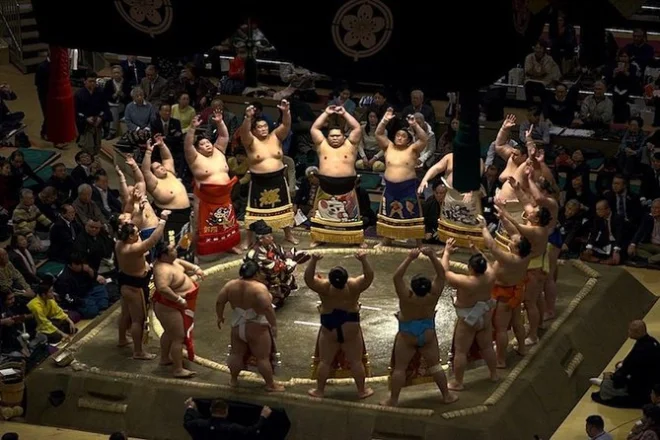


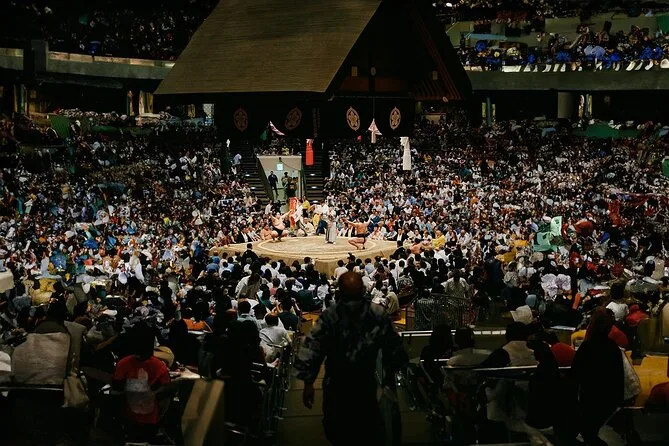
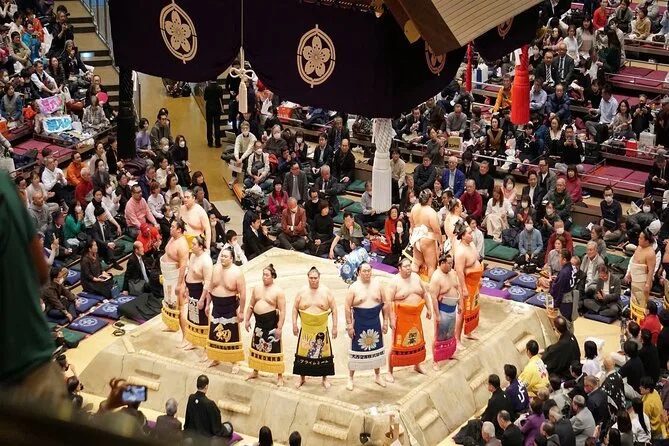
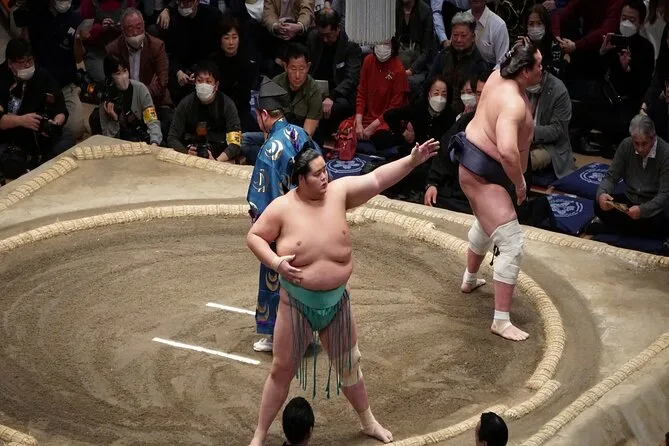
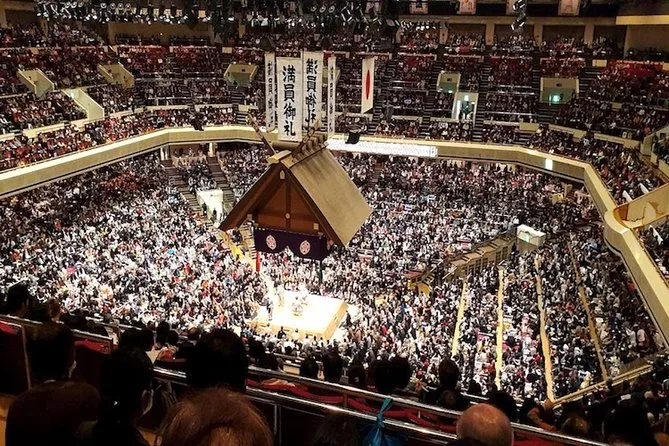
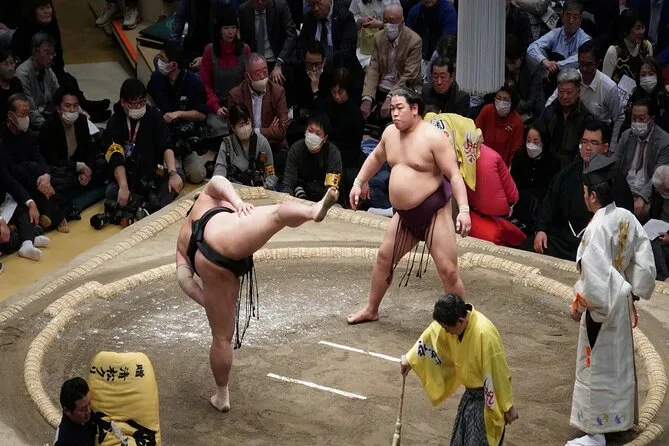
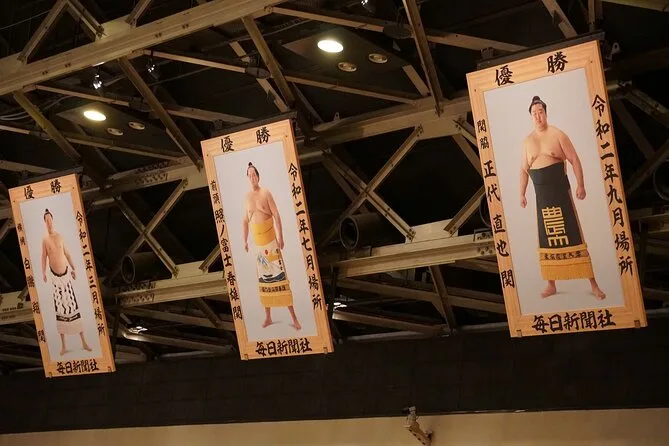
Sit ringside with expert commentary and meet wrestlers over a traditional chanko nabe lunch
A 4-hour guided tour of Japan's official Grand Sumo Tournament at Kokugikan Stadium in Tokyo, Osaka, Nagoya or Fukuoka, depending on the month you travel. You sit with an expert English-speaking guide who explains the matches, rituals and wrestlers as they happen, and the tour includes reserved seating (B, C, A or S-class depending on your option), a sumo info pamphlet with rankings, and optional chanko nabe dinner at a local restaurant afterward. Minimum 15 guests required. If the group doesn't form, you get a full refund. Off-season alternative: visit a sumo stable near Tokyo to watch morning practice, meet wrestlers over tea, and share a chanko lunch.
Compare the 8 alternatives
 Tokyo Shinjuku: Sumo Show, Photo & Drinks with Real WrestlersEvery day · First departure 10:00, last 20:00 · All ages★ 4.94 (5,024)1h 30mENJP¥ 12,000View ›
 Sumo Wrestling Challenge in Tokyo: Step Into the RingEvery day · First departure 10:00, last 19:00 · All ages★ 4.91 (338)1h 30m–2hJP¥ 9,500View ›
 Tokyo: Sumo Tournament Arena Tour & Ryogoku Walk with ExpertNext departure: 12 Jan 2027 · All ages★ 4.92 (123)6hEN · JAJP¥ 33,000View ›
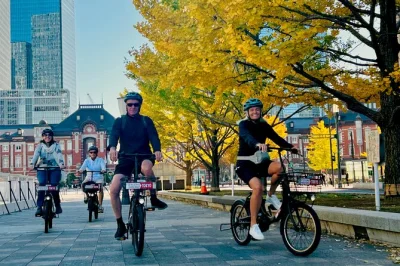 Tokyo E-Bike Tour: Imperial Palace, Markets & Hidden StreetsEvery day · 09:00 and 13:30 · Up to age 80★ 4.92 (746)3hENJP¥ 9,800View ›
 Tokyo Geisha Performance & Dinner with English InterpreterTue and Sat · 18:00 · From age 6★ 4.75 (107)2hEN · JAJP¥ 36,300View ›
 Tokyo Backstreets Bike Tour: Asakusa & Sumo StadiumEvery day · 13:30 · From age 6★ 4.91 (124)4hEN · JAJP¥ 12,000View ›
 Tokyo Go-Kart Tour: Asakusa, Skytree, AkihabaraEvery day · First departure 10:00, last 19:15 · From age 18★ 4.82 (1,148)1h 10mENJP¥ 15,000View ›
 Tokyo: English Stand-Up Comedy Show at Shibuya ClubEvery day · 18:00, 19:30 and 21:00 · From age 13★ 4.87 (286)1h–2hJP¥ 2,500View › Compare more experiences like this »
Step-by-step itinerary
Attend Sumo Tournament Experience
- Join guided sumo tournament tour
- Watch live sumo matches
- Listen to expert commentary
- Learn sumo traditions and rituals
- Cheer with local fans
The experience
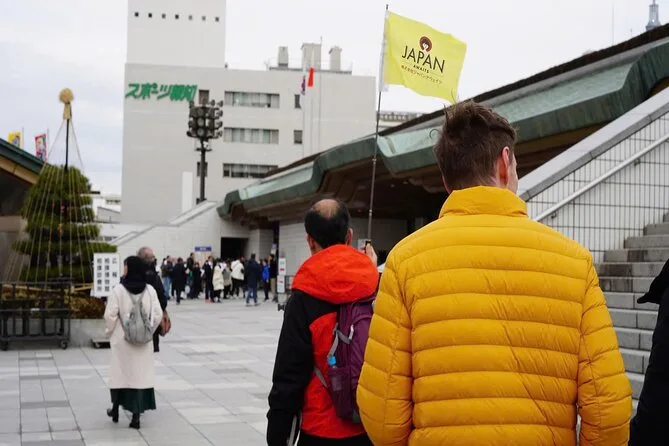
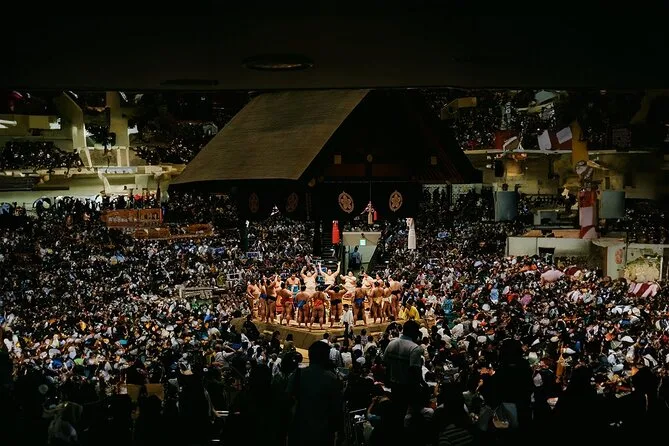
The sumo tournament runs six times a year on fixed dates: January, May and September in Tokyo; March in Osaka; July in Nagoya; November in Fukuoka. Each tournament lasts 15 days. You arrive at Kokugikan Stadium or the regional venue and join a group of up to 20 people with reserved seats on the second floor (B or C-class) for the standard tour, or closer to the ring (A or S-class) for private options. The guide meets you at the entrance with audio headsets so you hear the explanations clearly over the crowd noise.
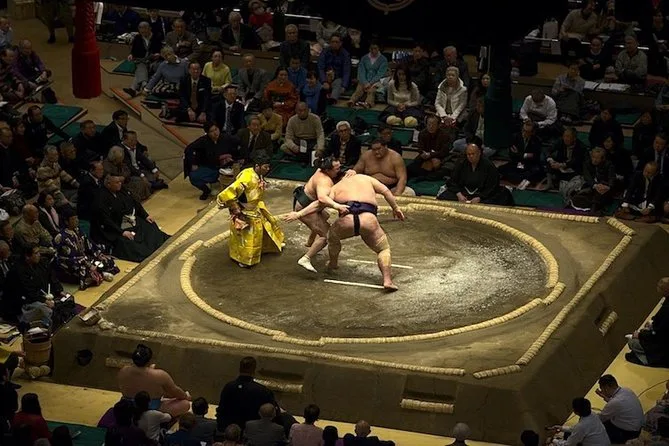
The 4-hour session covers live matches with real-time commentary on fighting styles, wrestler profiles, and the rituals that frame each bout. Your guide walks you through sumo's history and traditions while you watch the bouts unfold and cheer alongside local fans. The stadium sells food and drinks inside, though you cannot bring your own. A sumo info pamphlet and ranking table (banzuke-hyo) are included so you can follow the standings and recognize the wrestlers. If there is a wait before seating (which happens because the arena waits for all matches to end before letting groups in), you may visit the Sumo Museum on your own. The guide will meet you afterward.
If you book the dinner add-on, the tour ends with chanko nabe, a hearty hot pot stew that sumo wrestlers eat in large quantities during training. The restaurant offers a vegetarian version if you request it at checkout. Off-season (when no tournaments are running), you can instead visit a sumo stable near Warabi Station, 30 minutes from Tokyo, between 8 AM and noon. You watch the wrestlers train in the morning, listen to the guide explain techniques via headset, meet the wrestlers over tea, and finish with a chanko lunch. This option does not include a tournament seat ticket because no basho is taking place.
What’s included
- Reserved seating at the tournament (B, C, A or S-class depending on your option).
- English-speaking expert guide with audio headsets.
- sumo info pamphlet and ranking table.
- optional chanko nabe dinner at a local restaurant (vegetarian option available).
- service fee for ticket arrangement and seating allocation. Off-season stable visit includes morning practice observation, audio headset guidance, tea with wrestlers, and chanko lunch.
Options for this experience
10 optionsSee 7 more options
Before you book
Prices and times updated today
Operated by Japan Awaits
Is this one for you?Choose the private tour if you want seats closer to the ring and a smaller group experience. The standard tour works just as well for watching the matches and learning from the guide, but you'll sit on the second floor with up to 20 people. Book the dinner add-on if you want to taste chanko nabe the way sumo wrestlers eat it, or skip it and grab food from the stadium vendors during the tournament. If you're traveling during the off-season months when no tournaments are running, the sumo stable morning practice tour lets you see wrestlers train and meet them in person instead.
Traveler reviews
Top questions
Can children come?
Yes. Ticket types: Infant (under 3): free.
What happens if it rains?
It may be canceled due to bad weather. If that happens, you're offered another date or a refund. No refund if you cancel.
When do the sumo tournaments happen, and which cities host them?
The Grand Sumo Tournaments take place six times yearly on fixed dates: Tokyo in January, May and September; Osaka in March; Nagoya in July; and Fukuoka in November. Each tournament runs for 15 days. For 2026, Tokyo's January tournament runs Jan 11–25, May 10–24, and September 13–27; Osaka is March 8–22; Nagoya is July 12–26; and Fukuoka is November 8–22.
What's the difference between the private and standard tour seating?
Private tours offer A-class or S-class seats closer to the ring, while standard tours have B or C-class seats on the second floor. Both include the same 4-hour guided experience with an English-speaking expert, but private seating gives you a better view of the wrestlers and the action.
Can I visit a sumo stable instead of watching a tournament?
Yes, during the off-season when no tournaments are running, you can book the Sumo Stable Morning Practice Tour near Warabi Station, 30 minutes from Tokyo. The experience runs 8 AM to noon, includes watching wrestlers train, meeting them over tea, and sharing a chanko lunch with audio headset explanations from a guide. This option does not include a tournament seat ticket.
How far in advance should I book, and what happens if the group doesn't fill?
Book as early as possible, ideally three months before your travel date or at least one month ahead. A minimum of 15 guests is required to run the tour. If the group doesn't reach that number, you receive a full refund. Group tickets are released by the Sumo Association 4–7 weeks before the tour date. If tickets cannot be obtained, you'll be notified within four weeks and offered an alternative date or full refund.
What's included in the tour, and is dinner optional?
The tour includes reserved seating, an English-speaking guide with audio headsets, a sumo info pamphlet with rankings, and real-time explanations of matches and traditions. Dinner at a local chanko nabe restaurant is optional and can be added at checkout. Vegetarian options are available. Meals and drinks are not included unless you select the dinner add-on.
Are there any restrictions on what I can bring into the stadium?
No outside food or drinks are allowed inside the arena, but food and beverages are available for purchase from vendors within the stadium. If you book the dinner add-on, you'll eat after the tournament ends. Infants and small children can attend. Infants must sit on an adult's lap and do not need a ticket.
Sumo in Tokyo, Osaka, Nagoya: Live Tournament Matches
1d · EN
from JP¥ 27,800 per person
4.88581 reviewsVerified traveler reviews via our booking provider