
Kyoto: Samurai Training Dojo Class & Two-Katana Demo
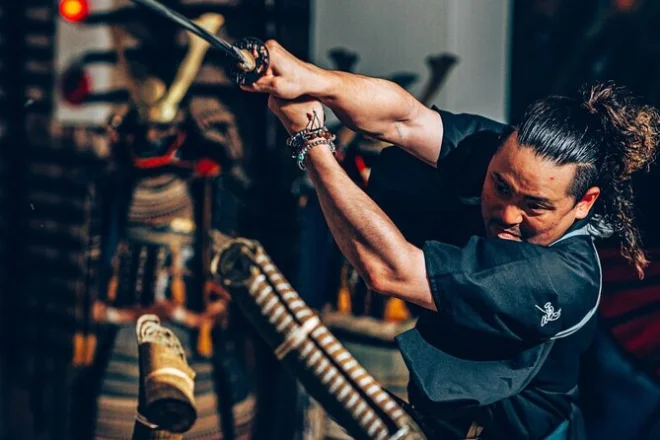

Suit up in samurai gear train with a Kyoto sword master and watch his rare two-katana demo
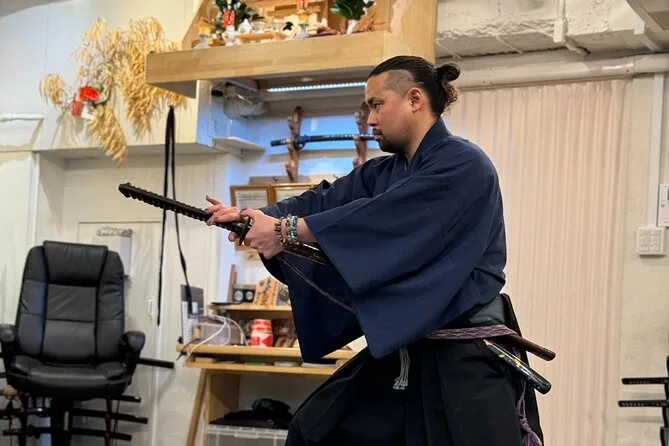
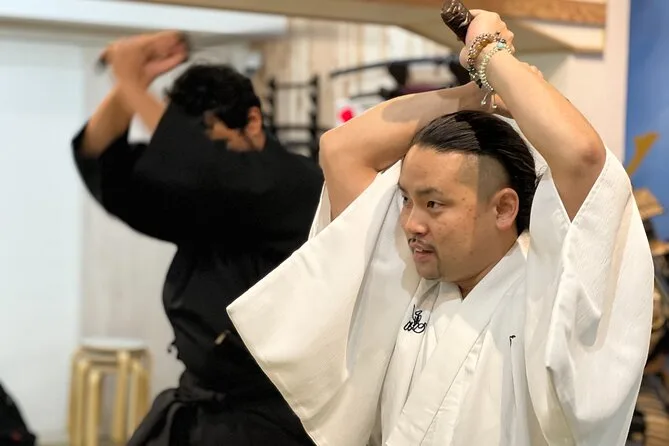
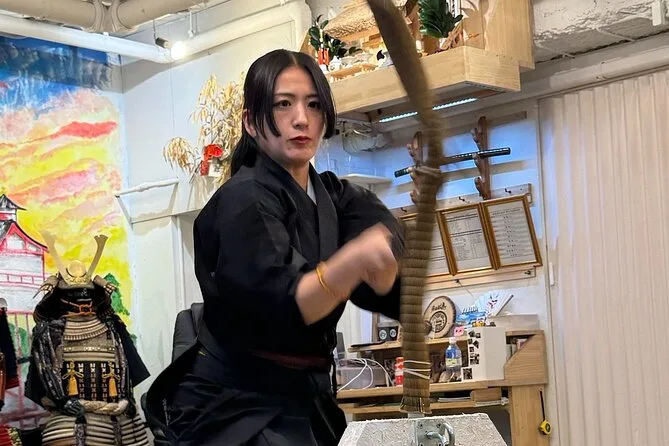
You’ll step barefoot onto tatami mats in a Kyoto dojo, suit up in real samurai gear, then learn sword basics from an expert who’s spent decades perfecting his craft. Try your hand at drawing and sheathing a katana (don’t worry—it’s not sharp), laugh at your own clumsy moves, then watch your teacher perform a rare two-katana demonstration you won’t forget soon.
 1h 45m

Step-by-step itinerary
Samurai training and katana performance
- Get dressed in samurai training gear
- Learn about samurai culture and swordsmanship
- Train drawing, sheathing, and wielding katana
- Practice an actual katana kata form
- Watch master’s katana performances

The Experience
The first thing I noticed was the soft slap of bare feet on tatami as we stepped inside the Kyoto dojo. It smelled faintly of old wood and something sharper—maybe the polish from the training swords lined up along the wall. Our instructor, who everyone called Sensei, greeted us with a bow so crisp I felt awkward trying to copy it. He handed me the dōgi and hakama—honestly, I fumbled with the belt for way too long until another participant quietly helped me out. There was this hush in the air, like everyone was holding their breath before something important.
Sitting cross-legged on the mat, Sensei started talking about what being a samurai meant—not just fighting but discipline, patience, all that stuff you kind of expect but don’t really get until you’re there. He showed us how to draw and sheath the katana (training ones, not sharp), and my hands were sweating so much I thought I’d drop it. The sound when blade met scabbard—sort of a muted click—felt weirdly satisfying. At one point he demonstrated a kata, moving so fast I blinked and almost missed it. Someone next to me whispered “Did you see that?” and honestly, I barely did.
I didn’t expect how physical it would be—even just holding that zinc alloy katana made my arms ache after a while. There was bottled water for us (thank god), but I still felt my heart pounding through most of it. Sensei had this dry humor; when one guy tried to copy his stance and nearly toppled over, he grinned and said “Samurai must have balance… or strong knees.” We laughed more than I thought we would.
The highlight? Watching Sensei do his two-katana routine at the end. You could hear every swish through the air—no music or anything fancy, just pure focus. It’s hard to explain but seeing someone move like that in person sticks with you longer than you’d think. Walking out into Kyoto’s street noise afterward felt almost too bright by comparison.

What’s included
Your session includes all traditional training gear (dōgi, obi belt, hakama pants), use of a zinc alloy practice katana during lessons and kata practice, plus bottled water so you can stay hydrated between drills before heading back out into Kyoto’s city buzz.
Operated by Yushinkan Co., Ltd. (株式会社勇進舘) SETO Yushin
Traveler reviews
Compare the 13 similar options
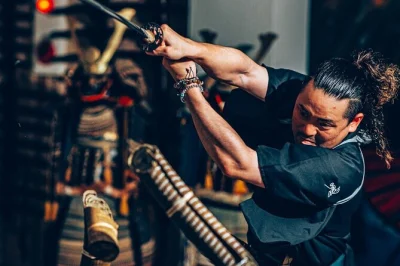 Kyoto: Samurai Training Dojo Class & Two-Katana Demo★ 4.97 (314)1h 45mEN · JAJP¥ 20,000
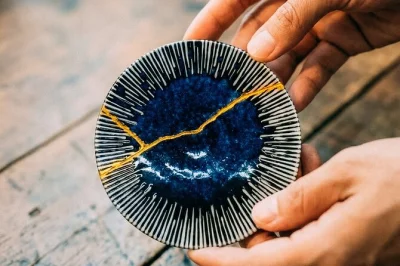 Kintsugi Workshop Kyoto: Repair Ceramics with GoldLearn kintsugi in a quiet Kyoto workshop near Gion, repairing a ceramic bowl or plate with lacquer and gold powder under an English-speaking instructor's★ 4.92 (1,887)1h 30mENJP¥ 2,028View ›
 Kyoto Tea Ceremony with Kimono near Imamiya Jinjya ShrineWear a kimono and whisk your own matcha in a serene Kyoto tea house with a knowledgeable guide—clear instruction makes it accessible even if you've never done this before.★ 4.96 (445)1h 30mEN · KO +1JP¥ 12,000View ›
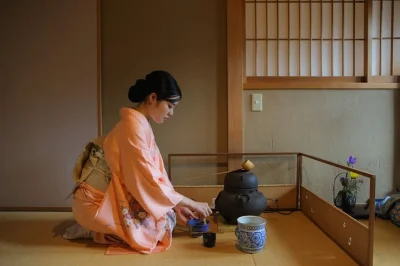 Kyoto Tea Ceremony Class: Make Your Own MatchaLearn to whisk matcha in an authentic Kyoto tea ceremony with an English-speaking instructor at Camellia Flower Teahouse. You'll taste seasonal sweets★ 4.80 (304)45mENJP¥ 5,500View ›
 Nara Day Trip from Kyoto: Private Vehicle & Cultural TemplesPrivate Nara day trip from Kyoto with hotel pickup, Todai-ji Temple, Nara Park deer, and Mt. Wakakusa views. English-speaking driver, no group crowds.10hENJP¥ 79,652per groupView ›
 Kyoto: Tea Ceremony Gion Matcha Making & Sweets TastingStep into Kyoto’s Gion for a tea ceremony with matcha making, traditional sweets, and stories from a local tea master. Includes accessible seating and recipe handout.★ 4.93 (184)1hENJP¥ 4,000View ›
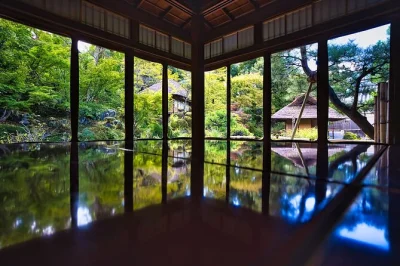 Kyoto Kiyomizu Tea Ceremony & Garden PhotosKyoto tea ceremony in Sannenzaka with matcha lesson, garden photos & wagashi sweets. Small group, tea master-led, 2 hours. Book ahead. Starts daily at 10am.★ 4.93 (246)45mENJP¥ 8,800View ›
 Sushi Making Class in Kyoto: Learn Nigiri & RollsMake 10 pieces of nigiri and rolls in 90 minutes at a Kawaramachi studio with English-speaking instructors, then eat what you've made and try Japanese sake with your meal.★ 4.96 (1,124)1h 30mENJP¥ 9,000View ›
 Kyoto Ramen and Gyoza Cooking Class: Make Three DishesLearn to make ramen, gyoza, and fried rice from a Kyoto ramen master, then enjoy your creations with complimentary drinks over 2.5 hours with an English-speaking guide.★ 4.92 (510)2h 30mENJP¥ 14,500View ›
 Asuka Day Trip from Kyoto: Ancient Capital & Buddhist TemplePrivate tour from Kyoto to Asuka's ancient ruins, Takamatsuzuka Tomb, and Japan's oldest Buddhist temple. Includes guide, entry fees, and hotel pickup.8hENJP¥ 132,432View ›
 Kyoto Tea Ceremony: Matcha Making & Philosophy ClassLearn matcha preparation in a traditional Kyoto tea ceremony with philosophy instruction, seasonal sweets, and two bowls included. 5 minutes from Karasuma Oike Station.★ 4.99 (119)1hENJP¥ 7,000View ›
 Ninja 1-Hour Hands-On Lesson in Kyoto: Learn from a MasterLearn ninja techniques in a one-hour hands-on class in Kyoto taught by a Japanese master in English, including meditation, sword★ 4.97 (543)1hEN · JAJP¥ 13,500View ›
 Kyoto Gion Geisha District Walking Tour with Live GuideWalk Kyoto's Gion district at night with a live English-speaking guide who explains geisha training★ 4.88 (2,216)2hENJP¥ 4,827View ›
Top questions
How long does the samurai training experience last?
The class takes about 1.5 to 2 hours depending on group size.
Is real katana mat cutting included?
No, mat cutting with a real katana is not currently offered.
What age do you need to be for this Kyoto samurai class?
You must be at least 12 years old to participate.
Is public transportation available nearby?
Yes, there are public transportation options close to the dojo.
Do you need previous martial arts experience?
No prior experience is needed for this class.
What should I wear for samurai training?
You’ll be given traditional training gear (dōgi, obi, hakama) to wear during class.
Are there health restrictions for participants?
This activity isn’t recommended for pregnant travelers or those with spinal injuries or poor cardiovascular health; moderate fitness is needed.
Kyoto: Samurai Training Dojo Class & Two-Katana Demo
1h 45m · EN · JA
from JP¥ 20,000 per person
★★★★★★★★★★4.97314 reviewsVerified traveler reviews via our booking provider
