
Kyoto hiking tour: Kurama and Kibune temples with guide



Eight hours through mountain temples, forest paths and the birthplace of reiki
A guided hike through Mount Kurama and down to Kibune village in Kyoto's mountains, visiting five temples and shrines across cedar forests and woodland trails. You walk from Yuki Shrine, home to an 800-year-old cedar, through Kuramadera Temple to Kifune Shrine, where you can try water fortune-telling and drink fresh mountain spring water. Hotel pickup from Kyoto is included, and an English-speaking guide leads the whole route.
Step-by-step itinerary
Hike from Kurama to Kibune
- Visit Yuki Shrine and cedar tree
- Experience Reiki meditation site
- Walk to Kuramadera Shrine
- Explore Okunoin Maoden Temple
- Visit Kifune Shrine and drink mountain water
- See goddess's boat at Kifune inner shrine
The experience
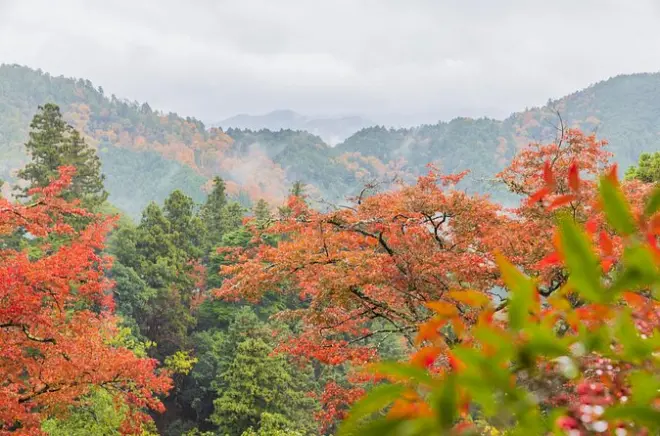
The hike starts at Yuki Shrine, moved to Kurama in 940 AD to protect the area from spiritual harm. The shrine's 53-meter cedar towers over the grounds and anchors the first stop. From there, a 25-minute forest walk leads to Kuramadera Temple, founded in the 8th century and dedicated to mountain worship. The views over the ranges are strongest in autumn. The route passes through Okunoin Maoden Temple, known in local legend as a place where demons dwell, before descending into Kibune village.
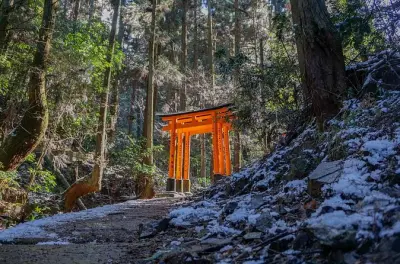
Mount Kurama holds significance as the birthplace of reiki. In the early 1900s, Mikao Usui, the founder of this healing practice, meditated for 21 days near the mountain's peak at Osugi Gongen, a site marked by a great sacred tree believed to be an incarnation of the god Maoson. Walking the mountain's maze of tree roots and forest paths is described as a meditation experience in itself. The cedar forests and the spiritual energy associated with the site shape the character of the entire day.
Kifune Shrine, dedicated to the god of water and rain, sits deep in the mountains and was historically a place where sailors prayed for safe voyages. The shrine has natural springs where you can drink pure mountain water straight from the source, and small streams run throughout the grounds. A signature stop is the mizuura mikuji (water fortune-telling papers that float on the water's surface), which your guide will translate. The shrine's appearance shifts with the season: wildflowers in summer, autumn colors, or snow in winter.
What’s included
- Hotel pickup and drop-off from Kyoto urban area.
- entry to Kuramadera Temple.
- English-speaking guide for the entire hike.
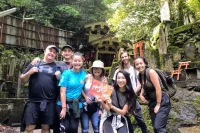
- photos of tour participants taken during the day.
Information
Lasts 8h, runs every day at 08:30 and 09:00, from JP¥ 32,000 per person, with a live guide in English, as a private tour and with free cancellation up to 24 h before.
Prices and times updated today
Operated by Trip Designer Inc.
Is this one for you?Hotel pickup from Kyoto means you don't need a car or arrange your own transport to the trailhead. The guide collects you and brings you back at the end of the day. The eight-hour pace suits hikers with moderate fitness who want a full mountain day without rushing between stops.
Traveler reviews
Compare the 7 alternatives

- 1,989 reviews
- 4.97★
- Duration
- 3h
- start times · Every day
- 3

- 285 reviews
- 4.99★
- Duration
- 4h–5h
- start times · Every day
- 3
- 37 reviews
- 4.97★
- Duration
- 3h
- start times · Every day
- 2

- 21 reviews
- 4.95★
- Duration
- 6h
- start times · Every day
- 15

- 105 reviews
- 4.50★
- Duration
- 4h
- Mon, Tue, Thu and Sat
- 08:30
- 43 reviews
- 5.00★
- Duration
- 3h
- start times · Every day
- 2

- Duration
- 8h
- start times · Every day
- 5
Top questions
Can children come?
Yes. Ticket types: Child (6 to 12 years); Infant (under 6): free.
What happens if it rains?
It may be canceled due to bad weather. If that happens, you're offered another date or a refund. Free cancellation up to 24 h before the start.
What is the 800-year-old cedar at Yuki Shrine, and why is it significant?
The cedar at Yuki Shrine towers 53 meters tall and is one of the highlights of the shrine grounds. Yuki Shrine itself was moved to Kurama in 940 AD from central Kyoto to protect the area from mysterious spiritual harm, and the ancient tree has stood there through centuries of the shrine's history.
How does Mount Kurama connect to reiki?
Mount Kurama is the birthplace of reiki, a holistic healing practice. Mikao Usui, the founder of reiki, meditated on the mountain for 21 days in the early 1900s near a site called Osugi Gongen, where a great sacred tree stands. The meditation and the mountain's spiritual energy are central to reiki's origins.
What can you do at Kifune Shrine?
Kifune Shrine sits in the mountains and is dedicated to the god of water and rain. You can drink fresh mountain spring water from natural sources throughout the shrine grounds, and you can try mizuura mikuji (water fortune-telling papers that float on the water's surface), which your guide will help you interpret.
How long is the walk between Kurama and Kibune?
The hike from Yuki Shrine to Kuramadera Temple takes about 25 minutes through forest paths. The full route from Kurama down to Kibune village spans the entire eight-hour tour, with stops at temples and shrines along the way through cedar forests and woodland trails.
Kyoto hiking tour: Kurama and Kibune temples with guide
8h · EN · at your hotel
from JP¥ 32,000 per person
≈ US$ 207 in your currency