
Asakusa: Senso-ji Temple History Walk & Japanese Snacks
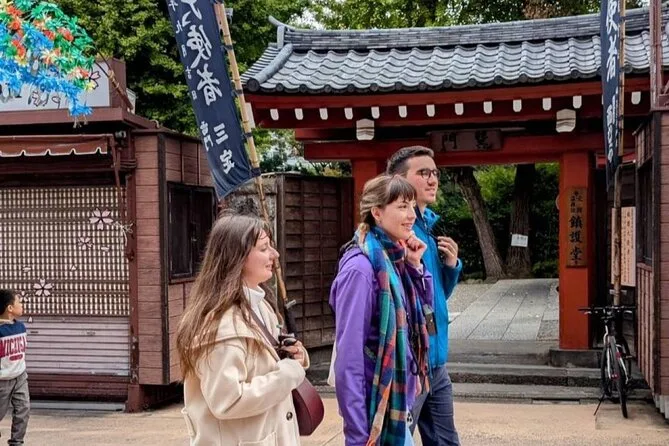

Asakusa’s old streets, sweet snacks and temple rituals under red lanterns
You’ll walk Asakusa’s ancient streets with a local guide, hear stories of fisherman brothers and temple legends, taste fresh-baked melon pan and rice crackers straight from tiny shops, draw your own fortune at Senso-ji Temple, and get lost in Rokku’s nostalgic alleys—a day full of small rituals and unexpected warmth.
 3h 30m

Step-by-step itinerary
Explore Asakusa history and landmarks
- View Tokyo Sky Tree from Azumabashi bridge
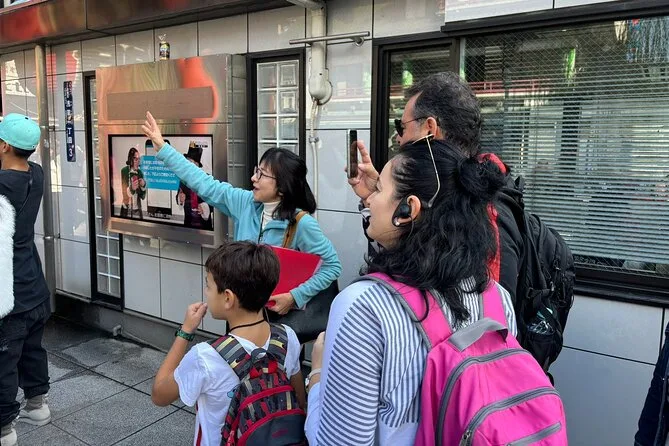
- Visit Asakusa Culture Tourist Information Center
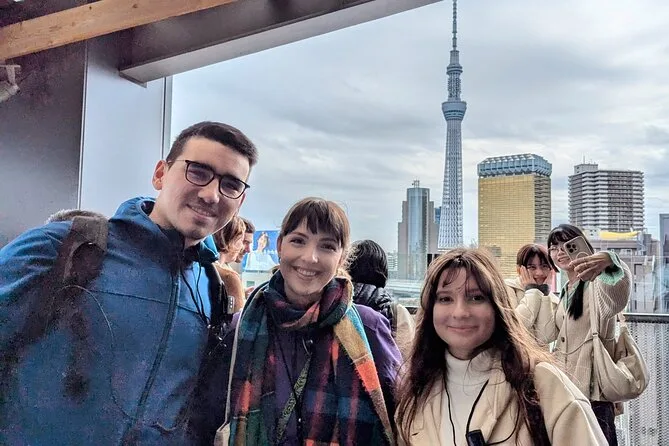
- Observe city from 8th floor terrace
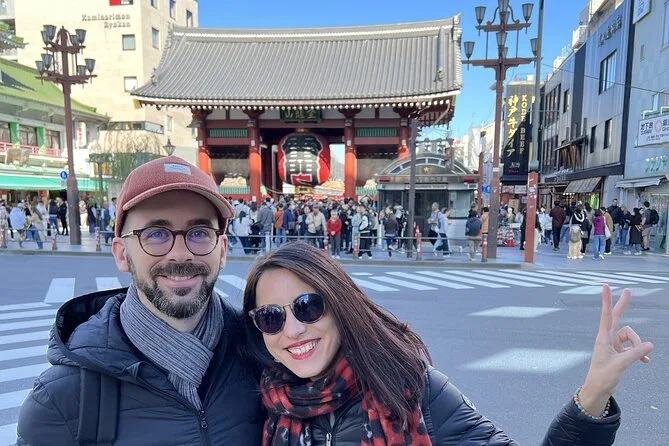
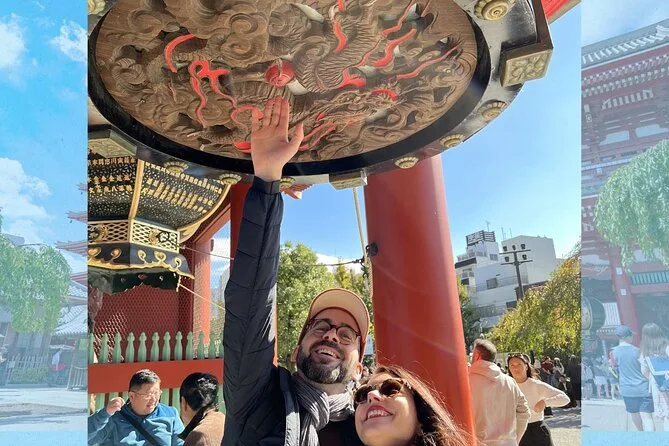
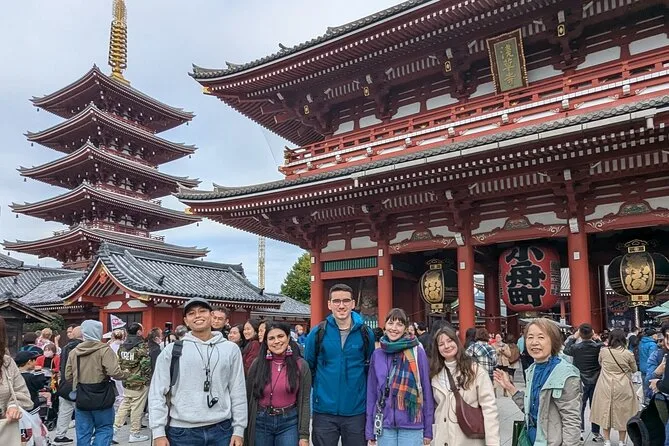
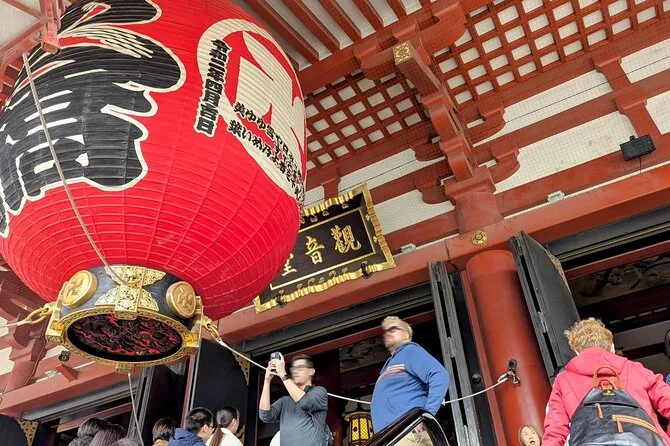
- See Kaminarimon gate and giant lantern
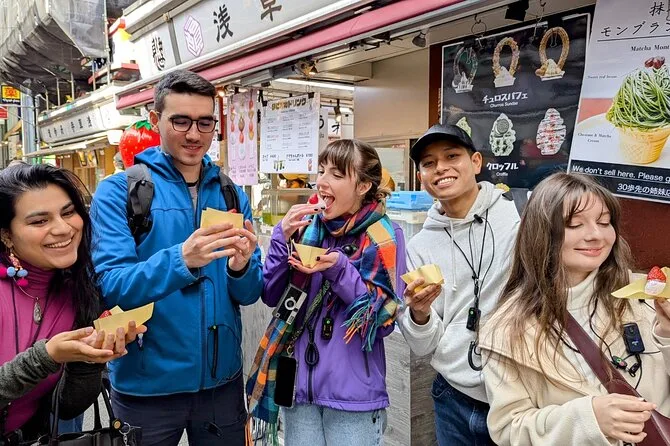
- Walk Nakamise shopping street and buy snacks
- Explore Hozomon gate and its statues
- Visit Five-storied Pagoda near Hozomon gate
- Draw omikuji fortune papers
- Perform incense smoke ritual
- Use water purification fountain
- Enter Senso-ji temple main hall
- Learn about coexistence of shrine and temple
- Walk through Rokku entertainment district
- Taste more Japanese sweet snacks

The Experience
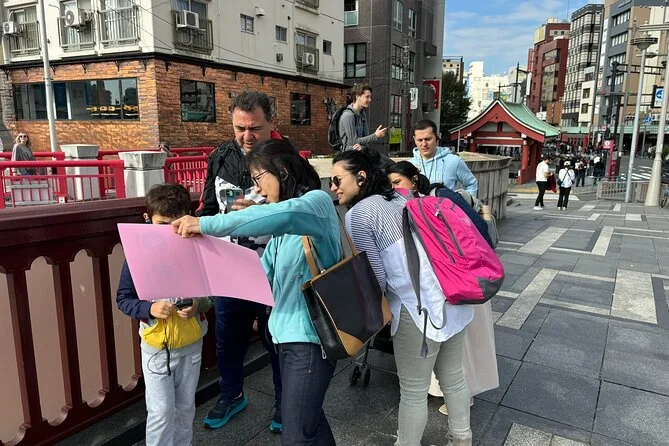
We were already halfway across Azumabashi Bridge when our guide, Hiroko, paused and pointed out the Tokyo Skytree poking through the haze. I’d just noticed the faint smell of river water mixed with something sweet—maybe that bakery on the corner? The Sumida River was busy with little boats, and Hiroko started telling us about two fisherman brothers who accidentally set all this in motion 1400 years ago. I didn’t expect to be so drawn in right from the start, but there’s something about hearing these old stories while actually standing where they happened. You know?
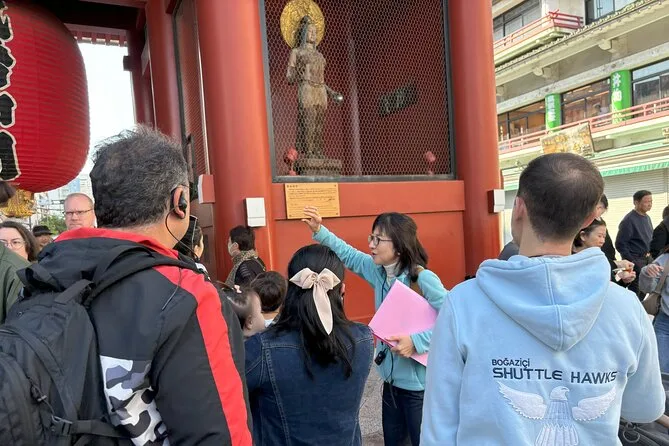
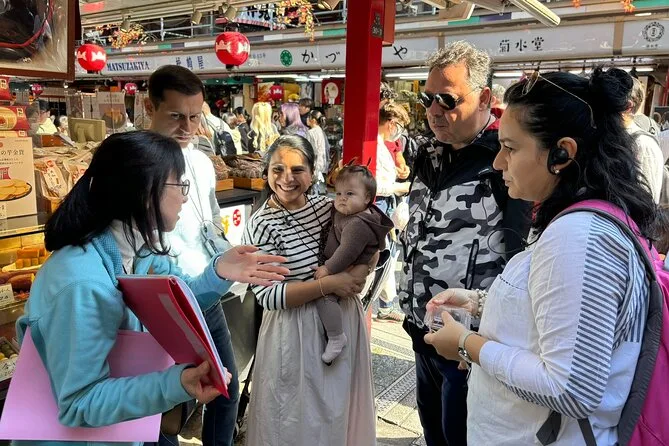
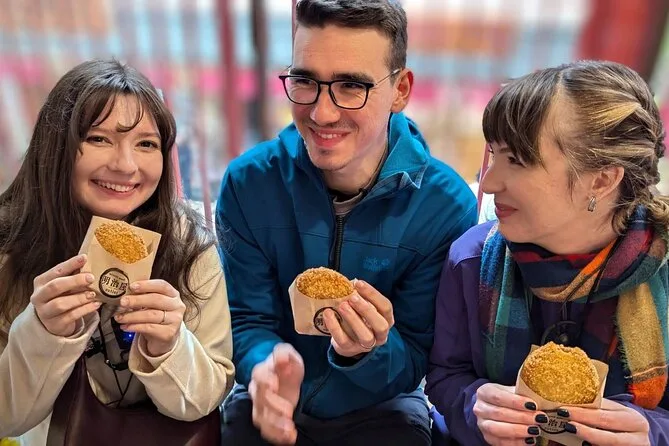
The walk to Senso-ji Temple took us past the Thunder Gate first—Kaminarimon—with its giant red lantern wobbling slightly in the breeze. People everywhere were snapping photos or just staring up at it. Hiroko explained what all the statues meant (I tried repeating one of their names and got it wrong—she laughed). Nakamise Street was next, a narrow stretch lined with snack stalls and souvenir shops. She bought us some warm melon pan bread that was almost too soft to hold. The smell was unreal—like toasted sugar—and I’m still thinking about it now. We stopped by a little stand for rice crackers too; they handed them over wrapped in paper, still hot.
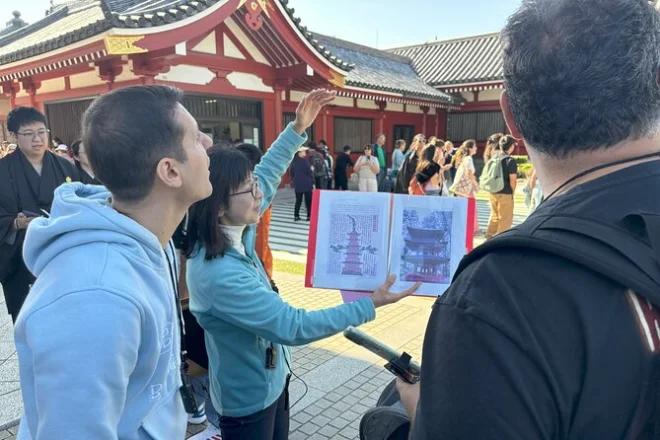
Inside Senso-ji’s grounds, everything felt slower. Smoke drifted from a huge bronze incense burner—locals wafted it over their faces for luck before heading up towards the main hall. Hiroko showed us how to draw an omikuji fortune (mine said “small blessing,” which seemed fair). There was a moment at the purification fountain where I watched an old man rinse his hands so carefully—it made me pause longer than I thought I would. The five-storied pagoda caught sunlight for a second; someone said it holds Buddha’s ashes from Sri Lanka but honestly, my mind was still on that melon pan.
We finished wandering through Rokku, Asakusa’s quieter entertainment district. Old posters peeling off brick walls, little bars tucked between shops selling handmade combs or paper fans. Hiroko told stories about comedians and movie houses that used to fill these streets—most are gone now but you kind of feel their echo if you listen long enough. The whole day felt less like ticking off sights and more like being let in on a secret rhythm Tokyo keeps hidden behind its neon.

What’s included
- Your day includes an English-speaking local guide throughout Asakusa’s historic streets.
- use of an earphone guide system if needed.
- plus fresh Japanese sweet snacks like melon pan or rice crackers along Nakamise Street—all wrapped up in a small group setting so you can actually hear every story (and joke) along the way before heading back on your own time.
Operated by Arumachi
Traveler reviews
Compare the 13 similar options
 Asakusa: Senso-ji Temple History Walk & Japanese Snacks★ 4.77 (162)3h 30mENJP¥ 10,800
 Asakusa Walking Tour: Sensoji Temple, Thunder Gate & RitualsWalk through Tokyo's oldest Buddhist temple and the Thunder Gate on a 2-hour guided tour of Asakusa★ 4.91 (74)2hENJP¥ 1,800View ›
 Tokyo & Mt. Fuji Private Tour: Custom Itinerary, Pickup & DriverFeel Tokyo’s pulse from Shibuya Crossing to Senso-ji Temple, with a private English-speaking driver, hotel pickup, and flexible stops—even Tsukiji Market snacks.★ 4.96 (329)9hEN · RU +1JP¥ 53,371per groupView ›
 Tokyo Private Walking Tour: Custom Itinerary & Local HostFeel Tokyo’s pulse with a private walking tour—see Senso-ji, Yanaka, Ginza, and more, all tailored by your local host. Flexible start times and pickup included.★ 4.87 (1,234)2h–7hEN · JAJP¥ 16,346View ›
 Tokyo Shibuya Crossing & Hachiko: Private Walking TourShibuya walking tour with local guide: Hachiko Statue, Scramble Crossing, Shibuya Center Gai, matcha break, JUMP SHOP. Guide takes and shares photos.2h 30mENJP¥ 9,921View ›
 Tokyo: Private Walking Tour Senso-ji, Shibuya & HarajukuLet a Tokyo local customize your private walking tour—Senso-ji, Shibuya Crossing, Harajuku pop culture. Includes hotel pickup and flexible start times.★ 4.99 (99)2h–8hEN · ESJP¥ 7,064View ›
 Tokyo Walking Tour: Temples, Food Streets & Neon City SightsFeel the contrasts of Tokyo with a private walking tour—temples, food streets, and neon districts led by a local guide. Flexible itinerary and hotel pickup included.★ 4.90 (156)4h–7hEN · FR +1JP¥ 15,000View ›
 Tokyo: Meiji Shrine, Senso-ji & SKYTREE with LunchFull-day Tokyo tour with certified English guide. Meiji Shrine, Imperial Palace, Senso-ji Temple, SKYTREE at 634m, and lunch included. Eco-friendly bus, 9 hours.★ 4.32 (1,287)9h–10hENJP¥ 13,000View ›
 Senso-ji Temple guided tour Tokyo: 90 minutes in AsakusaGuided tour of Tokyo's Senso-ji Temple with live English-speaking guide covering the Thunder Gate, Nakamise shopping street and temple rituals★ 5.00 (14)1h 30mENJP¥ 6,600View ›
 Tokyo Imperial Palace: 2-Hour Walking Tour & Nijubashi Bridge2-hour guided walking tour of Tokyo Imperial Palace with local expert. Small groups, Nijubashi Bridge, East Gardens, samurai history included.2hEN · ZHJP¥ 7,833View ›
 Tokyo: Private City Tour with Vehicle & Custom ItineraryFeel the pulse of Tokyo with a private vehicle, licensed guide, and your pick of city highlights—includes pickup and flexible stops for up to 15 people.★ 4.91 (164)6hEN · JAJP¥ 49,450View ›
 Tokyo Fish Market Food Tour: Tsukiji, Toyosu & Street EatsStart your Tokyo morning with a licensed guide, exploring Tsukiji and Toyosu fish markets, street food in Asakusa, and quirky kitchen shops. Includes hotel meetup.★ 4.78 (89)4h–6hEN · JAJP¥ 15,000View ›
 Tokyo: Private Custom Walking Tour & Metro Day TripFeel Tokyo’s pulse in a private day trip—choose your sights, stroll with a local guide, and catch the city’s rhythm by metro. Includes pickup and flexible routes.★ 4.95 (1,944)4h–8hENJP¥ 22,000View ›
Top questions
How long is the Asakusa history walking tour?
The tour covers several key sites in Asakusa over approximately half a day with moderate walking involved.
Does this tour include Japanese snacks?
Yes, your guide will buy you traditional Japanese sweet snacks like melon pan or rice crackers during the walk.
Is there a maximum group size for this tour?
Groups are limited to 8 participants to keep things personal and comfortable.
Are headsets provided during the tour?
Yes, an earphone guide system is included for groups of three or more so everyone can hear clearly.
What major attractions are visited on this Asakusa tour?
You’ll see Sumida River, Kaminarimon (Thunder Gate), Nakamise Street, Hozomon Gate, Senso-ji Temple, and Rokku district.
Is lunch included on this tour?
No full lunch is included but you’ll enjoy several local sweet snacks as part of your experience.
Can children join the Asakusa walking tour?
Children under 6 can join free (without inclusions); families are welcome though content is best suited for adults.
Does the tour operate in bad weather?
The tour runs rain or shine—just dress appropriately for conditions.
Asakusa: Senso-ji Temple History Walk & Japanese Snacks
3h 30m · EN
from JP¥ 10,800 per person
★★★★★★★★★★4.77162 reviews
