
Siracusa: Self-Guided Walking Tour with Audio & Food Tips


Walk ancient streets in siracusa markets temples and secret springs
You’ll wander Siracusa’s markets and ancient temples guided by your phone — but also by local voices sharing stories and food tips only insiders know. Hear legends at Fonte Aretusa, taste arancini where locals eat, and let yourself drift through centuries-old streets at your own pace. It’s not perfect navigation — but that’s half the fun.
 4h–5h
4h–5h

Step-by-step itinerary
Explore Ortigia and Syracuse highlights
- Visit Ortigia Market
- See Temple of Apollo
- View Fountain of Diana
- Tour Cathedral of Syracuse
- Visit Fonte Aretusa spring
- Explore Neapolis Archaeological Park
- Pass by Greek Theatre of Syracuse
- Pass by Ear of Dionysius cave
- Visit Sanctuary of Madonna delle Lacrime
- Visit Sanctuary of Santa Lucia al Sepolcro

The Experience
You know that moment when you hear the clatter of fishmongers before you even see the Ortigia Market? That’s how my day in Siracusa started — not with a grand entrance, but with the smell of oranges and the sound of someone haggling over swordfish. I had my phone out, headphones in, this digital guide quietly nudging me along side streets I’d never have noticed. The directions sync up with Google Maps, so I didn’t get lost (well, maybe once — but I blame the cannoli).
The Temple of Apollo just sits there, older than most things I’ve ever touched. My audio guide told me it’s from the 6th century BC — wild to think about. There was an old man on a bench nearby who nodded at me when I tried to read one of the signs out loud (my Italian is… let’s say “developing”). Then I wandered into Piazza Archimede, where the Fountain of Diana glints all silvery in the sun. It’s easy to get distracted by gelato stands here, but if you listen closely to the story about Diana and Arethusa, it actually makes you look twice at those statues.
I didn’t expect to feel much at Fonte Aretusa — it’s just a spring, right? But there was this hush around it except for some kids giggling and a faint whiff of papyrus. The digital guide explained why poets keep writing about this spot. After that, walking up to the Cathedral of Syracuse felt different; knowing it stands on layers of history makes every stone seem heavier somehow. Lunch happened somewhere between monuments — my guide pointed out a trattoria that does these fried rice balls (arancini) that still haunt my dreams.
By afternoon I found myself in Neapolis Archaeological Park. The Greek Theater is huge; you can almost hear echoes if you sit long enough (or maybe that was just me). The Ear of Dionysius cave really does amplify sound — some teenagers were testing it out with bad pop songs and laughing like they owned the place. My phone battery nearly died right after hearing about Santa Lucia’s miracle — pro tip: bring a charger if you’re as easily distracted as me.

What’s included
- Your day includes access to a multi-language audio/text digital guide synced with Google Maps for easy navigation around Siracusa’s main sites.
- insider tips on history and curiosities.
- advice for authentic local restaurants.
- plus practical info like wheelchair accessibility and public transport nearby—all right on your smartphone so you can explore at your own rhythm.
Operated by Walking Cap
Traveler reviews
Compare the 4 similar options
 Siracusa: Self-Guided Walking Tour with Audio & Food Tips★ 4.61 (99)4h–5h€ 6.50
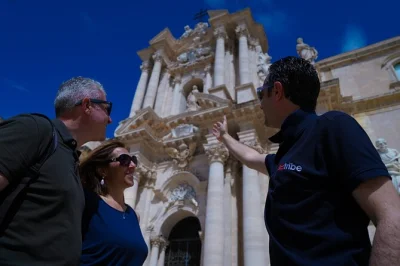 Syracuse, Ortigia & Noto: Walking Tour from Catania with Archaeological Park EntryStep into ancient Syracuse, wander Ortigia’s market, and stroll Noto’s baroque streets on a guided day trip from Catania—includes tickets and shuttle bus.★ 4.77 (308)8hEN · IT +1€ 107View ›
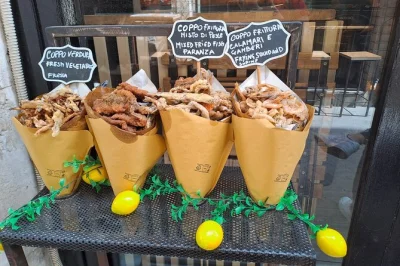 Syracuse Ortigia: Sicilian Street Food Tour & Market TastingTaste authentic Syracuse cuisine on a food tour through Ortigia's markets. Sample arancini, impanata, seafood, granita and cannoli with a local guide and one drink included.★ 4.96 (651)3hEN · IT€ 52View ›
 Syracuse boat tour: Ortigia island and sea cavesSail around the island of Ortigia on a 1.5-hour boat tour of Syracuse, exploring sea caves accessible only by water and viewing Maniace Castle★ 4.99 (80)1h 30mEN · IT€ 30View ›
Top questions
Is this Siracusa walking tour self-guided or with a live guide?
This is a self-guided walking tour using an audio and written digital guide created with input from locals.
What attractions are included on the Siracusa walking tour?
You’ll visit places like Ortigia Market, Temple of Apollo, Fountain of Diana, Cathedral of Syracuse, Fonte Aretusa, Neapolis Archaeological Park, Greek Theater of Syracuse, Ear of Dionysius, Sanctuary of Madonna delle Lacrime, and Santa Lucia al Sepolcro.
Do I need internet for the digital guide?
Yes, you’ll need a smartphone with internet connection to use the digital guide features during your walk.
Is this tour wheelchair accessible?
Yes, it is wheelchair accessible and suitable for all physical fitness levels.
Are there food recommendations included?
The digital guide includes advice for local restaurants serving authentic Sicilian food and aperitivo spots.
Can infants or small children join this walking tour?
Yes, infants and small children can ride in a pram or stroller during the tour.
What languages is the audio/text available in?
The digital guide offers audio and text in English, Spanish, Italian, German, and French.
How do I activate or access the digital guide?
You’ll receive details on activating your digital guide in your voucher after booking—read it carefully before starting!
Siracusa: Self-Guided Walking Tour with Audio & Food Tips
4h–5h · EN · DE +3
from € 6.50 per person
★★★★★★★★★★4.6199 reviewsVerified traveler reviews via our booking provider
