
Private Full Day Rome Tour with Licensed Guide & Car





See Rome's landmarks without navigating crowds or public transit
A private full-day Rome tour pairs a licensed guide with an executive car for eight hours of sightseeing from your hotel. The guide speaks English, Italian or Russian and covers thirteen major sites (from Trevi Fountain at dawn to the Coppedè District's Art Nouveau villas) with lunch in the traditional Trastevere neighborhood included in the itinerary. Hotel pickup and drop-off, plus refreshments in the car, are part of the package. Lunch cost is separate.
Compare the 12 alternatives
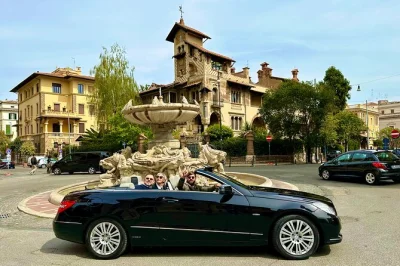 Private Cabriolet Tour Rome: Landmarks in a morningEvery day · First departure 09:00, last 00:00★ 4.71 (7)2hEN · RU · IT€ 210View ›
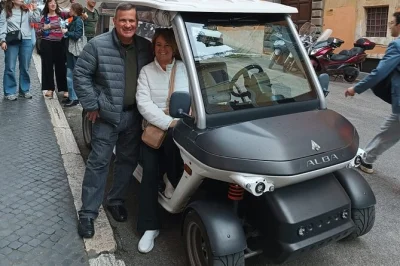 Rome: Private Golf Cart City Tour & Custom PickupEvery day · First departure 07:00, last 19:00★ 4.93 (390)3hEN · IT · FR · ES€ 184View ›
 Rome: Vintage Fiat 500 Cabriolet Tour & Professional PhotoshootEvery day · First departure 07:00, last 22:00 · From age 3★ 4.90 (246)1h 35mEN · RU · IT · TR +1€ 155View ›
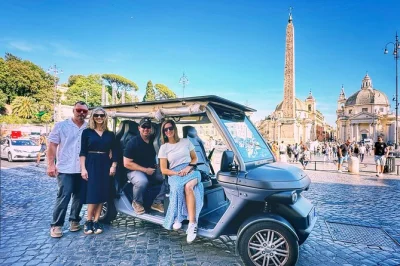 Private Rome Golf Cart Tour: Colosseum, Trastevere & Hidden GemsEvery day · First departure 09:30, last 19:00 · All ages★ 4.97 (5,173)2h–7hEN
 Rome: Colosseum & Vatican Private Tour from CivitavecchiaEvery day · First departure 06:30, last 09:00★ 5.00 (180)8hEN · IT · ES€ 730per groupView ›
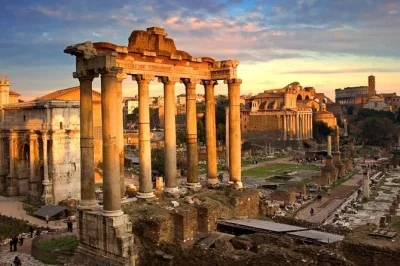 Rome: Colosseum, Catacombs & Trevi Fountain Private Car TourEvery day · 09:00 · Up to age 69★ 4.96 (26)7hEN · AR€ 350View ›
 Rome: Private Golf Cart Tour with Colosseum Stop & PickupEvery day · First departure 08:00, last 00:00★ 4.54 (1,361)3hEN · AR · DE · ZH +3€ 44View ›
 Rome Night Tour: Mini Cooper Cabrio, Drinks & City ViewsEvery day · All ages★ 4.96 (89)3hEN · IT€ 185View ›
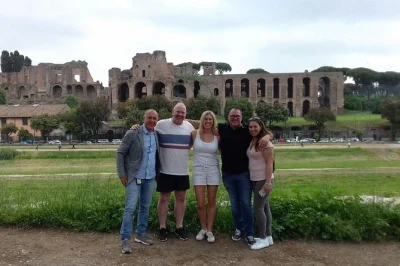 Private Rome Tour from Civitavecchia: Colosseum & VaticanEvery day · First departure 06:00, last 14:00★ 4.94 (253)3h–10hEN · ES€ 480View ›
 Private Electric Tuk Tuk Tour Rome: 3 Hours, 12 StopsEvery day · First departure 09:00, last 17:00 · From age 4★ 4.91 (205)3hEN · IT · ES€ 99View ›
 Rome: Fiat 500 Vintage Tour with Photos & Gelato StopEvery day · First departure 07:00, last 23:00 · From age 3★ 5.00 (153)2h 30mEN · RU · IT€ 119View ›
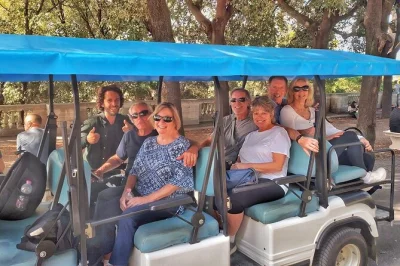 Rome Private Golf Cart Tour: Colosseum, Trevi Fountain & GelatoEvery day · First departure 09:00, last 14:30 · All ages★ 4.94 (919)3hEN · RU · IT · ES
Step-by-step itinerary
- Trevi Fountain30m
- Spanish Steps30m
- Pantheon30m
- Piazza Navona30m
- Piazza Veneziapass by
- Circus Maximus30m
- Capitoline Hill and Museums30m
- Trastevere1h 30m
- Basilica of Santa Maria Maggiore30m
- Coppedè District30m
- Santa Maria degli Angeli e dei Martiri30m
- Fontana dell'Acqua Paola30m
- Piazza del Popolo30m
Full day tour of Rome and Vatican
- Start tour at hotel
- Visit Trevi Fountain early
- Throw coins in Trevi Fountain
- Try Roman ice cream near fountain
- Visit Spanish Steps and Barcaccia Fountain
- See oldest coffee house in Rome
- View Pantheon from outside
- Visit Piazza Navona and Fountain of the Four Rivers
- Pass by Altar of the Fatherland
- See Circus Maximus and Palatine Hill
- Enjoy panorama from Orange Garden
- Visit Capitoline Hill and Museums
- Lunch in Trastevere at family restaurant
- Visit Basilica of Santa Maria Maggiore
- Explore Coppedè District
- Visit Thermae of Diocletian
- See Fontana dell'Acqua Paola on Janiculum hill
- Visit Piazza del Popolo and Santa Maria del Popolo Cathedral
The experience
The day starts early at your hotel and heads straight to Trevi Fountain before the crowds arrive. The guide explains how the 18th-century fountain still runs on a 2,000-year-old Roman aqueduct, and you'll have time to throw coins in and grab Roman gelato if you want. From there the car takes you to the Spanish Steps, where you'll see the Church of the Holy Trinity and learn the history of the staircase itself, plus visit the oldest coffee house in Rome, open since 1760.
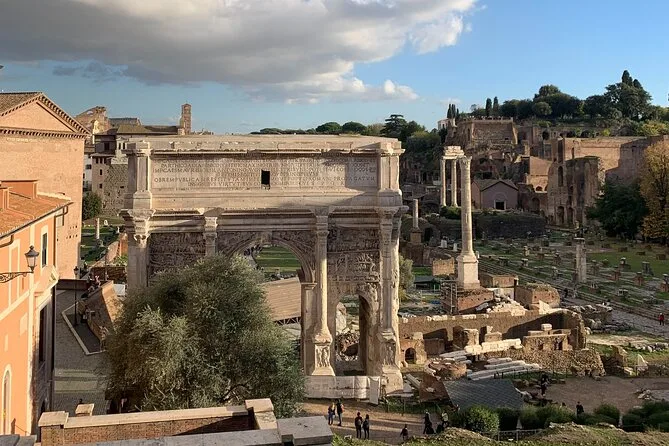
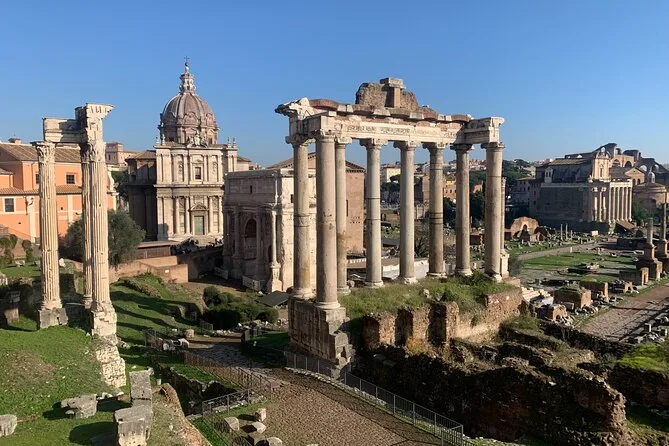
The route moves through the city's layers: the Pantheon with its massive dome built by Emperor Hadrian; Piazza Navona and Bernini's Fountain of the Four Rivers; the Altar of the Fatherland in Piazza Venezia, built a century ago and now one of Rome's main symbols; and Circus Maximus, the ancient chariot-racing arena that held 250,000 spectators. You'll stop at the Orange Garden on the Janiculum Hill for a panoramic view framing St. Peter's dome between Roman pines: a spot Romans themselves come to at sunset. The Capitoline Hill offers views of the Roman Forum and houses the Capitoline Wolf, the city's symbol.
Lunch happens in Trastevere, the traditional neighborhood on the right bank, at a family-run restaurant operating for four generations. After eating, the tour continues to Santa Maria Maggiore, a basilica with a gold-covered ceiling and Baroque decoration; the Coppedè District, an early-20th-century Art Nouveau area of imaginative villas designed by Luigi Coppedè; and the Thermae of Diocletian, the largest ancient Roman baths, where Michelangelo later built a church inside. The day ends at the Fontana dell'Acqua Paola on the Janiculum and Piazza del Popolo, where the Cathedral of Santa Maria del Popolo holds two original Caravaggio paintings.
What’s included
- Licensed tour guide for the full eight hours in English, Italian, or Russian.
- Mercedes Van or Mercedes E-class car for the entire day.
- hotel, apartment or B&B pickup and drop-off in central Rome.
- wine, water and sweets in the car.
Before you book
Prices and times updated 17 days ago
Operated by Alexandr Guide Rome
Is this one for you?Choose this tour if you want to move through Rome's major sites without managing public transit or crowds: the private car and guide handle the route, timing and navigation so you focus on the landmarks themselves.
Traveler reviews
Top questions
What languages is the guide in?
Live guide in English, Italian and Russian.
What is Trevi Fountain actually like when you arrive early in the morning?
Trevi Fountain is visited early in the tour specifically to see it before large crowds gather. The fountain was built in the 18th century and is powered by an ancient Roman aqueduct that has been running for 2,000 years.
Does the tour go inside the Pantheon or just view it from outside?
The Pantheon can have long lines due to metal detectors, so the guide may show you its exterior rather than wait for entry inside, depending on the day's conditions.
Is lunch included in the tour price?
Lunch is part of the itinerary in Trastevere at a traditional family restaurant, but the cost of the meal is separate from the tour price.
What is the Coppedè District and why is it on the tour?
The Coppedè District is a Roman Art Nouveau neighborhood created in the early 20th century by architect Luigi Coppedè. It features imaginative villas that look like castles, each different from the next, and represents a side of Rome beyond ancient sites and baroque squares.
How much time do you spend at each major site?
The eight-hour tour covers thirteen major attractions, with time allocated by the guide based on crowds and your interests. Some stops, like Trevi Fountain and Piazza Navona, allow for lingering. Others, like views from the Capitoline Hill, are briefer.
Private Full Day Rome Tour with Licensed Guide & Car
8h · EN · IT +1 · at your hotel
from € 600 per person
4.9225 reviewsVerified traveler reviews via our booking provider