
Bologna Food Tour: Pasta, Parmigiano & Wine Tasting


Options for this experience
2 optionsOptions with the same name differ in details you'll see when you pick a date.
Compare the 12 alternatives
 Bologna food and wine tour: Dinner, tastings and fresh pastaDaily · 17:30 · All ages★ 4.95 (106)3hEN€ 89View ›
 Wine tasting in Bologna: 3 regional wines with local foodMon–Sat · 11 departure times, from 12:30 to 20:00 · From age 18★ 4.96 (82)45mEN · PT +2€ 29View ›
 Bologna Food Tour: Taste Local Specialties & PastaMon–Sat · 10 departure times, from 10:00 to 17:00 · All ages★ 4.91 (1,250)3hEN€ 79View ›
 Bologna Food & Market Tour: Tastings, Pasta & WineDaily · 11 departure times, from 09:45 to 16:30 · All ages★ 4.95 (1,789)2h–3h 30mEN€ 60View ›
 Bologna Food Tour with Local Chef: Tastings in the QuadrilateroDaily · 10:00, 11:00 and 15:00 · All ages★ 4.94 (87)3h 40mEN€ 95View ›
 Bologna Food Tour: 6 Stops, 20+ Local TastingsMon–Sat · 10:00 · All ages★ 4.97 (934)4h 30mEN€ 110View ›
 Bologna: Walking Food Tour & Piazza Maggiore with Local GuideDaily · 11:00, 14:00 and 17:30 · All ages★ 4.84 (114)2h 30mEN€ 74View ›
 Bologna Food Tour: Behind-the-Scenes with Local ArtisansMon–Sat · 09:30 and 10:00 · From age 4★ 4.85 (460)4hEN€ 104View ›
 Make Fresh Pasta & Tiramisu in Bologna: Learn From a LocalDaily · 10:30 and 17:00 · From age 4★ 4.07 (174)3h€ 85View ›
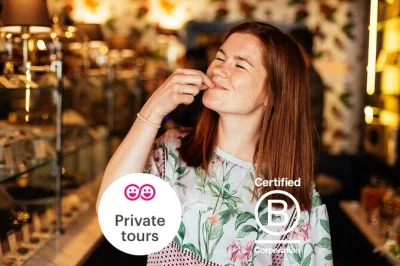 Bologna: Private Food Tour with 6 or 10 Tastings & City WalkDaily · 17 departure times, from 11:00 to 19:00★ 4.59 (352)2h–3hEN · IT€ 113View ›
 Bologna wine tasting in Colli Bolognesi: Organic DOCG winery tourWed · Fri · Sat · 15:00 and 17:00 · From age 18★ 4.57 (21)2hEN · IT€ 49View ›
 Bologna: Food Market Tour with 6 Tastings & Local WineDaily · 09:45 and 15:30 · All ages★ 4.97 (116)3h 30mEN€ 188View › Compare more experiences like this »

Ten Tastings Through Bologna's Medieval Streets & Markets
You taste your way through Bologna's medieval center with a local guide, stopping at ten spots (delis, markets, bakeries, trattorias) for aged cheese, cured meats, fresh pasta, and wine. Morning tours include a pasta-making class where you fold your own tortellino. Afternoon tours end at a 600-year-old tavern. The whole thing takes three hours and includes entry, tastings, and the stories behind each stop.
 3h
3h

Step-by-step itinerary
Bologna food and cultural tasting tour
- Visit Piazza Maggiore landmarks
- Try Parmigiano Reggiano and balsamic
- Make pasta with sfogline (morning only)
- Taste mortadella and focaccia
- Pass Mercato di Mezzo market
- Taste classic rice cake at bakery
- See the Two Towers
- Taste Friggione, tigella, and Lambrusco
- Enjoy tagliatelle, tortelloni, and Pignoletto wine
- Visit 600-year-old tavern for drinks (afternoon only)
- Explore University District street art

The Experience
The sfogline, the pasta ladies, don't rush. You watch one fold a tortellino between her thumb and forefinger, the motion so practiced it looks like breathing, and then she hands you the dough and lets you try. Your fingers are clumsy at first. She doesn't correct you, just smiles and keeps working. That's the moment you understand why Bologna's food tastes the way it does: it's made by people who've been doing it the same way for decades, sometimes centuries. This three-hour food tour moves through the Quadrilatero and Mercato di Mezzo, the medieval heart of the city, and stops at ten different places: delis, bakeries, trattorias, a market that's been running since the Middle Ages. Morning tours include that pasta workshop where you make your own tortellino. Afternoon ones end at a 600-year-old tavern instead, the oldest in the city, where you sit down with a drink and let the day settle.
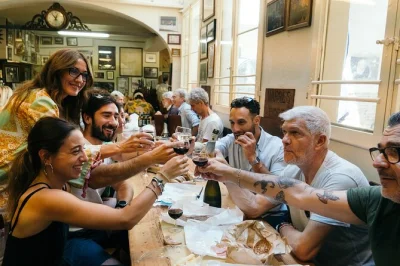
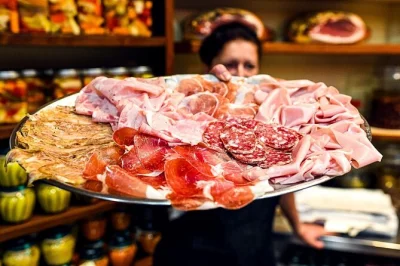
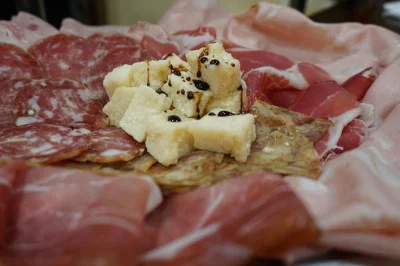
You start at Piazza Maggiore, the square that's been Bologna's gathering place since 1200, with the Basilica of San Petronio rising behind it. From there the guide (English-speaking, local) takes you into the narrow streets where the real work happens. A traditional delicatessen where they cut mortadella so thin it's almost translucent, paired with homemade focaccia. A family-run bakery from the late 19th century still using the same ovens, where you taste their rice cake, a local thing most tourists never find. Aged Parmigiano Reggiano (24 months and 36 months) with balsamic vinegar that's been sitting in wooden barrels since before you were born. Cured meats you've never heard of. At one stop, tigella (a local flatbread) topped with prosciutto, served with Lambrusco wine. At another, tagliatelle al ragù (the real Bolognese sauce, not the watered-down version) with Pignoletto wine and an espresso to finish, then a chocolate tortellino. The tour includes ten tastings total, and they're not small tastes: they're real bites, real glasses, the kind of eating that makes you understand why this city calls itself "La Grassa", The Fat.
Mercato di Mezzo itself is worth the walk. It's been a market since medieval times, became a covered market in the 1800s, got renovated in 2014, and now it's this strange, lively mix of old and new: vendors selling local food and wine next to tourists taking photos. The University District, where you finish, is where Bologna's students live and study. The University of Bologna moved its main offices to Palazzo Poggi in 1803, and the whole area still feels like that: old buildings, contemporary street art, the smell of espresso and something being cooked in a kitchen you can't see. The Two Towers, Due Torri, mark the entrance to the ancient Via Emilia, built in the 12th century, one of them tilted so dramatically it looks like it might fall over any minute. You see them, you walk past them, and then you're back in the streets where the food is.

What’s included
Your three hours include a local English-speaking guide, entry to all stops, ten tastings of cured meats, aged Parmigiano Reggiano with balsamic vinegar, fresh pasta with Bolognese sauce, local wines (Lambrusco and Pignoletto), mortadella with focaccia, and either a tortellino-making class (morning) or a drink at a 600-year-old tavern (afternoon). The tour also includes "Food & the City" insider tips about Bologna's food history and neighborhoods.
Prices and times updated today
Operated by Eating Europe Food Tours Rome
Is this one for you?Book this if you want to eat your way through Bologna's real food scene without spending the morning researching which deli to visit or which trattoria has the authentic ragù. The guide knows where to go and what to order, and the three-hour pace means you taste widely without overdoing it.
Traveler reviews

Top questions
Can children come?
13 to 17 years; 4 to 12 years. Under 4: no ticket type, they can't be added to a booking.
What's included in the 10 tastings?
Aged Parmigiano Reggiano (24 and 36 months) with balsamic vinegar, mortadella with focaccia, tagliatelle al ragù, tigella with prosciutto, and local wines including Lambrusco and Pignoletto. The exact selection varies by day and season.
Is the pasta-making class in every tour?
No. Morning tours include a tortellino-making class with the sfogline (pasta ladies). Afternoon tours visit a 600-year-old traditional tavern instead.
How long is the tour?
Three hours. It covers the Quadrilatero, Mercato di Mezzo, and the University District.
Do I need to book in advance?
The tour requires a minimum of 2 guests. If you're booking alone, contact the operator to be matched with others or rescheduled.
Can I do this tour if I'm vegetarian or have dietary restrictions?
Yes. Email the operator or add a note at booking about vegetarian, gluten-free, or other dietary needs, and they'll accommodate where possible. Tours with severe food allergies are not suitable.
Is this tour physically demanding?
No. It's suitable for all fitness levels and involves walking through medieval streets and markets, but at a leisurely pace with frequent stops.
What's the best time to book, morning or afternoon?
Morning tours include the pasta-making class. Afternoon tours end at the historic tavern. Choose based on whether you prefer hands-on cooking or a more relaxed finish.
Bologna Food Tour: Pasta, Parmigiano & Wine Tasting
3h · EN
from € 79 per person
★★★★★★★★★★4.95188 reviewsVerified traveler reviews via our booking provider