
Self-guided podcast tour: Hanover's streets reclaimed from cars
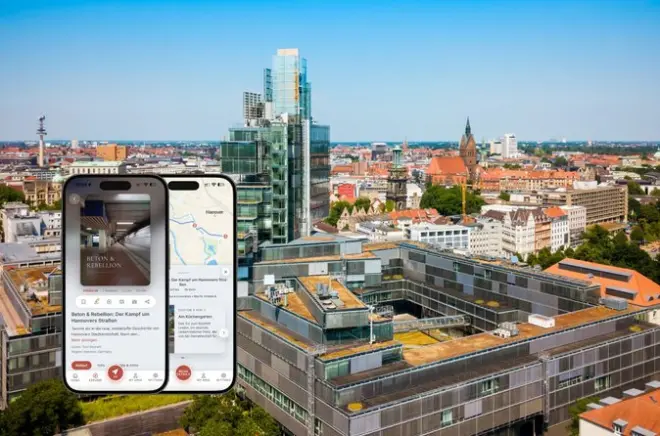


Walk the fault lines where Hanover's citizens fought back against concrete and asphalt
A self-guided podcast tour through Hanover traces how working-class neighborhoods and artists reshaped the city after planners tried to build a car-centric utopia in the decades following World War II. You follow 7 stations over 4.5 km, listening to experts and locals explain the monumental infrastructure designed to separate pedestrians from traffic, and the decades-long resistance that reclaimed the streets. The audio guide works in English or German via the app, with navigation between stops and answers to questions about the history and surroundings.
More experiences you might like
 Wolfsburg Italian Guest Workers Podcast Tour: 7 StopsEvery day · From age 132h 35m
 Hannover Rock Revolution: Self-Guided Podcast TourEvery day · From age 133h 3m€ 5.99View ›
 Scorpions Hannover Podcast Tour: The Hannover SoundEvery day · From age 132h 38m€ 5.99View ›
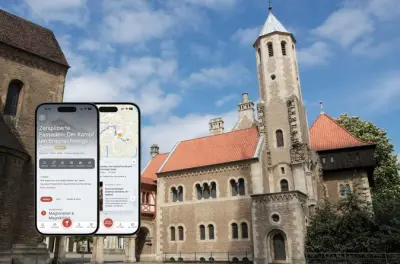 Braunschweig Podcast Tour: The Battle for Brunswick's SoulEvery day · From age 131h 29m€ 5.99View › Compare more experiences like this »
Step-by-step itinerary
Explore Hanover's urban history
- Visit major traffic hub
- Walk along multi-lane road
- See brutalist complex
- Explore Linden district gate
- Stroll pedestrian zone with kiosks
- Visit former feather factory cultural center
- Cross pedestrian bridge
The experience
The tour starts at a massive traffic hub built in the 1950s to prioritize cars over people, and from there you walk through the layers of Hanover's post-war planning failures. A multi-lane road that severed the old town from the Leine River, a colossal brutalist complex from the 1970s designed to separate cars and pedestrians vertically, the gate to the Linden district where a once-busy square was reclaimed for slow mobility. Each stop tells the story of infrastructure that tried to remake the city and the people who refused to accept it.
The podcast audio is told by experts and locals, not a generic narrator, so the history arrives with the voices of people who lived through the conflicts. You navigate yourself between the seven stops using the app, which also lets you ask questions about what you're seeing and the history around it. The whole route covers 4.5 km and takes about two hours at a walking pace, so you can move through it at your own speed and linger where the story catches you.
By the end you've reached a pedestrian bridge that symbolizes the ultimate victory: the reclamation of the city for walking and nature instead of traffic. The tour is suitable for all fitness levels and works in either English or German. You need to be at least 13 to use the app.
What’s included
- Podcast audio in English or German delivered by experts and locals.
- interactive guide in the app to ask questions about history and surroundings.
- point-to-point navigation between the seven stops.
- verified historical facts woven into the narrative.
Before you book
Prices and times updated 12 days ago
Operated by Red Thread
Is this one for you?Start from any public transit stop near the route and walk at your own pace. The self-guided format means no fixed departure time and no need to coordinate with a group or a guide's schedule. This works well if you're staying elsewhere in the city or don't have a car, since you control when you arrive and how long you spend at each station.
Top questions
What exactly is the Limmern culture mentioned in the Linden district stop?
Limmern is a local Hanover tradition of convivial gathering at kiosks, a form of street life and community that stands in direct opposition to car-centric urban planning. The podcast explains it as the antithesis to the infrastructure that was designed to push people away from the streets.
Can I do this tour without a smartphone or app?
The tour is designed around the app for navigation and audio playback, so you'll need a smartphone with the app installed to follow the route and hear the podcast content.
How long does the whole tour take to complete?
The tour covers 4.5 km across 7 stations and runs approximately 2.2 hours, though you can move at your own pace and spend more time at stops that interest you.
What was the brutalist complex built in the 1970s trying to accomplish?
The colossal brutalist complex was built on a failed utopian idea of separating cars and pedestrians vertically: stacking traffic above or below street level to keep them apart. The podcast explains how this design philosophy ultimately failed and what happened to the space afterward.
Is this tour accessible if I'm staying in a different part of Hanover?
Public transportation options are available nearby the tour route, so you can reach the starting point without a car. The tour itself is self-guided, so you can arrive at your own time and begin whenever you're ready.
Self-guided podcast tour: Hanover's streets reclaimed from cars
2h 9m · EN · DE
from € 4.79 per person