
Tbilisi and Mtskheta Day Tour: Cable Car, Fortress, Monasteries
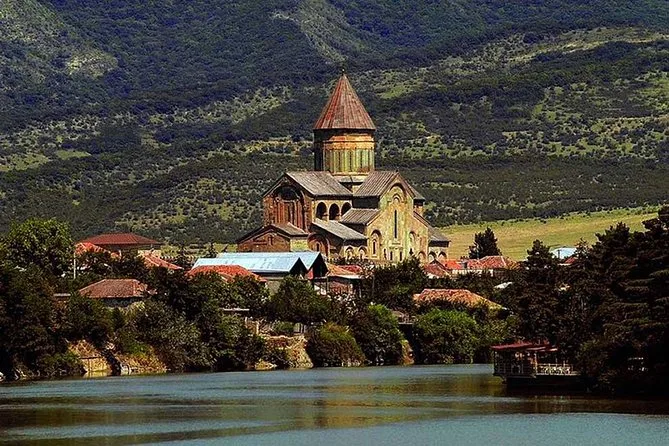


A cable car climbs to a fortress overlooking the old city, then the day moves back twelve centuries to medieval monasteries.
A one-day guided tour of Tbilisi and Mtskheta covers both Georgia's modern and ancient capitals in eight hours. You visit Holy Trinity Cathedral, ride the cable car to Narikala Fortress for panoramic views, explore the sulphur baths quarter of old Tbilisi, then drive to Mtskheta to see Jvari Monastery (6th century) and Svetitskhoveli Cathedral, where the robe of Christ is kept. A live guide in English, Spanish or Russian leads the route. Hotel pickup, transport throughout, the cable car ride and mineral water are included.
Compare the 6 alternatives
 Tbilisi Walking Tour: Narikala Fortress, Cable Car & Wine TastingEvery day · From age 5★ 4.94 (17)2h–4hEN · RUUS$ 71View ›
 Tbilisi Walking Tour: Cable Car, Churches & Georgian BakeryEvery day · 10:00 · From age 5★ 4.95 (1,577)4hENUS$ 19View ›
 Tbilisi: Old Town Walking Tour with Wine Tasting & Cable CarEvery day · 11:00, 14:30 and 18:00★ 4.99 (300)2h–3hENUS$ 39View ›
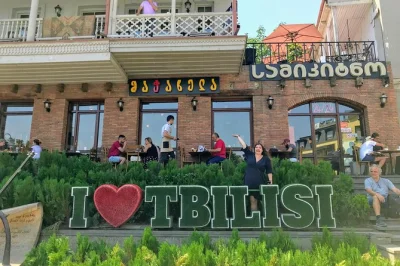 Old Tbilisi Walking Tour: Landmarks, Cable Car & Hidden GemsEvery day · First departure 09:30, last 16:00 · All ages★ 4.90 (168)2h 30m–3h 30mENUS$ 15View ›
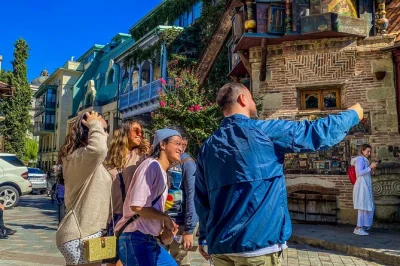 Tbilisi Old Town Walk: Private Tour with Cable Car & WineEvery day · First departure 11:00, last 17:00★ 4.92 (38)4hENUS$ 45View ›
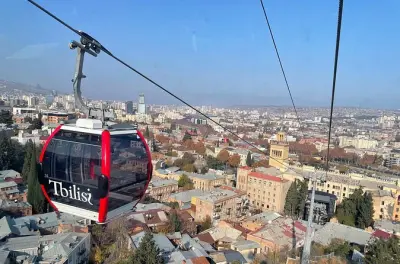 Mtatsminda cable car & Lagidze lemonade tasting in TbilisiEvery day · 14:15★ 4.43 (7)3hENUS$ 19View › Compare more experiences like this »
Step-by-step itinerary
- Tbilisi Sulphur Baths30m · entry included
- Metekhi Church15m · entry included
- Narikala Fortress15m · entry included
- Svetitskhoveli Cathedral1h · entry included
- Jvari Monastery15m · entry included
Tour Tbilisi and Mtskheta highlights
- Visit Holy Trinity cathedral
- See Metekhi church and Vakhtang Gorgasali monument
- Take cable car to Narikala Fortress
- Explore sulfur baths and waterfall in old Tbilisi
- Drive to Mtskheta after lunch
- Visit Jvari Monastery
- Visit Svetitskhoveli Cathedral
The experience
The day starts in Tbilisi at Holy Trinity Cathedral, one of the largest Orthodox cathedrals in the world, then moves to Metekhi Church and the Monument of Vakhtang Gorgasali, the legendary founder of the city. From there you take the cable car up to Narikala Fortress, a 4th-century stronghold that sits above the old town and gives you a panoramic view of Tbilisi spreading out below. After the fortress, the tour descends into the historic quarter known for its sulphur bath houses and a waterfall in the middle of the old city. A small, beautiful area that has long been a center for wedding ceremonies.
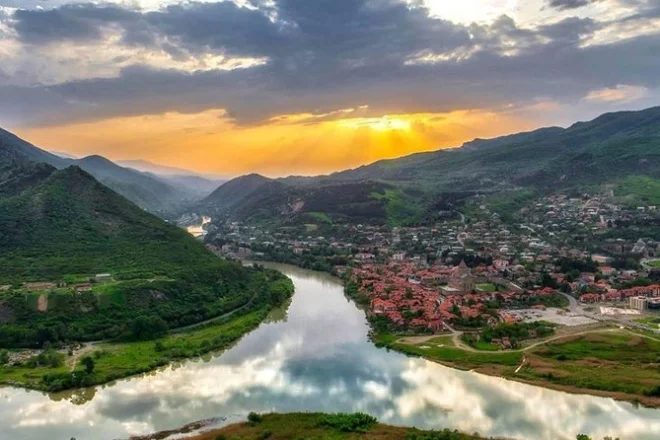
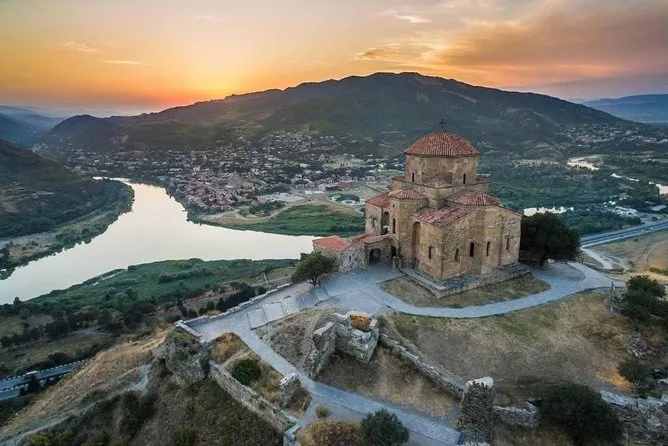
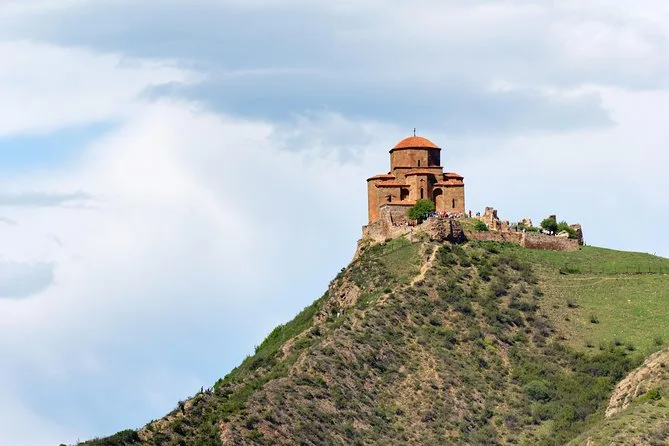
After lunch (on your own), the group drives to Mtskheta, one of Georgia's oldest towns and its cultural and religious heart. Mtskheta was the capital of the Eastern Georgian Kingdom of Iberia from the third century BC and now holds two of the country's most significant religious sites. Jvari Monastery, a 6th-century architectural masterpiece, sits on a hilltop overlooking the confluence of the Aragvi and Mtkvari rivers. Svetitskhoveli Cathedral, the main cathedral of Mtskheta, is a sacred place where the robe of Christ is kept and stands as an 11th-century monument to Georgian Orthodox faith. Both sites are UNESCO World Heritage structures.
Transport runs throughout the day, and you'll have a bottle of mineral water per person. The guide speaks English, Spanish or Russian, and pickup from your hotel is included in the price. The tour assumes moderate physical fitness. There is walking at each stop and climbing involved at the fortress and monasteries.
What’s included
- Hotel pickup and transport throughout the day.
- cable car ride to Narikala Fortress.
- guided sightseeing tour of both cities.
- one bottle of mineral water per person.
Before you book
Prices and times updated 13 days ago
Operated by Join Georgia LLC
Is this one for you?Pick this eight-hour tour if you want to see both Tbilisi's modern landmarks and Mtskheta's medieval monasteries in one day while keeping your afternoon free.
Traveler reviews
Top questions
What languages is the guide in?
Live guide in English, Spanish and Russian.
What is Narikala Fortress and why do we take a cable car to it?
Narikala Fortress is a 4th-century stronghold that overlooks Tbilisi from above the old city. The cable car carries you up to it so you can see the panoramic view of the city from the top without the steep climb on foot.
What makes Jvari Monastery and Svetitskhoveli Cathedral worth visiting in Mtskheta?
Jvari Monastery is a 6th-century architectural masterpiece perched on a hilltop where two rivers meet, and Svetitskhoveli Cathedral is the main cathedral of Mtskheta, a sacred place where the robe of Christ is kept. Both are UNESCO World Heritage sites and represent the religious and cultural heart of Georgia.
How long is the tour and what time does it start?
The tour runs for eight hours and includes hotel pickup, so the exact start time depends on where you're staying in Tbilisi. Transport, the cable car ride, a guided route through both cities and mineral water are all included.
Is lunch included in the tour?
Lunch is not included, so you'll have time to eat on your own after the Tbilisi portion of the day, before driving to Mtskheta.
Do I need to be in good physical shape for this tour?
The tour requires at least a moderate level of physical fitness because there is walking at each stop and climbing involved at Narikala Fortress and the monasteries in Mtskheta.
Tbilisi and Mtskheta Day Tour: Cable Car, Fortress, Monasteries
8h · EN · ES +1 · at your hotel
from US$ 115 per person
4.8010 reviewsVerified traveler reviews via our booking provider