
Gondar city tour: Medieval castles and Timkat's sacred bath
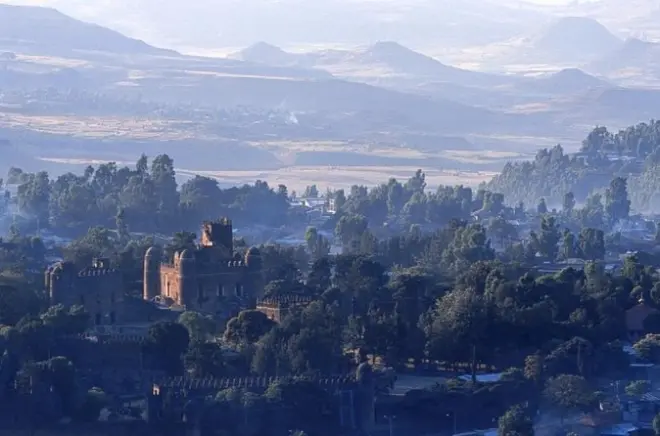


Five centuries of Ethiopian empire in one morning, from castle walls to a Jewish village five kilometers out
A guided tour of Gondar's historic sites includes Fasilidas' Palace (the 17th-century UNESCO complex), Debre Birhan Selassie church with its famous ceiling of angels' eyes, Fasilides' Bath where Timkat celebrations center each January, Qusquam Maryam Monastery on a hilltop overlooking the city, and Wolleka Falasha village with its pottery workshops and Hebrew cemetery. A professional English-speaking guide leads the route. Pickup and private vehicle transport are included.
More experiences you might like
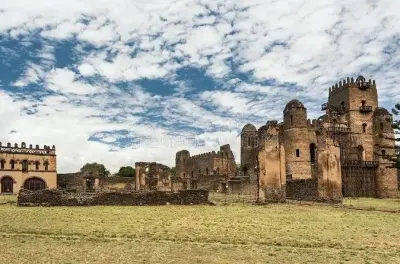 Gondar City Tour: Medieval Castles & Churches with Airport PickupEvery day · 09:00 · All ages★ 5.00 (6)7h 30mENUS$ 90View ›
 Gondar: Simien Mountains Trek & Gelada Monkeys Day TripEvery day · 08:30 · From age 11★ 4.67 (6)6h–8hENUS$ 164View ›
 2 Days Simien Mountains Trekking: Gelada Baboons & Jinbahir FallsEvery day · 08:00 · From age 11★ 4.83 (6)2dENUS$ 295View ›
 Lalibela, Simien Mountains & Danakil Tour: Rock-Hewn ChurchesEvery day · 05:30 · From age 4★ 4.89 (35)6dENUS$ 1,436View › Compare more experiences like this »
Step-by-step itinerary
Explore Gondar's historic sites
- Visit Fasiladas' Palace complex
- Tour Debre Birhan Selassie church
- See Fasilides’ Bath site
- Explore Qusquam Maryam Monastery
- Visit Wolleka Falasha Village
- Walk around Emperor Tewodros II Square
The experience
Fasilidas' Palace anchors the day. Built in the 17th century by Emperor Fasilidas, this UNESCO World Heritage Site sits at the heart of the Royal Enclosure: a walled compound holding several palaces, churches and administrative buildings from the Gondarine dynasty. The Grand Palace itself is a massive stone castle with towering walls, turrets and battlements that blend medieval European style with traditional Ethiopian and Portuguese and Indian influences. You walk through arched windows, past stone carvings and wooden balconies, and see the ruins of Emperor Iyasu's Palace, known for its interior murals, and the Palace of Mentewab.
Debre Birhan Selassie church sits on its own, built during Emperor Iyasu I's reign (1682–1706) and the only Gondar church to survive the Mahdist Dervish invasion of 1888: legend says a swarm of bees protected it. The rectangular stone structure has a thatched roof and a surrounding wall with twelve towers representing the Twelve Apostles. Inside, the ceiling called "Angels' Eyes" dominates the space. Wall frescoes, the Tabot (a replica of the Ark of the Covenant), illuminated manuscripts in Ge'ez, processional crosses and ceremonial umbrellas fill the interior. Fasilides' Bath, built in the same century, is a massive sunken pool that served as a royal bathing palace and now anchors Ethiopia's Timkat festival each January. If you visit then, you'll see festival decorations still in place.
The route also reaches Qusquam Maryam Monastery, an 18th-century hilltop complex built by Empress Mentewab, and Wolleka Falasha village, five kilometers from Gondar in the foothills. The village holds the last remnants of Beta Israel culture. Most residents left for Israel in the 1980s and 1990s, but a few families remain. You see synagogue ruins, a Jewish cemetery with Hebrew inscriptions, and workshops where artisans hand-shape unglazed black clay pottery using ancient techniques, no potter's wheel. Traditional round tukuls with Star of David motifs still stand. The tour ends at Tewodros II Square, the open stone-paved plaza once used for military drills and royal ceremonies, where you interact with locals.
What’s included
- Professional guide in English.
- pickup and drop-off from designated meeting points.
- private vehicle transport.
- traditional Ethiopian coffee.
- bottles of drinking water.
Before you book
Prices and times updated today
Operated by Majesty Ethiopia Tours
Is this one for you?The tour covers seven hours and involves walking through multiple sites across Gondar and into the surrounding foothills, so it suits travelers comfortable with a full morning of movement and a moderate pace. The route reaches five distinct locations, each requiring some walking to explore, and the village visit adds countryside terrain.
Traveler reviews
Top questions
Can children come?
Yes. Ticket types: Youth (12 to 17 years); Child (3 to 11 years); Infant (under 3).
What is Fasilidas' Palace and why does it matter in Ethiopian history?
Fasilidas' Palace is a 17th-century stone castle at the heart of Gondar's Royal Enclosure and a UNESCO World Heritage Site. Built by Emperor Fasilidas, it blends medieval European, Portuguese and Indian architectural styles with Ethiopian tradition and stands as Africa's only medieval castle complex. The walled compound holds several palaces, churches and administrative buildings from the Gondarine dynasty, including the ruins of Emperor Iyasu's Palace with its interior murals.
What happens at Fasilides' Bath and when?
Fasilides' Bath is a massive 17th-century sunken pool built as a royal bathing palace and now the epicenter of Ethiopia's Timkat (Epiphany) festival each January. The compound includes a two-story castle-like structure, surrounding gardens and trees, and festival decorations if you visit during January.
What can you see inside Debre Birhan Selassie church?
Debre Birhan Selassie holds a famous ceiling called "Angels' Eyes," wall frescoes, the Tabot (a replica of the Ark of the Covenant), illuminated manuscripts written in Ge'ez, processional crosses, ceremonial umbrellas, and prayer staffs used in liturgical music. The church itself is a rectangular stone structure with a thatched roof and a surrounding wall with twelve towers symbolizing the Twelve Apostles.
What is Wolleka Falasha village and what do you do there?
Wolleka is a village five kilometers from Gondar that preserves Beta Israel (Ethiopian Jewish) heritage. Most residents immigrated to Israel in the 1980s and 1990s, but a few families remain. You visit synagogue ruins, a Jewish cemetery with Hebrew inscriptions, workshops where artisans hand-craft unglazed black clay pottery using ancient techniques without a potter's wheel, and traditional round mud-walled tukuls with Star of David motifs.
How long does the tour take and what is included?
The tour runs seven hours and includes a professional English-speaking guide, pickup and drop-off from designated meeting points, private vehicle transport, traditional Ethiopian coffee, and bottles of drinking water. Food and drinks beyond the coffee are not included.
Gondar city tour: Medieval castles and Timkat's sacred bath
7h · EN
from US$ 120 per person
5.002 reviewsVerified traveler reviews via our booking provider