
London: British Museum Archaeology Tour with Expert Guide


Trace the Path of Archaeologists Through London's Greatest Collection
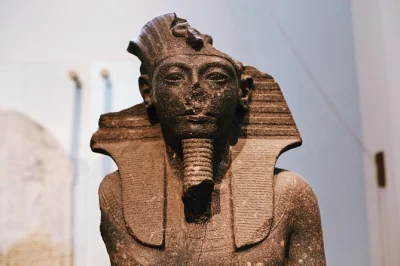
You spend the tour with a qualified archaeologist who explains how explorers acquired the British Museum's treasures and what their discoveries reveal about human civilization. You see the Rosetta Stone, Parthenon Marbles, Lewis Chessmen and learn to decode ancient scripts and play a 4,000-year-old board game. The guide sets the pace through five major galleries, so you absorb the story without feeling rushed.
Compare the 10 alternatives
 British Museum Guided Tour: 2 Hours, Priority EntryEvery day · 10:30, 14:00 and 17:00 · All ages★ 4.90 (604)2hEN · IT£ 35View ›
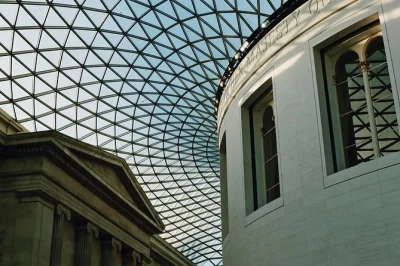 British Museum London: 2.5-Hour Guided Tour & Rosetta StoneEvery day · 10:00, 13:30 and 17:00 · All ages★ 4.95 (598)2h 30mEN · FR · ES£ 90View ›
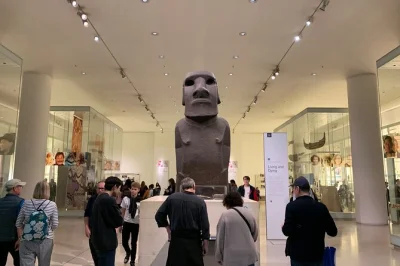 Private British Museum Tour: 2 Hours, No StrangersEvery day · 10:30 and 14:00★ 4.97 (248)2hEN · IT£ 140per groupView ›
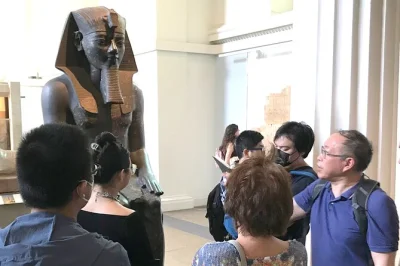 London: British Museum Biblical Artifacts & Timeline TourMon, Tue, Thu and Fri · 13:00 · From age 8★ 5.00 (145)3h–4hEN£ 56View ›
 British Museum: Skip-the-Line & Colonial History TourEvery day · 09:45 and 13:15 · All ages★ 5.00 (8)2h 30mEN£ 90View ›
 London: British Museum Rosetta Stone & Parthenon Sculptures TourEvery day · 10:30 and 14:00 · All ages★ 5.00 (8)2hEN£ 73View ›
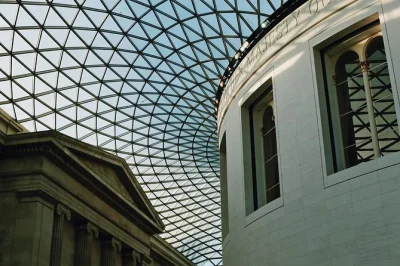 Private British Museum Tour: Small Group Under 8 GuestsEvery day · 10:00, 13:30 and 17:00 · All ages★ 4.97 (1,162)2h 30mEN£ 90View ›
 London: British Museum & National Gallery Small Group TourEvery day · 10:00 · All ages★ 5.00 (205)5h 30mEN£ 184View ›
 London: British Museum & National Gallery Private Combo TourEvery day · 10:00 · All ages★ 5.00 (84)5h 30mEN · FR · ES£ 184View ›
 London: British Museum Kids Tour & Covent Garden WalkEvery day · 10:00 and 14:00 · All ages★ 4.94 (54)3hEN£ 221View › Compare more experiences like this »
Step-by-step itinerary
Explore British Museum archaeology highlights
- Meet qualified archaeologist guide
- Tour Ancient Egypt and Assyria galleries
- See Rosetta Stone and Parthenon Marbles
- Visit Ancient Greece and Rome exhibits
- Explore Vikings and Aztecs collections
- Learn about deciphering ancient scripts
- Play the Royal Game of Ur
The experience
You've just walked through the doors of the British Museum, and the scale hits you immediately: galleries stretching in every direction, cases holding objects that survived empires. A qualified archaeologist meets you and starts not with dates, but with stories: how explorers risked their lives to bring the Rosetta Stone out of Egypt, what drove them to dig, what they found and how they knew what they were looking at. That's the angle here. You're not reading plaques. You're following in the footsteps of the people who actually uncovered these things.
The tour moves through the museum's core galleries (Ancient Egypt, Assyria, Greece, Rome, the Vikings, the Aztecs), but the pace is set by the archaeologist's knowledge, not by the crowd. You'll stand in front of the Parthenon Marbles and hear the story of how they arrived in London, then move to the Lewis Chessmen and learn why medieval chess pieces matter to understanding trade routes. Along the way, the guide walks you through how ancient scripts like Egyptian hieroglyphs and cuneiform were actually deciphered, not as abstract history, but as a detective story. You'll even learn to play the Royal Game of Ur, the world's oldest known board game, whose rules British Museum scholars reconstructed from the artefacts themselves.
The British Museum is wheelchair accessible throughout, and the route is designed so you're not racing between floors or backtracking. If you're traveling with small children, strollers work fine on the main galleries. The guide adjusts the pace to the group. There's no fixed speed, just the rhythm of understanding. Public transport gets you there easily, and once you're inside, the archaeologist handles the navigation. You leave knowing not just what these objects are, but why they matter and how we know.
What’s included
- A qualified archaeologist guide who leads you through the British Museum's major galleries: Ancient Egypt, Assyria, Greece, Rome, the Vikings and the Aztecs.
- You'll explore world-famous artefacts including the Rosetta Stone, Parthenon Marbles and Lewis Chessmen, learn how ancient scripts like Egyptian hieroglyphs and cuneiform were deciphered, and discover the stories of the explorers and relic hunters who acquired these treasures.
- The guide also teaches you to play the Royal Game of Ur, the world's oldest board game, whose rules were reconstructed by British Museum scholars.
Before you book
Prices and times updated 2 days ago
Operated by Spirit of Discovery Tours
Is this one for you?A good fit if you want to understand the British Museum's collection through the lens of archaeology and exploration, rather than wandering alone with a map. The guide's expertise transforms objects into stories, and the pace is set by learning, not by the crowd.
Traveler reviews
Top questions
Can children come?
Yes. Ticket types: Youth (16 to 22 years); Child (5 to 15 years); Infant (under 5): free.
What is included in the tour?
A qualified archaeologist guide who leads you through the museum's major galleries. Museum entry is not explicitly stated as included. Confirm with the provider whether admission is separate.
Is the British Museum wheelchair accessible?
Yes. All areas and surfaces are wheelchair accessible, and transportation options nearby are also wheelchair accessible.
Can I bring a service animal?
Yes, service animals are allowed throughout the museum.
What are the main galleries covered?
Ancient Egypt, Assyria, Ancient Greece and Rome, the Vikings, and the Aztecs. You'll see artefacts including the Rosetta Stone, Parthenon Marbles, and Lewis Chessmen.
Will I learn about how ancient scripts were deciphered?
Yes. The guide explains how Egyptian hieroglyphs and cuneiform were decoded, and you'll learn the rules of the Royal Game of Ur, which scholars reconstructed from museum artefacts.
Do I need to book entry to the British Museum separately?
The tour description does not clarify whether museum admission is included. Contact the provider to confirm what is covered by the tour price.
London: British Museum Archaeology Tour with Expert Guide
5h 30m · EN
from £ 60 per person
4.93123 reviewsVerified traveler reviews via our booking provider