
London: British Museum Biblical Artifacts & Timeline Tour
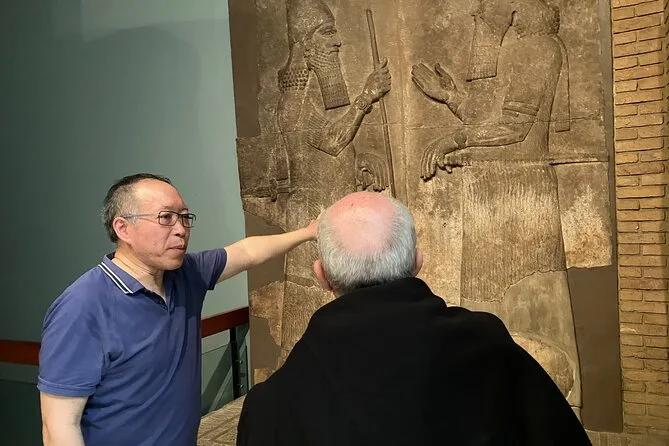
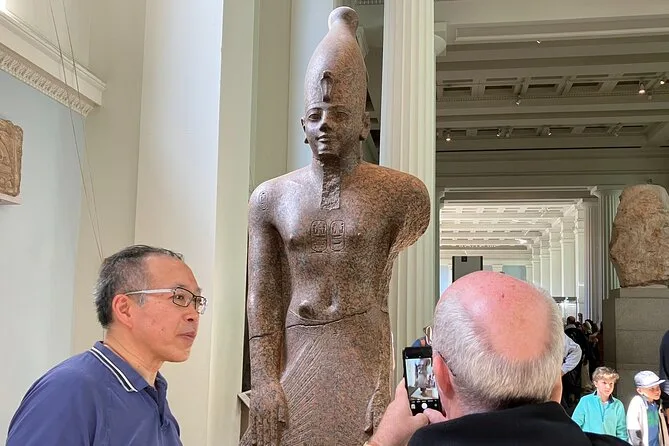
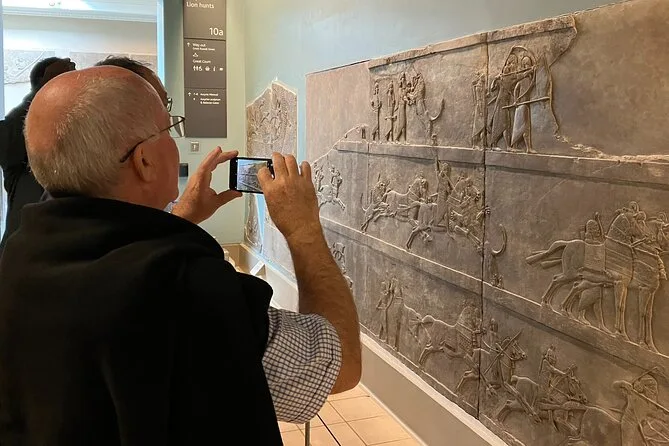
See the Bible Come Alive in the British Museum's Ancient Galleries
You read Bible verses in your own translation while standing in front of ancient artifacts at the British Museum, then answer guided questions that help you remember both. The tour moves through Assyrian, Egyptian, Greek and Roman galleries over two to three hours, covering figures like Joseph, Moses, Jesus and Paul. You leave with study notes linking every artifact to its verses, so the connections stay with you after you leave.
Compare the 9 alternatives
 British Museum Guided Tour: 2 Hours, Priority EntryEvery day · 10:30, 14:00 and 17:00 · All ages★ 4.90 (604)2hEN · IT£ 35View ›
 British Museum London: 2.5-Hour Guided Tour & Rosetta StoneEvery day · 10:00, 13:30 and 17:00 · All ages★ 4.95 (598)2h 30mEN · FR · ES£ 90View ›
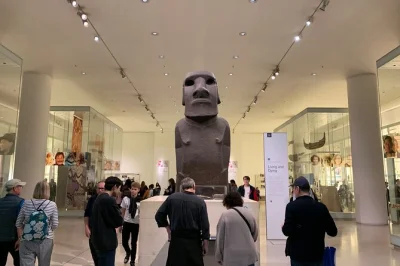 Private British Museum Tour: 2 Hours, No StrangersEvery day · 10:30 and 14:00★ 4.97 (248)2hEN · IT£ 140per groupView ›
 London: British Museum Archaeology Tour with Expert GuideSat · 09:45 · All ages★ 4.93 (123)5h 30mEN£ 60View ›
 British Museum: Skip-the-Line & Colonial History TourEvery day · 09:45 and 13:15 · All ages★ 5.00 (8)2h 30mEN£ 90View ›
 London: British Museum Rosetta Stone & Parthenon Sculptures TourEvery day · 10:30 and 14:00 · All ages★ 5.00 (8)2hEN£ 73View ›
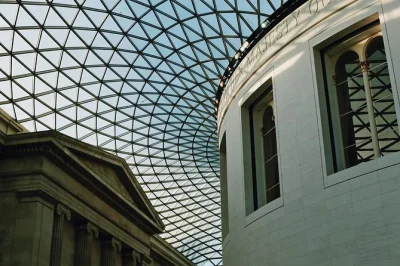 Private British Museum Tour: Small Group Under 8 GuestsEvery day · 10:00, 13:30 and 17:00 · All ages★ 4.97 (1,162)2h 30mEN£ 90View ›
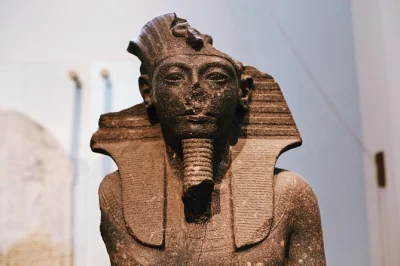 London: British Museum & National Gallery Small Group TourEvery day · 10:00 · All ages★ 5.00 (205)5h 30mEN£ 184View ›
 London: British Museum & National Gallery Private Combo TourEvery day · 10:00 · All ages★ 5.00 (84)5h 30mEN · FR · ES£ 184View › Compare more experiences like this »
Step-by-step itinerary
Explore Biblical artifacts at British Museum
- Visit Assyrian, Egyptian, Greek galleries
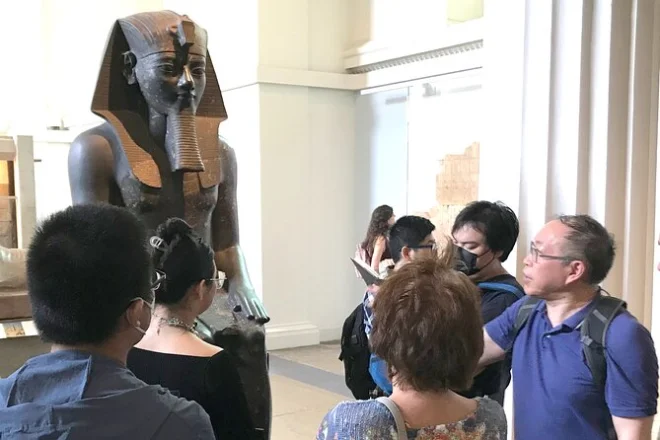
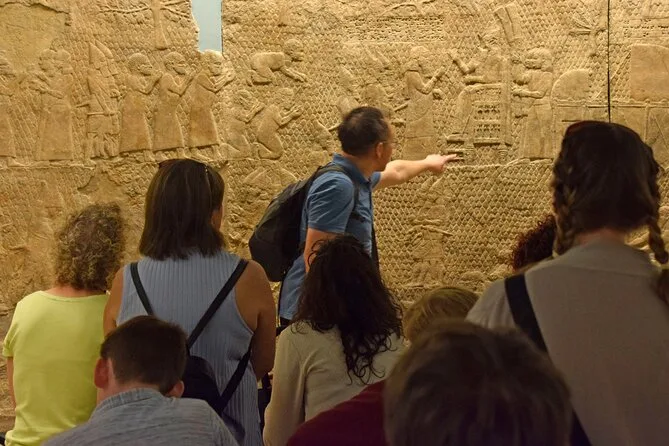
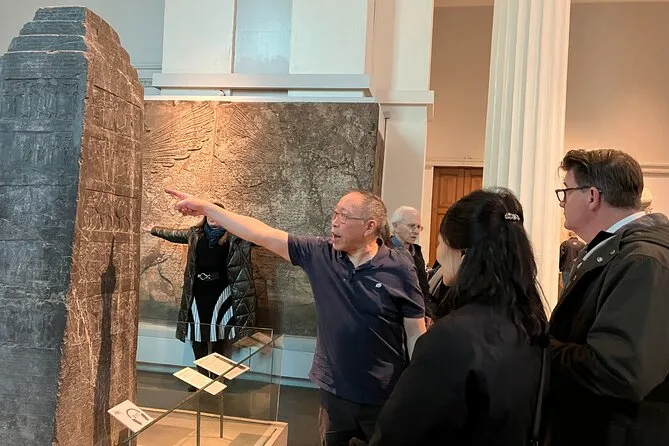
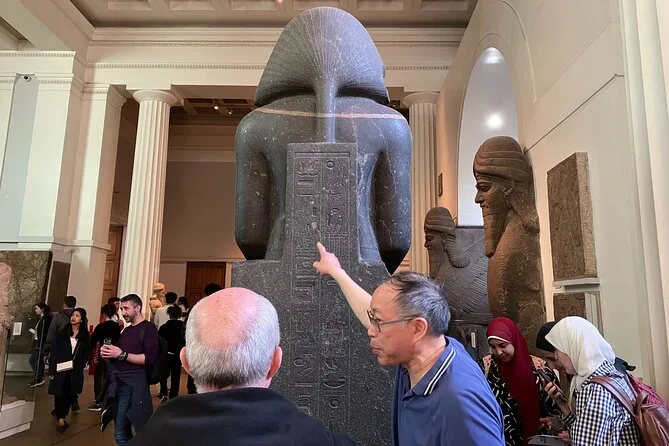
- See Assyrian lamassu beasts and pharaoh statues
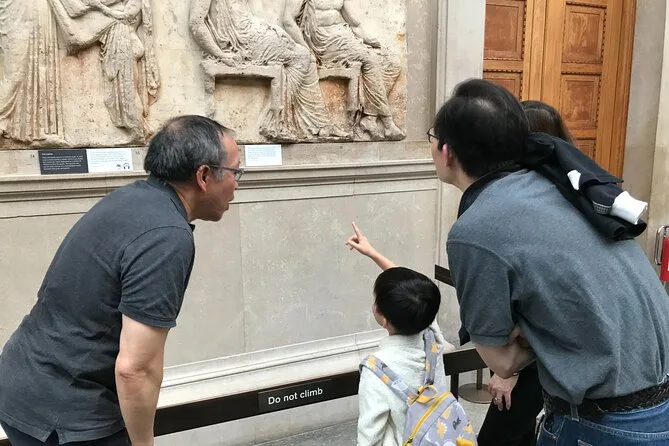
- View Parthenon temple sculptures of Athens
- Take a break
- Go upstairs to Roman galleries
- Optionally visit Persia and Babylon galleries
- Examine Roman emperors and biblical objects
- Discuss biblical figures from Egypt, Assyria, Greece, Rome
The experience
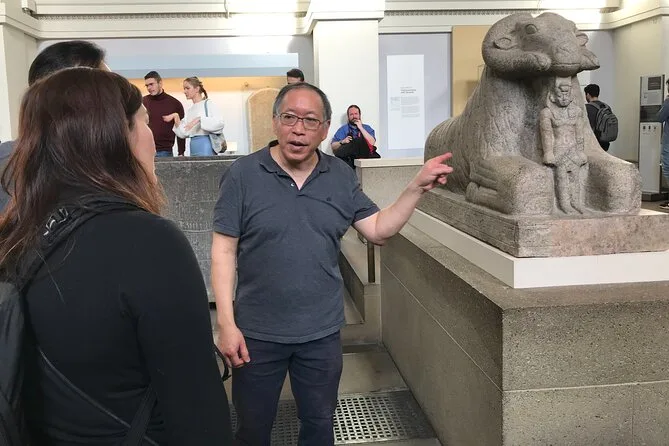
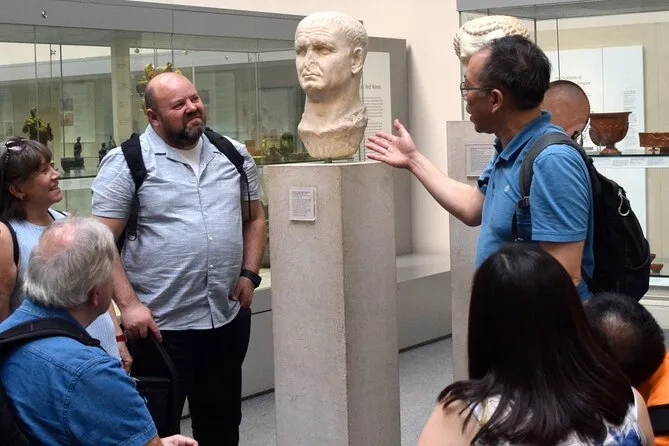
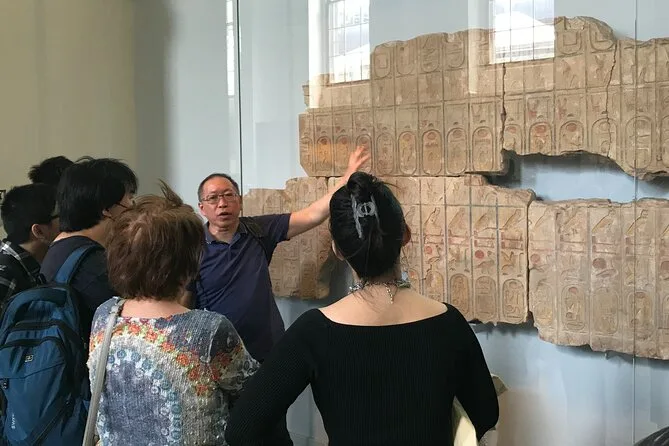
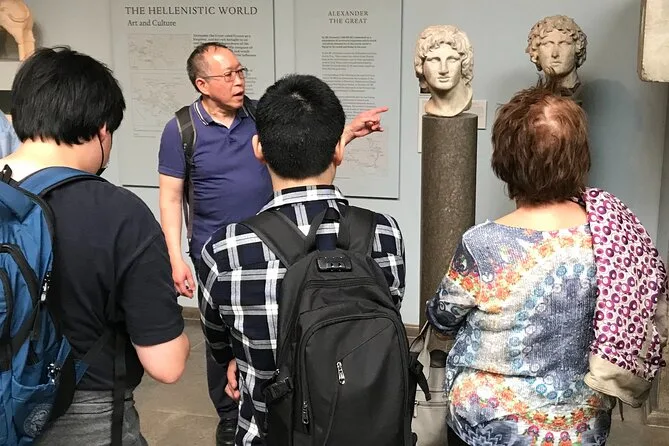
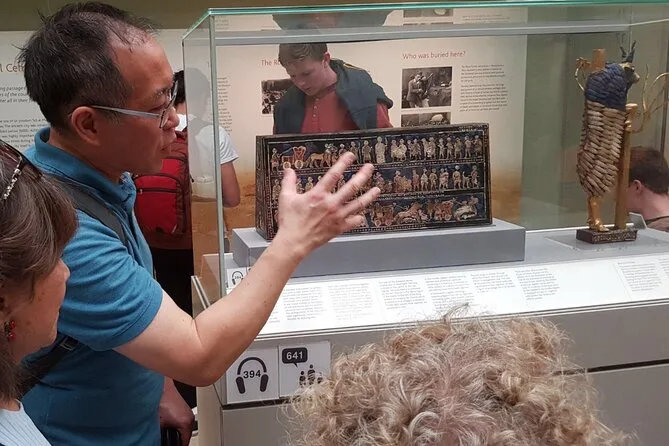
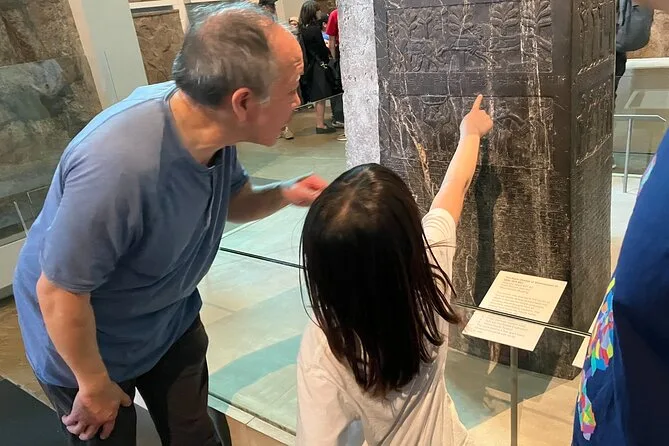
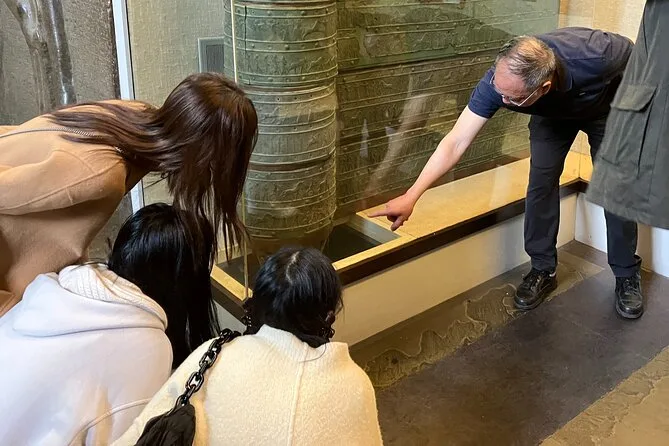
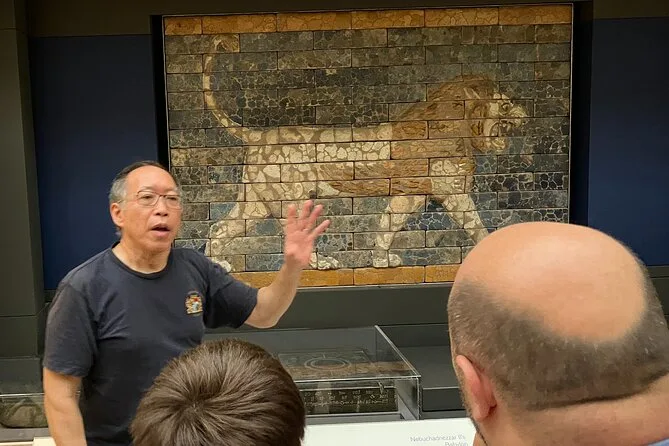
"So when you stand in front of the actual artifact, the verse just clicks." That's the moment this tour is built around, when a 40-ton Assyrian lamassu beast or a Roman emperor's portrait stops being a museum object and becomes the setting for a story you've read a hundred times. The British Museum holds pieces connected to Joseph, Moses, Jonah, Jesus, Paul and others, but without the right frame, they're just stone and bronze. This semi-private guided tour threads those connections for you, starting on the ground floor with the Assyrian, Egyptian and Greek galleries, then moving upstairs to the Roman section where objects relate directly to Jesus and Paul.
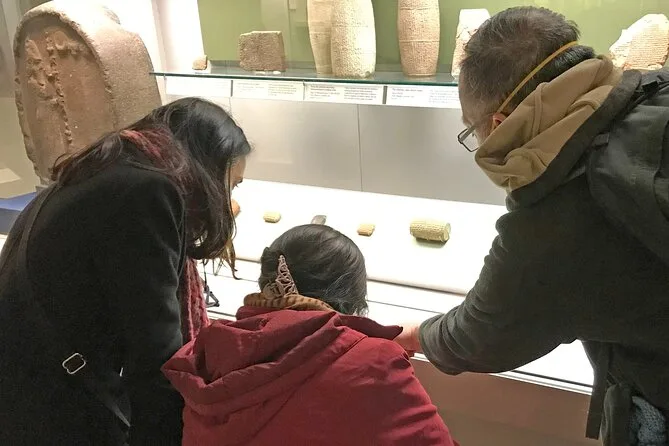
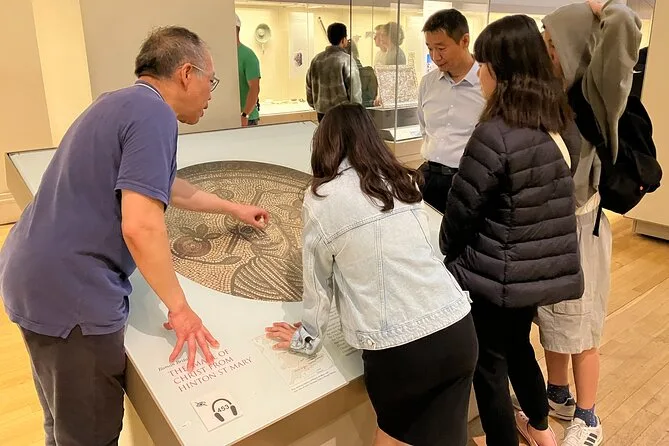
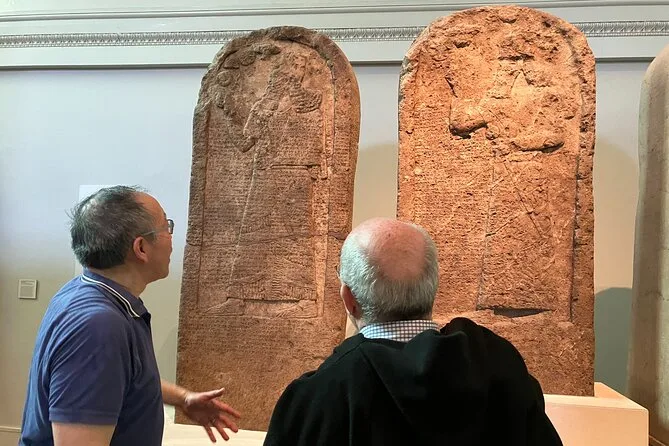
The method matters as much as the artifacts. Instead of listening to a guide's interpretation, you read the verses yourself in your own Bible translation while standing in front of the object. That's how memory sticks. Then the guide asks gentle questions that prompt you to the answer rather than handing it to you. It sounds like a small difference, but saying the answer aloud in front of the artifact is what makes you actually retain it. You'll see statues of famous pharaohs, Parthenon temple sculptures from Athens, Roman emperors, and objects that anchor the people and events you know from Scripture to a real timeline. The tour covers Egypt (Joseph, Moses), Assyria (Jonah, Ahab, Hezekiah), Rome (Jesus, Paul) and Greek galleries as time allows and your preference dictates.
Logistics are straightforward: the tour runs for about two to three hours and stays semi-private, meaning you're not in a crowd of thirty. Optional portable folding stools are available if you want to sit while reading verses, and you'll get a Google Doc of study notes afterward that lists all the Bible passages connected to each artifact. The museum is fully wheelchair accessible, and public transportation options are nearby, though the tour isn't recommended if you've just landed after a long flight and are still jet-lagged, since the reading and thinking require focus.
What’s included
Semi-private guided tour through British Museum galleries (Assyrian, Egyptian, Greek, Roman), your own Bible reading at each artifact, Socratic questioning method, optional portable folding stools, and a Google Doc of study notes with all Bible verses linked to the artifacts you see.
Before you book
Prices and times updated yesterday
Operated by London Bible Tours
Is this one for you?Right for anyone who wants to understand how ancient objects in the British Museum connect to Bible stories, without needing a background in archaeology or theology: the guide's questions help you discover the connections yourself rather than lecturing at you.
Traveler reviews
Top questions
Can children come?
Yes. Ticket types: Youth (13 to 17 years); Child (8 to 12 years): free. Under 8: they can't be included in the booking.
How long is the tour?
Approximately two to three hours, covering the ground floor galleries (Assyrian, Egyptian, Greek) and then the Roman galleries upstairs.
What Bible figures are covered?
The tour discusses Joseph and Moses (Egypt), Jonah, Ahab and Hezekiah (Assyria), Jesus and Paul (Rome), and Paul (Greek galleries).
Do I need to bring my own Bible?
You should have a Bible app installed on your phone (YouVersion works well and functions in airplane mode). You'll read verses in your own translation while standing at each artifact.
Is the museum wheelchair accessible?
Yes, all areas and surfaces are wheelchair accessible. Infants and small children can use a pram or stroller, and service animals are allowed.
What do I get after the tour?
A Google Doc of study notes that includes a comprehensive list of Bible verses related to each artifact you saw.
Can I bring a folding stool?
Optional portable folding stools are available during the tour if you want to sit while reading verses.
Is this tour recommended for jet-lagged travelers?
No, it's not recommended if you've just arrived after a long flight, since the tour requires focus for reading and thinking through guided questions.
London: British Museum Biblical Artifacts & Timeline Tour
3h–4h · EN
from £ 55.80 per person
5.00145 reviewsVerified traveler reviews via our booking provider