
Birmingham Canals Walking Tour: Georgian to Modern



Walk the canal network that built an empire, then see what Birmingham became.
You walk for two hours starting at the Library of Birmingham, moving between the Town Hall, canals, and modern landmarks with a local expert guide using a live audio system so you hear every detail. The tour includes a free copy of Discovering Birmingham and supports Sifa Fireside, which helps the city's homeless community.
 2h
2h

Step-by-step itinerary
Explore Birmingham's history and architecture
- Start at Library of Birmingham
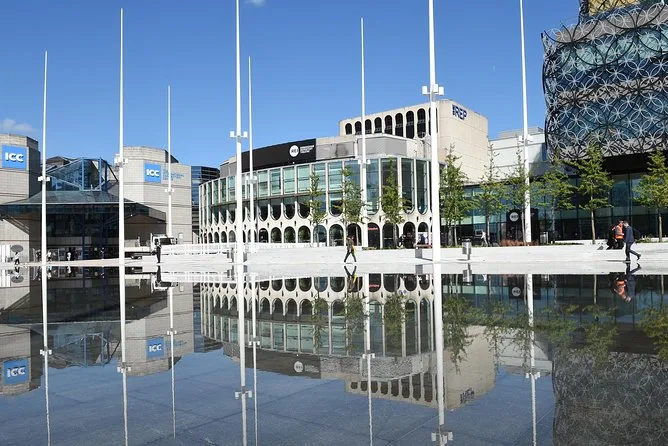
- View Symphony Hall and ICC
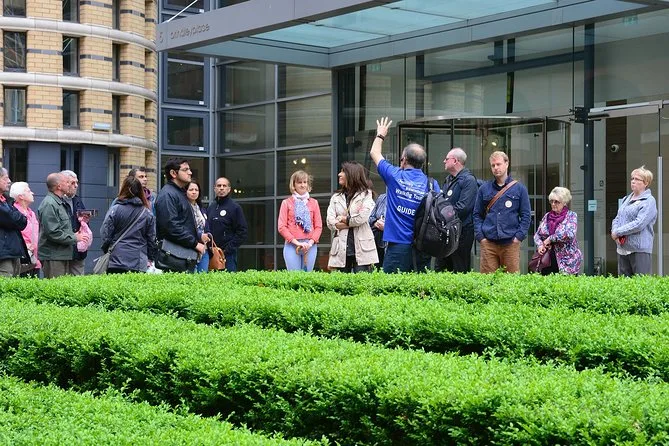
- Explore Brindleyplace history
- Visit Birmingham canal network
- Discuss Victorian period and public art
- Examine Birmingham's future plans
- See 1880s double portico design
- View former post office BBC HQ
- Visit The Cube at Mailbox
- Pass Ikon Gallery building
- See Art Deco Hall of Memory
- Walk from Centenary Square to canalside
- Visit Birmingham Town Hall

The Experience
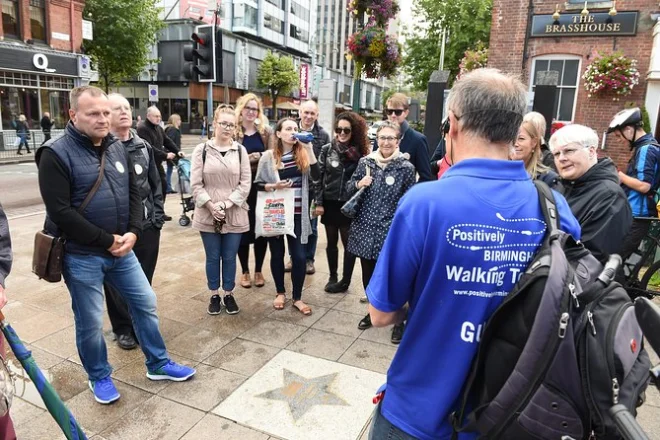
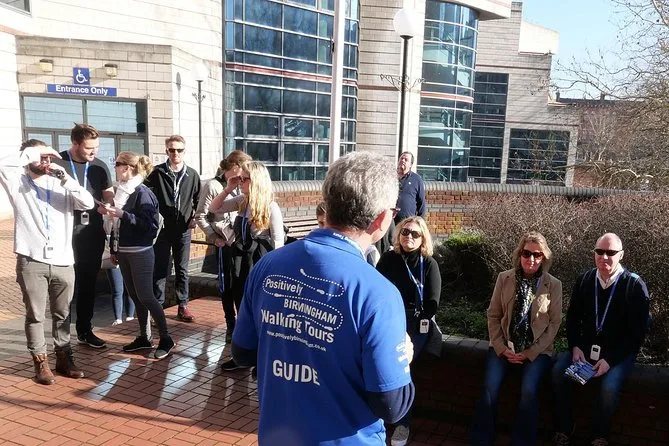
Hands adjust a small radio receiver, testing the earpiece before the group gathers outside the Library of Birmingham. That's how the tour begins — not with a speech, but with the practical setup that lets you hear the guide clearly even when the city noise rises around you. The walk itself starts at 1:30pm, and from there you move through two hours of the city's layers: the canals that made Birmingham an industrial nerve center, the Victorian buildings that still frame Chamberlain Square, and the newer architecture that's reshaping what the city looks like now. Your guide is someone who actually knows this place — Jonathan Berg wrote the book on discovering Birmingham, or Michael Harrison, who specializes in twentieth-century design — and you get a copy of that book to take home.
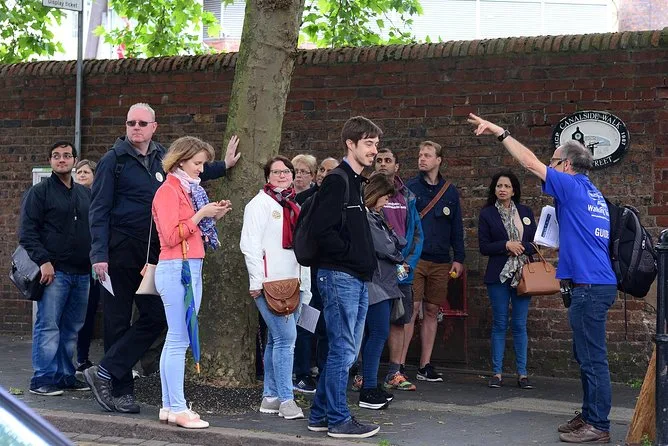
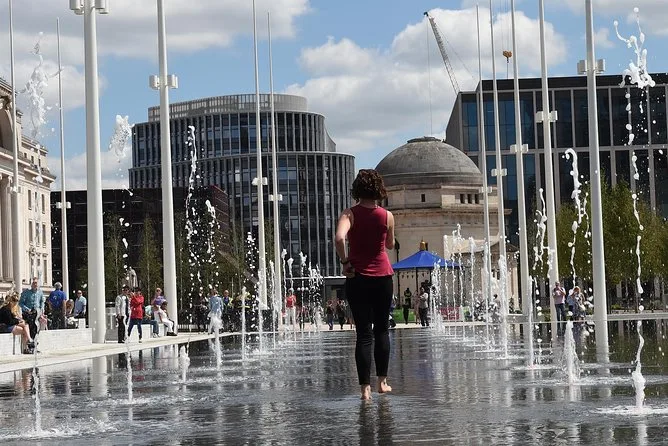
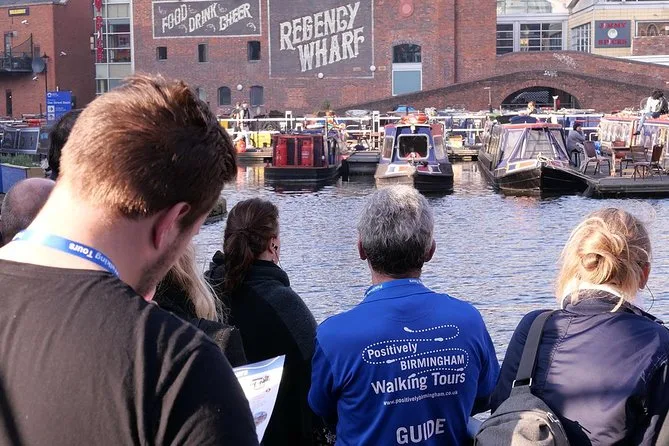
The route moves between specific landmarks without rushing. You'll stand in front of Birmingham Town Hall, built in 1834 and still the oldest building in Victoria Square, then walk to Brindleyplace where the canal network opens up and you can see how the waterways shaped the whole city's growth. The Hall of Memory comes next, an Art Deco memorial from 1925 with William Bloye tablets inside — the kind of detail a local guide points out because they've actually looked at it, not because it's on a checklist. Chamberlain Square anchors the middle of the walk, and from there you see the BBC headquarters (a converted post office sorting office), the Cube development with views across the city, and the Ikon Gallery, which started as a school designed by the same architects who built over forty others around Birmingham.
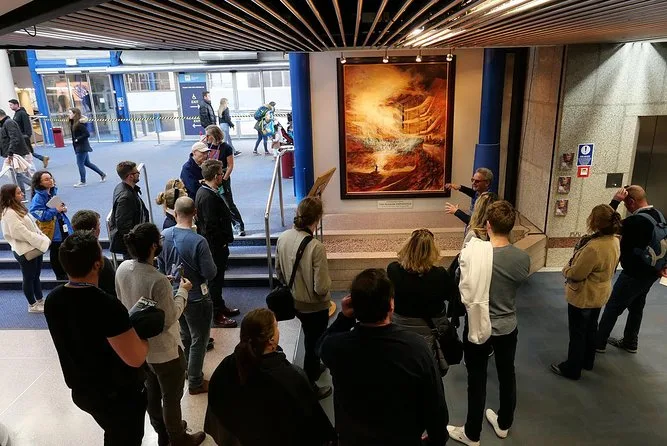
What makes this different from walking alone is the audio system. You wear the receiver, plug in your own earphones or use the pair they provide, and the guide's voice stays with you even when you're standing in the middle of traffic or a crowded square. It's a small thing that changes how much you actually hear instead of how much you miss. The walk is wheelchair accessible if you email ahead to let them modify the route, and the whole thing is designed for people with moderate fitness — no scrambling or long stretches without a break. By the end, you've moved through the city's Georgian industrial boom, its Victorian reinvention, and the way it's moving now, all in the time it takes to drink a coffee and walk a few miles.

What’s included
The tour includes the guided walk led by a local expert, a live audio system with a personal receiver and earphones (bring your own or use the provided pair), and a free copy of Discovering Birmingham as a memento. The tour supports Sifa Fireside, which helps Birmingham's homeless community.
Operated by Positively Birmingham Walking Tours
Is this one for you?Right for travelers who want to understand Birmingham's industrial past and modern transformation without arranging their own route — the two-hour walk and audio system mean you move at a set pace and hear the details that matter, which is what lets you see the whole story in one afternoon.
Traveler reviews
Compare the 5 similar options
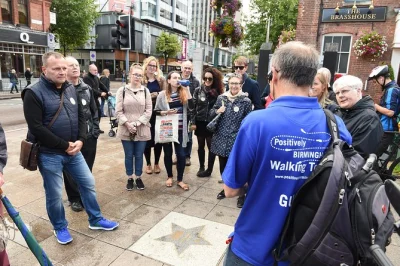 Birmingham Canals Walking Tour: Georgian to Modern★ 4.91 (377)2hEN£ 15
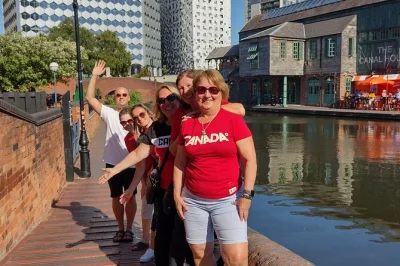 Birmingham Walking Tour: City Centre History & CanalsFeel the pulse of Birmingham on a city centre walking tour with a local. Stroll past canals, historic squares & the Hall of Memory—includes local guide.★ 4.85 (306)1h 30mEN£ 14View ›
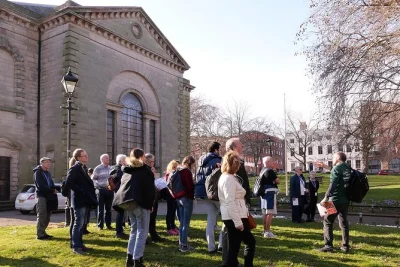 Birmingham: Jewellery Quarter Walking Tour & Canal RouteStep into Birmingham’s history with a 2-hour walking tour through the Jewellery Quarter, canal paths, and city squares. Includes audio receiver and local guide.★ 4.95 (345)2hEN£ 15View ›
 Cotswolds Day Tour From Birmingham: 4 Villages & Free TimeFull-day Cotswolds tour from Birmingham visiting Bibury, Burford, Bourton-on-the-Water and Stow-on-the-Wold. Includes coach, free time in each village, and quiz with prizes.★ 4.63 (40)9h–10hEN£ 80View ›
 Birmingham: Slogging Gangs Walking Tour & Pub StopsStep through Birmingham’s gritty gang history with Edward Shelby, hear wild tales in old pubs, and stroll real slogging gang turf. Includes pub stops & local guide.★ 4.56 (330)2hEN£ 20View ›
Top questions
What time does the tour start?
The tour starts at 1:30pm and lasts two hours.
Do I need to bring my own earphones?
You can bring your own earphones with a 3.5mm socket, or the tour provides a pair for you.
Is the tour wheelchair accessible?
The route can be modified for wheelchairs, but you should email ahead to let the tour operator know so they can adjust the path.
Who are the guides?
Tours are led by local experts including Jonathan Berg, author of Discovering Birmingham, and Michael Harrison, a specialist in twentieth-century architecture.
What's included in the tour?
The tour includes the guided walk, a live audio system with a receiver and earphones, and a free copy of Discovering Birmingham.
Where does the tour start and finish?
Both start and finish at the Library of Birmingham.
What landmarks do you visit?
The tour passes Birmingham Town Hall, Hall of Memory, Chamberlain Square, Brindleyplace, and modern developments including the BBC headquarters and the Cube.
How much walking is involved?
The tour is two hours long and requires a moderate level of physical fitness.
Birmingham Canals Walking Tour: Georgian to Modern
2h · EN
from £ 15 per person
★★★★★★★★★★4.91377 reviews
